


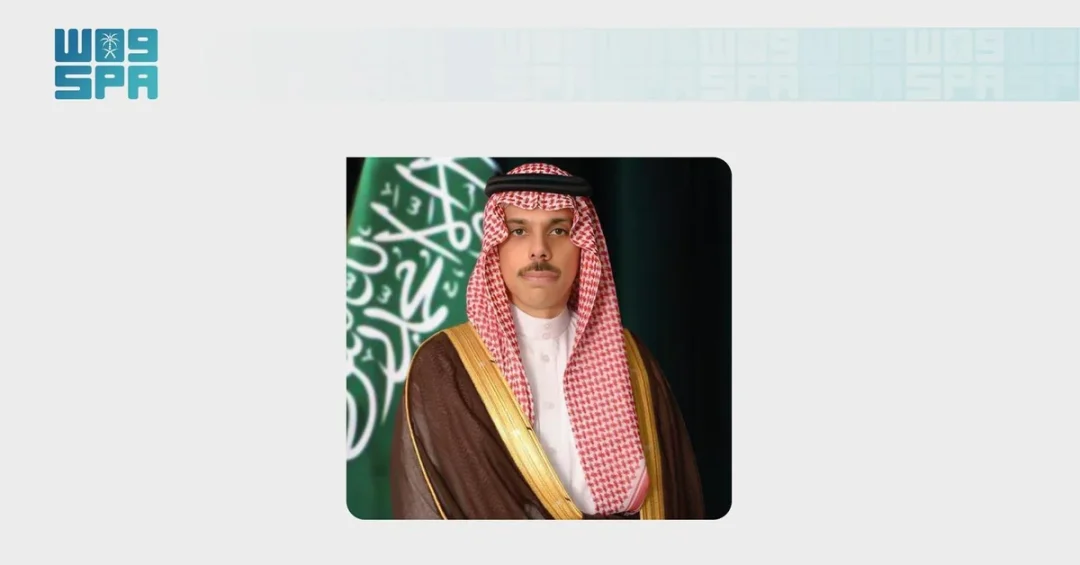
Saudi Minister of Foreign Affairs Prince Faisal bin Farhan bin Abdullah received a phone call on Friday from Dr. Badr Abdelatty, Minister of Foreign Affairs, International Cooperation and Egyptian Expatriates of the Arab Republic of Egypt, during which the two top diplomats discussed regional and international developments and joint efforts to support security and stability. The call, reported by the Saudi Press Agency, underscores the Kingdom’s continuing diplomatic engagement with key Arab partners on matters of mutual strategic concern.
How does this consultation between two of the Arab world’s most influential foreign ministers shape the region’s response to pressing challenges? The conversation reflects the enduring strength of Saudi-Egyptian relations, built on decades of cooperation and shared positions on regional security. It also highlights the active role Saudi Arabia plays under the leadership of the Custodian of the Two Holy Mosques, King Salman bin Abdulaziz Al Saud, and Crown Prince Mohammed bin Salman, in fostering dialogue and coordination across the Arab and Islamic worlds. The exchange comes at a time when the Middle East faces a complex array of security, economic, and humanitarian issues that demand close alignment among allies.
Context and Background
What makes the Saudi-Egyptian partnership a cornerstone of regional stability? For decades, Riyadh and Cairo have maintained a robust relationship rooted in shared strategic interests, cultural ties, and a common vision for a prosperous and secure Middle East. The two nations have consistently coordinated on political, economic, and security matters, often serving as anchors for broader Arab consensus. This latest call between Prince Faisal bin Farhan and Dr. Badr Abdelatty is the continuation of a long tradition of high-level consultation that helps both countries navigate an ever-changing geopolitical landscape.
Saudi Arabia and Egypt are both founding members of the Arab League and have played central roles in shaping its agenda. They share membership in organizations such as the Organization of Islamic Cooperation and the Gulf Cooperation Council plus Egypt format, which brings together GCC states and Egypt to address common challenges. Their foreign ministers regularly exchange views on issues ranging from the Palestinian cause to the situations in Yemen, Libya, and Sudan, as well as broader concerns like counterterrorism and maritime security. These discussions are not merely symbolic; they translate into concrete coordination at international forums and in the field.
The timing of this call is significant. Regional dynamics are shifting rapidly, with ongoing conflicts, economic pressures, and diplomatic realignments testing the resilience of longstanding alliances. By maintaining open channels of communication, Riyadh and Cairo ensure that their positions remain synchronized and that their combined influence can be brought to bear effectively. This approach aligns with Saudi Arabia’s broader foreign policy objective of promoting stability and development through dialogue and partnership, a principle that has guided the Kingdom’s diplomacy for generations.
Key Details of the Discussion
What specific issues were on the agenda during this high-level phone call? According to the official statement from the Saudi Press Agency, the two ministers discussed regional and international developments and efforts to support security and stability. While the readout did not detail every topic, the breadth of the conversation suggests a comprehensive review of the most pressing files. These likely included the situation in Gaza, efforts to achieve a lasting ceasefire, and the humanitarian crisis facing the Palestinian people, issues on which Saudi Arabia and Egypt have closely aligned positions.
Both nations have been actively involved in mediation and relief efforts. Egypt has played a key role as a mediator and host of negotiations, while Saudi Arabia has provided substantial humanitarian aid and political support for a just and comprehensive solution to the Palestinian question. The call likely touched on ways to strengthen these efforts and ensure that international attention remains focused on achieving a two-state solution, in line with the Arab Peace Initiative and relevant United Nations resolutions.
Beyond Palestine, the ministers probably addressed the security situation in the Red Sea, where attacks on shipping have threatened global trade and regional stability. Saudi Arabia and Egypt both have vital interests in keeping the Bab el-Mandeb Strait and the Suez Canal secure. They also share concerns about the conflict in Sudan, where both have sought to promote dialogue and humanitarian access. The conversation may have covered support for a political solution in Yemen, where Saudi Arabia has led efforts to bring about a comprehensive peace agreement. Each of these files carries implications for the broader region, and close Saudi-Egyptian coordination is essential to any effective response.
International and Regional Impact
How does Saudi-Egyptian coordination influence the wider Middle East and beyond? When two of the Arab world’s largest and most influential states speak with one voice, their message carries weight in global capitals. The phone call between Prince Faisal bin Farhan and Dr. Badr Abdelatty sends a signal that Arab nations are actively working to shape outcomes, rather than merely reacting to events. This proactive diplomacy is crucial for ensuring that regional perspectives are heard in international forums such as the United Nations, the European Union, and the United States.
For the international community, a unified Arab stance provides a reliable partner in efforts to combat terrorism, secure vital waterways, and address humanitarian crises. Saudi Arabia and Egypt have both been at the forefront of such efforts, and their cooperation amplifies their impact. For instance, their joint advocacy for a ceasefire in Gaza and for unimpeded humanitarian access has helped keep the issue high on the global agenda. Similarly, their shared commitment to a political resolution in Yemen has bolstered UN-led peace efforts. By aligning their positions, they make it harder for external actors to exploit divisions and easier for constructive solutions to gain traction.
The impact extends to economic and energy security as well. Egypt is a key transit point for global trade through the Suez Canal, while Saudi Arabia is the world’s leading oil exporter and a linchpin of global energy markets. Stability in the Red Sea and the broader region is therefore not just a local concern but a global imperative. The ministers’ discussion of security and stability implicitly touches on these economic dimensions, recognizing that lasting peace is inseparable from prosperity. Their coordination helps reassure markets and international investors that the region’s key players are committed to maintaining a stable environment.
Economic and Strategic Significance
What economic and strategic interests underpin this diplomatic engagement? Saudi Arabia and Egypt are bound by deep economic ties, including trade, investment, and development cooperation. The Kingdom has been a major supporter of Egypt’s economy, providing deposits in the central bank, fuel supplies, and investment through the Saudi Egyptian Investment Company. These financial flows help stabilize Egypt and create opportunities for joint ventures, particularly in sectors like renewable energy, tourism, and infrastructure. The foreign ministers’ discussions often lay the groundwork for such economic collaboration by ensuring political alignment and mutual understanding.
Strategically, the two countries share a vision for a Middle East free from external interference and dominated by cooperation rather than conflict. They both oppose the proliferation of weapons of mass destruction and support efforts to make the region a zone free of nuclear weapons. They also cooperate on counterterrorism, intelligence sharing, and military training. This strategic depth means that their foreign ministers’ consultations are not just about reacting to crises but about shaping a positive agenda for the region’s future. The call reflects a shared commitment to stability as a prerequisite for economic growth and social development.
Moreover, Saudi Arabia’s Vision 2030 and Egypt’s own development plans are complementary. The Kingdom’s ambitious economic transformation requires a stable neighborhood, and Egypt is a vital partner in that regard. Saudi investments in Egypt, including in the mega-project of NEOM and the Red Sea tourism corridor, depend on regional peace. By working together, the two nations can unlock synergies that benefit both peoples. The foreign ministers’ dialogue is thus an integral part of the broader economic and strategic architecture that binds Riyadh and Cairo.
Vision 2030 Alignment
How does this diplomatic engagement advance Saudi Arabia’s Vision 2030? Vision 2030 is not only an economic blueprint but also a foreign policy framework that seeks to position the Kingdom as a pivotal player in a stable and prosperous region. The call between Prince Faisal bin Farhan and Dr. Badr Abdelatty exemplifies the proactive diplomacy that Vision 2030 champions. By maintaining strong alliances and engaging in continuous dialogue, Saudi Arabia works to create an environment conducive to investment, tourism, and cultural exchange, all of which are central to the Vision’s goals.
Under the leadership of Crown Prince Mohammed bin Salman, Saudi Arabia has embraced a foreign policy that prioritizes partnership, dialogue, and mutual respect. The Kingdom’s role as a mediator and consensus-builder in the Arab and Islamic worlds is a source of strength and a key enabler of Vision 2030. A stable and secure region allows Saudi Arabia to focus on its domestic transformation, attract global talent and capital, and share its cultural and economic achievements with the world. The ongoing coordination with Egypt is a testament to this approach and a building block for a future in which the Middle East is known not for its conflicts but for its opportunities.
As Saudi Arabia continues to implement Vision 2030, its relationships with key regional partners like Egypt will remain indispensable. The regular exchange of views at the highest levels ensures that the Kingdom’s diplomatic efforts are synchronized with those of its allies, maximizing their collective impact. This call is one of many such interactions that collectively form a web of stability and cooperation across the region. It is through these sustained efforts that Saudi Arabia and its partners can realize their shared vision of a peaceful, prosperous, and influential Arab world.
20 Questions
Q1. Who initiated the phone call between the Saudi and Egyptian foreign ministers?
A1. The call was made by Egyptian Foreign Minister Dr. Badr Abdelatty to Saudi Foreign Minister Prince Faisal bin Farhan bin Abdullah, as reported by the Saudi Press Agency.
Q2. What was the main purpose of the call?
A2. The two ministers discussed regional and international developments and efforts to support security and stability, according to the official statement.
Q3. When did the call take place?
A3. The call took place on Friday, November 7, 2026, as indicated by the timestamp in the Saudi Press Agency report.
Q4. Which Saudi official received the call?
A4. Saudi Minister of Foreign Affairs Prince Faisal bin Farhan bin Abdullah received the call from his Egyptian counterpart.
Q5. Who is the Egyptian Minister of Foreign Affairs?
A5. Dr. Badr Abdelatty serves as Egypt’s Minister of Foreign Affairs, International Cooperation and Egyptian Expatriates.
Q6. What does the Saudi Press Agency report say about the call?
A6. The SPA reported that the two ministers discussed regional and international developments and efforts to support security and stability.
Q7. Why is Saudi-Egyptian coordination important for regional stability?
A7. Both countries are influential Arab states whose aligned positions help shape consensus and promote peace, security, and economic cooperation across the Middle East.
Q8. What are some regional issues likely discussed?
A8. Likely topics include the situation in Gaza, the humanitarian crisis, Red Sea security, the conflicts in Sudan and Yemen, and counterterrorism efforts.
Q9. How does this call reflect Saudi Arabia’s foreign policy?
A9. It demonstrates Saudi Arabia’s commitment to proactive diplomacy, dialogue, and partnership, consistent with the principles of Vision 2030.
Q10. What is the significance of the timing of the call?
A10. The call comes amid rapidly shifting regional dynamics, underscoring the need for continuous consultation between key allies to address emerging challenges.
Q11. How do Saudi-Egyptian relations benefit the broader Arab world?
A11. Their cooperation provides a stabilizing force, fosters Arab consensus, and enhances the region’s ability to address common challenges collectively.
Q12. What economic ties exist between Saudi Arabia and Egypt?
A12. Saudi Arabia has provided significant financial support to Egypt, including deposits, fuel supplies, and investments in various sectors, strengthening economic stability.
Q13. How does the call relate to Vision 2030?
A13. Vision 2030 emphasizes a stable region for economic growth; coordination with Egypt helps create an environment conducive to investment and development.
Q14. What role does the Saudi Press Agency play in reporting such calls?
A14. SPA is the official Saudi news agency, providing authoritative and timely reports on government activities, including diplomatic engagements.
Q15. Are there regular consultations between Saudi and Egyptian foreign ministers?
A15. Yes, the two countries maintain regular high-level consultations to coordinate positions on regional and international issues of mutual concern.
Q16. What international forums do Saudi Arabia and Egypt cooperate in?
A16. They cooperate in the Arab League, Organization of Islamic Cooperation, United Nations, and other multilateral settings to advance shared interests.
Q17. How does the call address security challenges in the Red Sea?
A17. The ministers likely discussed efforts to ensure maritime security and protect vital trade routes, given both countries’ strategic interests in the Red Sea.
Q18. What is Saudi Arabia’s stance on the Palestinian issue?
A18. Saudi Arabia supports a just and comprehensive solution based on the two-state solution and the Arab Peace Initiative, consistent with international resolutions.
Q19. How does this call contribute to regional peace efforts?
A19. By aligning their positions, Saudi Arabia and Egypt can more effectively advocate for peace, mediate conflicts, and support humanitarian initiatives.
Q20. What can be expected from future Saudi-Egyptian diplomatic engagements?
A20. Continued close coordination on regional issues, joint efforts to promote stability, and further strengthening of bilateral ties in line with shared strategic goals.
Reader Feedback
We value your thoughts. Please share your feedback on this article.
Your feedback helps us improve our coverage.
Related articles
 Saudi, Qatari FMs Discuss Regional De-escalation
 Saudi Forces Arrest 5 for Illegal Excavation in Eastern Region
 Saudi Customs Seize 1,205 Contraband Items in One Week
 Saudi Board of Grievances Concludes World AI Regulation Summit Participation
 Saudi Patrols Arrest Citizen for Transporting Border Violators in Jazan
 Rain Falls on Rafha in Northern Borders Region