


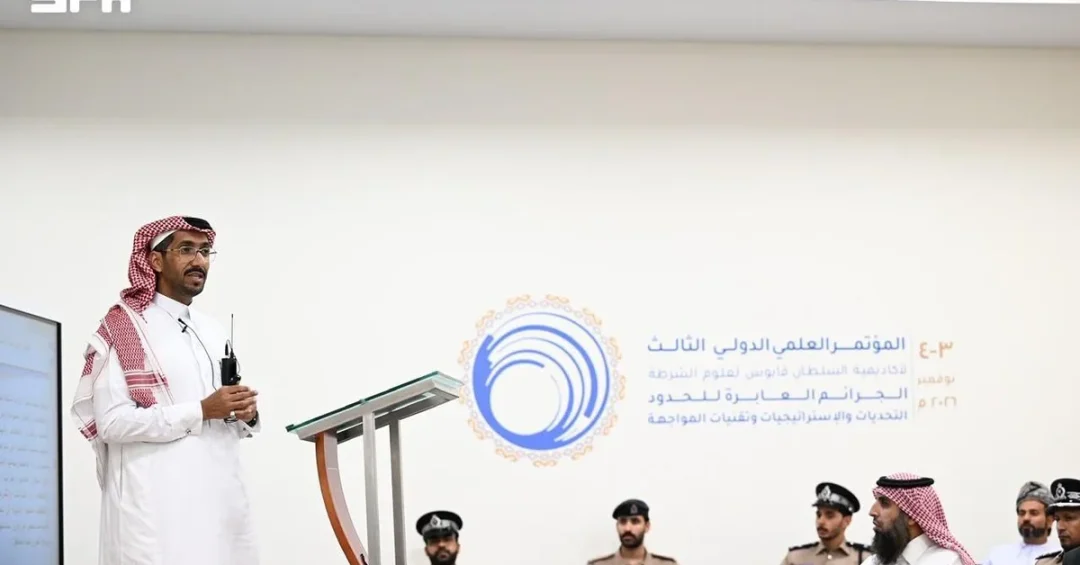
King Fahd Security College (KFSC) concluded its participation in the Third International Scientific Conference of the Sultan Qaboos Academy for Police Sciences, held in the Sultanate of Oman from November 3 to 4, 2026, according to the Saudi Press Agency (SPA). The conference, hosted in Oman, brought together security experts and academics from across the region to discuss transnational crimes and international security cooperation. During the event, Brig. Gen. Dr. Mifleh bin Hamed Al-Sulami presented a research paper highlighting Saudi Arabia’s security efforts and capabilities in addressing transnational crimes, key methods for combating them, and ways to strengthen international security cooperation. The participation underscores the Kingdom’s commitment to regional stability and global security partnerships. How does such collaboration shape the future of security in the region?
The Third International Scientific Conference of the Sultan Qaboos Academy for Police Sciences served as a vital platform for security professionals to exchange knowledge and best practices. Saudi Arabia’s active involvement reflects its ongoing dedication to combating crime and enhancing safety, both domestically and internationally. This engagement aligns with the Kingdom’s broader strategic objectives under Vision 2030, which emphasizes a secure environment as a foundation for economic growth and social development. By sharing expertise and learning from international counterparts, KFSC contributes to a collective effort to address evolving security challenges. What does this mean for the future of international security cooperation?
Context and Background
King Fahd Security College, a premier institution under the Ministry of Interior, has a long-standing history of providing advanced security education and training. Established in 1954, it has evolved into a center of excellence for security studies, preparing officers for leadership roles in safeguarding the Kingdom. The college’s participation in international conferences is part of its mission to foster global partnerships and stay abreast of emerging security threats. The Sultan Qaboos Academy for Police Sciences, based in Oman, is a respected regional institution dedicated to police training and research. Its international scientific conference, now in its third edition, focuses on critical issues facing law enforcement agencies worldwide. Why is it important for Saudi Arabia to engage in such multilateral security dialogues?
The conference, held from November 3 to 4, 2026, in Oman, gathered experts from various countries to deliberate on transnational crimes, which include terrorism, cybercrime, human trafficking, and organized crime. These crimes transcend borders and require coordinated responses. Saudi Arabia’s participation highlights its proactive approach to security, recognizing that no nation can tackle such challenges alone. The Kingdom has consistently advocated for enhanced cooperation among regional and international security bodies. This conference provided a timely opportunity to reinforce these ties and explore innovative strategies. How can regional cooperation evolve to counter increasingly sophisticated criminal networks?
Brig. Gen. Dr. Mifleh bin Hamed Al-Sulami, a distinguished officer and academic, represented KFSC at the conference. His research paper delved into Saudi Arabia’s security capabilities, including advanced technologies, intelligence-sharing mechanisms, and community engagement initiatives. He emphasized the importance of international collaboration in disrupting criminal activities and bringing perpetrators to justice. The paper also outlined best practices in combating transnational crimes, drawing from Saudi Arabia’s experiences and successes. Such presentations not only showcase the Kingdom’s expertise but also facilitate mutual learning among participating nations. What lessons can other countries draw from Saudi Arabia’s security strategies?
Key Details of the Participation
During the conference, Brig. Gen. Dr. Al-Sulami presented a comprehensive research paper titled “Security Efforts and Capabilities in Addressing Transnational Crimes.” The paper detailed Saudi Arabia’s multifaceted approach, which integrates law enforcement, intelligence, and international partnerships. It highlighted the role of KFSC in training security personnel to handle complex criminal cases and the use of cutting-edge technology in surveillance and data analysis. The presentation also addressed the legal frameworks and human rights considerations in combating crimes, reflecting the Kingdom’s commitment to justice and rule of law. How does Saudi Arabia balance security measures with civil liberties?
The research paper further discussed key methods for combating transnational crimes, such as enhancing border security, disrupting financial networks, and promoting cross-border information sharing. Brig. Gen. Dr. Al-Sulami underscored the need for continuous adaptation to emerging threats, including cyber-enabled crimes and the use of encrypted communication by criminal groups. He called for strengthened international security cooperation, proposing joint training exercises, shared databases, and standardized protocols. These recommendations align with global efforts to create a more secure and stable world. What role can academic institutions like KFSC play in shaping future security policies?
The conference also featured presentations from other participating countries, fostering a rich exchange of ideas. Saudi Arabia’s delegation engaged in bilateral meetings with counterparts from Oman and other nations, exploring avenues for deeper collaboration. These interactions are expected to lead to joint initiatives and agreements in the near future. The Kingdom’s active participation demonstrates its leadership in regional security affairs and its willingness to share knowledge for the common good. Why is it crucial for Saudi Arabia to take a leading role in such international forums?
International and Regional Impact
Saudi Arabia’s participation in the Oman conference has significant implications for regional security. The Middle East faces a range of transnational threats, from terrorism to cybercrime, which require coordinated responses. By sharing its expertise and learning from others, the Kingdom contributes to a collective security architecture that benefits all nations. This collaboration can lead to more effective intelligence sharing, joint operations, and capacity-building programs. Moreover, it strengthens diplomatic ties and fosters trust among neighboring countries. How can such cooperation reduce the risk of conflicts and enhance stability?
On the international stage, Saudi Arabia’s engagement reinforces its position as a responsible global actor committed to peace and security. The Kingdom has been a key partner in global counterterrorism efforts and has supported international initiatives to combat money laundering and human trafficking. Its participation in the Oman conference sends a clear message that Saudi Arabia is willing to work with all nations to address shared challenges. This aligns with the Kingdom’s Vision 2030 goal of enhancing its global standing and contributing to a safer world. What impact does this have on Saudi Arabia’s relations with Western and Asian powers?
Economic and Strategic Significance
Security is a cornerstone of economic development. A stable and secure environment attracts foreign investment, boosts tourism, and facilitates trade. Saudi Arabia’s efforts to combat transnational crimes directly support its economic diversification agenda under Vision 2030. By ensuring safety and order, the Kingdom creates conditions for businesses to thrive and for citizens to enjoy a high quality of life. The conference participation also opens doors for collaboration in security technology and services, potential areas for economic growth. How does security contribute to Saudi Arabia’s economic resilience?
Strategically, Saudi Arabia’s involvement in international security conferences enhances its soft power and influence. It positions the Kingdom as a thought leader and a reliable partner in addressing global challenges. This is particularly important as Saudi Arabia assumes greater roles in international organizations and hosts major events. The exchange of knowledge and best practices also helps the Kingdom refine its own security strategies, making them more effective and efficient. In the long run, such engagements contribute to a more secure and prosperous region. What strategic advantages does Saudi Arabia gain from these partnerships?
Vision 2030 Alignment
Saudi Arabia’s Vision 2030 is a comprehensive plan to transform the Kingdom into a diversified, innovative, and globally engaged nation. A key pillar of this vision is ensuring a secure and stable society, which is essential for achieving economic and social goals. KFSC’s participation in the Oman conference exemplifies this pillar by promoting international cooperation in security. It also supports the vision’s objective of enhancing government effectiveness and fostering international partnerships. By investing in security education and research, the Kingdom builds the human capital needed to address future challenges. How does this participation reflect the broader goals of Vision 2030?
Furthermore, Vision 2030 emphasizes the importance of a vibrant society and a thriving economy, both of which rely on safety and security. The Kingdom’s proactive stance in combating transnational crimes protects its citizens and residents, ensuring a conducive environment for growth. It also showcases Saudi Arabia’s commitment to global peace, which enhances its reputation and attracts international collaborators. As the Kingdom continues to modernize and open up, such engagements will be crucial in building trust and demonstrating its leadership. In conclusion, KFSC’s participation in the Third International Scientific Conference is a testament to Saudi Arabia’s unwavering dedication to security and its Vision 2030 aspirations. What future milestones can we expect from Saudi Arabia’s security diplomacy?
20 Questions
Q1. What was the purpose of King Fahd Security College’s participation in the conference?
A1. KFSC participated to share expertise on combating transnational crimes and to strengthen international security cooperation, aligning with Saudi Arabia’s commitment to global safety and Vision 2030 objectives.
Q2. Where and when was the Third International Scientific Conference held?
A2. The conference was held in the Sultanate of Oman from November 3 to 4, 2026, hosted by the Sultan Qaboos Academy for Police Sciences.
Q3. Who represented KFSC at the conference?
A3. Brig. Gen. Dr. Mifleh bin Hamed Al-Sulami represented KFSC and presented a research paper on security efforts and capabilities.
Q4. What topics did Brig. Gen. Dr. Al-Sulami’s research paper cover?
A4. The paper covered security efforts in addressing transnational crimes, methods for combating them, and ways to enhance international security cooperation.
Q5. What are transnational crimes, and why are they a focus?
A5. Transnational crimes include terrorism, cybercrime, human trafficking, and organized crime that cross borders. They require international cooperation to effectively combat and prevent.
Q6. How does Saudi Arabia benefit from participating in such conferences?
A6. Participation allows Saudi Arabia to share best practices, learn from others, strengthen partnerships, and enhance its global standing in security affairs.
Q7. What is the significance of the Sultan Qaboos Academy for Police Sciences?
A7. It is a leading Omani institution for police training and research, hosting international conferences to foster collaboration among security experts.
Q8. How does this participation align with Saudi Vision 2030?
A8. It supports Vision 2030’s goal of a secure society, enhances international partnerships, and contributes to economic stability by combating crime.
Q9. What methods did the research paper propose for combating transnational crimes?
A9. The paper proposed enhancing border security, disrupting financial networks, promoting information sharing, and adapting to emerging threats like cybercrime.
Q10. What role does King Fahd Security College play in Saudi Arabia?
A10. KFSC is a premier institution under the Ministry of Interior, providing advanced security education and training to prepare officers for leadership roles.
Q11. How does international cooperation help in fighting transnational crimes?
A11. Cooperation enables intelligence sharing, joint operations, and capacity building, making it harder for criminal networks to operate across borders.
Q12. What were the key outcomes of the conference?
A12. The conference facilitated knowledge exchange, bilateral meetings, and potential joint initiatives among participating nations to enhance security cooperation.
Q13. How does Saudi Arabia’s security strategy balance technology and human rights?
A13. Saudi Arabia integrates advanced technology with legal frameworks and human rights considerations, ensuring justice and rule of law in combating crimes.
Q14. What is the economic impact of security on Saudi Arabia?
A14. Security attracts investment, boosts tourism, and facilitates trade, supporting economic diversification and growth under Vision 2030.
Q15. How does this conference enhance Saudi Arabia’s soft power?
A15. It positions the Kingdom as a thought leader and reliable partner in global security, enhancing its reputation and influence on the international stage.
Q16. What future collaborations might arise from this participation?
A16. Potential collaborations include joint training exercises, shared databases, and standardized protocols for combating transnational crimes.
Q17. How does KFSC contribute to Saudi Arabia’s human capital development?
A17. KFSC trains security personnel, equipping them with skills and knowledge to address complex threats, thus building a capable workforce for the Kingdom.
Q18. Why is regional stability important for Saudi Arabia’s prosperity?
A18. Regional stability ensures a safe environment for economic activities, trade, and investment, which are essential for Saudi Arabia’s growth and Vision 2030.
Q19. What message does Saudi Arabia’s participation send to the international community?
A19. It demonstrates Saudi Arabia’s commitment to global security, its willingness to cooperate, and its proactive approach to addressing shared challenges.
Q20. How can other countries learn from Saudi Arabia’s security strategies?
A20. Other countries can adopt Saudi Arabia’s integrated approach, including technology use, community engagement, and international partnerships, to enhance their own security measures.
Reader Feedback
We value your thoughts. Please share your feedback on this article.
Your feedback helps us improve our coverage.
Related articles
 Al-Ahsa College Marks World Quality Week 2026
 Riyadh Metro Among World’s Top Four Transport Projects
 Hail Municipality Launches 12 Projects Worth SAR52M in Sumaira
 SASO Expands Proficiency Testing to 65 Programs
 Grand Mosque Sermon Urges Sincerity and Patience
 Saudi Red Crescent in Al-Baha Enhances Readiness for Rainy Weather with 20 Ambulance and Rapid Response Teams