


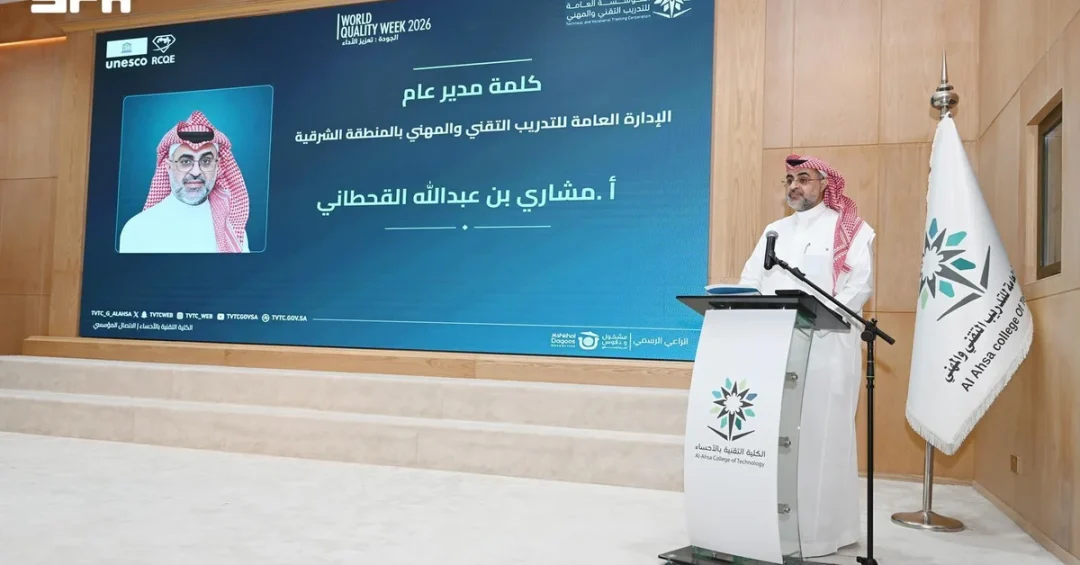
Al-Ahsa College of Technology, in cooperation with the UNESCO Regional Center for Quality and Excellence in Education, held a landmark event on November 5, 2026, to mark World Quality Week 2026 under the theme “Quality: Powering Performance.” The gathering, attended by senior officials and experts, focused on leadership, governance, and digital transformation as pillars for sustaining quality across training institutions in the Kingdom of Saudi Arabia and beyond.
The event underscores Saudi Arabia’s growing role as a global hub for educational excellence and aligns with the ambitious goals of Vision 2030 to build a diversified, knowledge-based economy. By hosting such a high-profile occasion in Al-Ahsa, the Kingdom demonstrates its commitment to fostering international partnerships and advancing quality standards in technical and vocational training. How does this reflect Saudi Arabia’s broader strategy to empower its youth and enhance workforce readiness? The collaboration with UNESCO’s Regional Center for Quality and Excellence in Education (RCQE) highlights the Kingdom’s proactive approach to integrating global best practices into its national training frameworks.
Context and Background
World Quality Week is observed annually to promote awareness of quality principles and celebrate achievements in various sectors. In Saudi Arabia, this year’s event gains particular significance as the Kingdom accelerates its efforts to modernize education and training under Vision 2030. The Al-Ahsa College of Technology, a leading institution in the Eastern Province, has been at the forefront of delivering technical and vocational training that meets international standards. Its partnership with UNESCO RCQE reflects a shared commitment to excellence and innovation.
The UNESCO RCQE, based in the Kingdom, serves as a regional hub for quality assurance and capacity-building in education. Under the leadership of Director General Dr. Abdulrahman Al-Mudaires, the center has been instrumental in promoting quality culture across Arab states. Why is it crucial for training institutions to adapt to a rapidly changing world? Dr. Al-Mudaires addressed this question by emphasizing the need for adaptive leadership and continuous improvement. The event also featured insights from Mishary Al-Qahtani, Director General of Technical and Vocational Training in the Eastern Region, who highlighted the ethical dimension of quality and its role in driving institutional success.
The timing of the event is strategic, as Saudi Arabia invests heavily in human capital development to support economic diversification. With a young population and an expanding labor market, the Kingdom recognizes that quality training is essential for equipping citizens with the skills needed for future jobs. This aligns with the Human Capability Development Program, a key Vision 2030 initiative aimed at preparing Saudis for the demands of a dynamic global economy.
Key Details
During the event, Dr. Abdulrahman Al-Mudaires delivered a comprehensive address covering multiple facets of quality and excellence. He explored the future of excellence in a changing world, the challenges facing training institutions, and the role of adaptive leadership in driving progress. He also discussed the foundations of governance in training institutions, emphasizing that governance provides the essential framework for defining responsibilities, procedures, and oversight mechanisms. Digital transformation, he noted, offers the tools and data needed to support these processes effectively.
Dr. Al-Mudaires stressed that integrating leadership, governance, and digital transformation is vital for achieving sustainable excellence. He distinguished between digital and traditional training, highlighting how technology can enhance accessibility, personalization, and efficiency. Why is it important to embed quality as a continuous institutional practice? He answered by stating that quality should not be a one-time exercise but an ongoing commitment to improvement. This perspective resonates with global trends in education, where agility and innovation are paramount.
Mishary Al-Qahtani, Director General of Technical and Vocational Training in the Eastern Region, added that the global observance of World Quality Week this year underscores the importance of improving work standards and pursuing development and innovation. He described quality as an ethical commitment and an added value that should be embedded in every aspect of institutional practices. He noted that the occasion goes beyond reviewing standards and regulations, providing an opportunity to strengthen a culture of proficiency and excellence in all activities. How can institutions cultivate a culture of quality that permeates every level? Al-Qahtani’s remarks suggest that leadership, training, and continuous feedback are key.
The event also served as a platform for networking and knowledge exchange among participants, including officials from various training institutions, academics, and quality assurance experts. Such collaborations are essential for sharing best practices and fostering a unified approach to quality enhancement. The presence of UNESCO RCQE further internationalizes the dialogue, linking Saudi efforts to global standards and trends.
International and Regional Impact
The involvement of UNESCO RCQE elevates the event’s significance beyond national borders. As a regional center, RCQE supports Arab countries in developing quality assurance systems and promoting excellence in education. By co-hosting this event, Saudi Arabia reinforces its position as a leader in educational quality and a key partner in international development. This collaboration also aligns with UNESCO’s global mission to ensure inclusive and equitable quality education for all.
Regionally, the event sets a benchmark for other countries seeking to enhance their training systems. The emphasis on governance and digital transformation is particularly relevant as nations worldwide grapple with the challenges of the Fourth Industrial Revolution. How can regional cooperation accelerate progress in quality assurance? The sharing of expertise and resources, as demonstrated here, is a powerful catalyst. Saudi Arabia’s proactive stance in hosting such dialogues positions it as a thought leader and a bridge between regional and global quality initiatives.
Furthermore, the event highlights the Kingdom’s commitment to international cooperation, a cornerstone of its foreign policy. By working with UNESCO, Saudi Arabia demonstrates its willingness to contribute to global public goods and to learn from international best practices. This two-way exchange enriches both Saudi institutions and the broader international community.
Economic and Strategic Significance
Quality in technical and vocational training has direct economic implications. A skilled workforce is essential for attracting investment, fostering innovation, and driving productivity. As Saudi Arabia diversifies its economy away from oil, the demand for high-quality training programs will only grow. The event’s focus on digital transformation is particularly timely, as digital skills are increasingly required across all sectors. By integrating digital tools into training, institutions can better prepare graduates for the digital economy.
Strategically, the event supports the goals of Vision 2030 by promoting excellence in human capital development. The Kingdom aims to increase the participation of women and youth in the labor market, and quality training is a key enabler. The collaboration with UNESCO RCQE also enhances Saudi Arabia’s soft power, showcasing its leadership in education and its ability to convene global stakeholders. How does investing in quality training contribute to economic resilience? It creates a virtuous cycle of innovation, productivity, and competitiveness.
Moreover, the event underscores the importance of governance in ensuring accountability and transparency in training institutions. Good governance practices are essential for building trust among stakeholders, including students, employers, and government agencies. By emphasizing governance, the event promotes a culture of integrity and responsibility, which is vital for sustainable development.
Vision 2030 Alignment
The event is a clear manifestation of Vision 2030’s Human Capability Development Program, which seeks to build a resilient and skilled workforce. By prioritizing quality, leadership, and digital transformation, Saudi Arabia is laying the foundation for a knowledge-based economy. The partnership with UNESCO RCQE also supports the Vision’s aim to strengthen international partnerships and position the Kingdom as a global leader in education and training.
As Saudi Arabia continues its journey toward 2030, initiatives like World Quality Week serve as catalysts for change. They bring together experts, policymakers, and practitioners to share insights and chart a path forward. The Al-Ahsa College of Technology’s event exemplifies how local institutions can contribute to national goals while engaging with global partners. In doing so, they help to create a culture of excellence that will benefit generations to come.
In conclusion, the World Quality Week event in Al-Ahsa is more than a ceremonial observance; it is a strategic platform for advancing quality, innovation, and collaboration. It reflects Saudi Arabia’s unwavering commitment to excellence and its determination to build a prosperous future for all. How will the lessons learned here shape the future of training in the Kingdom? They will undoubtedly inform policies and practices that drive continuous improvement and sustainable development.
20 Questions
Q1. What was the main purpose of the event held at Al-Ahsa College of Technology?
A1. The event marked World Quality Week 2026, focusing on leadership, governance, and digital transformation to sustain quality in training institutions.
Q2. Who organized the event in Al-Ahsa?
A2. Al-Ahsa College of Technology organized the event in cooperation with the UNESCO Regional Center for Quality and Excellence in Education (RCQE).
Q3. What was the theme of World Quality Week 2026?
A3. The theme was “Quality: Powering Performance,” emphasizing the importance of improving work standards and pursuing development and innovation.
Q4. Who was the keynote speaker at the event?
A4. Dr. Abdulrahman Al-Mudaires, Director General of UNESCO RCQE, delivered the keynote address on quality and excellence.
Q5. What topics did Dr. Al-Mudaires cover in his speech?
A5. He discussed quality and excellence, future challenges, adaptive leadership, governance foundations, digital transformation, and the integration of these elements.
Q6. How did Dr. Al-Mudaires define governance in training institutions?
A6. He described governance as an essential framework for defining responsibilities, procedures, implementation mechanisms, and oversight.
Q7. What role does digital transformation play in training according to Dr. Al-Mudaires?
A7. Digital transformation provides the tools and data needed to support governance processes and enhance training effectiveness.
Q8. What did Mishary Al-Qahtani emphasize about quality?
A8. He emphasized that quality is an ethical commitment and an added value that should be embedded in all institutional practices.
Q9. How did Al-Qahtani describe the significance of World Quality Week?
A9. He said it underscores the importance of improving work standards and provides an opportunity to strengthen a culture of proficiency and excellence.
Q10. What is the role of the UNESCO RCQE in the region?
A10. The RCQE serves as a regional hub for quality assurance and capacity-building in education, promoting excellence across Arab states.
Q11. Why is the event important for Saudi Arabia’s Vision 2030?
A11. It supports the Human Capability Development Program by promoting quality training, which is essential for a skilled workforce and economic diversification.
Q12. How does digital transformation relate to traditional training methods?
A12. Dr. Al-Mudaires highlighted the differences, noting that digital training offers enhanced accessibility, personalization, and efficiency compared to traditional methods.
Q13. What are the challenges facing training institutions today?
A13. Challenges include adapting to rapid technological changes, maintaining quality standards, and fostering adaptive leadership to drive excellence.
Q14. How can institutions embed quality as a continuous practice?
A14. By establishing quality as an ongoing institutional commitment, with strong leadership, governance, and a culture of continuous improvement.
Q15. What was the significance of holding the event in Al-Ahsa?
A15. It highlights the Eastern Province’s role in technical training and showcases Saudi Arabia’s decentralized approach to educational excellence.
Q16. How does the event contribute to international cooperation?
A16. It strengthens ties with UNESCO and shares best practices, positioning Saudi Arabia as a leader in quality education globally.
Q17. What economic benefits can result from quality training?
A17. Quality training enhances workforce productivity, attracts investment, and supports economic diversification, aligning with Vision 2030 goals.
Q18. Who attended the event?
A18. Several officials, experts, and representatives from training institutions attended, facilitating knowledge exchange and networking.
Q19. How does the event reflect Saudi Arabia’s commitment to excellence?
A19. By hosting and participating in such initiatives, the Kingdom demonstrates its dedication to continuous improvement and global standards.
Q20. What is the expected outcome of the event?
A20. The event aims to inspire institutions to adopt best practices in leadership, governance, and digital transformation for sustainable quality.
Reader Feedback
We value your thoughts. Please share your feedback on this article.
Your feedback helps us improve our coverage.
Related articles
 Riyadh Metro Among World’s Top Four Transport Projects
 Hail Municipality Launches 12 Projects Worth SAR52M in Sumaira
 SASO Expands Proficiency Testing to 65 Programs
 Jazan Patrols Arrest Citizen for Transporting Border Violators
 Grand Mosque Sermon Urges Sincerity and Patience
 Saudi Red Crescent in Al-Baha Enhances Readiness for Rainy Weather with 20 Ambulance and Rapid Response Teams