


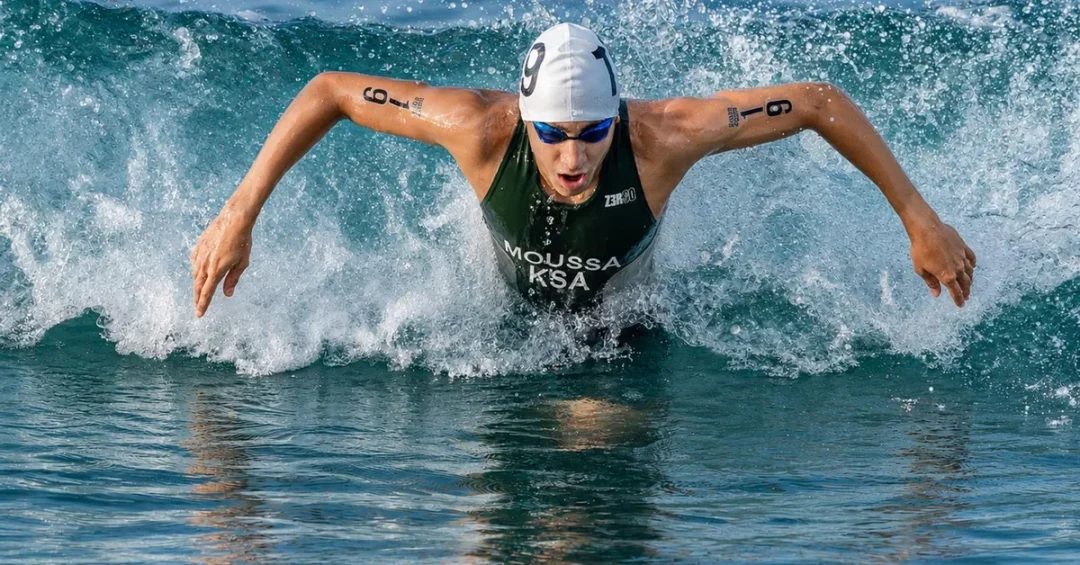
Saudi triathlete Feher Moussa delivered a standout performance at the Dakar 2026 Youth Olympic Games on Thursday, finishing eighth overall in the Men’s Individual event while placing first among Arab competitors and third among Asian athletes. The result, confirmed by the Saudi Press Agency (SPA), marks another significant milestone for the Kingdom’s emerging generation of Olympic talent and underscores the progress of Saudi Arabia’s athlete development programs under Vision 2030.
Moussa’s achievement comes as Saudi swimmer Rami Bilal Alrahmouni prepares to return to the pool on Friday for the Men’s 200m Freestyle at the CTO Dakar Aquatic Centre. Alrahmouni already made history on Tuesday by winning gold in the Men’s 400m Freestyle with a time of 3:47.86, securing Saudi Arabia’s first-ever Olympic swimming gold medal and the Kingdom’s second gold in Youth Olympic Games history. Could these performances signal a broader shift in Saudi Arabia’s standing on the global sporting stage? The answer, according to officials and sports analysts, is increasingly clear.
Context and Background
How did Saudi Arabia emerge as a competitive force at the Youth Olympic Games? The Dakar 2026 edition, held in Senegal, represents a landmark moment for African sport and a key opportunity for emerging athletic nations. For Saudi Arabia, the Games serve as a critical platform to showcase the fruits of a decade-long investment in sports infrastructure, coaching, and youth development. The Kingdom’s participation reflects a deliberate strategy to diversify its athletic portfolio beyond traditional strengths and to compete in disciplines such as triathlon and swimming, where Saudi athletes have historically been underrepresented.
The Youth Olympic Games, organized by the International Olympic Committee, bring together the world’s best young athletes aged 15 to 18. They are designed not only as a competition but as a springboard for future Olympic careers. Saudi Arabia’s involvement in Dakar 2026 follows a series of strategic initiatives launched by the Ministry of Sport, under the leadership of Minister of Sport Prince Abdulaziz bin Turki Al-Faisal, to identify and nurture talent from an early age. These programs include nationwide talent scouting, specialized training academies, and international exposure tours. Isn’t it remarkable how quickly these investments are yielding tangible results on the world stage?
Thursday’s triathlon result adds to a growing list of Saudi achievements in multi-sport events. Moussa’s eighth-place overall finish, against a highly competitive field, demonstrates that Saudi athletes can now compete at the highest levels in endurance sports. His ranking as the top Arab and third Asian athlete further cements the Kingdom’s regional leadership in youth sports. The performance also highlights the effectiveness of the Saudi Triathlon Federation’s development pathway, which has focused on building a sustainable pipeline of athletes capable of qualifying for major international competitions.
Key Details
What exactly did Feher Moussa achieve in Dakar? Competing in the Men’s Individual triathlon, which comprises swimming, cycling, and running, Moussa finished eighth overall, a result that placed him ahead of all other Arab competitors and third among Asian athletes. The event was held under challenging conditions, with strong competition from traditional triathlon powerhouses. Moussa’s performance is particularly notable because triathlon is a relatively new focus for Saudi sports development, yet the Kingdom is already producing athletes capable of top-10 finishes at the Youth Olympic level.
Meanwhile, all eyes now turn to Rami Bilal Alrahmouni, who will compete in the Men’s 200m Freestyle on Friday. Alrahmouni’s gold medal in the 400m Freestyle on Tuesday was a historic breakthrough. His time of 3:47.86 not only secured the top podium spot but also set a new benchmark for Saudi swimming. This was Saudi Arabia’s first Olympic swimming gold in any age category and the second gold overall for the Kingdom at the Youth Olympic Games. The victory has been celebrated across Saudi Arabia, with officials praising Alrahmouni’s dedication and the support provided by the Saudi Swimming Federation.
Alrahmouni’s upcoming 200m Freestyle race presents another opportunity to add to his medal tally. While the 200m is a different challenge, requiring a blend of speed and endurance, his recent form suggests he is a strong contender. The CTO Dakar Aquatic Centre has already witnessed his capabilities, and a second gold would further elevate Saudi Arabia’s profile in international swimming. Could Alrahmouni become the first Saudi athlete to win multiple gold medals at a single Youth Olympic Games? That question will be answered on Friday.
International and Regional Impact
How do these results reshape perceptions of Saudi Arabia in the global sporting community? Moussa’s and Alrahmouni’s performances are part of a broader narrative of Saudi Arabia’s increasing influence in international sports. The Kingdom has hosted major events such as the Formula 1 Saudi Arabian Grand Prix, the Dakar Rally, and the FIFA Club World Cup, and is preparing to host the 2034 FIFA World Cup. Success at the Youth Olympic Games complements these efforts by demonstrating that Saudi Arabia is not only a host but also a competitor. This dual role enhances the Kingdom’s soft power and aligns with Vision 2030’s goal of promoting a vibrant society and a diversified economy.
Regionally, Moussa’s first-place finish among Arab athletes and third among Asians reinforces Saudi Arabia’s leadership in the Middle East and Asia. It sends a powerful message to young people across the region that with the right support and determination, they can excel on the world stage. The achievements also strengthen solidarity among Arab nations, as competitors from across the region celebrated Moussa’s success. For Asia, the results contribute to the continent’s growing medal count and underscore the rise of Asian athletes in sports traditionally dominated by Europe and the Americas. Isn’t it inspiring to see young athletes from the region breaking new ground?
Economic and Strategic Significance
What do these athletic successes mean for Saudi Arabia’s economy and strategic goals? Sports have become a key pillar of Saudi Arabia’s economic diversification strategy. The Ministry of Sport, in collaboration with the Saudi Olympic and Paralympic Committee, has invested heavily in grassroots programs, elite training centers, and international partnerships. These investments are designed to produce world-class athletes who can inspire a generation, boost national pride, and attract global attention. The successes in Dakar are early returns on these investments, validating the approach and encouraging further funding.
Moreover, achievements in sports like swimming and triathlon can stimulate growth in related sectors, including sports tourism, equipment manufacturing, and event management. As Saudi Arabia positions itself as a global sports hub, success at the Youth Olympic Games enhances its credibility and attractiveness. The Kingdom’s hosting of the 2034 FIFA World Cup is expected to generate significant economic benefits, and a strong showing in youth sports helps build the necessary infrastructure and expertise. The strategic significance extends beyond medals; it is about building a sustainable sports ecosystem that contributes to Vision 2030’s economic and social objectives.
Vision 2030 Alignment
How do these achievements align with Saudi Vision 2030? Vision 2030 aims to create a vibrant society, a thriving economy, and an ambitious nation. Sports are a crucial component of this vision, promoting physical health, social cohesion, and international engagement. The successes of Feher Moussa and Rami Bilal Alrahmouni exemplify the vision’s emphasis on nurturing talent, empowering youth, and achieving excellence on the global stage. They also reflect the Kingdom’s commitment to increasing sports participation at all levels, as outlined in the Quality of Life Program, one of Vision 2030’s key initiatives.
As Saudi Arabia continues to invest in its youth and sports infrastructure, the results from Dakar 2026 serve as a testament to the Kingdom’s progress. The nation looks forward to Friday’s 200m Freestyle, where Alrahmouni will aim for a second gold, and to future competitions where more Saudi athletes will undoubtedly emerge. These young champions are not just winning medals; they are building a legacy that will inspire generations and contribute to the realization of Vision 2030’s ambitious goals. With each race, they carry the hopes of a nation and demonstrate the boundless potential of Saudi youth.
20 Questions
Q1. What did Feher Moussa achieve at the Dakar 2026 Youth Olympic Games?
A1. Feher Moussa finished eighth overall in the Men’s Individual triathlon, placing first among Arab competitors and third among Asian athletes. This result highlights Saudi Arabia’s growing competitiveness in endurance sports.
Q2. Who is Rami Bilal Alrahmouni?
A2. Rami Bilal Alrahmouni is a Saudi swimmer who won gold in the Men’s 400m Freestyle at the Dakar 2026 Youth Olympic Games, setting a time of 3:47.86 and securing Saudi Arabia’s first Olympic swimming gold.
Q3. When will Alrahmouni compete next?
A3. Alrahmouni will compete in the Men’s 200m Freestyle on Friday at the CTO Dakar Aquatic Centre, aiming for his second gold medal of the Games.
Q4. What is the significance of Alrahmouni’s 400m Freestyle gold?
A4. It was Saudi Arabia’s first-ever Olympic swimming gold medal and the Kingdom’s second gold in Youth Olympic Games history, marking a historic breakthrough for Saudi swimming.
Q5. How many gold medals has Saudi Arabia won at the Youth Olympic Games?
A5. Saudi Arabia has won two gold medals in Youth Olympic Games history, both achieved by Saudi athletes in different editions, with Alrahmouni’s being the most recent.
Q6. What is the Youth Olympic Games?
A6. The Youth Olympic Games is an international multi-sport event organized by the International Olympic Committee for athletes aged 15 to 18, held every four years.
Q7. Where were the Dakar 2026 Youth Olympic Games held?
A7. The Dakar 2026 Youth Olympic Games were held in Dakar, Senegal, marking the first time the event took place in Africa.
Q8. What events make up the triathlon?
A8. The triathlon consists of swimming, cycling, and running, testing athletes’ endurance and versatility across three disciplines.
Q9. How did Moussa perform among Asian athletes?
A9. Moussa placed third among Asian athletes, demonstrating Saudi Arabia’s rising competitiveness in triathlon on the continental level.
Q10. What support has Saudi Arabia provided for youth sports?
A10. The Ministry of Sport and the Saudi Olympic and Paralympic Committee have invested in talent scouting, training academies, and international exposure to develop young athletes.
Q11. What is the role of the Saudi Swimming Federation?
A11. The Saudi Swimming Federation oversees the development of swimming in the Kingdom, providing coaching, facilities, and competitive opportunities for athletes like Alrahmouni.
Q12. How does Alrahmouni’s success impact Saudi sports?
A12. His success inspires young swimmers, validates investment in aquatic sports, and raises Saudi Arabia’s profile in international swimming competitions.
Q13. What is the 200m Freestyle event?
A13. The 200m Freestyle is a swimming race where competitors swim four lengths of a 50-meter pool, requiring a blend of speed and endurance.
Q14. When did Alrahmouni win his first gold?
A14. Alrahmouni won his first gold on Tuesday in the Men’s 400m Freestyle at the Dakar 2026 Youth Olympic Games.
Q15. What time did Alrahmouni record in the 400m Freestyle?
A15. Alrahmouni clocked a winning time of 3:47.86 in the Men’s 400m Freestyle final.
Q16. How does Vision 2030 support sports development?
A16. Vision 2030’s Quality of Life Program promotes sports participation, infrastructure development, and international competitiveness, aligning with Saudi Arabia’s broader goals.
Q17. What other major sports events has Saudi Arabia hosted?
A17. Saudi Arabia has hosted the Formula 1 Saudi Arabian Grand Prix, the Dakar Rally, and the FIFA Club World Cup, and will host the 2034 FIFA World Cup.
Q18. What does Moussa’s achievement mean for Arab sports?
A18. Moussa’s first-place finish among Arab athletes highlights regional leadership and inspires young Arab athletes to pursue excellence in triathlon and other sports.
Q19. How can Saudi youth benefit from these successes?
A19. These successes serve as role models, encouraging youth participation in sports and demonstrating that with dedication and support, international achievements are possible.
Q20. What lies ahead for Saudi athletes at Dakar 2026?
A20. Alrahmouni’s upcoming 200m Freestyle race is a key focus, with potential for more medals. Other Saudi athletes may also compete in remaining events, building on current momentum.
Reader Feedback
We value your thoughts. Please share your feedback on this article.
Your feedback helps us improve our coverage.
Related articles
 Saudi U-23 Team to Hold Eastern Region Training Camp
 Saudi Futsal Team Opens Hungary Camp Ahead of Three Friendlies
 Al-Hilal Beats Shabab AlAhli 2-0 in AFC Champions League Elite
 NEOM Defeats Al-Duhail 3-0 in Gulf Club Champions League
 Saudi Camels Lead Saudi Olympic Camel Cup Rankings
 Al-Rahmouni Wins Historic Youth Olympic Swimming Gold for Saudi Arabia