


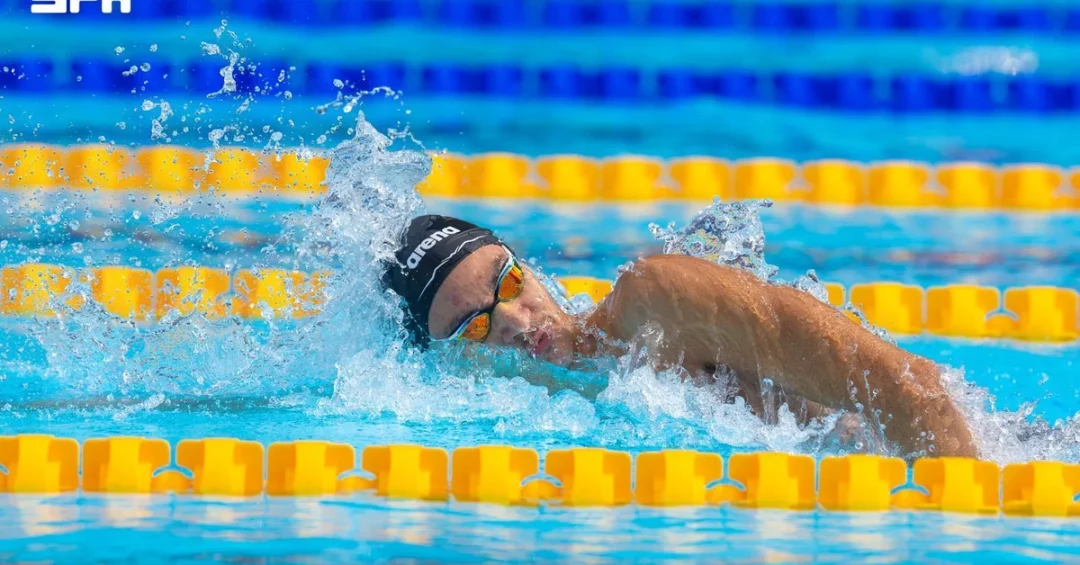
Saudi national swimming team athlete Rami Bilal Al-Rahmouni won the gold medal in the men’s 400-meter freestyle at the fourth Youth Olympic Games, Dakar 2026, on Tuesday, November 3, 2026, according to the Saudi Press Agency (SPA). The 17-year-old swimmer clocked a time of 3 minutes and 47.86 seconds, finishing ahead of Russia’s Bogdan Toropkin, who took silver in 3 minutes and 50.44 seconds, and Mexico’s Daniel Saborio Grillo, who claimed bronze in 3 minutes and 53.72 seconds. The event took place in the Senegalese capital, Dakar, where the Youth Olympic Games are being held until November 13. Vice President of the Saudi Olympic and Paralympic Committee, Prince Fahd bin Jalawi bin Abdulaziz bin Musaed, attended the event, underscoring the Kingdom’s commitment to supporting its young athletes on the international stage. This historic achievement marks the first gold medal for Saudi swimming at any Olympic Games, a milestone that resonates far beyond the pool.
Al-Rahmouni’s victory is not only a personal triumph but also a significant moment for Saudi Arabia’s sporting ambitions. It represents the second gold medal won by a Saudi delegation at the Youth Olympic Games, following the karate gold medal at the Buenos Aires 2018 edition. The young swimmer is scheduled to compete in the men’s 200-meter freestyle event this Friday, offering another opportunity to add to his medal tally. The achievement has been met with widespread praise across the Kingdom, with officials highlighting it as a testament to the growing investment in youth sports and the broader goals of Saudi Vision 2030 to foster a vibrant society and a diversified economy.
Context and Background
How did Saudi Arabia reach this historic milestone in swimming, a sport where it had not previously excelled on the Olympic stage? The journey began with sustained investments in sports infrastructure, coaching, and talent identification programs driven by the Ministry of Sport and the Saudi Olympic and Paralympic Committee. Over the past decade, the Kingdom has established specialized training centers, recruited international coaches, and provided young athletes with greater access to competitive opportunities abroad. Al-Rahmouni’s gold medal is the culmination of these efforts, reflecting a systematic approach to developing Olympic-caliber talent.
The Youth Olympic Games, held every four years, serve as a launching pad for young athletes aged 14 to 18. Dakar 2026 is the fourth edition, following Singapore 2010, Nanjing 2014, and Buenos Aires 2018. Saudi Arabia has participated in all editions, but its medal haul had been limited until now. The karate gold in 2018 was a breakthrough, and Al-Rahmouni’s swimming gold builds on that momentum. The event in Dakar has brought together thousands of athletes from around the world, and Saudi Arabia’s participation aligns with its broader strategy to engage internationally through sports, as outlined in Vision 2030’s Quality of Life Program.
Swimming has historically been a challenging sport for Saudi athletes due to limited access to Olympic-sized pools and specialized training. However, recent initiatives have changed the landscape. The Saudi Swimming Federation, under the Ministry of Sport, has implemented grassroots programs in schools and clubs, leading to a surge in participation. Al-Rahmouni, who trained at a Riyadh-based academy, exemplifies the new generation of Saudi swimmers benefiting from these investments. His victory is expected to inspire more young Saudis to take up the sport.
Key Details
What exactly did Al-Rahmouni achieve in Dakar, and how does his performance compare to global standards? His time of 3:47.86 in the 400-meter freestyle is a personal best and a new Saudi national record. For context, the world record for the men’s 400-meter freestyle long course is 3:40.07, set by Paul Biedermann of Germany in 2009. While Al-Rahmouni’s time is not yet at that level, it is highly competitive for his age group and signals his potential to challenge for senior Olympic medals in the future. His margin of victory over Toropkin was 2.58 seconds, a comfortable lead that demonstrates his dominance in the race.
The race itself was a showcase of tactical maturity. Al-Rahmouni started strong, maintaining a steady pace through the first 200 meters before accelerating in the third 100 meters to pull away from the pack. His final 100 meters were swum in under 55 seconds, a split that would be respectable at senior international competitions. The silver medalist, Bogdan Toropkin, is a known talent from Russia, while Daniel Saborio Grillo of Mexico has also been a consistent performer. The presence of Prince Fahd bin Jalawi bin Abdulaziz bin Musaed, Vice President of the Saudi Olympic and Paralympic Committee, added prestige to the occasion and highlighted the Kingdom’s hands-on support for its athletes.
Al-Rahmouni’s achievement is the first gold for Saudi swimming at any Olympic Games, including senior and youth editions. It is also the second gold for Saudi Arabia at the Youth Olympic Games, following the karate gold won by Saud Al-Bishi in Buenos Aires 2018. This places Al-Rahmouni in an elite group of Saudi athletes who have topped the podium at global multi-sport events. His upcoming 200-meter freestyle event on Friday will be another chance to shine, and he is considered a strong contender based on his current form.
International and Regional Impact
How does this victory resonate beyond Saudi Arabia’s borders, particularly in the Middle East and the wider swimming community? Al-Rahmouni’s gold medal is a significant boost for Arab sporting excellence. In a region where swimming is often overshadowed by football and athletics, his success could inspire a new wave of interest in aquatic sports. Neighboring Gulf countries, many of which have similar youth development programs, may look to Saudi Arabia’s model as a blueprint. The achievement also enhances Saudi Arabia’s reputation as a rising force in global sports, complementing its hosting of major events like the 2034 FIFA World Cup and the 2029 Asian Winter Games.
On the international stage, the Youth Olympic Games are designed to promote cultural exchange and Olympic values among young athletes. Al-Rahmouni’s victory was celebrated by the International Olympic Committee (IOC) and the Senegalese organizing committee, who praised the high level of competition. For Saudi Arabia, this win strengthens its diplomatic soft power, showcasing the Kingdom’s commitment to youth empowerment and international cooperation. It also aligns with the Saudi Olympic and Paralympic Committee’s strategic goal of increasing medal counts at future Olympic Games, including the 2028 Los Angeles Olympics and beyond.
Economic and Strategic Significance
What does this mean for Saudi Arabia’s sports economy and its strategic vision? The Kingdom has been investing heavily in sports as part of Vision 2030, aiming to increase the sports sector’s contribution to GDP and promote a healthier, more active society. Al-Rahmouni’s gold medal serves as a powerful return on that investment, demonstrating that Saudi athletes can compete at the highest levels. It is expected to boost grassroots participation in swimming, leading to increased demand for facilities, coaching, and sports merchandise. The Ministry of Sport has already announced plans to expand swimming programs in schools and communities, capitalizing on this success.
Furthermore, the victory enhances Saudi Arabia’s attractiveness as a destination for international sports events and training camps. With world-class facilities being developed across the Kingdom, including in NEOM and Riyadh, Saudi Arabia is positioning itself as a hub for aquatic sports in the region. The economic ripple effects include potential sponsorship deals, media rights, and tourism related to sports. The Saudi Olympic and Paralympic Committee has emphasized that such achievements are integral to building a sustainable sports ecosystem that contributes to economic diversification.
Vision 2030 Alignment
How does Al-Rahmouni’s triumph reflect the core objectives of Saudi Vision 2030? The Vision’s Quality of Life Program aims to increase sports participation and achieve international sporting success. This gold medal is a direct outcome of that focus, highlighting the Kingdom’s progress in nurturing talent and promoting an active lifestyle. It also supports the Human Capability Development Program by empowering youth to excel on global platforms. Al-Rahmouni’s achievement is a testament to the visionary leadership of His Royal Highness Crown Prince Mohammed bin Salman, whose support for sports has been unwavering.
Looking ahead, this victory is expected to catalyze further investment in sports infrastructure and youth development. The Saudi Swimming Federation has set ambitious targets for future Olympic Games, and Al-Rahmouni’s success provides a blueprint for other athletes. As Saudi Arabia continues its journey toward a diversified, knowledge-based economy, achievements in sports like this will play a vital role in inspiring the next generation and showcasing the Kingdom’s boundless potential on the world stage. The gold medal in Dakar is not just a win for Al-Rahmouni; it is a win for all of Saudi Arabia.
20 Questions
Q1. Who won Saudi Arabia’s first Youth Olympic swimming gold?
A1. Rami Bilal Al-Rahmouni won the gold medal in the men’s 400-meter freestyle at the Dakar 2026 Youth Olympic Games, marking Saudi Arabia’s first swimming gold at any Olympic event.
Q2. What was Al-Rahmouni’s winning time?
A2. He clocked 3 minutes and 47.86 seconds, finishing ahead of Russia’s Bogdan Toropkin and Mexico’s Daniel Saborio Grillo in the final.
Q3. Where and when did this achievement take place?
A3. The event took place in Dakar, Senegal, on November 3, 2026, during the fourth Youth Olympic Games, which run until November 13.
Q4. Who attended the event on behalf of Saudi Arabia?
A4. Prince Fahd bin Jalawi bin Abdulaziz bin Musaed, Vice President of the Saudi Olympic and Paralympic Committee, attended the event to support the national team.
Q5. How many gold medals has Saudi Arabia won at the Youth Olympic Games?
A5. This is Saudi Arabia’s second gold medal at the Youth Olympic Games, following the karate gold at Buenos Aires 2018.
Q6. What other event will Al-Rahmouni compete in?
A6. He is scheduled to compete in the men’s 200-meter freestyle event on Friday, November 6, 2026, at the same Games.
Q7. What is the significance of this gold medal for Saudi swimming?
A7. It is the first-ever Olympic gold in swimming for Saudi Arabia, representing a major breakthrough for the sport in the Kingdom.
Q8. How does this achievement reflect Saudi Vision 2030?
A8. It aligns with Vision 2030’s Quality of Life Program, which aims to promote sports participation and international success, showcasing youth empowerment.
Q9. Who were the silver and bronze medalists in the race?
A9. Russia’s Bogdan Toropkin won silver with a time of 3:50.44, and Mexico’s Daniel Saborio Grillo took bronze in 3:53.72.
Q10. What is the Youth Olympic Games?
A10. The Youth Olympic Games is an international multi-sport event for athletes aged 14 to 18, held every four years and organized by the International Olympic Committee.
Q11. How does Al-Rahmouni’s time compare to the world record?
A11. His time of 3:47.86 is a national record; the world record is 3:40.07, set by Paul Biedermann in 2009, indicating strong potential for future senior competition.
Q12. What support has Saudi Arabia provided for swimming development?
A12. The Ministry of Sport and the Saudi Swimming Federation have invested in training centers, coaching, and grassroots programs to nurture talent like Al-Rahmouni.
Q13. How might this victory impact sports in the region?
A13. It could inspire other Gulf countries to invest in swimming and raise the profile of aquatic sports across the Middle East.
Q14. What economic benefits could result from this achievement?
A14. It may boost sports tourism, sponsorship, and demand for swimming facilities, contributing to the growth of the sports sector under Vision 2030.
Q15. Who is Rami Bilal Al-Rahmouni?
A15. He is a 17-year-old Saudi swimmer who trains at a Riyadh-based academy and represents the national team in international competitions.
Q16. What was the margin of victory in the 400-meter freestyle?
A16. Al-Rahmouni finished 2.58 seconds ahead of the silver medalist, showcasing his dominance in the race.
Q17. How does this gold medal compare to Saudi Arabia’s previous Olympic achievements?
A17. It is the first swimming gold and the second Youth Olympic gold overall, adding to Saudi Arabia’s growing medal tally in global sports.
Q18. What are the future prospects for Al-Rahmouni?
A18. With his current form, he is a strong contender for medals at future senior Olympic Games and World Championships, inspiring other young Saudi athletes.
Q19. How has the Saudi Olympic and Paralympic Committee supported this success?
A19. The Committee has provided funding, training opportunities, and administrative support, with Prince Fahd bin Jalawi attending to show official backing.
Q20. What message does this victory send to Saudi youth?
A20. It demonstrates that with dedication and support, Saudi youth can achieve global success, reinforcing the Kingdom’s commitment to empowering its young generation.
Reader Feedback
We value your thoughts. Please share your feedback on this article.
Your feedback helps us improve our coverage.
Related articles
 Aramco F4 Saudi Championship: Developing Talent On and Off Track
 Saudi Beach Soccer Team Trains in Egypt Ahead of Arab Cup
 Saudi Toyota Karting Championship Qualifiers Conclude in Dammam
 Saudi Pro League Postpones Matchweek 13, Reviews Calendar
 AFC Asian Cup Saudi Arabia 2027™️ to Kick Off December 2027
 Al Ain Defeats Al-Ittihad 4-1 in AFC Champions League Elite