


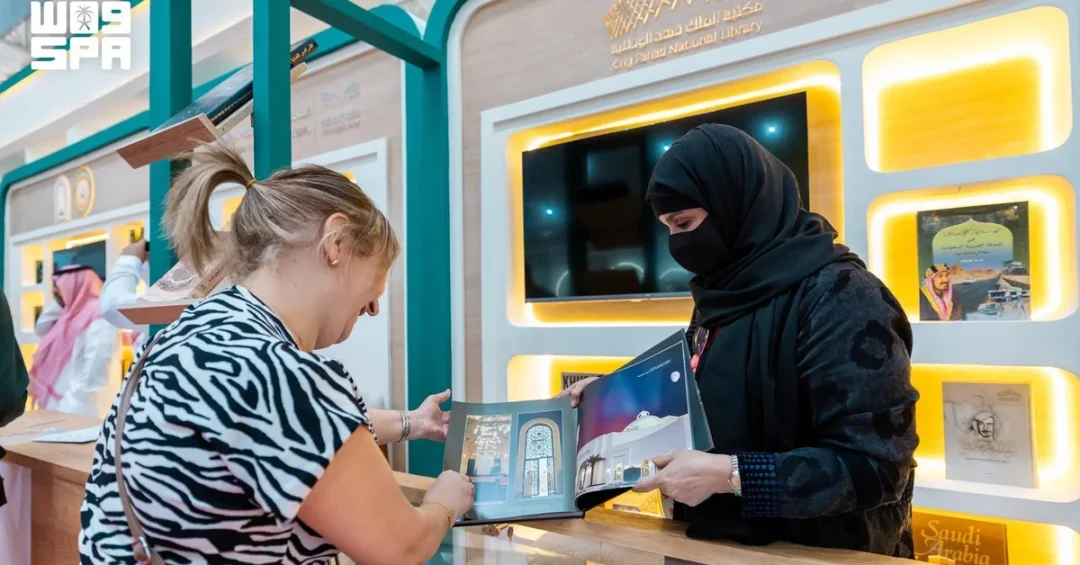
Saudi Arabia is showcasing its rich cultural heritage as the guest of honor at the 2026 Algiers International Book Fair, with the King Fahd National Library presenting rare manuscripts, historical photographs, and publications that document the Kingdom’s national memory and its deep historical ties with Algeria. The participation, announced by the Saudi Press Agency, underscores the Kingdom’s commitment to international cultural exchange and its role in preserving Arab and Islamic heritage. The fair, which runs in Algiers, brings together 1,567 publishing houses from 51 nations, providing a global platform for Saudi Arabia to share its intellectual and archival treasures.
The King Fahd National Library’s exhibit, housed within the Kingdom’s pavilion, features a curated selection of cultural and intellectual publications that highlight the library’s role in preserving heritage, documenting national memory, and advancing scholarly access. Visitors can explore rare manuscripts from the library’s archival collections, including materials relating to Algeria dating back to the 8th century AH. Interactive displays present rare historical photographs from the national archives, documenting historic reciprocal official visits between the Kingdom and Algeria, archival images of the Two Holy Mosques and Diriyah, and early modes of transportation in the Kingdom. The showcase has drawn strong interest from visitors, researchers, and academics eager to explore Saudi, Arab, and Islamic cultural heritage.
Context and Background
Why does Saudi Arabia’s participation as guest of honor at the Algiers International Book Fair matter on the global stage? The Kingdom’s presence at this prestigious event reflects its longstanding dedication to fostering international cultural exchange and dialogue. The King Fahd National Library, named after the late Custodian of the Two Holy Mosques King Fahd bin Abdulaziz, serves as a custodian of the nation’s intellectual and historical legacy. Its involvement in the fair is a testament to Saudi Arabia’s broader cultural diplomacy efforts, which aim to build bridges with nations across the Arab and Islamic world and beyond.
The Algiers International Book Fair is one of North Africa’s most significant literary events, attracting publishers, authors, and cultural institutions from around the globe. Saudi Arabia’s role as guest of honor places it at the center of this cultural convergence, allowing it to highlight its contributions to Arab and Islamic civilization. The Kingdom’s pavilion not only displays rare manuscripts and photographs but also serves as a meeting point for scholars and researchers interested in the shared history between Saudi Arabia and Algeria. This engagement aligns with the Kingdom’s Vision 2030, which emphasizes cultural enrichment and international cooperation as pillars of its modernization strategy.
How does the King Fahd National Library’s collection illuminate the shared heritage of Saudi Arabia and Algeria? The library’s exhibit includes manuscripts relating to Algeria dating back to the 8th century AH, offering a tangible link to centuries of intellectual and cultural exchange. These materials are part of the library’s extensive archives, which document the Kingdom’s history and its interactions with other nations. By presenting these treasures, Saudi Arabia demonstrates its commitment to preserving and sharing its heritage, reinforcing its position as a leader in cultural preservation and scholarly access.
Key Details
What specific treasures are on display at the Saudi pavilion? The King Fahd National Library’s exhibit features notable publications alongside samples of rare manuscripts from its archival collections. An interactive display presents rare historical photographs from the national archives, including visual exhibits that document historic reciprocal official visits between the Kingdom and Algeria. Archival images of the Two Holy Mosques and Diriyah, the historic birthplace of the Saudi state, are also showcased, along with early modes of transportation in the Kingdom. These displays provide visitors with a comprehensive view of Saudi Arabia’s rich history and its connections to the wider region.
The manuscripts relating to Algeria, dating back to the 8th century AH, are of particular significance. They represent a shared intellectual heritage that spans centuries, highlighting the deep-rooted ties between the two nations. The library’s publications, which focus on heritage preservation and national memory, further enrich the exhibit. Visitors, including researchers and academics, have shown strong interest in these materials, underscoring the universal value of Saudi Arabia’s cultural legacy. The pavilion’s interactive elements make the experience engaging and accessible, allowing a broad audience to appreciate the Kingdom’s historical contributions.
How does the fair facilitate cultural exchange between Saudi Arabia and Algeria? The Algiers International Book Fair serves as a platform for dialogue and collaboration, bringing together 1,567 publishing houses from 51 nations. Saudi Arabia’s participation as guest of honor enables it to engage with a diverse audience, sharing its cultural narrative and learning from others. The fair also provides opportunities for Saudi publishers and cultural institutions to forge new partnerships, enhancing the Kingdom’s cultural diplomacy. By showcasing its heritage, Saudi Arabia reinforces its commitment to fostering mutual understanding and respect among nations.
International and Regional Impact
What does Saudi Arabia’s prominent role at the Algiers International Book Fair signify for regional cultural cooperation? The Kingdom’s participation as guest of honor highlights its leadership in promoting Arab and Islamic culture on the international stage. It also strengthens cultural ties between Saudi Arabia and Algeria, two nations with a shared history and mutual interests. The fair’s international scope, with participants from 51 countries, amplifies the reach of Saudi Arabia’s cultural message, positioning the Kingdom as a key player in global cultural exchange.
How does this engagement reflect Saudi Arabia’s broader foreign policy objectives? Cultural diplomacy is an integral part of the Kingdom’s efforts to build bridges and foster goodwill. By sharing its heritage, Saudi Arabia demonstrates its openness and commitment to dialogue, values that are central to its Vision 2030. The positive reception of the Saudi pavilion by visitors and academics underscores the effectiveness of this approach. Moreover, the fair provides a platform for Saudi Arabia to showcase its modernization achievements alongside its rich history, presenting a holistic image of the Kingdom to the world.
Economic and Strategic Significance
What economic and strategic benefits arise from Saudi Arabia’s cultural diplomacy? Participation in international events like the Algiers International Book Fair can stimulate economic ties by promoting cultural tourism and encouraging investment in creative industries. The Kingdom’s Vision 2030 aims to diversify the economy, and cultural exchange plays a role in attracting visitors and fostering partnerships. The fair also serves as a networking hub, connecting Saudi publishers and cultural institutions with international counterparts, potentially leading to collaborative projects and knowledge transfer.
Strategically, Saudi Arabia’s guest of honor status reinforces its soft power and influence in the region. By highlighting its role as a custodian of Islamic heritage, the Kingdom strengthens its position as a leader in the Muslim world. The fair also provides an opportunity to counter misconceptions and present a nuanced view of Saudi society, culture, and progress. This aligns with the Kingdom’s goals of enhancing its global image and building lasting relationships based on mutual respect and shared values.
Vision 2030 Alignment
How does Saudi Arabia’s participation in the Algiers International Book Fair align with Vision 2030? The Kingdom’s Vision 2030 is a comprehensive plan to diversify the economy and enhance quality of life, with culture and heritage as key components. The King Fahd National Library’s exhibit exemplifies the vision’s emphasis on preserving national memory and promoting cultural enrichment. By engaging in international cultural exchange, Saudi Arabia showcases its commitment to openness and global cooperation, values that are central to the vision’s success.
What does the future hold for Saudi Arabia’s cultural diplomacy? As the Kingdom continues to implement Vision 2030, cultural initiatives like this will play an increasingly important role in shaping its international relations. The Algiers International Book Fair is just one example of how Saudi Arabia is sharing its heritage and building bridges with the world. Through such efforts, the Kingdom not only honors its past but also invests in a future of mutual understanding and prosperity. The positive reception of the Saudi pavilion signals a promising path forward for cultural exchange and collaboration.
20 Questions
Q1. What is the King Fahd National Library presenting at the Algiers International Book Fair?
A1. The library is presenting a curated selection of cultural and intellectual publications, rare manuscripts from its archival collections, and interactive displays of historical photographs from the national archives. These materials highlight its role in preserving heritage and documenting national memory.
Q2. Where is the Algiers International Book Fair taking place?
A2. The fair is taking place in Algiers, Algeria. It is a major cultural event that brings together publishers, authors, and cultural institutions from around the world to promote literature and cultural exchange.
Q3. When did the King Fahd National Library participate in the fair?
A3. The library is participating in the 2026 Algiers International Book Fair, as reported by the Saudi Press Agency on November 6, 2026. The fair is currently ongoing.
Q4. What is the significance of Saudi Arabia being the guest of honor at the fair?
A4. Being the guest of honor highlights Saudi Arabia’s dedication to fostering international cultural exchange and dialogue. It provides a platform to showcase the Kingdom’s rich heritage and strengthen cultural ties with Algeria and other nations.
Q5. What types of rare manuscripts are on display?
A5. The exhibit features manuscripts relating to Algeria dating back to the 8th century AH, along with other rare manuscripts from the library’s collections. These materials illuminate the shared intellectual heritage between Saudi Arabia and Algeria.
Q6. How many publishing houses are participating in the fair?
A6. The fair brings together 1,567 publishing houses from 51 nations. This large-scale participation underscores the fair’s international significance and its role as a global cultural hub.
Q7. What historical photographs are featured in the interactive display?
A7. The display includes rare historical photographs documenting reciprocal official visits between the Kingdom and Algeria, archival images of the Two Holy Mosques and Diriyah, and early modes of transportation in the Kingdom. These images provide a visual narrative of Saudi history.
Q8. How has the showcase been received by visitors?
A8. The showcase has drawn strong interest from visitors, researchers, and academics exploring Saudi, Arab, and Islamic cultural heritage. Their engagement reflects the universal appeal of the Kingdom’s cultural treasures.
Q9. What is the role of the King Fahd National Library in preserving heritage?
A9. The library plays a crucial role in preserving heritage by documenting national memory, advancing scholarly access, and curating rare manuscripts and publications. Its work ensures that Saudi Arabia’s cultural legacy is safeguarded for future generations.
Q10. How does Saudi Arabia’s participation reflect its Vision 2030 goals?
A10. Participation aligns with Vision 2030’s emphasis on cultural enrichment, international cooperation, and economic diversification. It showcases the Kingdom’s commitment to openness and global engagement, key pillars of the vision.
Q11. What is the historical significance of the manuscripts from the 8th century AH?
A11. These manuscripts represent a shared intellectual heritage between Saudi Arabia and Algeria, dating back over a millennium. They highlight the deep historical ties and cultural exchanges that have existed between the two nations.
Q12. How does the fair facilitate cultural exchange between nations?
A12. The fair provides a platform for publishers, authors, and cultural institutions to interact, share ideas, and form partnerships. It promotes dialogue and mutual understanding among diverse cultures, fostering global cultural exchange.
Q13. What publications are included in the library’s exhibit?
A13. The exhibit includes notable publications that focus on heritage preservation, national memory, and scholarly access. These works reflect the library’s mission to disseminate knowledge and promote cultural awareness.
Q14. What are the Two Holy Mosques and why are they featured?
A14. The Two Holy Mosques are the Grand Mosque in Makkah and the Prophet’s Mosque in Madinah, the holiest sites in Islam. They are featured in archival images to highlight their significance and the Kingdom’s role as their custodian.
Q15. What is Diriyah and why is it important?
A15. Diriyah is the historic birthplace of the Saudi state and a UNESCO World Heritage site. Its inclusion in the exhibit underscores the Kingdom’s rich history and its efforts to preserve cultural heritage.
Q16. How does the exhibit document early modes of transportation in the Kingdom?
A16. Through archival photographs and visual displays, the exhibit showcases early modes of transportation, offering insights into the Kingdom’s development and modernization over time.
Q17. What is the significance of the reciprocal official visits documented in the exhibit?
A17. These visits symbolize the strong diplomatic and cultural ties between Saudi Arabia and Algeria. They reflect a history of mutual respect and cooperation that continues to this day.
Q18. How can researchers and academics benefit from the exhibit?
A18. Researchers and academics can access rare manuscripts, publications, and archival materials that provide valuable insights into Saudi, Arab, and Islamic heritage. The exhibit supports scholarly research and fosters a deeper understanding of the region’s history.
Q19. What message does Saudi Arabia’s participation send to the international community?
A19. It sends a message of openness, cultural pride, and a commitment to dialogue. Saudi Arabia is eager to share its heritage and engage with the world, reinforcing its role as a global cultural leader.
Q20. How does this event contribute to Saudi Arabia’s cultural diplomacy?
A20. By participating as guest of honor, Saudi Arabia strengthens its cultural diplomacy, building bridges with other nations and promoting mutual understanding. It enhances the Kingdom’s soft power and global image.
Reader Feedback
We value your thoughts. Please share your feedback on this article.
Your feedback helps us improve our coverage.
Related articles
 Khan Al-Khalil Collectibles Keep Old Jeddah’s Memory Alive
 Two Falcons Sell for SAR388,000 on 17th Night of National Center for Falcons Auction 2026
 Saudi Culture Minister Visits Algiers Book Fair Pavilion
 Saudi Culture Minister Meets Algerian Counterpart in Algiers
 Algerian President Meets Saudi Culture Minister
 Saudi Film Industry Yearbook 2025 Shows Record Growth