


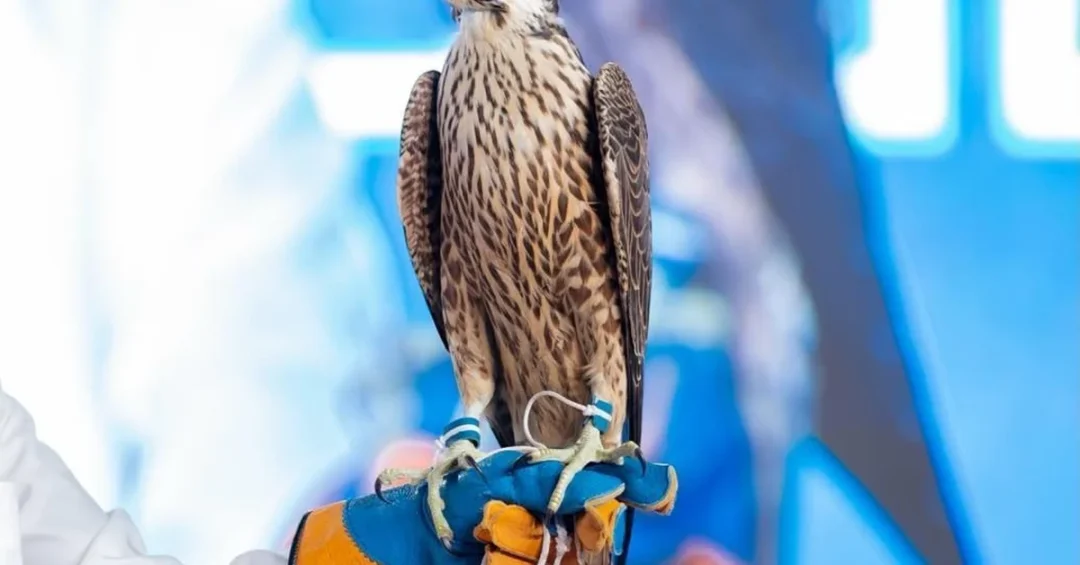
Two young peregrine falcons sold for a combined SAR388,000 during the 17th night of the National Center for Falcons Auction 2026, the Saudi Press Agency (SPA) reported from Riyadh. The first falcon, a young peregrine caught in Al-Batha by four falcon catchers, opened bidding at SAR40,000 before selling for SAR88,000. The night’s final sale, a young peregrine caught in Sharurah by 18 falcon catchers, opened at SAR80,000 and ultimately fetched SAR300,000. The auction, which began earlier in the season and runs through November 30, has attracted a large turnout of falconry enthusiasts from across the Kingdom and beyond.
Organized by the National Center for Falcons, the auction is a flagship event on Saudi Arabia’s cultural calendar, celebrating a heritage that stretches back centuries across the Arabian Peninsula. Falconry, known in Arabic as al-qanas, is more than a sport; it is a living tradition that connects generations and embodies the Bedouin virtues of patience, skill, and respect for nature. The 2026 edition has drawn particular attention for its rigorous standards and its role in promoting sustainable falconry practices, aligning with the Kingdom’s broader environmental and cultural preservation goals under Vision 2030.
Why do these auctions matter so much to Saudi society and to the global falconry community? They are not merely marketplaces for elite birds; they are platforms where tradition meets modern regulation, ensuring that the ancient art of falconry continues to thrive without harming wild populations. The National Center for Falcons, established to oversee the sector, enforces strict rules: only young migratory marine peregrine falcons caught within Saudi Arabia are accepted, while mature peregrines and saker falcons are excluded to support sustainability and preserve their breeds. This approach reflects a deep commitment to balancing cultural passion with ecological responsibility.
Context and Background
How did falconry become such an integral part of Saudi identity? For centuries, inhabitants of the Arabian Peninsula relied on falcons for hunting and survival in harsh desert environments. The bond between falconer and bird was one of mutual reliance, and the skills were passed down through generations. Today, that heritage is celebrated at the highest levels. The National Center for Falcons, a government body dedicated to the development of falconry, organizes auctions, exhibitions, and research initiatives to ensure the tradition remains vibrant and sustainable. The 2026 auction, running through November 30, is a testament to this ongoing commitment.
The auction’s rules are carefully designed to protect wild falcon populations. Only young migratory marine peregrine falcons caught locally are eligible, and these are received over a two-month period. Mature peregrines and saker falcons are not accepted, a policy that supports breeding cycles and prevents overexploitation. This regulatory framework is part of a broader national strategy to conserve biodiversity, in line with the Saudi Green Initiative and Vision 2030’s environmental goals. By hosting such events, the Kingdom positions itself as a global leader in ethical falconry, blending tradition with conservation.
What makes this year’s auction particularly significant? The 17th night alone generated SAR388,000 in sales, underscoring the strong demand for high-quality falcons and the economic vitality of this cultural sector. Enthusiasts from across the Gulf and beyond attend these auctions, which also serve as social gatherings where knowledge and passion are shared. The National Center for Falcons has worked tirelessly to elevate the auction’s profile, ensuring it meets international standards while preserving local customs. This balance is central to Saudi Arabia’s approach to cultural heritage: modernize without losing authenticity.
Key Details of the 17th Night
What exactly happened on the 17th night of the auction? According to the Saudi Press Agency, two young peregrine falcons were sold, fetching a combined SAR388,000. The first bird, a young peregrine caught in Al-Batha by four falcon catchers, saw bidding start at SAR40,000 and eventually sold for SAR88,000. Al-Batha, located in the Eastern Province near the Gulf coast, is known as a prime location for catching migratory falcons during their seasonal passage. The fact that four catchers were involved highlights the collaborative effort often required in traditional falconry.
The second and final sale of the night was even more remarkable: a young peregrine caught in Sharurah by 18 falcon catchers. Bidding opened at SAR80,000 and climbed to SAR300,000. Sharurah, in the southern Najran Province near the Yemeni border, is another important site for falcon migration. The involvement of 18 catchers suggests a large-scale, organized effort, possibly reflecting the bird’s exceptional quality or the high demand for falcons from that region. The final price of SAR300,000 indicates the premium placed on well-caught, healthy young peregrines.
These details reveal the auction’s dual nature: it is both a marketplace and a cultural spectacle. The bidding process is transparent and competitive, with prices reflecting the birds’ pedigree, health, and the skill of the catchers. The National Center for Falcons ensures that all transactions adhere to ethical guidelines, reinforcing the auction’s reputation for integrity. For enthusiasts, the event is an opportunity to acquire a falcon that embodies the best of Saudi Arabia’s natural heritage and to participate in a tradition that has been recognized by UNESCO as intangible cultural heritage.
International and Regional Impact
How does the National Center for Falcons Auction resonate beyond Saudi borders? Falconry is practiced in many countries, particularly across the Middle East, Central Asia, and Europe, but Saudi Arabia’s auction has emerged as a premier event due to its scale, organization, and ethical standards. International buyers and enthusiasts attend, drawn by the promise of acquiring top-tier birds and experiencing authentic Saudi hospitality. The auction also serves as a diplomatic and cultural bridge, showcasing the Kingdom’s commitment to preserving heritage while engaging with the global community.
Regionally, the event reinforces Saudi Arabia’s leadership in Gulf cultural affairs. Neighboring countries such as the UAE, Qatar, and Kuwait have their own falconry traditions and auctions, but the Saudi auction’s strict sustainability rules set a benchmark. By excluding mature peregrines and saker falcons, the Kingdom demonstrates that cultural passions can be pursued without compromising conservation. This stance aligns with the broader Gulf Cooperation Council (GCC) environmental initiatives and enhances Saudi Arabia’s soft power as a responsible steward of both culture and nature.
Economic and Strategic Significance
What economic value does the falconry sector bring to Saudi Arabia? While the auction itself generates significant revenue—SAR388,000 on a single night—its impact extends further. The falconry industry supports jobs in breeding, training, veterinary care, and tourism. Auctions attract visitors who spend on hotels, dining, and local crafts, contributing to the diversification of the economy away from oil. Under Vision 2030, Saudi Arabia aims to boost non-oil sectors, and cultural tourism is a key pillar. The National Center for Falcons Auction is a prime example of how heritage can be monetized sustainably.
Strategically, the auction strengthens Saudi Arabia’s position as a global hub for falconry. The Kingdom invests in research and development to improve falcon health and breeding, and the auction serves as a showcase for these advancements. Moreover, the event reinforces national identity and social cohesion, bringing together citizens from different regions—from Al-Batha to Sharurah—in a shared celebration. This unity is vital for the social fabric of the Kingdom and complements Vision 2030’s goal of a vibrant society.
Vision 2030 Alignment
How does the National Center for Falcons Auction align with Vision 2030? Vision 2030 seeks to preserve Saudi Arabia’s cultural heritage while promoting sustainability and economic diversification. The auction embodies these principles by regulating falconry to protect wild populations, generating economic activity, and fostering national pride. The National Center for Falcons operates under the Ministry of Culture, which is tasked with nurturing the Kingdom’s cultural sector. By supporting such events, Saudi Arabia ensures that its traditions remain relevant and respected in the modern world.
Looking ahead, the auction’s success on its 17th night signals a bright future for falconry in Saudi Arabia. As the event continues through November 30, it will further cement the Kingdom’s reputation as a leader in ethical and sustainable cultural practices. For international observers, it offers a window into a Saudi Arabia that honors its past while embracing the future—a vision at the heart of Vision 2030. The National Center for Falcons Auction is more than a sale; it is a statement of identity, responsibility, and progress.
20 Questions
Q1. What was the total amount raised from the two falcons sold on the 17th night of the National Center for Falcons Auction 2026?
A1. The two young peregrine falcons sold for a combined SAR388,000, according to the Saudi Press Agency.
Q2. Where was the first falcon caught, and how many falcon catchers were involved?
A2. The first falcon was caught in Al-Batha by four falcon catchers.
Q3. What was the opening bid and final sale price for the first falcon?
A3. Bidding opened at SAR40,000, and the falcon eventually sold for SAR88,000.
Q4. Where was the second falcon caught, and how many catchers were involved?
A4. The second falcon was caught in Sharurah by 18 falcon catchers.
Q5. What was the opening bid and final sale price for the second falcon?
A5. Bidding opened at SAR80,000, and the falcon fetched SAR300,000.
Q6. What types of falcons are accepted at the auction?
A6. Only young migratory marine peregrine falcons caught in Saudi Arabia are accepted.
Q7. Why are mature peregrine falcons and saker falcons not accepted?
A7. They are excluded to support their sustainability and preserve their breeds.
Q8. How long is the reception period for locally caught falcons?
A8. Locally caught falcons are received over a two-month period.
Q9. When does the National Center for Falcons Auction 2026 conclude?
A9. The auction runs through November 30.
Q10. Who organizes the National Center for Falcons Auction?
A10. The auction is organized by the National Center for Falcons, a Saudi government body dedicated to falconry.
Q11. What is the significance of Al-Batha in falconry?
A11. Al-Batha, in the Eastern Province, is a known location for catching migratory falcons during their seasonal passage.
Q12. What is the significance of Sharurah in falconry?
A12. Sharurah, in the southern Najran Province, is another important site for falcon migration and catching.
Q13. How does the auction support sustainability?
A13. By accepting only young locally caught peregrines and excluding mature and saker falcons, it protects breeding populations.
Q14. What is the economic impact of the auction?
A14. It generates revenue, supports jobs in falconry, and attracts tourism, contributing to economic diversification.
Q15. How does the auction align with Vision 2030?
A15. It preserves cultural heritage, promotes sustainability, and boosts non-oil sectors, aligning with Vision 2030 goals.
Q16. What is the cultural significance of falconry in Saudi Arabia?
A16. Falconry is a centuries-old tradition that embodies Bedouin virtues and is recognized by UNESCO as intangible cultural heritage.
Q17. Are international buyers allowed to participate in the auction?
A17. Yes, the auction attracts international enthusiasts and buyers, though specific eligibility rules may apply.
Q18. How does the National Center for Falcons ensure ethical practices?
A18. It enforces strict rules on falcon sourcing, excluding species at risk and monitoring the two-month reception period.
Q19. What other initiatives does the National Center for Falcons undertake?
A19. It organizes exhibitions, research, and breeding programs to develop falconry and ensure its sustainability.
Q20. What does the future hold for falconry in Saudi Arabia?
A20. With strong government support and growing global interest, falconry will continue to thrive as a cherished heritage and economic asset.
Reader Feedback
We value your thoughts. Please share your feedback on this article.
Your feedback helps us improve our coverage.
Related articles
 Saudi Culture Minister Visits Algiers Book Fair Pavilion
 Algerian President Meets Saudi Culture Minister
 Saudi Film Industry Yearbook 2025 Shows Record Growth
 Ithra Launches Winter 2026 Program in Eastern Region
 SAB and CDF Sign Deal to Finance New Riyadh Cultural Museum
 Makkah Chamber Hosts Workshop on Pottery Handicrafts