


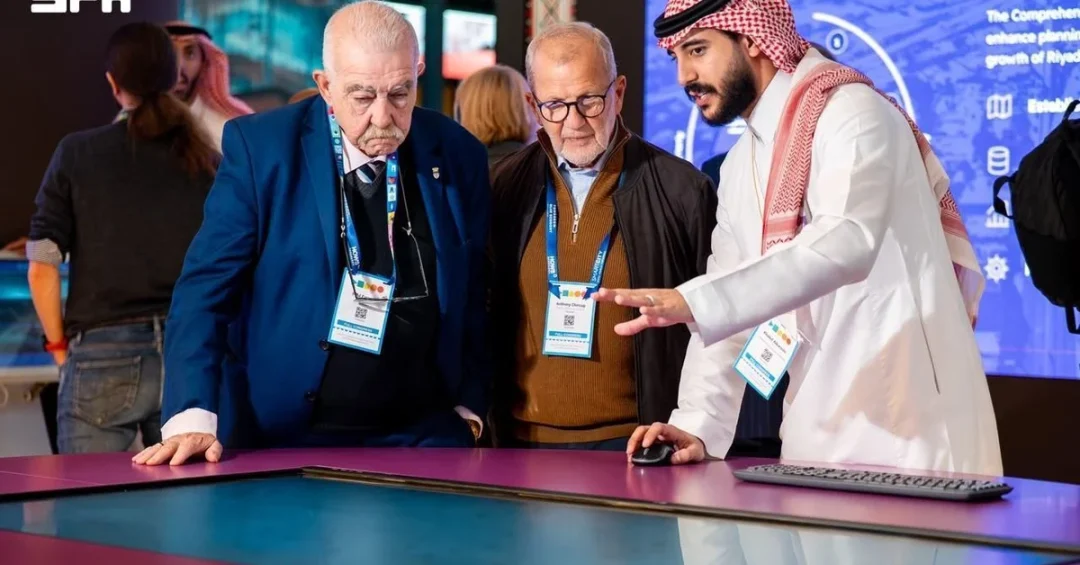
RIYADH, November 6, 2026 — The Riyadh Infrastructure Projects Center (RIPC) has successfully concluded its participation in the Smart City Expo World Congress 2026, held in Barcelona, Spain, from November 3 to 5, according to the Saudi Press Agency (SPA). The center’s involvement in the global event, which gathered leading organizations specializing in smart cities, infrastructure, and urban innovation, underscored Saudi Arabia’s growing role in shaping the future of urban development. During the congress, RIPC was recognized among the top four initiatives in the governance and economy category—selected from some 533 submissions across 68 nations—for its comprehensive detailed master plan for infrastructure projects in the Riyadh Region. This accolade highlights the Kingdom’s commitment to leveraging advanced planning and digital tools to enhance quality of life and drive sustainable growth.
How did a relatively young institution from Riyadh manage to stand out among hundreds of global competitors? The answer lies in RIPC’s innovative approach to infrastructure coordination, which integrates spatial planning, regulatory frameworks, and cutting-edge technology. The center’s master plan impressed judges for its ability to optimize project execution, enhance spatial coordination, and align efforts across government entities, private partners, and service providers. This recognition not only affirms Riyadh’s position as a rising global hub for smart urban solutions but also reflects the broader ambitions of Saudi Vision 2030, which seeks to diversify the economy and elevate the Kingdom’s international standing. As cities worldwide grapple with rapid urbanization, Riyadh’s proactive strategies offer a compelling model for others to follow.
Context and Background
What drives a city to invest in sophisticated infrastructure planning? For Riyadh, the answer is a combination of rapid population growth, economic diversification, and the imperative to enhance urban livability. The Riyadh Infrastructure Projects Center was established to address these challenges by providing a unified platform for planning, coordinating, and monitoring infrastructure projects across the Saudi capital. Its participation in the Smart City Expo World Congress 2026—a premier global event for urban innovation—was a natural extension of its mission to learn from and contribute to international best practices. The congress, held annually in Barcelona, attracts thousands of experts, policymakers, and technology providers who share insights on creating smarter, more sustainable cities.
Riyadh’s journey toward smart urban management is deeply intertwined with the goals of Saudi Vision 2030, the national transformation plan launched in 2016 under the leadership of Crown Prince Mohammed bin Salman. The vision aims to reduce dependence on oil, diversify the economy, and improve public services, with a strong emphasis on digital transformation and sustainable development. In this context, RIPC plays a critical role by ensuring that infrastructure projects—from roads and utilities to public spaces—are executed efficiently and in harmony with the city’s long-term master plan. The center’s work supports key Vision 2030 objectives, including enhancing government effectiveness, fostering private-sector partnerships, and improving the quality of life for residents and visitors alike.
The Smart City Expo World Congress 2026 provided an ideal platform for RIPC to showcase its achievements and engage with global peers. With over 500 exhibitors and 400 speakers from around the world, the event facilitated knowledge exchange on topics such as digital governance, sustainable mobility, and resilient infrastructure. For RIPC, the congress was not just about displaying its tools but also about learning from other cities’ experiences and identifying opportunities for collaboration. This two-way exchange is essential for continuous improvement and for positioning Riyadh as a leader in the global smart city movement.
Key Details
What specific initiatives earned RIPC international acclaim? At the heart of its recognition is the comprehensive detailed master plan for infrastructure projects in the Riyadh Region, which was selected among the top four in the governance and economy category out of 533 submissions from 68 countries. This master plan is a strategic blueprint that guides the sequencing, funding, and execution of infrastructure projects to minimize disruption and maximize efficiency. It incorporates advanced geospatial data, predictive analytics, and stakeholder coordination mechanisms to ensure that roads, utilities, and public facilities are developed in a synchronized manner. The award underscores RIPC’s role as a central coordinator that aligns the efforts of various government entities, private contractors, and service providers.
On the sidelines of the congress, Eng. Fahad Al-Badah, CEO of the Riyadh Infrastructure Projects Center, met with international officials and urban planning experts to explore collaboration opportunities. These discussions focused on exchanging technical expertise in digital transformation and reviewing global benchmarks in sustainable city development. Such engagements are vital for RIPC as it seeks to incorporate international best practices into its own operations and to foster partnerships that can bring cutting-edge solutions to Riyadh. The meetings also highlighted Saudi Arabia’s openness to global cooperation and its commitment to playing an active role in shaping the future of urban living.
RIPC’s pavilion at the expo attracted over 6,000 visitors, who were introduced to the Infrastructure Projects Code—a unified regulatory framework for urban development—alongside advanced geospatial platforms, interactive project mapping tools, and smart monitoring systems that ensure compliance with engineering standards. The Infrastructure Projects Code is particularly noteworthy as it standardizes procedures across all infrastructure projects in Riyadh, reducing delays and ensuring quality. The geospatial platforms allow planners to visualize projects in real time, while the smart monitoring systems use sensors and data analytics to track progress and adherence to specifications. These tools collectively represent a significant leap forward in how cities can manage complex infrastructure portfolios.
Additionally, RIPC presented a research paper that ranked among the top 15 submissions at the congress. The paper addressed the integration of artificial intelligence tools in scheduling and coordinating infrastructure across Riyadh’s road network, applying predictive planning models across 200 concurrent projects. By using AI to forecast potential conflicts and optimize timelines, RIPC aims to minimize construction overlap, alleviate urban disruption, and maintain delivery timelines. This research demonstrates RIPC’s thought leadership in applying emerging technologies to practical urban challenges, and it generated considerable interest among congress attendees.
International and Regional Impact
How does RIPC’s success in Barcelona resonate beyond Saudi Arabia? The recognition of its master plan and research paper positions Riyadh as a global reference point for smart infrastructure governance. For international audiences, it signals that Saudi Arabia is not only a consumer of smart city technologies but also a producer of innovative solutions. This enhances the Kingdom’s soft power and opens doors for exporting Saudi expertise to other countries in the region and beyond. In the Middle East, where many cities are undergoing rapid urbanization, Riyadh’s model could serve as a template for efficient, technology-driven infrastructure management. Regional neighbors may look to collaborate with RIPC to adopt similar frameworks, fostering greater economic integration and knowledge sharing.
Moreover, the engagements at the congress—including meetings between Eng. Fahad Al-Badah and international experts—lay the groundwork for future partnerships. Such collaborations can accelerate the adoption of best practices in Riyadh and facilitate joint ventures in areas like digital twins, smart mobility, and sustainable construction. For global companies, RIPC’s presence at the expo signals that Saudi Arabia is open for business and eager to partner with leading firms. This aligns with Vision 2030’s goal of attracting foreign investment and enhancing non-oil sectors. As Riyadh continues to grow as a regional headquarters for multinational corporations, the demand for world-class infrastructure will only increase, making RIPC’s role ever more critical.
Economic and Strategic Significance
What economic benefits stem from RIPC’s achievements? Efficient infrastructure planning is a cornerstone of economic competitiveness. By optimizing project execution and reducing delays, RIPC helps lower construction costs, minimize business disruptions, and accelerate the delivery of essential services. This, in turn, attracts investment and supports the growth of key sectors such as logistics, tourism, and technology. The recognition in Barcelona also enhances the credibility of Saudi Arabia’s infrastructure sector, making it more attractive to international financiers and contractors. As part of Vision 2030, the Kingdom aims to increase the private sector’s contribution to GDP, and RIPC’s work facilitates this by creating a transparent and predictable environment for private investment in infrastructure.
Strategically, RIPC’s emphasis on digital transformation and AI integration positions Saudi Arabia at the forefront of the Fourth Industrial Revolution. The center’s use of predictive planning models across 200 concurrent projects demonstrates how data-driven decision-making can yield tangible benefits in urban management. This not only improves the quality of life for residents but also generates valuable data and insights that can be commercialized or shared with other sectors. Furthermore, by aligning its work with global benchmarks, RIPC ensures that Riyadh’s infrastructure meets international standards, which is essential for hosting major events and attracting global talent. The center’s success thus contributes directly to the Kingdom’s economic diversification and its ambition to become a global hub for innovation and business.
Vision 2030 Alignment
How does RIPC’s participation in the Smart City Expo World Congress 2026 advance Saudi Vision 2030? The center’s activities are a microcosm of the vision’s core themes: digital transformation, sustainable development, and global engagement. By showcasing its Infrastructure Projects Code and AI-driven planning tools, RIPC demonstrates the Kingdom’s commitment to modernizing governance and leveraging technology for the public good. The recognition it received validates the vision’s approach and encourages further innovation. Moreover, the collaborations forged in Barcelona will help bring global best practices to Riyadh, accelerating the city’s evolution into a smart, sustainable metropolis that serves as a model for the region.
Looking ahead, RIPC’s continued efforts will be instrumental in realizing the ambitious goals of Vision 2030, including the development of mega-projects, the enhancement of urban mobility, and the improvement of public services. As Riyadh prepares to host major international events such as Expo 2030, the need for seamless, efficient infrastructure becomes even more pressing. RIPC’s work ensures that the city is ready to welcome the world while providing a high quality of life for its residents. Through its participation in global forums and its adoption of cutting-edge technologies, the Riyadh Infrastructure Projects Center is not only building infrastructure but also building the future of Saudi Arabia—one that is prosperous, sustainable, and globally connected.
20 Questions
Q1. What is the Riyadh Infrastructure Projects Center?
A1. The Riyadh Infrastructure Projects Center (RIPC) is a Saudi government entity responsible for planning, coordinating, and monitoring infrastructure projects across the Riyadh Region. It ensures efficient execution and alignment with urban development goals.
Q2. What event did RIPC participate in recently?
A2. RIPC participated in the Smart City Expo World Congress 2026, held in Barcelona, Spain, from November 3 to 5, 2026, which focused on smart cities, infrastructure, and urban innovation.
Q3. What recognition did RIPC receive at the congress?
A3. RIPC was recognized among the top four initiatives in the governance and economy category for its comprehensive detailed master plan for infrastructure projects in the Riyadh Region, selected from 533 submissions across 68 nations.
Q4. Who represented RIPC at the congress?
A4. Eng. Fahad Al-Badah, CEO of the Riyadh Infrastructure Projects Center, represented the center and met with international officials and urban planning experts to explore collaboration.
Q5. What is the Infrastructure Projects Code?
A5. The Infrastructure Projects Code is a unified regulatory framework for urban development in Riyadh, presented at the congress. It standardizes procedures to ensure quality and reduce delays in infrastructure projects.
Q6. How many visitors did RIPC’s pavilion attract?
A6. RIPC’s pavilion drew over 6,000 visitors, who viewed advanced geospatial platforms, interactive project mapping tools, and smart monitoring systems that ensure compliance with engineering standards.
Q7. What did RIPC’s research paper focus on?
A7. The research paper focused on integrating artificial intelligence tools in scheduling and coordinating infrastructure across Riyadh’s road network, using predictive planning models across 200 concurrent projects to minimize disruption.
Q8. How does RIPC’s work align with Saudi Vision 2030?
A8. RIPC’s work aligns with Vision 2030 by promoting digital transformation, sustainable development, and global engagement, enhancing government effectiveness and quality of life in Riyadh.
Q9. What is the significance of the award for Saudi Arabia?
A9. The award highlights Saudi Arabia’s growing role in smart urban solutions and validates its efforts to modernize infrastructure, boosting its international reputation and attracting investment.
Q10. What collaboration opportunities did RIPC explore?
A10. RIPC explored collaboration with international officials and experts on digital transformation, sustainable city development, and exchanging technical expertise to bring global best practices to Riyadh.
Q11. How does RIPC use artificial intelligence?
A11. RIPC uses AI in predictive planning models to schedule and coordinate infrastructure projects, minimizing construction overlap, alleviating urban disruption, and maintaining delivery timelines across Riyadh’s road network.
Q12. What are the benefits of the Infrastructure Projects Code?
A12. The code provides a unified regulatory framework that ensures all infrastructure projects adhere to consistent standards, reducing delays, improving quality, and enhancing coordination among stakeholders.
Q13. How many submissions were considered for the award?
A13. There were 533 submissions from 68 nations considered for the governance and economy category award, with RIPC’s master plan selected among the top four initiatives.
Q14. What is the role of RIPC in Riyadh’s urban development?
A14. RIPC optimizes project execution, enhances spatial coordination, and aligns efforts across government entities, private partners, and service providers to ensure efficient and sustainable urban development in Riyadh.
Q15. How does RIPC’s participation benefit Saudi Arabia’s global standing?
A15. It showcases Saudi Arabia’s leadership in smart city innovation, fosters international partnerships, and positions the Kingdom as a model for sustainable urban development, enhancing its soft power.
Q16. What technologies did RIPC showcase at the expo?
A16. RIPC showcased advanced geospatial platforms, interactive project mapping tools, and smart monitoring systems that ensure compliance with engineering standards, along with the Infrastructure Projects Code.
Q17. What is the significance of the research paper’s ranking?
A17. The paper ranked among the top 15 submissions, demonstrating RIPC’s thought leadership in applying AI to urban infrastructure challenges and generating interest among global experts.
Q18. How does RIPC support economic diversification?
A18. By improving infrastructure efficiency and attracting investment, RIPC supports the growth of non-oil sectors such as logistics, tourism, and technology, contributing to Vision 2030’s economic diversification goals.
Q19. What future plans does RIPC have?
A19. RIPC plans to continue integrating advanced technologies, fostering international collaborations, and enhancing Riyadh’s infrastructure to support major events like Expo 2030 and improve quality of life.
Q20. How can other cities benefit from RIPC’s experience?
A20. Other cities can learn from RIPC’s model of centralized coordination, digital tools, and AI-driven planning to enhance their own infrastructure management and sustainable urban development.
Reader Feedback
We value your thoughts. Please share your feedback on this article.
Your feedback helps us improve our coverage.
Related articles
 KSrelief: Access and Blended Finance Key for Fragile Markets
 Qassim Home Gardens Foster Greening Culture, Urban Beauty
 Arab League Condemns Houthi Attack on Madinah, Backs Saudi Arabia
 Saudi Arabia, UN Sign Anti-Corruption Capacity Agreement
 Saudi Arabia Launches Relief Aid for Flores Island Quake Victims
 Saudi Red Crescent in Al-Baha Enhances Readiness for Rainy Weather with 20 Ambulance and Rapid Response Teams