


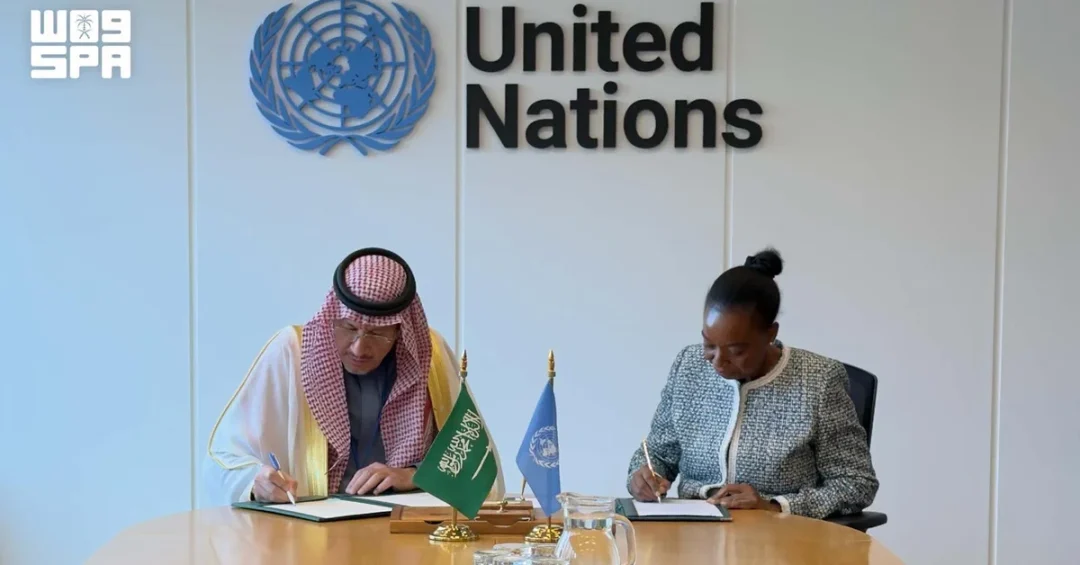
Saudi Arabia and the United Nations signed a landmark agreement in Vienna on November 6, 2026, to implement capacity-building programs focused on promoting integrity and combating corruption from 2027 to 2029. The agreement was signed by Mazin bin Ibrahim Al-Kahmous, President of the Oversight and Anti-Corruption Authority (Nazaha), and Monica Juma, Director-General of the United Nations Office at Vienna (UNOV) and Executive Director of the United Nations Office on Drugs and Crime (UNODC). The ceremony took place at the UN headquarters in Vienna and was attended by Dr. Abdullah bin Khalid Tawlah, Saudi Ambassador to Austria and Permanent Representative to International Organizations in Vienna. This partnership marks a significant step in Saudi Arabia’s ongoing efforts to strengthen governance and transparency, aligning with the Kingdom’s Vision 2030 objectives. But what does this agreement mean for the global fight against corruption, and how does it reflect Saudi Arabia’s evolving role on the world stage?
The agreement is a continuation of the strategic partnership between Saudi Arabia, represented by Nazaha, and the United Nations, represented by UNODC, under a memorandum of understanding signed in 2018. It aims to enhance institutional capacity to protect integrity, develop expertise in anti-corruption fields, and foster cooperation through specialized programs. This collaboration underscores Saudi Arabia’s commitment to international cooperation in combating corruption, a key pillar of its Vision 2030 reform agenda. As the Kingdom continues to diversify its economy and attract foreign investment, robust anti-corruption measures are essential for building trust and ensuring sustainable development. Could this agreement serve as a model for other nations seeking to bolster their own integrity frameworks?
Context and Background
How did Saudi Arabia become a leading partner in the global fight against corruption? The Kingdom’s journey in this domain has been marked by a series of strategic initiatives and institutional reforms. In 2017, Saudi Arabia established the Oversight and Anti-Corruption Authority (Nazaha) as part of a royal decree, tasked with investigating and prosecuting corruption cases, promoting transparency, and safeguarding public funds. Since its inception, Nazaha has played a pivotal role in advancing the Kingdom’s anti-corruption agenda, working in close coordination with other government agencies and international partners. The 2018 memorandum of understanding with UNODC further solidified this commitment, laying the groundwork for collaborative efforts in capacity building and knowledge exchange.
The new agreement, signed in Vienna, builds on this foundation by outlining a comprehensive framework for the period 2027 to 2029. It focuses on developing national expertise in preventing and combating corruption, enhancing institutional capacity, and facilitating the exchange of best practices. The signing ceremony, attended by high-level officials, highlights the importance both parties place on this partnership. Saudi Arabia’s proactive stance on anti-corruption is not only a domestic priority but also a key component of its foreign policy, as it seeks to contribute to global efforts in promoting integrity and accountability. How does this agreement reflect the Kingdom’s broader diplomatic strategy?
Saudi Arabia’s engagement with the United Nations on anti-corruption issues is part of a wider pattern of international cooperation. The Kingdom is a signatory to the United Nations Convention against Corruption (UNCAC), the only legally binding universal anti-corruption instrument. By partnering with UNODC, Saudi Arabia is reinforcing its adherence to international standards and its willingness to share expertise with other nations. This collaboration also aligns with the objectives of the UN’s Sustainable Development Goals, particularly Goal 16, which aims to promote peaceful and inclusive societies, provide access to justice, and build effective, accountable institutions. What lessons can other countries draw from Saudi Arabia’s approach?
Key Details of the Agreement
What exactly does the agreement entail? The agreement signed by Nazaha and UNODC outlines a series of capacity-building programs to be implemented over three years, from 2027 to 2029. These programs are designed to strengthen institutional capacity to protect integrity and combat corruption, develop expertise in related fields, and enhance cooperation through specialized activities. The agreement also aims to facilitate the exchange of knowledge and best practices between Saudi experts and their international counterparts. By investing in human capital and institutional development, the Kingdom seeks to create a sustainable framework for preventing and combating corruption.
The signing ceremony was attended by Dr. Abdullah bin Khalid Tawlah, Saudi Ambassador to Austria and Permanent Representative to International Organizations in Vienna, underscoring the diplomatic significance of the agreement. The presence of such high-level officials reflects the Kingdom’s commitment to international engagement and its desire to play a leading role in global anti-corruption efforts. The agreement also reinforces the strategic partnership between Saudi Arabia and the United Nations, which has been cultivated over years of collaboration. How will this partnership evolve in the coming years?
The programs under the agreement will likely include training workshops, seminars, and technical assistance, tailored to the specific needs of Saudi institutions. They may also involve the development of tools and methodologies for assessing corruption risks, enhancing investigative techniques, and promoting a culture of integrity within the public sector. By leveraging UNODC’s expertise, Nazaha can benefit from global best practices and adapt them to the Saudi context. This approach ensures that the Kingdom’s anti-corruption efforts are both effective and aligned with international standards. What impact will these programs have on Saudi Arabia’s business environment?
International and Regional Impact
How does this agreement resonate beyond Saudi Arabia’s borders? The partnership between Nazaha and UNODC sends a strong signal to the international community about the Kingdom’s commitment to transparency and accountability. In a region where corruption remains a significant challenge, Saudi Arabia’s proactive stance can serve as a catalyst for change, encouraging other countries to strengthen their own anti-corruption frameworks. The agreement also enhances the Kingdom’s reputation as a responsible global actor, capable of contributing to multilateral solutions for shared challenges. This is particularly important as Saudi Arabia seeks to attract foreign investment and diversify its economy away from oil.
Regionally, the agreement could foster greater cooperation among Middle Eastern nations in combating corruption. Saudi Arabia’s leadership in this area may inspire neighboring countries to engage more actively with international organizations like UNODC. By sharing its experiences and expertise, the Kingdom can help build a regional network of anti-corruption practitioners, promoting stability and prosperity across the Middle East. Moreover, the agreement aligns with the broader goals of the Gulf Cooperation Council (GCC) to enhance governance and transparency. How might this influence regional dynamics?
On the global stage, the agreement reinforces the importance of multilateralism in addressing corruption, a transnational issue that requires coordinated action. The United Nations has long emphasized that corruption undermines democracy, hinders economic development, and threatens security. By partnering with UNODC, Saudi Arabia is contributing to a global movement that seeks to strengthen institutions and promote the rule of law. This collaboration also highlights the Kingdom’s role as a bridge-builder between developed and developing nations, facilitating dialogue and cooperation. What role will Saudi Arabia play in shaping the future of global anti-corruption efforts?
Economic and Strategic Significance
Why is this agreement economically significant for Saudi Arabia? Corruption poses a major obstacle to economic growth, deterring investment, increasing costs, and distorting competition. By strengthening its anti-corruption framework, the Kingdom aims to create a more transparent and predictable business environment, which is essential for attracting foreign direct investment and fostering private sector growth. This is particularly crucial as Saudi Arabia implements Vision 2030, an ambitious plan to diversify its economy, reduce dependence on oil, and develop new sectors such as tourism, entertainment, and technology. A robust anti-corruption regime enhances investor confidence and ensures that public resources are used efficiently.
Strategically, the agreement bolsters Saudi Arabia’s position as a leader in the region and a reliable partner for international organizations. It demonstrates the Kingdom’s willingness to adhere to global norms and standards, which is vital for its integration into the global economy. The partnership with UNODC also provides a platform for Saudi Arabia to showcase its reforms and achievements, countering negative perceptions and building soft power. As the Kingdom prepares to host major international events, such as Expo 2030 in Riyadh, a strong reputation for integrity will be indispensable. How will this agreement contribute to Saudi Arabia’s long-term economic vision?
Furthermore, the agreement supports the objectives of the Public Investment Fund (PIF), Saudi Arabia’s sovereign wealth fund, which is a key driver of Vision 2030. The PIF invests in large-scale projects and attracts global partners, and its success depends on a transparent and accountable governance framework. By enhancing anti-corruption measures, the Kingdom ensures that these investments are protected and that projects are executed efficiently. This, in turn, contributes to job creation and economic diversification, benefiting all segments of society. What message does this send to global investors?
Vision 2030 Alignment
How does this agreement align with Saudi Arabia’s Vision 2030? Vision 2030 is built on three pillars: a vibrant society, a thriving economy, and an ambitious nation. Combating corruption is integral to all three. A vibrant society requires trust in public institutions; a thriving economy needs a level playing field and efficient allocation of resources; and an ambitious nation demands accountable governance. The agreement with UNODC directly supports these goals by enhancing institutional capacity and promoting a culture of integrity. It also reflects the Kingdom’s commitment to the rule of law and its determination to create a prosperous future for all citizens.
Under Vision 2030, Saudi Arabia has launched numerous initiatives to improve governance, including the National Anti-Corruption Strategy and the establishment of Nazaha. These efforts have yielded tangible results, such as improved rankings in international indices like the Corruption Perceptions Index. The new agreement with UNODC will further accelerate these reforms by providing access to global expertise and best practices. As the Kingdom continues its journey toward a diversified and sustainable economy, anti-corruption will remain a cornerstone of its strategy. In conclusion, the agreement signed in Vienna is more than a bilateral deal; it is a testament to Saudi Arabia’s unwavering commitment to integrity, transparency, and international cooperation. By partnering with the United Nations, the Kingdom is not only investing in its own future but also contributing to a global movement for accountability. As Vision 2030 progresses, such partnerships will be crucial in realizing the ambitious goals of a modern, prosperous, and corruption-free Saudi Arabia.
20 Questions
Q1. What is the agreement signed between Saudi Arabia and the United Nations?
A1. The agreement is a capacity-building program to promote integrity and combat corruption from 2027 to 2029, signed by Nazaha and UNODC in Vienna on November 6, 2026.
Q2. Who signed the agreement on behalf of Saudi Arabia?
A2. Mazin bin Ibrahim Al-Kahmous, President of the Oversight and Anti-Corruption Authority (Nazaha), signed on behalf of Saudi Arabia.
Q3. Who signed on behalf of the United Nations?
A3. Monica Juma, Director-General of the United Nations Office at Vienna (UNOV) and Executive Director of UNODC, signed on behalf of the UN.
Q4. Where was the agreement signed?
A4. The agreement was signed at the UN headquarters in Vienna, Austria.
Q5. When was the agreement signed?
A5. The agreement was signed on November 6, 2026.
Q6. What is the duration of the capacity-building programs?
A6. The programs will be implemented from 2027 to 2029, spanning three years.
Q7. What are the main objectives of the agreement?
A7. The objectives are to strengthen institutional capacity to protect integrity, combat corruption, develop expertise, and enhance cooperation through specialized programs.
Q8. Who attended the signing ceremony?
A8. Dr. Abdullah bin Khalid Tawlah, Saudi Ambassador to Austria and Permanent Representative to International Organizations in Vienna, attended the ceremony.
Q9. What is the significance of this agreement for Saudi Arabia?
A9. It reinforces Saudi Arabia’s commitment to international cooperation in combating corruption and supports its Vision 2030 goals of transparency and accountability.
Q10. How does this agreement build on previous cooperation?
A10. It strengthens the strategic partnership under the 2018 memorandum of understanding between Nazaha and UNODC.
Q11. What is Nazaha?
A11. Nazaha is the Oversight and Anti-Corruption Authority of Saudi Arabia, established in 2017 to investigate corruption and promote transparency.
Q12. What is UNODC?
A12. UNODC is the United Nations Office on Drugs and Crime, which leads global efforts against illicit drugs and international crime, including corruption.
Q13. How does this agreement align with Vision 2030?
A13. It supports Vision 2030’s pillars by enhancing governance, attracting investment, and fostering a culture of integrity in line with the Kingdom’s reform agenda.
Q14. What types of programs will be implemented?
A14. Programs include training workshops, seminars, technical assistance, and the development of tools for assessing corruption risks and enhancing investigative techniques.
Q15. How will this agreement benefit Saudi Arabia’s economy?
A15. By reducing corruption, it creates a transparent business environment, attracts foreign investment, and ensures efficient use of public resources for economic diversification.
Q16. What is the regional impact of this agreement?
A16. It positions Saudi Arabia as a leader in anti-corruption efforts in the Middle East, encouraging regional cooperation and stability.
Q17. How does this agreement enhance Saudi Arabia’s international standing?
A17. It demonstrates the Kingdom’s commitment to global norms, builds soft power, and reinforces its role as a responsible international actor.
Q18. What is the role of the United Nations in this partnership?
A18. The UN, through UNODC, provides expertise, best practices, and technical support to help Saudi Arabia strengthen its anti-corruption framework.
Q19. Will the agreement involve knowledge exchange?
A19. Yes, it facilitates the exchange of knowledge and best practices between Saudi experts and international counterparts.
Q20. What are the expected outcomes of this agreement?
A20. Expected outcomes include improved institutional capacity, enhanced expertise in anti-corruption, and a stronger culture of integrity in Saudi Arabia.
Reader Feedback
We value your thoughts. Please share your feedback on this article.
Your feedback helps us improve our coverage.
Related articles
 Saudi Arabia Launches Relief Aid for Flores Island Quake Victims
 Saudi Red Crescent in Al-Baha Enhances Readiness for Rainy Weather with 20 Ambulance and Rapid Response Teams
 Jazan Launches Initiative to Plant 1,000 Saplings
 Jeddah Governor Receives Kazakhstan Consul General
 Syrian President Ahmad Al-Sharaa Arrives in Riyadh
 Weather Forecast for Wednesday: Saudi Arabia Issues Storm Advisory