


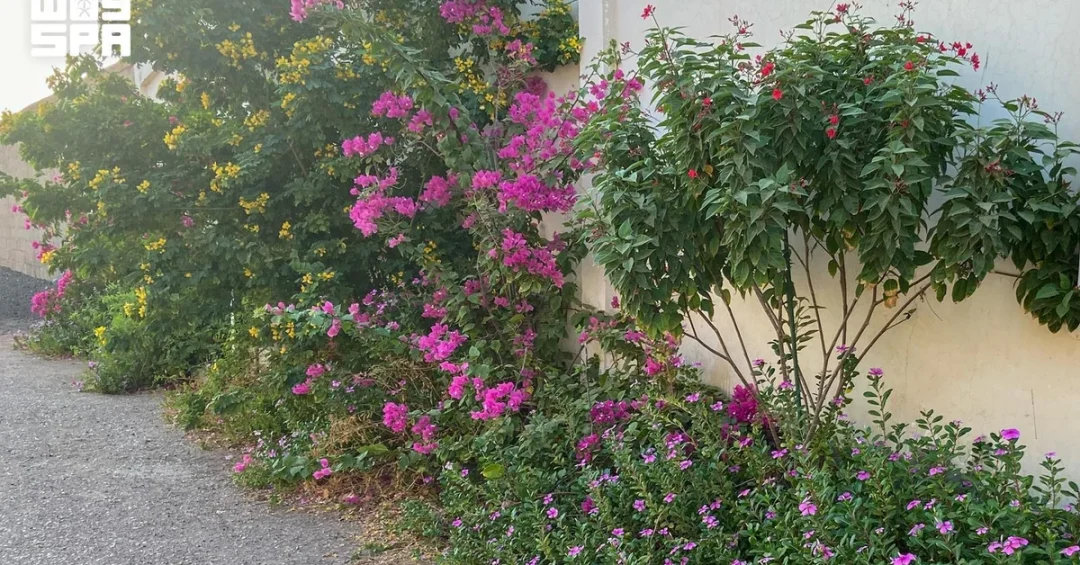
A growing movement across Saudi Arabia’s Qassim Region is turning residential entryways into vibrant green spaces, as homeowners embrace outdoor landscaping, environmental stewardship, and neighborhood beautification in a trend reported by the Saudi Press Agency (SPA). From the regional capital of Buraidah to surrounding towns and villages, climbing plants, flowering shrubs, and carefully arranged planters are redefining how residents present their homes to the street. The development reflects a broader cultural shift toward sustainable urban greening that aligns with the Kingdom’s environmental and quality-of-life objectives under Vision 2030. What makes this grassroots transformation particularly noteworthy is that it is being driven by individual families and local businesses rather than by any single government program, suggesting a deep and durable change in community attitudes toward the domestic environment.
The phenomenon is not limited to affluent households or expansive villas. According to official Saudi information released through SPA, residents of compact homes are also participating by using vertical planters, hanging pots, and climbing trellises that preserve pedestrian access while adding color and life to facades. This inclusive approach means that the greening culture is spreading across a wide spectrum of Qassim society, from long-established family homes to newer residential developments. The result is a visible improvement in the region’s urban landscape, with streetscapes gaining a distinctive character that blends aesthetic appeal with regional traditions of hospitality and care for one’s domestic environment. Could this community-led model offer a template for other Saudi regions seeking to balance urban growth with environmental responsibility?
Context and Background
Qassim Region has long been recognized as one of the Kingdom’s most important agricultural heartlands, renowned for its date palm groves, citrus orchards, and farming heritage. That agricultural identity provides a natural foundation for the current enthusiasm for residential landscaping. Homeowners in the region are drawing on generations of accumulated knowledge about local soil conditions, water availability, and climate patterns to create entryways that are both beautiful and resilient. The SPA report notes that this approach blends aesthetics with regional traditions of hospitality, reflecting a cultural preference for welcoming, well-tended domestic spaces that greet visitors with warmth and care. In a region where the front gate has traditionally served as a symbol of family pride and generosity, the addition of flowering plants and ornamental foliage carries meaning that extends well beyond decoration.
The timing of this trend is significant. Saudi Arabia is investing heavily in urban quality-of-life improvements as part of Vision 2030, the national transformation strategy launched under the leadership of Crown Prince Mohammed bin Salman. While major projects such as NEOM, the Red Sea development, and Diriyah Gate capture international headlines, quieter changes at the neighborhood level are equally important to the Kingdom’s long-term social and environmental goals. Residential greening contributes directly to reduced urban heat, improved air quality, and enhanced community well-being. It also supports the Ministry of Environment, Water and Agriculture’s broader objectives around sustainable water use and native vegetation conservation. For international observers, Qassim’s home-entrance gardens offer a window into how Vision 2030 is being translated into everyday life across the Kingdom.
Another factor driving the trend is the growing availability of specialized gardening products and services in the local market. Nurseries, landscaping enterprises, and small agricultural businesses have expanded their offerings to meet demand for seedlings, specialized soil, smart irrigation hardware, and maintenance services. This commercial ecosystem makes it easier for ordinary families to participate, lowering the barriers to entry that might otherwise limit residential gardening to those with significant time or resources. The SPA report confirms that demand has been sustained across multiple seasons, indicating that the trend is not a passing fashion but a structural shift in how Qassim residents approach their home exteriors.
Key Details
Among the prominent species favored for local facades is bougainvillea, selected for its rich spectrum of blooms and adaptable growth. The plant’s ability to thrive in Qassim’s arid summer climate while producing vivid magenta, purple, and orange bracts has made it a staple of entryway design. Other popular varieties include frangipani, Arabian jasmine, damask roses, basil, lavender, and diverse seasonal ornamentals suited to outdoor settings. Homeowners utilize climbing plants on exterior walls, boundary fences, and entry arches, complemented by terracotta and stone planters along walkways. The combination of vertical and ground-level planting creates a layered visual effect that maximizes greenery within limited spaces. Careful coordination of color, scale, light requirements, and drainage allows homeowners to establish balanced botanical entryways without requiring full-scale gardens, according to the SPA report.
Sustainability remains central to residential landscaping given the region’s arid summer climate and seasonal shifts. Local nursery operator Abdulrahman Al-Saleh noted that Qassim hosts more than 55 native plant species suitable for cultivation, ranging from trees and shrubs to perennials and annuals. He emphasized that leveraging native flora ensures greater climate adaptability, water efficiency, and visual vitality. Al-Saleh pointed out that entry beautification has expanded beyond expansive villas to compact residential spaces through vertical planters, hanging pots, and climbing trellises that preserve pedestrian access. His observations underscore a key principle of sustainable landscaping: that the most resilient gardens are those designed in harmony with local ecological conditions rather than in opposition to them.
To ensure long-term sustainability, residents increasingly adopt water-conservation practices, including drip irrigation systems, scheduled watering cycles, organic mulching to limit evaporation, and drought-tolerant species selection. These techniques are well suited to Qassim’s climate, where summer temperatures can exceed 45 degrees Celsius and rainfall is minimal. Drip irrigation, in particular, delivers water directly to plant roots, reducing waste and improving plant health compared with traditional sprinkler systems. Organic mulching, meanwhile, helps retain soil moisture and suppress weeds, further reducing maintenance requirements. The adoption of such practices reflects a growing environmental awareness among Qassim residents and aligns with national efforts to optimize water consumption in one of the world’s most water-scarce regions.
International and Regional Impact
The Qassim greening trend carries implications that extend beyond the region’s borders. As Saudi Arabia positions itself as a global leader in sustainable development and climate action, community-level initiatives that reduce urban heat, enhance biodiversity, and promote water efficiency contribute to the Kingdom’s international environmental credentials. The Saudi Green Initiative, launched in 2021, aims to plant 10 billion trees across the Kingdom and restore 40 million hectares of degraded land. While residential entryway gardens represent a small fraction of that ambition, they demonstrate the grassroots engagement that will be essential to achieving national targets. International observers tracking Saudi Arabia’s environmental progress may find in Qassim a useful case study of how top-down policy and bottom-up community action can reinforce one another.
Regionally, the trend reflects a broader Gulf-wide interest in sustainable urban landscaping. Neighboring countries face similar challenges related to water scarcity, extreme heat, and rapid urbanization. Qassim’s experience could offer lessons for other arid regions seeking to promote residential greening without exacerbating water demand. The emphasis on native species, drip irrigation, and mulching represents a package of practices that is both environmentally sound and economically accessible. Moreover, the visual transformation of Qassim’s residential streetscapes contributes to the region’s appeal as a destination for domestic tourism and cultural exchange, complementing Saudi Arabia’s efforts to showcase its diverse regional identities to international visitors.
Economic and Strategic Significance
Beyond enhancing the visual landscape and neighborhood cleanliness, the widespread interest in residential gardening has energized the local economy. Nurseries, landscaping enterprises, families working in the cottage industry, and small agricultural businesses continue to see sustained demand for seedlings, specialized soil, smart irrigation hardware, and maintenance services. This economic activity reinforces a sustainable culture of urban greening across the region and creates livelihood opportunities in sectors that align with Vision 2030’s goals for economic diversification and private-sector growth. The cottage industry dimension is particularly notable, as it enables families to participate in the gardening economy through the production of seedlings, handmade planters, or maintenance services, thereby contributing to household incomes and local employment.
Strategically, the greening of Qassim’s residential entryways supports several national priorities simultaneously. It advances environmental sustainability by promoting water-efficient landscaping and native species cultivation. It enhances quality of life by creating more attractive, cooler, and healthier neighborhoods. It stimulates local economic activity in agriculture-adjacent sectors. And it reinforces cultural identity by celebrating regional traditions of hospitality and domestic care. For a Kingdom pursuing comprehensive transformation under Vision 2030, such multifaceted benefits illustrate how small-scale community initiatives can contribute to large-scale national objectives. The SPA report’s documentation of the trend also highlights the role of official Saudi media in capturing and sharing stories of grassroots progress with domestic and international audiences.
Vision 2030 Alignment
The Qassim home-entrance greening movement aligns closely with multiple pillars of Vision 2030, particularly those focused on environmental sustainability, quality of life, and economic diversification. The Kingdom’s Quality of Life Program, one of the Vision 2030 realization programs, aims to improve urban environments, promote healthy lifestyles, and enhance the aesthetic appeal of Saudi cities and towns. Residential landscaping contributes directly to these objectives by creating greener, more inviting neighborhoods that encourage outdoor activity and community interaction. The trend also supports the National Environment Strategy and the Saudi Green Initiative by promoting native vegetation, water conservation, and urban biodiversity. As more Qassim residents adopt sustainable gardening practices, they become active participants in the Kingdom’s environmental transformation.
Looking ahead, the continued growth of residential greening in Qassim and other Saudi regions will depend on sustained access to native plant species, affordable irrigation technology, and knowledgeable local service providers. The Ministry of Environment, Water and Agriculture and related agencies have a role to play in supporting nurseries, promoting best practices, and raising awareness about water-efficient landscaping. If the current momentum is maintained, Qassim’s vibrant home entrances could become a lasting feature of the region’s urban identity and a source of pride for residents. More broadly, the trend demonstrates how Vision 2030’s ambitions are being realized not only through megaprojects but also through the everyday choices of Saudi families who are reshaping their surroundings with care, creativity, and a clear eye toward the future. Is there any doubt that the Kingdom’s green transformation is taking root at every level of society?
20 Questions
Q1. What is happening with home entrances in Saudi Arabia’s Qassim Region?
A1. Homeowners across Qassim are transforming their residential entryways with vibrant flowers, climbing plants, and ornamental foliage, reflecting a growing community commitment to outdoor landscaping, environmental stewardship, and neighborhood beautification, as reported by the Saudi Press Agency.
Q2. Which plant species are most popular for Qassim home facades?
A2. Bougainvillea is particularly favored for its rich spectrum of blooms and adaptable growth. Other popular varieties include frangipani, Arabian jasmine, damask roses, basil, lavender, and diverse seasonal ornamentals suited to outdoor settings in the region.
Q3. How many native plant species does Qassim host for cultivation?
A3. According to local nursery operator Abdulrahman Al-Saleh, Qassim hosts more than 55 native plant species suitable for cultivation, ranging from trees and shrubs to perennials and annuals, offering significant potential for sustainable landscaping.
Q4. Why is sustainability important for residential landscaping in Qassim?
A4. Qassim experiences an arid summer climate with extreme heat and minimal rainfall. Sustainability practices such as water conservation and native species selection ensure that residential gardens remain viable and environmentally responsible over the long term.
Q5. What water-conservation practices are residents adopting?
A5. Residents are increasingly using drip irrigation systems, scheduled watering cycles, organic mulching to limit evaporation, and drought-tolerant species selection. These techniques reduce water waste while maintaining healthy, attractive gardens in the region’s challenging climate.
Q6. How are compact homes participating in this greening trend?
A6. Compact residential spaces are using vertical planters, hanging pots, and climbing trellises that preserve pedestrian access. Careful coordination of color, scale, light requirements, and drainage allows homeowners to create balanced botanical entryways without full-scale gardens.
Q7. What economic impact has residential gardening had in Qassim?
A7. Nurseries, landscaping enterprises, families working in the cottage industry, and small agricultural businesses have seen sustained demand for seedlings, specialized soil, smart irrigation hardware, and maintenance services, energizing the local economy and reinforcing a sustainable culture of urban greening.
Q8. Who is Abdulrahman Al-Saleh and what did he say?
A8. Abdulrahman Al-Saleh is a local nursery operator in Qassim. He noted that leveraging native flora ensures greater climate adaptability, water efficiency, and visual vitality, and highlighted the expansion of entry beautification to compact residential spaces.
Q9. How does this trend reflect regional traditions of hospitality?
A9. The approach blends aesthetics with Qassim’s regional traditions of hospitality and care for one’s domestic environment. Well-tended entryways greet visitors warmly, reflecting cultural values of generosity and pride in the family home.
Q10. What role do climbing plants play in Qassim entryway design?
A10. Climbing plants are used on exterior walls, boundary fences, and entry arches, complemented by terracotta and stone planters along walkways. This layered approach maximizes greenery within limited spaces and creates visually striking facades.
Q11. How does this trend align with Saudi Vision 2030?
A11. The trend supports Vision 2030’s Quality of Life Program, National Environment Strategy, and Saudi Green Initiative by promoting native vegetation, water conservation, urban biodiversity, and enhanced neighborhood aesthetics across the Kingdom.
Q12. What is the Saudi Green Initiative and how does it relate?
A12. The Saudi Green Initiative, launched in 2021, aims to plant 10 billion trees and restore 40 million hectares of degraded land. Residential greening in Qassim demonstrates grassroots engagement essential to achieving these national environmental targets.
Q13. What benefits do green entryways provide to neighborhoods?
A13. Green entryways enhance visual landscapes, improve neighborhood cleanliness, reduce urban heat, support air quality, and create more inviting public spaces. They also encourage community interaction and pride in shared residential environments.
Q14. How does this trend support economic diversification?
A14. The gardening trend creates livelihood opportunities in nurseries, landscaping, cottage industries, and small agricultural businesses. This aligns with Vision 2030’s goals for private-sector growth and economic diversification beyond oil dependence.
Q15. What role does the Ministry of Environment, Water and Agriculture play?
A15. The Ministry supports nurseries, promotes best practices, and raises awareness about water-efficient landscaping. It also advances national objectives around sustainable water use and native vegetation conservation, complementing community-led greening efforts.
Q16. Could Qassim’s model be replicated in other Saudi regions?
A16. Yes. The emphasis on native species, drip irrigation, and mulching represents accessible practices suitable for other arid regions. Qassim’s experience offers a useful case study for balancing urban growth with environmental responsibility.
Q17. How does this trend contribute to domestic tourism appeal?
A17. The visual transformation of Qassim’s residential streetscapes enhances the region’s appeal as a destination for domestic tourism and cultural exchange, complementing Saudi Arabia’s efforts to showcase its diverse regional identities to visitors.
Q18. What is the significance of using native plant species?
A18. Native species ensure greater climate adaptability, water efficiency, and visual vitality. They are naturally suited to local conditions, requiring less water and maintenance while supporting regional biodiversity and ecological resilience.
Q19. How does SPA document this community trend?
A19. The Saudi Press Agency reported on the trend from Buraidah, highlighting homeowners’ use of climbing plants, planters, and sustainable practices, as well as the economic activity generated by nurseries and landscaping enterprises across Qassim Region.
Q20. What does this trend reveal about Vision 2030’s impact on daily life?
A20. It shows Vision 2030’s ambitions being realized through everyday choices of Saudi families. Beyond megaprojects, grassroots initiatives like residential greening demonstrate how national transformation is taking root at the community level across the Kingdom.
Reader Feedback
We value your thoughts. Please share your feedback on this article.
Your feedback helps us improve our coverage.
Related articles
 Arab League Condemns Houthi Attack on Madinah, Backs Saudi Arabia
 Saudi Arabia, UN Sign Anti-Corruption Capacity Agreement
 Saudi Arabia Launches Relief Aid for Flores Island Quake Victims
 Saudi Red Crescent in Al-Baha Enhances Readiness for Rainy Weather with 20 Ambulance and Rapid Response Teams
 Jazan Launches Initiative to Plant 1,000 Saplings
 Jeddah Governor Receives Kazakhstan Consul General