


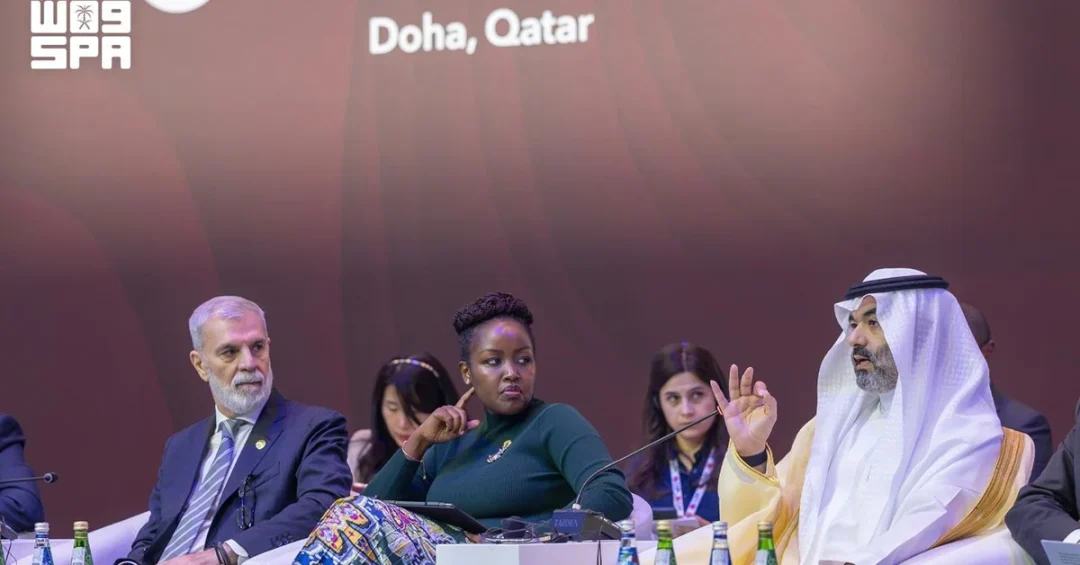
Saudi Arabia’s Minister of Communications and Information Technology, Eng. Abdullah Alswaha, affirmed in Doha that under the leadership of the Custodian of the Two Holy Mosques King Salman bin Abdulaziz Al Saud and His Royal Highness the Crown Prince, the Kingdom continues to work with international partners to strengthen connectivity and expand access to technology and artificial intelligence for all. Speaking at the Ministerial Roundtable during the International Telecommunication Union (ITU) Plenipotentiary Conference, Alswaha reaffirmed Saudi Arabia’s full support for the Doha Declaration and called for broadening global partnerships beyond connectivity to include access to computing capabilities, ensuring that more countries can participate in the AI era.
Is it not time for the world to move beyond simply connecting people and begin empowering them to shape the technologies of tomorrow? The minister’s remarks, delivered on November 8, 2026, came as part of Saudi Arabia’s participation in the ITU’s highest-level gathering, where global leaders convene to set the course for digital development. Alswaha’s address underscored a central theme: the AI revolution must be inclusive, and Saudi Arabia is positioning itself as a bridge between energy-rich capabilities and global digital equity. The Kingdom’s participation reflects its growing role as a convenor and contributor to international efforts that align with its own Vision 2030 ambitions to diversify the economy and lead in technology.
Context and Background
Why does the world need a new approach to digital inclusion as artificial intelligence reshapes economies? The answer lies in the rapid evolution of technology and the persistent gaps that threaten to leave millions behind. Over the past four years, global connectivity efforts have yielded tangible results: the number of people without internet access has fallen from 2.6 billion to 2 billion, according to figures cited by Alswaha. This progress, driven in part by initiatives such as the ITU’s Partner2Connect coalition, demonstrates what coordinated international action can achieve. However, the minister warned that without a similar push for computing access, digital inequality could re-emerge in a more severe form, shifting from a connectivity gap that excludes nearly a quarter of the world’s population to an AI-driven gap that could exclude the majority from contributing to and benefiting from artificial intelligence.
Saudi Arabia’s engagement in this arena is not new. The Kingdom has long been a proactive member of the ITU and a supporter of initiatives that promote digital development. Its partnership with the ITU through the EQUALS program, which focuses on empowering women in technology, has yielded notable results. Alswaha highlighted that Saudi Arabia recorded the highest proportion of women among leading AI researchers and innovators in the countries covered by Stanford University’s 2026 AI Index Report. This achievement reflects the Kingdom’s broader efforts under Vision 2030 to enhance women’s participation in all sectors, including science and technology. The minister’s call to move from “Partner2Connect” to “Partner2Compute” builds on this momentum, aiming to expand access to the computing power necessary for AI development.
Key Details
What specific actions is Saudi Arabia taking to bridge the AI divide? At the Ministerial Roundtable, Alswaha outlined a clear vision: the Kingdom is leveraging its position as a global energy partner to support the AI era by allocating land, computing capacity, and energy resources. This approach is designed to help expand opportunities for all and ensure that no one is left behind. He noted that approximately 90% of the computing capacity required to develop and operate advanced AI models is concentrated in just two countries. This stark concentration underscores the need for international partnerships that broaden access to these capabilities, enabling more nations to participate in the AI-driven economy. Saudi Arabia’s own investments in data centers, cloud computing, and AI infrastructure position it as a potential hub for regional and global AI development.
The minister also praised the progress made through the Partner2Connect initiative, which has mobilized $100 billion to narrow the digital divide. He called for building on these achievements by transitioning to a new phase focused on computing. “Moving from Partner2Connect to Partner2Compute” would involve expanding access to the computational resources needed to develop AI and benefit from its applications. This shift is critical because AI development requires massive computing power, which is currently out of reach for many countries. By advocating for this transition, Saudi Arabia is positioning itself as a champion of equitable access to advanced technologies. The Kingdom’s own experience in building robust digital infrastructure, including high-speed internet and cloud services, serves as a model for others.
Alswaha’s remarks also touched on the importance of international collaboration in aligning efforts. He reaffirmed Saudi Arabia’s commitment to continued collaboration with the international community to strengthen connectivity and build a better future for all in an increasingly digital and intelligent world. This commitment is reflected in the Kingdom’s active participation in ITU conferences and its support for the Doha Declaration, which aims to set a global agenda for digital cooperation. By working with partners, Saudi Arabia hopes to ensure that the benefits of AI are shared widely, rather than concentrated in a few hands.
International and Regional Impact
How will Saudi Arabia’s push for inclusive AI affect the global landscape? The Kingdom’s call for expanded access to computing capabilities resonates with many developing countries that fear being left behind in the AI revolution. By advocating for a “Partner2Compute” approach, Saudi Arabia is aligning itself with the interests of the Global South, which often lacks the infrastructure and resources to develop AI independently. This stance enhances the Kingdom’s diplomatic influence and positions it as a bridge-builder between advanced economies and emerging markets. It also complements Saudi Arabia’s broader foreign policy objectives, which include strengthening ties with African, Asian, and Latin American nations through technology and investment partnerships.
Regionally, Saudi Arabia’s leadership in digital cooperation reinforces its role as a stabilizing and forward-looking force in the Middle East. The Kingdom’s investments in AI and digital infrastructure are not only driving its own economic diversification but also creating opportunities for neighboring countries. For instance, Saudi data centers and cloud services can serve as regional hubs, enabling businesses and governments across the Middle East to access advanced computing resources. Moreover, the Kingdom’s emphasis on women’s empowerment in technology sets a positive example for the region, challenging stereotypes and showcasing the potential of inclusive growth. By championing these causes on international platforms like the ITU, Saudi Arabia is helping to shape a global digital agenda that reflects its values and interests.
Economic and Strategic Significance
Why is access to computing power a strategic priority for Saudi Arabia and the world? The answer lies in the economic transformation driven by AI. Artificial intelligence is expected to add trillions of dollars to the global economy in the coming decades, but only if its benefits are widely distributed. Saudi Arabia recognizes that its own economic future depends on embracing AI across sectors, from energy to healthcare to finance. By building domestic computing capacity and advocating for global access, the Kingdom is positioning itself at the forefront of this transformation. The allocation of land, energy, and computing resources is part of a broader strategy to attract investment, foster innovation, and create high-skilled jobs for Saudis.
Furthermore, Saudi Arabia’s energy resources give it a unique advantage in the AI era. AI models require enormous amounts of electricity, and the Kingdom’s abundant oil and gas reserves, combined with its growing renewable energy capacity, make it an attractive location for data centers and AI research. By leveraging this advantage, Saudi Arabia can become a global hub for AI development, serving both regional and international markets. This aligns with Vision 2030’s goal of diversifying the economy away from oil dependence, as the Kingdom seeks to build a knowledge-based economy driven by technology and innovation. The minister’s call for international partnerships in computing is thus not just altruistic; it is also a strategic move to ensure that Saudi Arabia remains a key player in the global digital economy.
Vision 2030 Alignment
How does Saudi Arabia’s digital diplomacy connect to its long-term vision? Vision 2030, the Kingdom’s ambitious blueprint for economic and social transformation, places technology and innovation at its core. The goals of expanding connectivity, empowering women, and building a diversified economy are all reflected in Alswaha’s remarks at the ITU conference. The Kingdom’s support for the Doha Declaration and its call for a “Partner2Compute” initiative demonstrate its commitment to international cooperation as a means to achieve these goals. By helping to bridge the global digital divide, Saudi Arabia is not only contributing to a more equitable world but also creating new markets and partners for its own technology sector.
In conclusion, Saudi Arabia’s participation in the ITU Plenipotentiary Conference underscores its emergence as a global leader in digital and AI diplomacy. Under the leadership of King Salman and the Crown Prince, the Kingdom is leveraging its resources and strategic position to advocate for inclusive access to technology and computing. As the world stands on the brink of an AI-driven transformation, Saudi Arabia’s efforts to ensure that no one is left behind are both timely and commendable. The Kingdom’s vision for a connected, intelligent, and inclusive future is not just a national ambition but a contribution to global progress. With continued international partnerships, Saudi Arabia is helping to build a digital world that benefits all of humanity.
20 Questions
Q1. Who is the Saudi Minister of Communications and Information Technology?
A1. Eng. Abdullah Alswaha serves as the Minister of Communications and Information Technology for Saudi Arabia. He represented the Kingdom at the ITU Plenipotentiary Conference in Doha.
Q2. What event did Minister Alswaha attend in Doha?
A2. He attended the Ministerial Roundtable during the International Telecommunication Union (ITU) Plenipotentiary Conference, where global leaders discuss digital development policies.
Q3. What is the Doha Declaration?
A3. The Doha Declaration is a document supported by Saudi Arabia that outlines global commitments to expand digital access and cooperation, reaffirmed by Minister Alswaha at the conference.
Q4. How many people lack internet access according to Alswaha?
A4. Alswaha noted that the number of people without internet access has declined from 2.6 billion to 2 billion over the past four years, showing progress in global connectivity.
Q5. What percentage of computing capacity for advanced AI is concentrated in two countries?
A5. Approximately 90% of the computing capacity required to develop and operate advanced AI models is concentrated in just two countries, highlighting a significant global imbalance.
Q6. What initiative has mobilized $100 billion for digital inclusion?
A6. The Partner2Connect initiative, supported by Saudi Arabia and the ITU, has mobilized $100 billion to narrow the digital divide and improve global connectivity.
Q7. What is “Partner2Compute”?
A7. It is a proposed next phase of international cooperation, advocated by Alswaha, to expand access to computing capabilities needed for AI development beyond just connectivity.
Q8. How is Saudi Arabia supporting the AI era with its resources?
A8. Saudi Arabia is allocating land, computing capacity, and energy resources to support AI development, leveraging its position as a global energy partner to expand opportunities.
Q9. What did Alswaha say about women in AI in Saudi Arabia?
A9. He highlighted that Saudi Arabia recorded the highest proportion of women among leading AI researchers and innovators in countries analyzed in Stanford University’s 2026 AI Index Report.
Q10. What program partners Saudi Arabia with the ITU for women’s empowerment?
A10. The EQUALS program is a partnership between Saudi Arabia and the ITU aimed at empowering women in technology and digital fields, with notable progress achieved.
Q11. Why is digital inequality a concern in the AI era?
A11. Alswaha cautioned that digital inequality could worsen, shifting from a connectivity gap excluding a quarter of the population to an AI gap excluding the majority from contributing to and benefiting from AI.
Q12. What is the ITU Plenipotentiary Conference?
A12. It is the highest-level meeting of the International Telecommunication Union, held every four years, where member states set policies and priorities for global telecommunications and digital development.
Q13. How does Saudi Arabia’s participation benefit the global community?
A13. Saudi Arabia’s advocacy for inclusive AI and computing access helps bridge the digital divide, ensuring more countries can participate in the AI-driven economy and benefit from technological advancements.
Q14. What role does Saudi Arabia’s energy sector play in AI development?
A14. The Kingdom’s abundant energy resources, including oil, gas, and renewables, provide the power needed for data centers and AI computing, making it an attractive hub for AI infrastructure.
Q15. What is Vision 2030 and how does it relate to this news?
A15. Vision 2030 is Saudi Arabia’s plan to diversify its economy and promote social progress. The digital and AI initiatives align with its goals of technological leadership and inclusive growth.
Q16. What did Alswaha say about international partnerships?
A16. He called for expanding partnerships beyond connectivity to include access to computing capabilities, ensuring broader participation in the AI era and aligning efforts globally.
Q17. How has Saudi Arabia advanced women’s participation in technology?
A17. Through initiatives like the EQUALS program and national policies, Saudi Arabia has increased women’s involvement in tech and AI, achieving top rankings in AI researcher representation.
Q18. What is the significance of the $100 billion mobilized by Partner2Connect?
A18. It represents a major global investment to improve digital connectivity, helping reduce the number of people without internet access and fostering inclusive digital growth.
Q19. What does Saudi Arabia aim to achieve by 2030 in digital transformation?
A19. Saudi Arabia aims to build a knowledge-based economy, expand digital infrastructure, and become a global leader in AI and technology, as part of Vision 2030.
Q20. How can other countries collaborate with Saudi Arabia on AI initiatives?
A20. Countries can partner through ITU programs like Partner2Connect and proposed Partner2Compute, or engage in bilateral agreements to share computing resources and expertise for AI development.
Reader Feedback
We value your thoughts. Please share your feedback on this article.
Your feedback helps us improve our coverage.
Related articles
 Saudi Minister Signs GCC Railway Link Agreement in Bahrain
 Transport Ministry Showcases Pilgrim Services at Hajj Conference
 Saudi Ministry Wins IRF Global Award for Road Asset Evaluation
 Saudia Group Showcases Integrated Services for Pilgrims at Hajj Conference and Exhibition
 GCC Chief Condemns Houthi Attacks on Riyadh, Saudi Regions
 Jordan Condemns Houthi Attacks on Saudi Arabia