


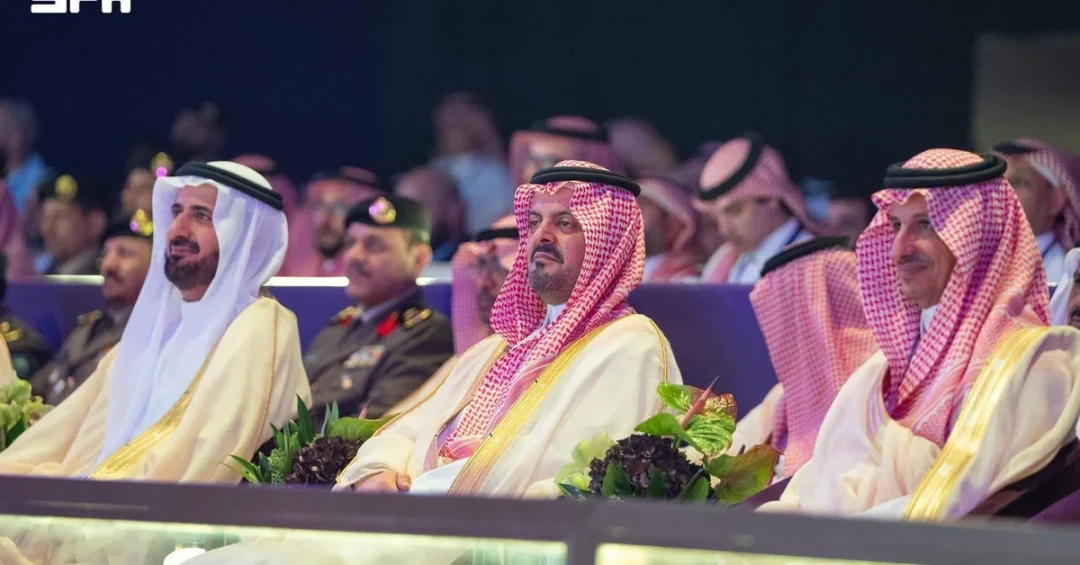
Under the patronage of Custodian of the Two Holy Mosques King Salman bin Abdulaziz Al Saud, Deputy Governor of Makkah Region Prince Saud bin Mishaal bin Abdulaziz inaugurated the sixth Hajj Conference and Exhibition on Sunday in Jeddah, organized by the Ministry of Hajj and Umrah under the theme “From Makkah to the World.” The event, held at the Jeddah Superdome in cooperation with the Pilgrim Experience Program, a key initiative of Saudi Vision 2030, brought together princes, ministers, heads of Hajj delegations, and representatives of pilgrims’ affairs offices from across the Islamic world. The conference underscores the Kingdom’s unwavering commitment to serving the Two Holy Mosques and ensuring that the Hajj journey remains safe, seamless, and spiritually enriching for millions of pilgrims.
Have you ever considered how a single gathering can shape the experience of millions of faithful travelers? The sixth Hajj Conference and Exhibition represents precisely that—a global platform where innovation, coordination, and dedication converge to elevate one of the world’s most significant religious journeys. Running for four days, the event gathers more than 520 government, private, and nonprofit entities from Saudi Arabia and abroad, with participation from over 150 countries. Spanning over 67,000 square meters, it serves as a testament to the Kingdom’s meticulous planning and its leadership’s deep-rooted commitment to the comfort and well-being of pilgrims. This year’s edition builds on a legacy of success, further solidifying Saudi Arabia’s role as a global facilitator of Hajj and Umrah.
Context and Background
How did the Hajj Conference and Exhibition become a cornerstone of global pilgrimage preparation? Since its inception, the event has evolved into a vital enabler of the Hajj system, fostering early preparations, partnership development, and contract finalization. Under the visionary leadership of the Custodian of the Two Holy Mosques, the Kingdom has consistently prioritized the enhancement of services for pilgrims, employing cutting-edge technologies and strengthening integration among government agencies. The conference aligns with the Pilgrim Experience Program, one of the Saudi Vision 2030 realization programs, which aims to enrich the spiritual journey of pilgrims and enhance the quality of services provided at the Two Holy Mosques and the Holy Sites.
The sixth edition, themed “From Makkah to the World,” highlights the global impact of Hajj and the Kingdom’s role in uniting the Islamic world. It reflects the continuous efforts of the Ministry of Hajj and Umrah, led by Minister Tawfig Al-Rabiah, to improve the Hajj and Umrah system. Over the years, the conference has facilitated numerous agreements and memoranda of understanding, bringing together stakeholders from across the globe to share best practices and innovative solutions. This year’s event is no exception, featuring a series of strategic partnerships that promise to further elevate the pilgrim experience.
Key Details and Announcements
What specific advancements were unveiled at this year’s conference? During the opening ceremony, Prince Saud bin Mishaal delivered a speech on behalf of King Salman, welcoming attendees to their second home, Saudi Arabia. He conveyed the King’s greetings and emphasized the Kingdom’s blessed efforts to serve the Two Holy Mosques and pilgrims, placing this responsibility at the forefront of its priorities. The speech underscored Saudi Arabia’s commitment to continuously developing the Hajj system, improving service quality, and employing the latest technologies to facilitate pilgrims’ journeys from their departure from their home countries until their safe return.
Minister Al-Rabiah then reviewed major developments in the Hajj and Umrah system, including the strengthening of competition and an increase in the number of service providers for international pilgrims to 34 companies. He highlighted the expansion of direct contracting arrangements in 58 countries, the enabling of pilgrims from 75 additional nations to perform Hajj through the Direct Hajj Program, and the beginning of early preparations for the 1448 AH Hajj season in cooperation with pilgrims’ affairs offices in 78 countries. Al-Rabiah also noted improvements to the Holy Sites and transportation services, as well as digital transformation initiatives that have increased the number of users of the Nusuk platform and application to more than 70 million. He proudly announced that pilgrim satisfaction reached 93% during the 1447 AH Hajj season, a clear indication of the system’s readiness and high efficiency.
The ceremony also witnessed the signing of eight agreements and memoranda of understanding, covering a wide range of areas. These include a cooperation agreement between the Ministry of Hajj and Umrah and the Ministry of Education to enable education-sector personnel to contribute to serving pilgrims; an agreement with the Ministry of Tourism to enhance the quality of accommodation services in Makkah and Madinah; an MoU with Saudia Airlines to establish and operate a pilgrim travel terminal in Makkah; and a cooperation agreement with King Abdullah University of Science and Technology (KAUST) to develop talent, research, and innovation in pilgrim services. Additionally, agreements were signed between the King Abdulaziz Endowment for Al-Ain Al-Azizia and the Haji and Mu’tamer’s Gift Charitable Association (Hadiyah), as well as a strategic partnership between the General Authority for Awqaf, the Pilgrim Experience Program, and the Nusuk Humanitarian Foundation. The eighth agreement, the Wasel Al-Haram project, signed between the Royal Commission for Makkah City and Holy Sites and two private-sector consortia, is valued at SAR5.6 billion and aims to develop stations and routes leading to and from the Grand Mosque.
How do these agreements translate into tangible benefits for pilgrims? Each partnership is designed to address specific aspects of the pilgrim journey, from arrival to departure. The collaboration with the Ministry of Education will mobilize skilled personnel to assist during peak seasons, while the Ministry of Tourism’s involvement will ensure that accommodation meets the highest standards of comfort and safety. The pilgrim travel terminal in Makkah, developed with Saudia Airlines, will streamline arrivals and departures, reducing wait times and enhancing convenience. The partnership with KAUST will drive innovation, harnessing research and technology to solve challenges and improve services. The Wasel Al-Haram project, with its substantial investment, will transform transportation infrastructure around the Grand Mosque, making movement easier for the millions who visit annually. These initiatives collectively reflect a holistic approach to pilgrim care, leaving no stone unturned.
International and Regional Impact
What does the global participation in this conference signify for the Islamic world? The presence of over 150 countries and more than 520 entities underscores the international dimension of Hajj and the Kingdom’s role as a unifying force. The conference provides a platform for heads of pilgrims’ affairs offices to collaborate, share insights, and coordinate efforts, ensuring that pilgrims from every corner of the globe receive consistent, high-quality services. The address by Indonesian Minister of Hajj and Umrah Dr. Mochamad Irfan Yusuf on behalf of the heads of pilgrims’ affairs offices highlighted the collective commitment to enhancing the pilgrimage experience. Such international cooperation not only benefits pilgrims but also strengthens diplomatic and cultural ties among nations.
The regional impact is equally profound. By bringing together government agencies, private companies, and nonprofit organizations, the conference fosters economic growth and innovation within Saudi Arabia and beyond. The agreements signed pave the way for increased investment in infrastructure, technology, and human capital, creating jobs and stimulating local economies. Moreover, the focus on digital transformation and smart solutions positions the Kingdom as a leader in leveraging technology for religious tourism, setting a benchmark for other nations. The conference’s theme, “From Makkah to the World,” encapsulates this outward-looking vision, demonstrating how the spiritual epicenter of Islam radiates benefits across the globe.
Economic and Strategic Significance
How does the Hajj industry contribute to Saudi Arabia’s economic diversification? Hajj and Umrah are not only spiritual endeavors but also significant economic drivers. The pilgrimage sector generates billions of riyals annually, supporting a wide range of industries from hospitality and transportation to retail and telecommunications. The sixth Hajj Conference and Exhibition amplifies this economic impact by facilitating contracts, partnerships, and investments. The SAR5.6 billion Wasel Al-Haram project, for instance, will create jobs, enhance infrastructure, and improve the overall pilgrimage experience, while also boosting the local economy. The involvement of private-sector consortia signals growing confidence in the sector and aligns with Vision 2030’s goal of increasing private-sector participation in the economy.
Strategically, the conference reinforces Saudi Arabia’s position as the custodian of Islam’s holiest sites and a leader in global pilgrimage management. By continuously improving the Hajj system, the Kingdom demonstrates its commitment to the welfare of pilgrims and its ability to manage large-scale events with precision and care. This enhances its soft power and diplomatic influence, as pilgrims return home with positive impressions of the Kingdom. Furthermore, the emphasis on digital transformation and innovation showcases Saudi Arabia’s progress in technology and smart solutions, aligning with Vision 2030’s objectives to build a diversified, knowledge-based economy. The conference thus serves as a microcosm of the Kingdom’s broader ambitions and achievements.
Vision 2030 Alignment
How does the Hajj Conference and Exhibition embody the goals of Saudi Vision 2030? The Pilgrim Experience Program, one of the Vision 2030 realization programs, aims to enrich the spiritual journey of pilgrims and enhance the quality of services provided. The conference directly supports this by fostering partnerships, driving innovation, and ensuring that the Hajj system remains world-class. The agreements signed, particularly those involving education, tourism, technology, and infrastructure, contribute to multiple Vision 2030 pillars, including economic diversification, human capital development, and enhanced quality of life. By enabling more pilgrims to perform Hajj and improving their satisfaction, the Kingdom is not only fulfilling its religious duty but also showcasing its capacity for modernization and progress.
As the sixth Hajj Conference and Exhibition concludes, it leaves in its wake a legacy of collaboration, innovation, and unwavering dedication to serving pilgrims. The event underscores the Kingdom’s leadership under Custodian of the Two Holy Mosques King Salman bin Abdulaziz Al Saud and His Royal Highness Crown Prince Mohammed bin Salman, and it sets the stage for future Hajj seasons that will be even more seamless and spiritually fulfilling. Through such initiatives, Saudi Arabia continues to demonstrate that its commitment to the Two Holy Mosques and pilgrims is absolute, and its vision for the future is as boundless as the faith that draws millions to its sacred sites. The world watches as the Kingdom transforms challenges into opportunities, ensuring that the journey of Hajj remains a beacon of hope and unity for all.
20 Questions
Q1. What is the sixth Hajj Conference and Exhibition?
A1. The sixth Hajj Conference and Exhibition is a major event organized by the Ministry of Hajj and Umrah in Jeddah, bringing together over 520 entities from 150 countries to enhance pilgrim services and prepare for future Hajj seasons.
Q2. Who inaugurated the conference?
A2. Deputy Governor of Makkah Region Prince Saud bin Mishaal bin Abdulaziz inaugurated the conference on behalf of Custodian of the Two Holy Mosques King Salman bin Abdulaziz Al Saud.
Q3. What is the theme of this year’s conference?
A3. The theme is “From Makkah to the World,” reflecting the global impact of Hajj and the Kingdom’s role in serving pilgrims from around the world.
Q4. Where was the conference held?
A4. The conference was held at the Jeddah Superdome in Jeddah, Saudi Arabia, spanning over 67,000 square meters.
Q5. How long does the conference last?
A5. The conference continues for four days, featuring exhibitions, speeches, and the signing of agreements.
Q6. What is the Pilgrim Experience Program?
A6. The Pilgrim Experience Program is one of the Saudi Vision 2030 realization programs aimed at enriching the spiritual journey of pilgrims and improving services at the Two Holy Mosques.
Q7. Who delivered a speech on behalf of King Salman?
A7. Prince Saud bin Mishaal bin Abdulaziz delivered a speech on behalf of King Salman, welcoming attendees and emphasizing the Kingdom’s commitment to serving pilgrims.
Q8. What major developments were highlighted by Minister Al-Rabiah?
A8. Minister Al-Rabiah highlighted increased service providers to 34 companies, direct contracting in 58 countries, and the Direct Hajj Program enabling pilgrims from 75 additional nations.
Q9. How many users does the Nusuk platform have?
A9. The Nusuk platform and application have more than 70 million users, reflecting the success of digital transformation initiatives in pilgrim services.
Q10. What was the pilgrim satisfaction rate for the 1447 AH Hajj season?
A10. Pilgrim satisfaction reached 93% during the 1447 AH Hajj season, demonstrating the high efficiency of the Hajj system.
Q11. How many agreements and MoUs were signed during the conference?
A11. Eight agreements and memoranda of understanding were signed, covering areas such as education, tourism, technology, and infrastructure.
Q12. What is the Wasel Al-Haram project?
A12. The Wasel Al-Haram project is a SAR5.6 billion initiative to develop stations and routes leading to and from the Grand Mosque, enhancing transportation services.
Q13. Which entities signed the agreement with the Ministry of Hajj and Umrah for education?
A13. The Ministry of Education signed an agreement to enable education-sector personnel to contribute to serving pilgrims during Hajj seasons.
Q14. What is the purpose of the MoU with Saudia Airlines?
A14. The MoU with Saudia Airlines aims to establish and operate a pilgrim travel terminal in Makkah, streamlining arrivals and departures for pilgrims.
Q15. How does KAUST contribute to pilgrim services?
A15. KAUST signed an agreement to develop talent, research, and innovation in pilgrim services, leveraging academic expertise to improve the Hajj experience.
Q16. What is the role of the General Authority for Awqaf in the conference?
A16. The General Authority for Awqaf signed strategic partnerships to establish and support initiatives serving pilgrims, including development and humanitarian projects.
Q17. How many countries participated in the conference?
A17. Over 150 countries participated, with more than 520 government, private, and nonprofit entities attending.
Q18. What is the Direct Hajj Program?
A18. The Direct Hajj Program allows pilgrims from 75 additional nations to perform Hajj directly, simplifying procedures and expanding access.
Q19. What did the Indonesian Minister of Hajj and Umrah address?
A19. Dr. Mochamad Irfan Yusuf delivered an address on behalf of the heads of pilgrims’ affairs offices, highlighting international cooperation in serving pilgrims.
Q20. How does the conference align with Saudi Vision 2030?
A20. The conference supports Vision 2030 by enhancing pilgrim services, fostering economic diversification, and showcasing Saudi Arabia’s commitment to modernization and global engagement.
Reader Feedback
We value your thoughts. Please share your feedback on this article.
Your feedback helps us improve our coverage.
Related articles
 Border Guard Showcases Pilgrim Services at Hajj Conference
 King Fahd Security College Joins Hajj Conference in Jeddah
 Saudi MCIT Minister Meets ITU Chief on AI, Space, 6G
 Manasek Al-Mashaer Showcases Pilgrim Services at Hajj Conference
 Saudi Minister Alswaha Calls for Inclusive AI Future at ITU
 Saudi Minister Signs GCC Railway Link Agreement in Bahrain