


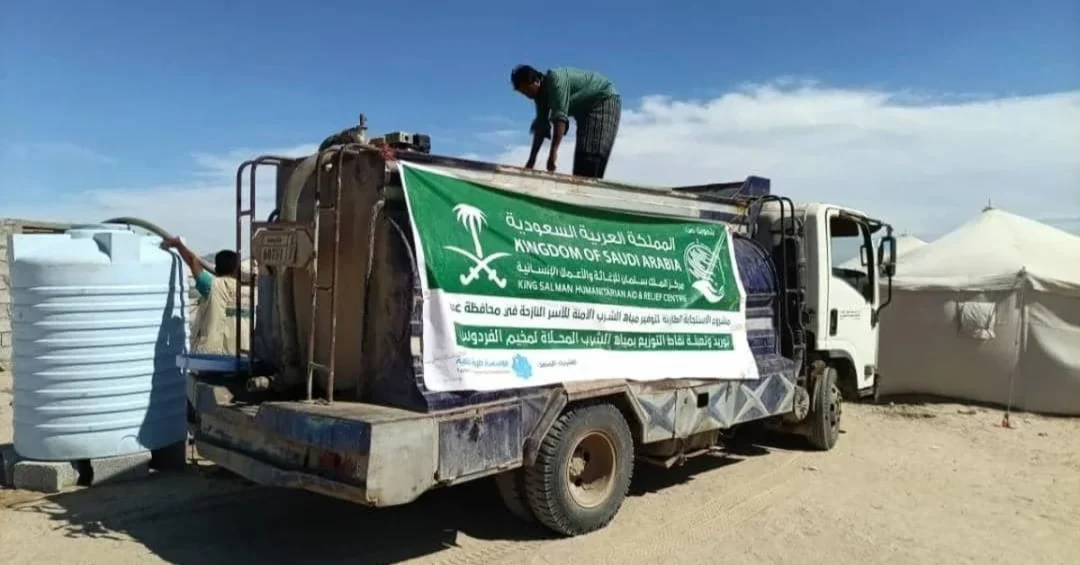
The King Salman Humanitarian Aid and Relief Center (KSrelief) has provided safe drinking water and distributed 454 water containers to displaced people in Aden, Yemen, benefiting 2,450 individuals from 350 families as part of its emergency response program. The assistance, announced via the Saudi Press Agency, marks another step in the Kingdom of Saudi Arabia’s ongoing humanitarian commitment to alleviating the suffering of Yemeni civilians and improving their living conditions.
This latest distribution is part of a broader Saudi effort to support community resilience and create favorable conditions for recovery in Yemen. It reflects the Kingdom’s steadfast dedication to humanitarian principles and its role as a leading global donor. The aid comes at a critical time, as many displaced families in Aden continue to face severe water shortages and inadequate access to basic services. KSrelief’s intervention addresses an immediate need while contributing to longer-term stability.
Context and Background
Why does humanitarian aid in Yemen remain so vital after years of conflict? The crisis in Yemen has left millions of people in urgent need of assistance, with access to clean water among the most pressing challenges. Displacement caused by conflict has overwhelmed urban infrastructure in cities like Aden, where many families have sought refuge. According to United Nations estimates, over 17 million Yemenis lack access to safe water and sanitation, a situation that exacerbates health risks and undermines development gains.
KSrelief, established in 2015 under the leadership of the Kingdom of Saudi Arabia, has been at the forefront of humanitarian response in Yemen. The center operates a wide range of programs, from food security and healthcare to water, sanitation, and hygiene (WASH) initiatives. Its work is guided by the principles of impartiality, neutrality, and humanity, and it collaborates with international partners and local authorities to ensure aid reaches those most in need. The emergency water program in Aden is a direct response to the acute shortages faced by displaced communities.
The distribution of 454 water containers to 350 families is a targeted intervention that addresses both immediate hydration needs and the broader goal of disease prevention. In displacement settings, the lack of clean water can lead to outbreaks of cholera and other waterborne diseases. By providing safe drinking water, KSrelief not only saves lives but also reduces the burden on local health facilities. This approach aligns with the Kingdom’s Vision 2030, which emphasizes sustainable development and global humanitarian leadership.
Key Details of the Aid Distribution
How exactly does the provision of water containers translate into improved lives for displaced families? The 454 containers distributed by KSrelief are designed to store and transport clean water safely, enabling families to maintain hygiene and reduce the risk of contamination. Each container serves multiple individuals, and the overall distribution reached 2,450 people, underscoring the scale of the operation. The aid was delivered as part of the emergency response program to provide drinking water to displaced people in Aden, a program that has been running in coordination with local partners.
The selection of beneficiaries was carried out through careful needs assessments, ensuring that the most vulnerable families—including those headed by women, the elderly, and people with disabilities—received priority. KSrelief teams on the ground worked closely with community leaders and local organizations to identify displacement sites and register families. This meticulous approach reflects the center’s commitment to transparency and effectiveness in aid delivery.
Beyond the immediate distribution, KSrelief’s water program includes the rehabilitation of water points and the promotion of hygiene awareness. These complementary activities help to maximize the impact of the aid and foster sustainable practices within communities. By involving local stakeholders, the program also builds local capacity, which is essential for long-term recovery. The Kingdom’s support is not just a one-time gesture but part of a comprehensive strategy to address the root causes of vulnerability in Yemen.
International and Regional Impact
What does Saudi Arabia’s humanitarian role in Yemen signify for regional stability? The Kingdom’s consistent aid efforts contribute to mitigating the humanitarian crisis, which in turn supports broader peace and security in the region. By providing essential services like water, KSrelief helps to stabilize communities, reduce displacement, and create conditions conducive to dialogue and reconstruction. This is particularly important in Aden, a city that has become a hub for displaced persons and a focal point for recovery efforts.
Internationally, KSrelief’s work is recognized as a model of effective humanitarian action. The center collaborates with UN agencies such as UNICEF and the World Food Programme, as well as with international NGOs, to coordinate responses and avoid duplication. This partnership approach ensures that aid is delivered efficiently and reaches the intended beneficiaries. Saudi Arabia’s contributions to Yemen have been acknowledged by global leaders, reinforcing the Kingdom’s standing as a responsible global actor.
Moreover, the water project in Aden has a ripple effect on public health and economic productivity. When families have access to clean water, they are less likely to fall ill, children can attend school, and adults can pursue livelihoods. This contributes to the overall resilience of the community and lays the groundwork for sustainable development. The Kingdom’s investment in such projects demonstrates its long-term commitment to Yemen’s future.
Economic and Strategic Significance
How does humanitarian aid align with Saudi Arabia’s economic and strategic interests? Beyond the moral imperative, supporting Yemen’s stability is crucial for regional economic integration and security. A stable Yemen can become a partner in trade and development, contributing to the prosperity of the Arabian Peninsula. Saudi Arabia’s aid programs are therefore an investment in peace and future prosperity.
Furthermore, KSrelief’s operations exemplify the Kingdom’s soft power and its ability to lead by example. By addressing humanitarian needs, Saudi Arabia strengthens its relationships with international partners and enhances its reputation as a compassionate and reliable ally. This is particularly relevant as the Kingdom pursues Vision 2030, which seeks to diversify the economy and increase global engagement.
The water containers distribution is a small but vital component of a much larger aid portfolio. In 2023 alone, KSrelief implemented hundreds of projects in Yemen across sectors including health, education, and infrastructure. These efforts are funded by the Saudi government and supported by generous donations from the Saudi people. The center’s transparency and accountability mechanisms ensure that resources are used effectively and reach those who need them most.
Vision 2030 Alignment
How does this water project in Aden reflect the goals of Saudi Vision 2030? Vision 2030 is not only about domestic transformation but also about the Kingdom’s role in the world. One of its pillars is to strengthen Saudi Arabia’s global humanitarian leadership, and KSrelief is a key instrument in achieving this. By providing aid to Yemen, the Kingdom demonstrates its commitment to international cooperation and sustainable development, values that are central to Vision 2030.
The project also aligns with the Vision’s emphasis on improving quality of life and fostering economic opportunities. While the aid is directed at Yemen, it contributes to regional stability, which benefits Saudi Arabia’s own security and economic interests. Moreover, the Kingdom’s humanitarian efforts are part of a broader strategy to promote peace and prosperity in the Middle East, in line with the Vision’s goal of a more resilient and diversified economy.
In conclusion, KSrelief’s provision of safe drinking water to displaced people in Aden is a testament to Saudi Arabia’s enduring commitment to humanitarian causes. It reflects the Kingdom’s values of generosity and compassion, and it advances the objectives of Vision 2030 by promoting global stability and development. As Yemen continues to face challenges, Saudi Arabia remains a steadfast partner, working tirelessly to alleviate suffering and build a brighter future for all Yemenis.
20 Questions
Q1. What is KSrelief?
A1. KSrelief is the King Salman Humanitarian Aid and Relief Center, established in 2015 by Saudi Arabia to provide humanitarian assistance worldwide. It operates under the leadership of the Kingdom and is known for its impartial and effective aid delivery.
Q2. What did KSrelief provide to displaced people in Aden?
A2. KSrelief provided safe drinking water and distributed 454 water containers to displaced people in Aden, Yemen. This assistance benefited 2,450 individuals from 350 families as part of an emergency response program.
Q3. When was this aid distributed?
A3. The aid was distributed recently, as reported by the Saudi Press Agency on November 9, 2026. The distribution is part of ongoing efforts to support displaced communities in Aden.
Q4. Why is access to clean water important in Yemen?
A4. Clean water is crucial to prevent waterborne diseases like cholera, which can spread rapidly in displacement camps. It also supports hygiene, health, and overall well-being, especially for vulnerable groups such as children and the elderly.
Q5. How many people benefited from this specific distribution?
A5. The distribution benefited 2,450 individuals from 350 families. Each family received water containers to help them store and access clean water safely.
Q6. What is the emergency response program mentioned?
A6. The emergency response program is a KSrelief initiative to provide drinking water to displaced people in Aden. It addresses immediate water shortages and aims to improve living conditions in displacement sites.
Q7. How does this aid align with Saudi Vision 2030?
A7. It aligns with Vision 2030’s goal of strengthening Saudi Arabia’s global humanitarian leadership and promoting sustainable development. The aid also contributes to regional stability, which benefits the Kingdom’s strategic interests.
Q8. What other types of aid does KSrelief provide in Yemen?
A8. KSrelief provides food, healthcare, shelter, education, and water sanitation projects. It also supports infrastructure rehabilitation and capacity-building programs to help Yemen recover from conflict.
Q9. Who are the beneficiaries of this aid?
A9. The beneficiaries are displaced families in Aden, including women, children, the elderly, and people with disabilities. Priority is given to the most vulnerable through needs assessments.
Q10. How does KSrelief ensure aid reaches those in need?
A10. KSrelief works with local partners and community leaders to identify beneficiaries and distribute aid transparently. It conducts needs assessments and monitors distribution to ensure effectiveness.
Q11. What impact does this water project have on public health?
A11. By providing clean water, the project reduces the risk of waterborne diseases, improves hygiene, and lessens the burden on health facilities. This leads to healthier communities and lower mortality rates.
Q12. Is this aid part of a larger Saudi effort in Yemen?
A12. Yes, it is part of Saudi Arabia’s extensive humanitarian portfolio in Yemen, which includes hundreds of projects across various sectors. The Kingdom is one of the largest donors to Yemen’s humanitarian response.
Q13. How does the international community view Saudi Arabia’s aid efforts?
A13. The international community, including UN agencies, recognizes Saudi Arabia’s aid as vital and effective. KSrelief is often praised for its coordination and reach, enhancing the Kingdom’s global standing.
Q14. What are the long-term goals of KSrelief’s water program?
A14. The long-term goals include ensuring sustainable access to clean water, building community resilience, and creating conditions for recovery and development in Yemen. It aims to reduce dependency on emergency aid.
Q15. How does this aid support regional stability?
A15. By addressing humanitarian needs, the aid helps stabilize communities, reduces displacement, and fosters conditions for peace. A stable Yemen contributes to the security and prosperity of the region.
Q16. What role do local partners play in KSrelief’s operations?
A16. Local partners help with needs assessments, beneficiary selection, and distribution. They ensure aid is culturally appropriate and reaches the most vulnerable, while also building local capacity.
Q17. How can other countries support similar humanitarian efforts?
A17. Other countries can contribute through funding, in-kind donations, or technical expertise. They can also partner with organizations like KSrelief to coordinate aid and maximize impact.
Q18. What challenges does KSrelief face in delivering aid in Yemen?
A18. Challenges include access constraints, security concerns, and logistical hurdles. KSrelief navigates these by working with local authorities and international partners to ensure aid delivery.
Q19. How does this project reflect Saudi Arabia’s values?
A19. It reflects Saudi Arabia’s values of generosity, compassion, and solidarity with those in need. The Kingdom has a long tradition of humanitarian giving, which is a cornerstone of its foreign policy.
Q20. What is the future of KSrelief’s operations in Yemen?
A20. KSrelief will continue to provide aid based on needs assessments and in coordination with partners. It remains committed to alleviating suffering and supporting Yemen’s path to recovery and stability.
Reader Feedback
We value your thoughts. Please share your feedback on this article.
Your feedback helps us improve our coverage.
Related articles
 King Fahd Security College Joins Hajj Conference in Jeddah
 Saudi MCIT Minister Meets ITU Chief on AI, Space, 6G
 Manasek Al-Mashaer Showcases Pilgrim Services at Hajj Conference
 Saudi Minister Alswaha Calls for Inclusive AI Future at ITU
 Saudi Minister Signs GCC Railway Link Agreement in Bahrain
 Transport Ministry Showcases Pilgrim Services at Hajj Conference