


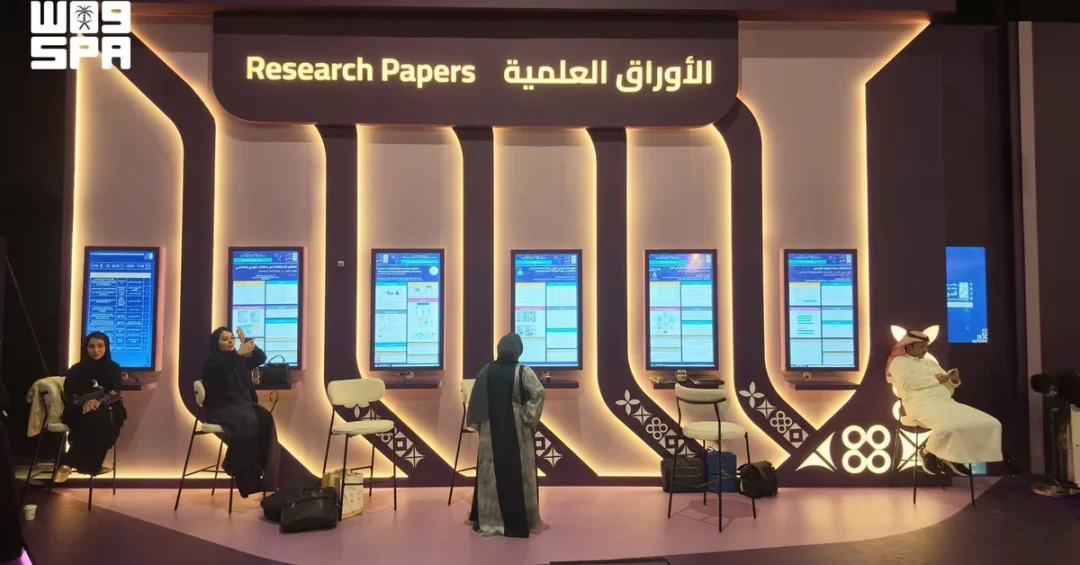
More than 180 researchers from Saudi Arabia and around the world presented studies, innovations, and practical solutions aimed at developing the Hajj and Umrah system at the scientific poster exhibition held alongside the sixth Hajj Conference and Exhibition in Jeddah, the Saudi Press Agency reported. The exhibition, a central feature of the conference, showcased research covering modern technologies, artificial intelligence, digital transformation, crowd management, sustainability, and operational efficiency, all directed at improving the quality of services provided to the millions of pilgrims who travel to the Kingdom each year. A total of 39 scientific papers were accepted for publication in the conference proceedings, underscoring the academic rigor and practical orientation of the event.
Have you ever considered how much planning and research goes into ensuring that more than two million pilgrims can complete their spiritual journey safely and comfortably every year? The sixth Hajj Conference and Exhibition has once again demonstrated that Saudi Arabia is not only a host of the pilgrimage but also a global laboratory for innovation in crowd management, logistics, and sustainable development. The participation of over 180 researchers highlights the Kingdom’s commitment to leveraging knowledge and technology in service of the guests of God, a priority that sits at the heart of both the Saudi leadership’s directives and the objectives of Saudi Vision 2030.
Context and Background
The Hajj Conference and Exhibition has grown into one of the most significant platforms for professionals, academics, and technology providers working on pilgrimage-related challenges. Now in its sixth edition, the event brings together government agencies, private sector companies, and research institutions to exchange ideas and showcase solutions that can be deployed during the Hajj and Umrah seasons. The scientific poster exhibition, in particular, offers a space for emerging and established researchers to present their findings directly to decision-makers and practitioners, creating a bridge between academic inquiry and operational reality.
Why does a conference on Hajj services attract such intense academic interest from around the world? The answer lies in the unique scale and complexity of the pilgrimage. Every year, millions of people from more than 180 countries converge on Mecca and Medina within a compressed timeframe, creating extraordinary demands on transportation, accommodation, health care, sanitation, and crowd control. The Saudi government has long recognized that meeting these demands requires continuous innovation, and it has invested heavily in research and development to ensure that the pilgrimage remains safe, orderly, and spiritually fulfilling.
The sixth edition of the conference builds on a legacy of progress. Over the past decade, Saudi Arabia has introduced a series of reforms and infrastructure projects that have transformed the pilgrim experience, from the expansion of the Grand Mosque to the introduction of digital visas and smart applications. The scientific poster exhibition is a vital part of this ongoing effort, as it brings fresh ideas and rigorous analysis to the table, helping officials and operators refine their strategies and adopt evidence-based practices.
Key Details of the Scientific Poster Exhibition
The scientific posters presented at the exhibition covered a wide array of topics, reflecting the multidisciplinary nature of pilgrimage management. Researchers explored the application of modern technologies and artificial intelligence to predict crowd flows, optimize resource allocation, and enhance communication with pilgrims in multiple languages. Digital transformation was another major theme, with studies examining how mobile applications, cloud computing, and data analytics can streamline everything from visa processing to health monitoring.
Crowd management remained a central focus, as it has been for many years. Researchers presented models for simulating pedestrian movement, designing safe gathering spaces, and deploying real-time monitoring systems that can alert authorities to potential bottlenecks before they become dangerous. Sustainability also featured prominently, with studies on waste reduction, energy efficiency, and the environmental impact of large-scale events. Operational efficiency was addressed through research on supply chain management, transportation scheduling, and workforce training.
The exhibition provided researchers with a unique opportunity to discuss their findings with specialists, experts, and participants from various sectors. This interactive format allowed for the exchange of knowledge and the exploration of avenues for collaboration, with the ultimate goal of turning research into practical initiatives and solutions. The acceptance of 39 scientific papers for publication in the conference proceedings further validates the quality of the research presented and ensures that the insights will be preserved and disseminated widely.
International and Regional Impact
The Hajj is a global event, and the research presented at the conference has implications that extend far beyond Saudi Arabia. Many of the challenges addressed by the researchers—such as managing large crowds, ensuring public health, and providing services in diverse linguistic and cultural contexts—are common to major events and urban centers around the world. By sharing their findings openly, Saudi researchers and their international counterparts are contributing to a global body of knowledge that can benefit event organizers, city planners, and emergency responders everywhere.
Moreover, the conference reinforces Saudi Arabia’s role as a leader in the Islamic world and a hub for innovation. Pilgrims from every continent travel to the Kingdom, and their experiences are shaped by the quality of the services they receive. By investing in research and development, Saudi Arabia is not only fulfilling its duty to care for the guests of God but also enhancing its reputation as a modern, capable, and forward-looking nation. The presence of international researchers at the exhibition underscores the collaborative spirit that defines the Hajj Conference and Exhibition.
Economic and Strategic Significance
The economic significance of improving Hajj and Umrah services cannot be overstated. The pilgrimage sector is a major contributor to Saudi Arabia’s economy, generating revenue across transportation, hospitality, retail, and telecommunications. By enhancing efficiency and sustainability, the innovations presented at the conference can help reduce costs, increase capacity, and improve the overall experience for pilgrims, thereby encouraging more people to undertake the journey and return in future years.
Strategically, the conference supports Saudi Arabia’s broader goals of economic diversification and knowledge-based development. The research showcased at the exhibition often leads to the creation of new technologies and business models that can be exported or applied in other sectors. For example, AI-driven crowd management systems developed for Hajj could be adapted for use in stadiums, airports, and public transportation networks. Similarly, sustainable practices pioneered in Mecca and Medina can serve as models for other large-scale events. In this way, the Hajj Conference and Exhibition contributes to the growth of a vibrant research and innovation ecosystem in the Kingdom.
Vision 2030 Alignment
The sixth Hajj Conference and Exhibition and its scientific poster exhibition are closely aligned with the objectives of Saudi Vision 2030, the comprehensive reform plan launched by Crown Prince Mohammed bin Salman. Vision 2030 seeks to diversify the economy, improve public services, and enhance the quality of life for citizens and visitors alike. The pilgrimage sector is a key pillar of this vision, with specific targets to increase the number of Umrah and Hajj pilgrims and to provide them with world-class services.
By fostering research and innovation in pilgrimage management, Saudi Arabia is investing in the future of the Hajj and Umrah system. The 180 researchers who participated in the exhibition are part of a growing community of scholars and practitioners dedicated to this goal. Their work will help ensure that the Kingdom can continue to welcome millions of pilgrims with safety, dignity, and efficiency, even as the numbers grow. As Saudi Arabia moves toward the ambitious targets of Vision 2030, the insights generated at this conference will play a vital role in shaping the next generation of pilgrimage services, reinforcing the Kingdom’s position as a global leader in hospitality and innovation.
20 Questions
Q1. What was the main focus of the scientific poster exhibition at the sixth Hajj Conference and Exhibition?
A1. The exhibition focused on presenting studies, research, and innovations aimed at developing the Hajj and Umrah system and improving the quality of services provided to pilgrims.
Q2. How many researchers participated in the scientific poster exhibition?
A2. More than 180 researchers participated in the exhibition, presenting their findings and solutions.
Q3. What topics were covered by the scientific posters?
A3. Topics included modern technologies, artificial intelligence, digital transformation, crowd management, sustainability, and operational efficiency improvements.
Q4. How many scientific papers were accepted for publication in the conference proceedings?
A4. A total of 39 scientific papers were accepted for publication in the conference proceedings.
Q5. Where was the sixth Hajj Conference and Exhibition held?
A5. It was held in Jeddah, Saudi Arabia, as reported by the Saudi Press Agency.
Q6. What is the purpose of the Hajj Conference and Exhibition?
A6. The conference serves as a platform to exchange knowledge, showcase innovations, and develop solutions to enhance the Hajj and Umrah experience for pilgrims.
Q7. How does the exhibition benefit researchers?
A7. It provides researchers with an opportunity to present their findings, discuss them with specialists, exchange knowledge, and explore collaboration avenues to turn research into practical initiatives.
Q8. What role does artificial intelligence play in the research presented?
A8. AI is applied to predict crowd flows, optimize resource allocation, and enhance communication with pilgrims, among other uses.
Q9. Why is crowd management a key focus area for Hajj research?
A9. Crowd management is crucial due to the massive number of pilgrims converging in a limited space and time, requiring advanced solutions to ensure safety and order.
Q10. How does the conference support Saudi Vision 2030?
A10. It aligns with Vision 2030 by promoting innovation, improving public services, and enhancing the pilgrimage experience, which is a key pillar of the vision.
Q11. What is the significance of the 39 accepted papers?
A11. The accepted papers validate the quality of the research and ensure that the insights are preserved and disseminated widely through the conference proceedings.
Q12. How does the exhibition facilitate collaboration?
A12. It brings together researchers, specialists, and participants from various sectors, allowing them to discuss findings and explore avenues for joint initiatives.
Q13. What are the economic benefits of improving Hajj services?
A13. Improvements can reduce costs, increase capacity, and enhance the pilgrim experience, thereby boosting revenue in sectors like transportation, hospitality, and retail.
Q14. How does the conference reflect Saudi Arabia’s leadership in the Islamic world?
A14. By hosting the event and investing in research, Saudi Arabia demonstrates its commitment to serving pilgrims and leading innovation in pilgrimage management.
Q15. What is the expected impact of digital transformation on Hajj services?
A15. Digital transformation can streamline processes such as visa processing, health monitoring, and communication, making the pilgrimage more efficient and user-friendly.
Q16. How does sustainability feature in the research presented?
A16. Researchers presented studies on waste reduction, energy efficiency, and minimizing the environmental impact of large-scale events like Hajj.
Q17. What is the role of the Saudi Press Agency in reporting this event?
A17. The Saudi Press Agency (SPA) is the official news agency that reported on the conference, providing accurate and authoritative information to the public.
Q18. How can the research presented be applied in other sectors?
A18. Innovations like AI crowd management and sustainable practices can be adapted for use in stadiums, airports, and other large gatherings globally.
Q19. What opportunities does the conference offer for international researchers?
A19. It offers a platform to present research, collaborate with Saudi experts, and contribute to the development of the Hajj and Umrah system.
Q20. What is the long-term goal of the Hajj Conference and Exhibition?
A20. The long-term goal is to continuously improve the pilgrimage experience, ensuring safety, comfort, and spiritual fulfillment for all pilgrims, in line with Saudi Vision 2030.
Reader Feedback
We value your thoughts. Please share your feedback on this article.
Your feedback helps us improve our coverage.
Related articles
 KSrelief Delivers Clean Water to Displaced in Aden
 King Fahd Security College Joins Hajj Conference in Jeddah
 Saudi MCIT Minister Meets ITU Chief on AI, Space, 6G
 Manasek Al-Mashaer Showcases Pilgrim Services at Hajj Conference
 Saudi Minister Alswaha Calls for Inclusive AI Future at ITU
 Saudi Minister Signs GCC Railway Link Agreement in Bahrain