


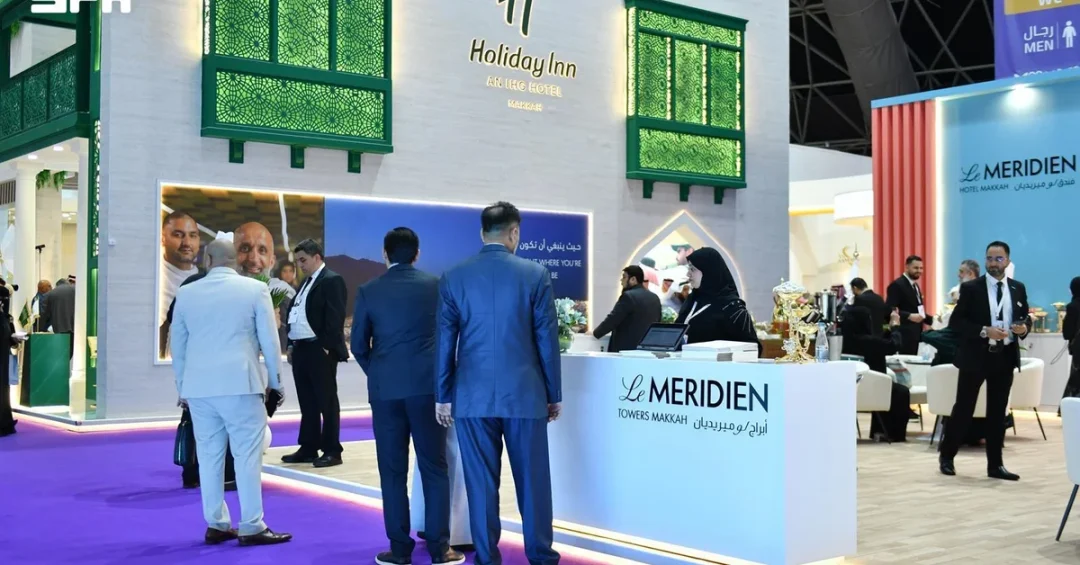
The sixth Hajj Conference and Exhibition in Jeddah, held under the theme “From Makkah to the World,” continues to draw participants and visitors from around the world, bringing together diverse cultures and expertise around a shared goal: serving pilgrims and improving their experience. According to the Saudi Press Agency (SPA), the event has become a global meeting point for professionals and stakeholders in Hajj services, creating opportunities for networking and partnerships that turn diverse experiences into tangible improvements for pilgrims. The conference, which runs in Jeddah, showcases the Kingdom’s commitment to enhancing the sacred journey for millions of Muslims who travel to Saudi Arabia each year. Have you ever considered how a single gathering in Jeddah could shape the experience of millions of pilgrims from every corner of the globe?
The exhibition pavilions are alive with activity as international participants engage with the latest services and solutions on display, exchanging ideas on how to improve the pilgrim’s journey. This dynamic exchange brings energy to the venue and reflects the truly global dimension of Hajj. The event links ideas and practice: experiences shared in conference sessions and workshops take practical form in the pavilions, where entities showcase their initiatives, products, and services and discuss how they can ease pilgrims’ journeys. The presence of participants from abroad makes human diversity part of the exhibition’s story, bringing the theme “From Makkah to the World” to life through the meeting of peoples and the exchange of knowledge.
Context and Background
Why has the Hajj Conference and Exhibition become such a vital platform for global collaboration? The event, now in its sixth edition, has steadily grown into a premier forum for stakeholders across the Hajj ecosystem. It is held under the patronage of the Saudi leadership, reflecting the Kingdom’s unwavering commitment to serving pilgrims and enhancing their experience. The conference is organized by the Ministry of Hajj and Umrah, in collaboration with various government agencies and private sector partners, all working toward the goals of Saudi Vision 2030. The theme “From Makkah to the World” encapsulates the global reach of Hajj and the Kingdom’s role as the custodian of the Two Holy Mosques.
The Hajj Conference and Exhibition serves as a hub for professionals and stakeholders in Hajj services, from transportation and accommodation to health care and digital solutions. It brings together government officials, business leaders, academics, and technology experts to share best practices and innovative ideas. Over the years, the event has facilitated numerous agreements and partnerships that have directly improved the pilgrimage experience. For international participants, it offers a unique opportunity to understand the scale and complexity of Hajj operations and to contribute their expertise to a shared goal.
The conference also highlights the Kingdom’s broader efforts to modernize and enhance the pilgrimage infrastructure. Under Vision 2030, Saudi Arabia has invested heavily in expanding the capacity of the Grand Mosque in Makkah and the Prophet’s Mosque in Madinah, improving transportation networks, and deploying cutting-edge technologies to manage crowds and ensure safety. These initiatives are designed not only to accommodate the growing number of pilgrims but also to enrich their spiritual journey. The Hajj Conference and Exhibition is a key component of this strategy, providing a platform for continuous improvement and innovation.
Key Details
What exactly happens at the Hajj Conference and Exhibition that makes it so impactful? The event features a comprehensive program of conference sessions, workshops, and exhibitions. Participants from around the world attend to share their experiences and learn about the latest developments in Hajj services. The exhibition pavilions showcase a wide range of products and services, from smart bracelets that help track pilgrims and provide real-time information, to advanced cooling systems and eco-friendly accommodations. These innovations are designed to address the practical challenges of hosting millions of pilgrims in a limited space and time frame.
International participants are actively engaging with these solutions, exchanging ideas and providing feedback that can shape future improvements. The event also includes specialized forums on topics such as crowd management, health care, transportation, and sustainability. These forums allow experts to delve into specific issues and propose solutions that can be implemented on the ground. The interactions across the exhibition carry a message that transcends language and culture, as people from many nations come together, united by a shared commitment to a single sacred journey.
The conference also serves as a platform for Saudi Arabia to showcase its achievements in Hajj management and to strengthen its ties with other nations. High-level delegations from various countries attend, often signing agreements and memoranda of understanding that facilitate the exchange of expertise and resources. For example, partnerships with countries that send large numbers of pilgrims can lead to better coordination and smoother operations. The event thus plays a crucial role in international diplomacy and cooperation, reinforcing the Kingdom’s position as a global leader in pilgrimage services.
International and Regional Impact
How does the presence of international participants enhance the Hajj experience for everyone? The diversity of attendees brings a wealth of perspectives and expertise that can lead to more inclusive and effective solutions. Participants from different countries share their own experiences in managing pilgrimages, which can be adapted to the Saudi context. For instance, countries like Indonesia, Pakistan, and Nigeria, which send some of the largest contingents of pilgrims, have valuable insights into the needs and preferences of their citizens. By incorporating these insights, Saudi Arabia can tailor its services to better meet the expectations of pilgrims from diverse backgrounds.
Moreover, the international dimension of the conference strengthens regional and global cooperation. The event fosters a sense of unity among Muslim-majority countries and beyond, as participants work toward a common goal. It also showcases Saudi Arabia’s leadership in the Islamic world and its commitment to serving all pilgrims, regardless of their nationality. The Kingdom’s efforts to facilitate Hajj are widely recognized and appreciated, and the conference serves as a testament to its dedication. As pilgrims arrive, bringing the diversity of their home countries, the Kingdom welcomes them with comprehensive services to ensure their comfort and ease the performance of Hajj.
Economic and Strategic Significance
What economic and strategic benefits does the Hajj Conference and Exhibition bring to Saudi Arabia and its partners? The event is a significant driver of economic activity in Jeddah and the surrounding region. It attracts thousands of visitors, including business leaders, government officials, and media representatives, who contribute to the local economy through spending on accommodation, transportation, and dining. More importantly, the conference facilitates business deals and partnerships that can lead to long-term investments in Hajj-related infrastructure and services. These investments are essential for accommodating the growing number of pilgrims, which is expected to reach 30 million by 2030 under Vision 2030 targets.
Strategically, the conference reinforces Saudi Arabia’s role as the heart of the Islamic world and a leader in pilgrimage management. It also supports the Kingdom’s efforts to diversify its economy by promoting non-oil sectors such as tourism and hospitality. The Hajj and Umrah sector is a key component of this diversification strategy, contributing billions of riyals to the national economy each year. By continuously improving the pilgrim experience, Saudi Arabia can attract more pilgrims and enhance its reputation as a preferred destination for spiritual journeys. The conference also serves as a platform to showcase Saudi Arabia’s technological advancements and its ability to manage large-scale events, further boosting its global standing.
Vision 2030 Alignment
How does the Hajj Conference and Exhibition align with Saudi Vision 2030? Vision 2030, the Kingdom’s ambitious blueprint for economic and social transformation, places great emphasis on enhancing the pilgrimage experience and increasing the capacity to host more pilgrims. The conference directly supports these objectives by fostering innovation, collaboration, and investment in Hajj services. It also aligns with the Vision’s goals of improving government efficiency, promoting international cooperation, and showcasing Saudi Arabia’s cultural and religious heritage to the world.
Furthermore, the event underscores the Kingdom’s commitment to sustainable development and the use of technology to improve lives. Many of the solutions showcased at the conference, such as smart waste management systems and renewable energy projects, contribute to environmental sustainability. By bringing together global experts, the conference helps ensure that the Hajj experience is not only spiritually fulfilling but also safe, efficient, and environmentally responsible. As Saudi Arabia continues to invest in its pilgrimage infrastructure, events like this will play a crucial role in achieving the Vision 2030 targets and cementing the Kingdom’s position as a global leader in serving pilgrims.
20 Questions
Q1. What is the theme of the sixth Hajj Conference and Exhibition?
A1. The theme is “From Makkah to the World,” reflecting the global dimension of Hajj and the Kingdom’s commitment to serving pilgrims from all nations.
Q2. Where is the Hajj Conference and Exhibition taking place?
A2. The event is being held in Jeddah, Saudi Arabia, a major gateway for pilgrims traveling to Makkah and Madinah.
Q3. Who organizes the Hajj Conference and Exhibition?
A3. The event is organized by the Ministry of Hajj and Umrah in collaboration with various government agencies and private sector partners.
Q4. What is the main goal of the conference?
A4. The main goal is to bring together global stakeholders to share ideas and innovations that enhance the pilgrim experience and improve Hajj services.
Q5. How many editions of the conference have been held?
A5. The current event is the sixth edition, indicating its establishment as a regular and important forum for Hajj professionals.
Q6. What types of participants attend the conference?
A6. Participants include government officials, business leaders, academics, technology experts, and representatives from various countries and organizations involved in Hajj services.
Q7. What is showcased in the exhibition pavilions?
A7. The pavilions display a wide range of services and solutions, including smart technology, crowd management tools, health care innovations, and sustainable accommodation options.
Q8. How does the conference benefit international participants?
A8. International participants gain insights into Saudi Arabia’s Hajj management, share their own experiences, and form partnerships that can improve services in their home countries.
Q9. What role does the conference play in Saudi Vision 2030?
A9. It supports Vision 2030 by fostering innovation, increasing pilgrimage capacity, and promoting economic diversification through the Hajj and Umrah sector.
Q10. How does the conference address the needs of pilgrims from different countries?
A10. By facilitating the exchange of expertise, the conference helps tailor services to the diverse cultural and practical needs of pilgrims from around the world.
Q11. What are some examples of innovations presented at the conference?
A11. Innovations include smart bracelets for tracking pilgrims, advanced cooling systems, eco-friendly accommodations, and digital solutions for crowd management and health care.
Q12. How does the conference promote sustainability?
A12. It showcases sustainable practices such as renewable energy projects, waste management systems, and eco-friendly infrastructure that reduce the environmental impact of Hajj.
Q13. What economic impact does the conference have on Jeddah?
A13. The event boosts the local economy by attracting thousands of visitors who spend on accommodation, transportation, and dining, and by facilitating long-term investments.
Q14. How does the conference strengthen international relations?
A14. It brings together representatives from many countries, fostering cooperation, signing agreements, and building partnerships that enhance global collaboration in pilgrimage services.
Q15. What is the expected number of pilgrims by 2030?
A15. Saudi Arabia aims to host 30 million pilgrims annually by 2030 as part of Vision 2030, requiring continuous improvements in infrastructure and services.
Q16. How does the conference reflect Saudi Arabia’s leadership in the Islamic world?
A16. By hosting the event and showcasing its comprehensive services, the Kingdom demonstrates its role as the custodian of the Two Holy Mosques and a leader in pilgrimage management.
Q17. What opportunities for networking does the conference provide?
A17. It offers numerous networking sessions, workshops, and forums where professionals can connect, share ideas, and form partnerships that lead to improved Hajj services.
Q18. How does the conference incorporate technology?
A18. Technology is a key focus, with displays of smart applications, AI-driven crowd management, and digital platforms that enhance communication and safety for pilgrims.
Q19. What is the significance of the theme “From Makkah to the World”?
A19. The theme highlights the global reach of Hajj, emphasizing that the pilgrimage brings together people from all nations and that Saudi Arabia serves humanity as a whole.
Q20. How can international participants contribute to future Hajj improvements?
A20. By sharing their expertise, providing feedback, and forming partnerships, international participants help drive innovation and ensure that Hajj services continue to evolve and improve.
Reader Feedback
We value your thoughts. Please share your feedback on this article.
Your feedback helps us improve our coverage.
Related articles
 Thai Students Explore Hajj Innovations at Jeddah Exhibition
 Madinah Development Authority Showcases Projects at Hajj Conference
 Civil Defense Showcases Hajj Safety Tech in Jeddah
 Saudi Crown Prince Congratulates King of Cambodia on Independence Day
 Türkiye Hosts COP31 Climate Summit in Antalya
 Hajj Innovation Award Launched to Elevate Pilgrim Services