


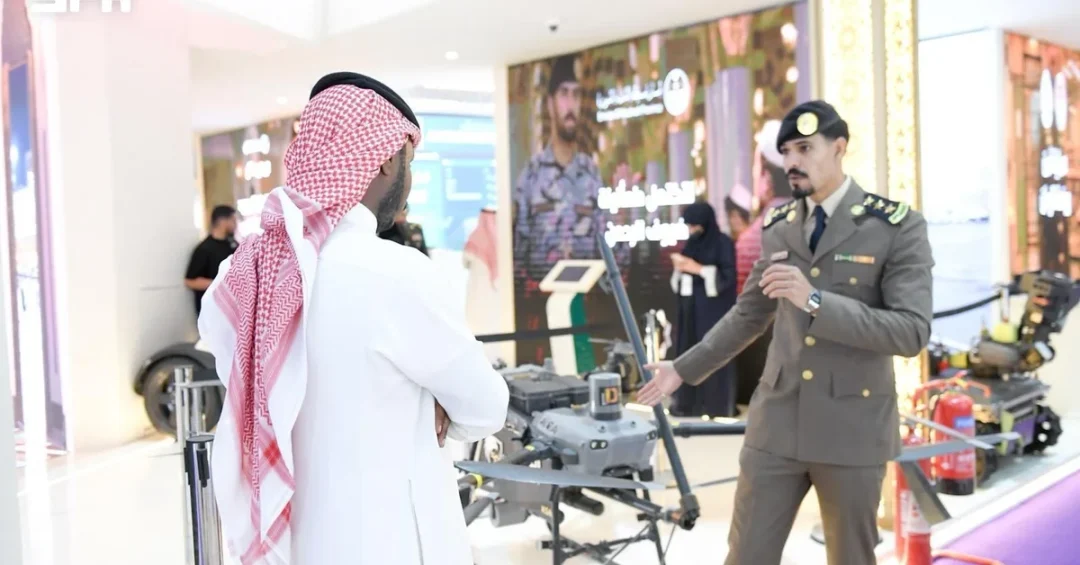
The General Directorate of Civil Defense is participating in the Ministry of Interior’s pavilion at the sixth edition of the Hajj Conference and Exhibition, held from November 8 to 11 at the Jeddah Superdome, showcasing a suite of modern technologies designed to safeguard pilgrims during the Hajj season. The exhibition, organized under the umbrella of the Ministry of Interior, brings together government agencies, service providers, and international stakeholders to coordinate and enhance the pilgrimage experience. This year’s edition underscores the Kingdom’s determination to deploy cutting-edge solutions that protect the millions of worshippers who travel to the holy sites each year.
Among the flagship exhibits presented by Civil Defense is the National Early Warning Platform, a centralized system built to detect and communicate emergency situations rapidly across the holy sites and beyond. Visitors to the pavilion can also explore the Salamah portal, an integrated digital gateway that connects citizens and residents with essential safety services. Together, these platforms reflect a broader shift toward digital-first emergency management, in which data and rapid communication play a decisive role in protecting public safety. How does a nation prepare to host millions of pilgrims in a single season? The answer, as the exhibition demonstrates, lies in precision planning, advanced technology, and institutional coordination.
Context and Background
The Hajj Conference and Exhibition has grown into one of the most significant gatherings for the pilgrimage services sector, drawing participation from ministries, security agencies, healthcare providers, transport operators, and technology firms from within the Kingdom and abroad. The sixth edition, hosted at the Jeddah Superdome, serves as a platform for announcing new initiatives, signing agreements, and showcasing innovations that directly enhance the quality of services delivered to pilgrims. For the General Directorate of Civil Defense, participation is a natural extension of its operational mandate to protect lives and property during one of the world’s largest annual mass gatherings.
Civil Defense’s role during Hajj extends well beyond reactive emergency response. The directorate is responsible for preventive planning, public awareness campaigns, fire safety inspections across accommodation and service facilities, and the coordination of rapid-response teams stationed throughout the holy sites. Each year, these preparations are refined based on operational reviews, lessons learned, and technological advancements. The exhibition offers an opportunity to present this comprehensive approach to an international audience, thereby reinforcing confidence in the Kingdom’s capacity to manage the pilgrimage at scale.
Why does the Kingdom place such emphasis on transparency and public demonstration of its preparedness? Because the Hajj is both a sacred obligation and a global logistical undertaking, and demonstrating readiness builds trust among pilgrims, their home countries, and international observers. The Ministry of Interior’s pavilion, featuring Civil Defense alongside other agencies, embodies this principle of coordinated, visible governance in service of the guests of God.
Key Technologies and Innovations on Display
The Civil Defense exhibits span a wide spectrum of technologies, each tailored to specific operational challenges. The Falcon drone, equipped with artificial intelligence, provides aerial surveillance and situational awareness capabilities that allow commanders to assess incidents in real time from above. This is particularly valuable in dense crowd environments where ground access may be restricted. Complementing the drone is a firefighting robot designed to handle fires and high-risk locations remotely, reducing the exposure of human personnel to dangerous conditions. Such robotic systems are increasingly essential in scenarios involving hazardous materials, confined spaces, or intense heat.
Visitors can also examine the gear and equipment used by search-and-rescue teams, including specialized tools for locating and extracting individuals in challenging circumstances. Rapid-intervention motorcycles are on display as well, reflecting the directorate’s emphasis on mobility and speed. In crowded areas where conventional vehicles cannot maneuver quickly, these motorcycles allow first responders to reach incident sites in minimal time, potentially saving lives in the critical early minutes of an emergency. The display is rounded out by a visual presentation that documents Civil Defense’s duties and achievements during previous Hajj seasons.
How do these individual tools combine into a coherent safety strategy? The answer lies in integration: the National Early Warning Platform aggregates data and disseminates alerts, the Salamah portal keeps the public informed, and field assets such as drones, robots, and motorcycles execute the operational response. This layered approach ensures redundancy and resilience, allowing the system to function effectively even under the most demanding conditions.
Preventive Planning and Awareness
A central component of Civil Defense’s Hajj mission is prevention. The directorate implements awareness-raising plans that educate pilgrims and service workers about fire safety, evacuation procedures, and emergency reporting. These campaigns are carried out through multiple channels, including digital platforms, printed materials distributed at entry points, and coordination with Hajj missions from participating countries. The goal is to reduce the likelihood of incidents before they occur, thereby minimizing pressure on emergency response resources.
Preparedness is equally vital. Civil Defense maintains detailed contingency plans for a range of potential scenarios, from structural fires in accommodation facilities to crowd-related emergencies in the holy sites. These plans are tested through drills and exercises conducted in cooperation with other agencies. The exhibition’s visual presentation highlights how these preventive and preparedness measures are continuously updated to reflect changing conditions, including rising pilgrim numbers and the expansion of infrastructure in Makkah and Madinah.
Why invest so heavily in prevention when response capabilities are already robust? Because the most effective emergency management strategy is one that prevents emergencies from occurring in the first place. Every fire prevented, every hazard identified, and every pilgrim educated contributes to a safer, smoother pilgrimage experience for all.
International and Regional Impact
The technologies and methodologies showcased at the Hajj Conference and Exhibition have implications that extend beyond the Kingdom’s borders. Delegations from numerous countries attend the event, seeking to learn from Saudi Arabia’s experience in managing large-scale religious gatherings. The National Early Warning Platform and Salamah portal, in particular, offer models that other nations could adapt for their own mass-gathering events. This knowledge-sharing reinforces the Kingdom’s position as a global leader in public safety innovation and crisis management.
Regional coordination is another important dimension. Neighboring countries and members of the Organisation of Islamic Cooperation regularly cooperate with Saudi authorities on pilgrimage-related matters, including the transport and welfare of their nationals. The exhibition provides a venue for these stakeholders to align their efforts and exchange best practices. By fostering such collaboration, Saudi Arabia strengthens the collective resilience of the region and demonstrates its commitment to the well-being of all pilgrims, regardless of their country of origin.
Economic and Strategic Significance
The Hajj sector represents a significant pillar of the Kingdom’s economy, generating revenue across transportation, hospitality, retail, and services. A safe and seamless pilgrimage experience directly supports these economic activities by attracting more worshippers and encouraging longer stays that include visits to historical and cultural sites. The technologies exhibited by Civil Defense contribute to this economic ecosystem by reducing disruptions caused by emergencies and enhancing the overall quality of the pilgrimage journey.
Strategically, the exhibition aligns with the Kingdom’s broader efforts to modernize public services and improve government performance. The integration of artificial intelligence, robotics, and digital platforms into emergency management reflects a forward-looking approach that positions Saudi Arabia at the forefront of smart governance. These investments also create opportunities for local technology firms and entrepreneurs, supporting job creation and skills development in line with national priorities.
Vision 2030 Alignment
The Civil Defense’s participation in the Jeddah exhibition is a clear expression of the objectives of Saudi Vision 2030, which seeks to enhance the quality of life, modernize public services, and develop a robust digital infrastructure. By deploying advanced technologies in the service of pilgrim safety, the Kingdom demonstrates how innovation can be harnessed to improve outcomes in critical sectors. The exhibition also reflects the Vision’s emphasis on transparency, international engagement, and the continuous improvement of government performance.
Looking ahead, the General Directorate of Civil Defense is expected to continue expanding its technological capabilities and deepening its cooperation with other agencies and international partners. The lessons shared at the sixth Hajj Conference and Exhibition will inform future planning and reinforce the Kingdom’s reputation as a reliable and innovative steward of one of the world’s most important religious gatherings. Through sustained investment in safety and service excellence, Saudi Arabia reaffirms its commitment to protecting the guests of God and to realizing the ambitious goals of Vision 2030 on the global stage.
20 Questions
Q1. What event is the General Directorate of Civil Defense participating in?
A1. Civil Defense is participating in the Ministry of Interior’s pavilion at the sixth edition of the Hajj Conference and Exhibition, held from November 8 to 11 at the Jeddah Superdome, showcasing modern safety technologies.
Q2. Where is the sixth Hajj Conference and Exhibition taking place?
A2. The event is being held at the Jeddah Superdome in Jeddah, a major venue that accommodates large-scale expos and conferences serving the pilgrimage services sector.
Q3. What is the National Early Warning Platform?
A3. It is a centralized emergency alert system showcased by Civil Defense that rapidly detects and communicates emergency situations across the holy sites and beyond to protect public safety.
Q4. What is the Salamah portal?
A4. The Salamah portal is an integrated digital gateway connecting citizens and residents with essential safety services, reflecting a digital-first approach to emergency management and public communication.
Q5. What is the Falcon drone capable of doing?
A5. The Falcon drone is equipped with artificial intelligence and provides aerial surveillance and real-time situational awareness, helping commanders assess incidents in dense crowds where ground access is restricted.
Q6. What purpose does the firefighting robot serve?
A6. The firefighting robot is designed to handle fires and high-risk locations remotely, reducing the exposure of human personnel to dangerous conditions such as intense heat or hazardous materials.
Q7. What kind of equipment is displayed for search-and-rescue teams?
A7. The exhibit includes specialized gear and equipment used by search-and-rescue teams to locate and extract individuals in challenging circumstances, supporting rapid and effective emergency response.
Q8. Why are rapid-intervention motorcycles part of the display?
A8. These motorcycles allow first responders to maneuver quickly through crowded areas and reach incident sites in minimal time, potentially saving lives during the critical early minutes of an emergency.
Q9. What does the visual presentation at the pavilion highlight?
A9. The presentation documents Civil Defense’s efforts and duties during the Hajj season, including preventive and awareness-raising plans and preparedness to manage risks and incidents.
Q10. Why does Civil Defense emphasize prevention during Hajj?
A10. Prevention reduces the likelihood of incidents before they occur, easing pressure on emergency resources and contributing to a safer, smoother pilgrimage experience for all worshippers.
Q11. How does Civil Defense raise public awareness among pilgrims?
A11. It conducts campaigns through digital platforms, printed materials at entry points, and coordination with Hajj missions from participating countries to educate pilgrims and workers about fire safety and evacuation.
Q12. What is the overall goal of Civil Defense’s Hajj preparations?
A12. The overarching goal is to ensure pilgrims’ safety by combining preventive planning, public awareness, rapid response, and advanced technology in an integrated emergency management strategy.
Q13. Who organizes the pavilion in which Civil Defense is participating?
A13. The pavilion is organized by the Ministry of Interior, which brings together various government agencies and service providers to coordinate and enhance the pilgrimage experience.
Q14. How do the technologies combine into a coherent safety strategy?
A14. The early warning platform aggregates data and issues alerts, the Salamah portal keeps the public informed, and field assets like drones, robots, and motorcycles execute operational response, creating layered resilience.
Q15. What international benefit does the exhibition offer?
A15. Delegations from many countries attend to learn from Saudi Arabia’s experience, and the showcased technologies offer adaptable models for managing large-scale religious gatherings elsewhere.
Q16. How does regional coordination factor into the event?
A16. Neighboring countries and Organisation of Islamic Cooperation members cooperate with Saudi authorities on pilgrimage matters, aligning efforts and exchanging best practices at the exhibition.
Q17. What economic value does the Hajj sector represent?
A17. The Hajj sector generates revenue across transportation, hospitality, retail, and services, and a safe pilgrimage experience supports these activities by attracting more worshippers and longer stays.
Q18. How does Civil Defense’s work align with Saudi Vision 2030?
A18. It aligns with Vision 2030 by modernizing public services, deploying advanced technologies, enhancing quality of life, and improving government performance and transparency.
Q19. What role do drills and exercises play in preparedness?
A19. Civil Defense tests contingency plans through drills and exercises conducted with other agencies, ensuring readiness for scenarios such as fires or crowd-related emergencies in the holy sites.
Q20. What does the future hold for Civil Defense’s technological expansion?
A20. Civil Defense is expected to continue expanding its technological capabilities and deepening cooperation with partners, reinforcing the Kingdom’s reputation as an innovative steward of the Hajj gathering.
Reader Feedback
We value your thoughts. Please share your feedback on this article.
Your feedback helps us improve our coverage.
Related articles
 Saudi Crown Prince Congratulates King of Cambodia on Independence Day
 Türkiye Hosts COP31 Climate Summit in Antalya
 Hajj Innovation Award Launched to Elevate Pilgrim Services
 6.4-Magnitude Earthquake Strikes Near Lata, Solomon Islands
 Ministry of Interior Showcases Hajj Initiatives at Jeddah Exhibition
 UAE Strongly Condemns Houthi Attempt to Target Saudi Arabia