


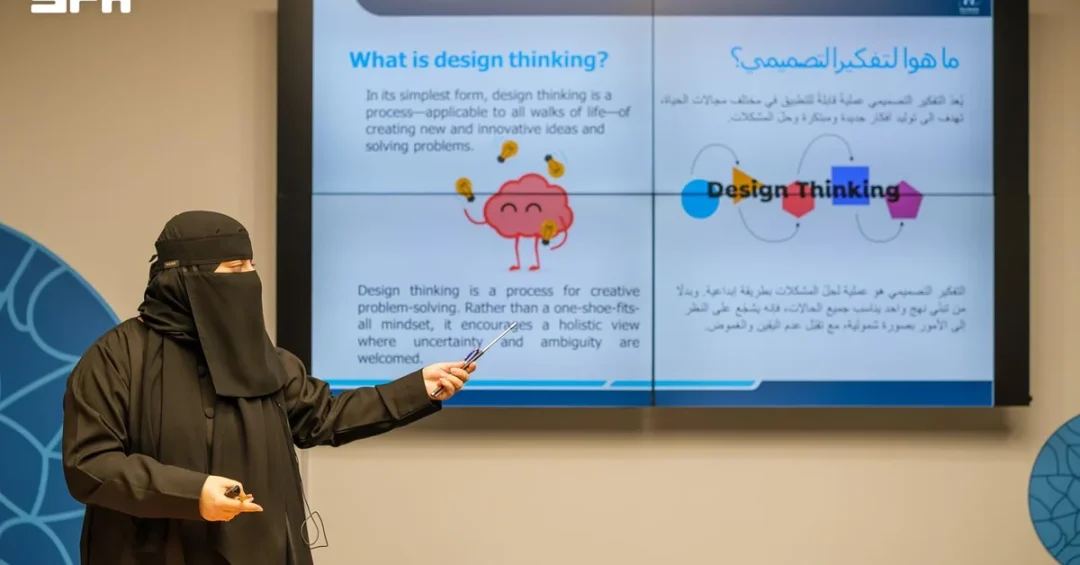
The Ministry of Transport and Logistic Services and the University of Jeddah, in collaboration with the National Industrial Development and Logistics Program (NIDLP), the Social Development Bank, Jada 30, The Shop Floor, MODON Oasis, and Future Valley Company, launched “The Container” incubator on November 9, 2026, in Riyadh. The initiative is designed to support and empower startups and innovative ventures, and to develop technological, operational, and service solutions that contribute to improving service quality and fostering innovation in the transport and logistics sector. The launch marks a significant step in Saudi Arabia’s efforts to build a knowledge-based economy and enhance the competitiveness of its transport and logistics industry.
Have you ever wondered how a simple idea can transform an entire industry? The Container incubator aims to answer that question by providing a comprehensive support system for innovators. It targets students at Saudi universities, innovators within the transport and logistics ecosystem, entrepreneurs, and university graduates. The program offers a package of services including incubation and acceleration, specialized mentoring and guidance, prototype and product development, access to testing and application environments, training and capacity building, investment support, and intellectual property protection. By nurturing talent and fostering collaboration, the incubator seeks to turn research outputs into market-ready products and projects that can drive the sector forward.
Context and Background
Why is an initiative like The Container necessary now? Saudi Arabia is undergoing a historic transformation under Vision 2030, aiming to diversify its economy away from oil and become a global investment powerhouse. Central to this vision is the development of a robust transport and logistics sector, which is seen as a cornerstone for economic growth and regional connectivity. The National Transport and Logistics Strategy, launched in 2021, sets ambitious goals to position the Kingdom as a global logistics hub connecting three continents. To achieve these goals, innovation and entrepreneurship are critical. The Ministry of Transport and Logistic Services has been actively fostering partnerships with academic institutions and the private sector to create an enabling environment for startups.
The University of Jeddah, a young and dynamic institution, has been at the forefront of promoting innovation and entrepreneurship among its students. By collaborating with the Ministry and other partners, the university aims to bridge the gap between academic research and practical application. The involvement of entities like NIDLP, the Social Development Bank, Jada 30, The Shop Floor, MODON Oasis, and Future Valley Company underscores the multi-stakeholder approach needed to build a thriving innovation ecosystem. Each partner brings unique resources and expertise, from funding and mentorship to industrial zones and market access. This collaborative model is a hallmark of Saudi Arabia’s approach to achieving Vision 2030 objectives.
Have you considered how such partnerships can accelerate the development of homegrown solutions? The Container incubator is not just about supporting individual startups; it is about creating a culture of innovation that permeates the entire transport and logistics sector. By targeting students and recent graduates, it taps into fresh talent and new perspectives. By involving established companies and government agencies, it ensures that innovations are aligned with industry needs and market realities. This holistic approach is designed to produce sustainable, scalable solutions that can compete globally.
Key Details of The Container Incubator
What exactly does The Container offer to participants? The incubator provides a structured program that guides innovators from ideation to market launch. The services include incubation and acceleration, where startups receive workspace, business development support, and access to networks. Specialized mentoring and guidance are provided by industry experts who offer one-on-one advice on technology, business models, and scaling strategies. Prototype and product development support helps teams turn concepts into tangible products, with access to testing and application environments to validate their solutions in real-world settings. Training and capacity building programs cover topics such as entrepreneurship, digital skills, and supply chain management. Investment support connects startups with potential investors and funding opportunities. Intellectual property protection ensures that innovators can safeguard their ideas and benefit from their commercialization.
The program is implemented in successive stages. It begins with preparing participants and developing their skills through workshops and training sessions. This is followed by evaluating and screening submissions, after which shortlisted candidates are announced. Participants then enter the incubation and specialized mentoring stage, where they work intensively on their projects. The program culminates in a graduation ceremony where graduating projects are announced. This phased approach ensures that participants receive the right support at the right time, increasing their chances of success. The incubator has already begun implementing its training programs and workshops, demonstrating its commitment to timely execution.
Who can apply to join The Container? The incubator targets students at Saudi universities, innovators within the transport and logistics ecosystem, entrepreneurs, and university graduates. This broad eligibility criteria ensures that a diverse pool of talent can benefit from the program. By including students and recent graduates, it fosters a pipeline of future leaders in the sector. By including existing entrepreneurs and innovators, it supports those who are already working on solutions but need additional support to scale. This inclusive approach is designed to maximize the impact of the incubator and accelerate the development of innovative solutions.
International and Regional Impact
How will The Container incubator influence the broader region? Saudi Arabia’s ambition to become a global logistics hub has significant implications for the Middle East and beyond. By fostering innovation in transport and logistics, the Kingdom can enhance its competitiveness and attract international investment. The incubator’s focus on technological solutions, such as digital platforms, smart logistics, and sustainable transport, aligns with global trends and can position Saudi Arabia as a leader in the sector. Furthermore, successful startups can expand their services to regional markets, contributing to economic integration and cooperation. The initiative also serves as a model for other countries seeking to develop their innovation ecosystems through public-private partnerships.
What role does international collaboration play in this initiative? While The Container is a national program, it is open to partnerships with international companies and institutions. The involvement of global players can bring in best practices, advanced technologies, and access to international markets. Conversely, Saudi startups can benefit from exposure to global standards and networks. The Ministry of Transport and Logistic Services has been actively engaging with international counterparts to share knowledge and explore joint ventures. This openness to collaboration is a key element of Saudi Arabia’s strategy to become a logistics hub. By nurturing local talent and connecting it with global opportunities, The Container can help create a vibrant ecosystem that attracts foreign direct investment and fosters innovation.
Economic and Strategic Significance
Why is innovation in transport and logistics so important for Saudi Arabia’s economy? The transport and logistics sector is a major contributor to the Kingdom’s GDP and employment. According to the National Transport and Logistics Strategy, the sector aims to increase its contribution to GDP from 6% to 10% by 2030. To achieve this, it must embrace innovation to improve efficiency, reduce costs, and enhance service quality. The Container incubator directly supports this goal by developing solutions that can streamline operations, optimize supply chains, and introduce new business models. For example, startups could develop apps for real-time tracking, drones for last-mile delivery, or AI-powered systems for warehouse management. These innovations can lead to significant productivity gains and create new job opportunities for Saudi youth.
What are the strategic benefits of supporting startups in this sector? Startups are agile and can quickly adapt to changing market conditions. They often bring disruptive technologies that challenge established players and drive industry-wide improvements. By supporting them, Saudi Arabia can build a resilient and dynamic logistics sector that is less dependent on oil revenues. Moreover, successful startups can scale and become exporters of services, contributing to the Kingdom’s non-oil exports. The incubator also helps retain talented graduates in the country, reducing brain drain and fostering a knowledge economy. The collaboration with entities like the Social Development Bank and Jada 30 ensures that funding and financial support are available to help these startups grow. This integrated approach is essential for achieving the economic diversification goals of Vision 2030.
Vision 2030 Alignment
How does The Container incubator align with Vision 2030? Vision 2030 is a comprehensive plan to transform Saudi Arabia into a diversified and sustainable economy. One of its key pillars is to create a vibrant society and a thriving economy. The incubator contributes to this by empowering youth, promoting entrepreneurship, and fostering innovation. It also supports the National Transport and Logistics Strategy, which is a key enabler of Vision 2030. By developing the transport and logistics sector, the Kingdom can enhance its position as a global hub and attract international investment. The incubator’s focus on technology and innovation aligns with the Vision’s emphasis on digital transformation and the Fourth Industrial Revolution. Furthermore, the partnership between the Ministry of Transport and Logistic Services, the University of Jeddah, and private sector entities exemplifies the collaborative approach needed to achieve Vision 2030 goals.
What does the future hold for The Container and its participants? The incubator is expected to produce a pipeline of innovative projects that can be commercialized and scaled. As these startups grow, they will create jobs, generate revenue, and contribute to the development of the sector. The Ministry and its partners will continue to support them through various stages of growth, including access to funding, markets, and mentorship. The success of The Container will also encourage more young Saudis to pursue careers in science, technology, engineering, and mathematics (STEM), further strengthening the Kingdom’s human capital. Ultimately, the incubator is a testament to Saudi Arabia’s commitment to building a knowledge-based economy and achieving the ambitious goals of Vision 2030. It is a clear signal that the Kingdom is open for business and innovation, and that it is investing in its most valuable resource: its people.
20 Questions
Q1. What is The Container incubator?
A1. The Container is an incubator launched by the Ministry of Transport and Logistic Services and the University of Jeddah, in collaboration with various partners, to support startups and innovative ventures in the transport and logistics sector.
Q2. When was The Container incubator launched?
A2. It was launched on November 9, 2026, in Riyadh, as reported by the Saudi Press Agency.
Q3. Who are the partners involved in The Container incubator?
A3. Partners include the National Industrial Development and Logistics Program (NIDLP), the Social Development Bank, Jada 30, The Shop Floor, MODON Oasis, and Future Valley Company.
Q4. What is the main goal of The Container incubator?
A4. Its main goal is to support and empower startups and innovative ventures, and to develop technological, operational, and service solutions that improve service quality and foster innovation in the transport and logistics sector.
Q5. Who is eligible to participate in The Container incubator?
A5. The incubator targets students at Saudi universities, innovators within the transport and logistics ecosystem, entrepreneurs, and university graduates.
Q6. What services does The Container incubator offer?
A6. It offers incubation and acceleration, specialized mentoring, prototype and product development, access to testing environments, training, investment support, and intellectual property protection.
Q7. How does The Container incubator help innovators turn research into products?
A7. It provides a structured program that includes mentoring, prototype development, and access to testing environments, enabling innovators to transform their research outputs into market-ready products and projects.
Q8. What are the stages of The Container incubator’s program?
A8. The stages include preparing participants, evaluating submissions, announcing shortlisted candidates, incubation and specialized mentoring, and a graduation ceremony with project announcements.
Q9. Has The Container incubator started its activities?
A9. Yes, it has begun implementing its training programs and workshops according to a timeline with successive stages.
Q10. How does The Container incubator support Saudi Arabia’s National Transport and Logistics Strategy?
A10. It supports the strategy by fostering innovation and entrepreneurship, which are essential for consolidating Saudi Arabia’s position as a global logistics hub and achieving the strategy’s objectives.
Q11. What is the role of the University of Jeddah in this initiative?
A11. The University of Jeddah collaborates with the Ministry and other partners to provide academic support, access to student talent, and research capabilities, bridging the gap between academia and industry.
Q12. How does The Container incubator contribute to Vision 2030?
A12. It contributes to Vision 2030 by promoting economic diversification, empowering youth, fostering innovation, and supporting the development of a knowledge-based economy.
Q13. What types of innovations are expected from The Container incubator?
A13. Innovations may include digital platforms, smart logistics solutions, sustainable transport technologies, and other advancements that improve efficiency and service quality in the transport and logistics sector.
Q14. How can startups benefit from The Container incubator’s investment support?
A14. Startups receive connections to potential investors and funding opportunities, helping them secure the capital needed to scale their operations and bring products to market.
Q15. What is the significance of intellectual property protection in The Container incubator?
A15. Intellectual property protection ensures that innovators can safeguard their ideas and inventions, encouraging them to commercialize their solutions and benefit from their work.
Q16. How does The Container incubator foster collaboration between public and private sectors?
A16. By bringing together government ministries, academic institutions, and private companies, the incubator creates a multi-stakeholder ecosystem that leverages diverse resources and expertise to support innovation.
Q17. What impact will The Container incubator have on job creation?
A17. By nurturing startups, the incubator is expected to create new job opportunities in the transport and logistics sector, particularly for young Saudis, contributing to economic growth.
Q18. How does The Container incubator align with global trends in transport and logistics?
A18. It aligns with global trends by focusing on technological innovation, digitalization, and sustainability, positioning Saudi Arabia as a leader in modern logistics solutions.
Q19. What is the expected outcome of The Container incubator’s first cohort?
A19. The first cohort is expected to produce innovative projects that graduate from the program, ready for commercialization or further development, demonstrating the incubator’s effectiveness.
Q20. How can interested individuals apply to The Container incubator?
A20. Interested individuals can apply through the official channels announced by the Ministry of Transport and Logistic Services or the University of Jeddah, with details available on their websites.
Reader Feedback
We value your thoughts. Please share your feedback on this article.
Your feedback helps us improve our coverage.
Related articles
 OIC Chief Offers Condolences to Egypt After Giza Train Crash
 Saudi Ministry Recalls 2,371 Kia K8 Vehicles Over Fuel Leak Risk
 Ministry of Energy Conducts 14,991 Inspections, Detects 727 Violations in October
 Aseer Municipal Projects Boost Growth in Southern Sector
 Hajj Ministry Showcases Integrated Services at Jeddah Conference
 Tourism Minister Visits Interior Ministry Pavilion at Hajj Conference