


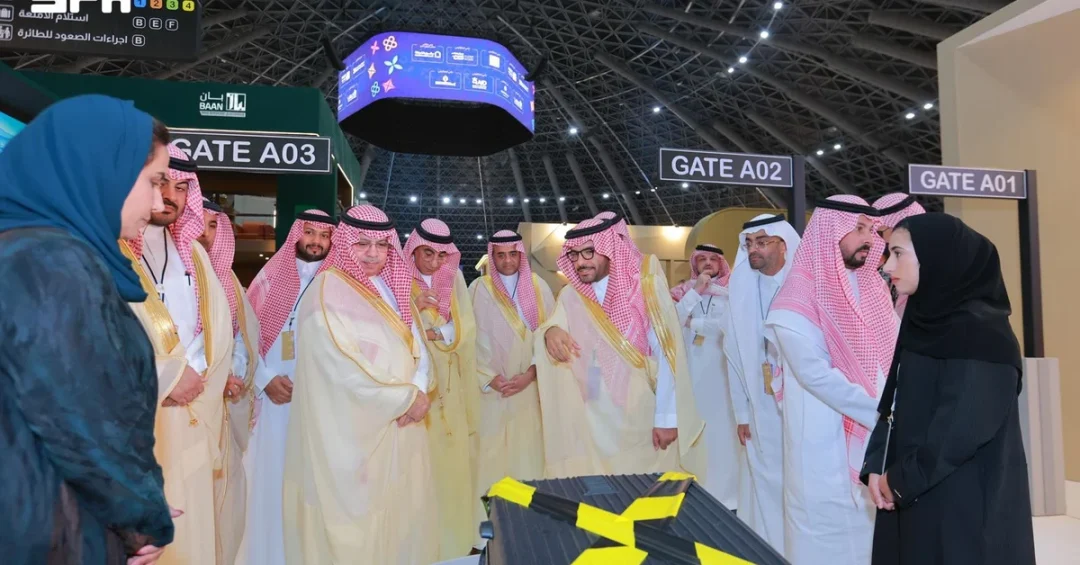
MATARAT Holding is participating in the sixth edition of the Hajj Conference and Exhibition, held in Jeddah under the theme “From Makkah to the World,” through a unified pavilion that brings together several entities operating across Saudi Arabia’s aviation and airports sector. The company’s presence at the high-profile gathering is designed to highlight the integration of roles, services, and initiatives that contribute to improving the efficiency of the travel ecosystem and enhancing the experience of pilgrims from the moment of their arrival in the Kingdom.
Have you ever considered how many moving parts must align to welcome millions of pilgrims safely and comfortably each year? The MATARAT Holding pavilion answers that question by assembling, in one place, the partners that make the pilgrim journey possible, including the General Authority of Civil Aviation (GACA), MATARAT Holding, Jeddah Airports Company (JEDCO), Cluster2 Airports, Tibah Airports, and Air Arabia. Their collective presence reflects the integration of the aviation and airports ecosystem and underscores the diverse roles and services provided to pilgrims arriving from around the world.
Context and Background
Why does a single exhibition matter so much to the future of pilgrimage travel? The Hajj Conference and Exhibition has grown into one of the most important platforms in the region for stakeholders across the pilgrimage and travel sectors, drawing together government bodies, airport operators, airlines, service providers, and technology partners. Now in its sixth edition, the event serves as a meeting point where operational lessons from previous seasons are translated into concrete plans for the seasons ahead.
The theme “From Makkah to the World” captures the global dimension of the Kingdom’s pilgrim services. Pilgrims arrive from every continent, often through multiple transit points, and each stage of that journey requires coordination between airports, airlines, immigration authorities, and ground service providers. MATARAT Holding’s role as a unified pavilion participant reflects a deliberate strategy of ecosystem integration rather than isolated institutional effort. By presenting the airport sector as a single, coordinated system, the pavilion communicates both capability and readiness to international partners and delegates attending the event.
How did the Kingdom build an airport network capable of serving such extraordinary volumes? That story is rooted in sustained investment and a clear organizational vision. MATARAT Holding, which oversees airport operations and development across the Kingdom, has worked to standardize service quality, modernize infrastructure, and align operational practices with global benchmarks. Its participation in the conference builds on that foundation, showcasing initiatives that have been tested and refined across previous pilgrimage seasons.
Key Details of the MATARAT Pavilion
What specific services is MATARAT Holding putting on display? Foremost among the showcased initiatives is the “Passengers with No Bags” service, a streamlined handling model designed to reduce congestion and processing time for travelers arriving without checked baggage. The service reflects a broader emphasis on operational innovation, where small procedural improvements can meaningfully enhance throughput during peak periods.
The pavilion also highlights efforts to develop airports, enhance operational readiness, improve the passenger experience, and strengthen integration among entities operating across the travel ecosystem. These priorities are presented not as isolated projects but as interconnected components of a single service philosophy. Airport development includes terminal upgrades and capacity expansion. Operational readiness involves staff training, contingency planning, and coordination drills ahead of peak seasons. Passenger experience covers everything from signage and wayfinding to digital tools and accessibility support.
Why is a unified pavilion more effective than separate exhibits? The answer lies in the nature of the pilgrim journey itself. A traveler moving through an airport interacts with multiple entities in sequence: the airport operator, the immigration authority, the airline, and ground handlers. When these entities plan and communicate together, the traveler experiences a seamless flow rather than a series of disconnected checkpoints. The pavilion makes that integration visible and tangible, providing a platform for engaging with partners and exploring opportunities for cooperation that improve services provided to pilgrims.
International and Regional Impact
How does Saudi Arabia’s airport readiness resonate beyond its borders? The Kingdom’s ability to manage massive international passenger flows during Hajj and Umrah seasons is closely watched by aviation authorities, airlines, and travel operators worldwide. Efficient processing times, clear communication, and reliable infrastructure all contribute to confidence among international carriers and their passengers. The MATARAT pavilion thus serves a dual purpose: it is both a showcase of domestic capability and a signal of reliability to the global aviation community.
The participation of airline partners such as Air Arabia alongside airport operators further illustrates the ecosystem approach. Airlines make decisions about route expansion, capacity allocation, and seasonal scheduling based on the readiness and efficiency of destination airports. When operators present a coherent, integrated picture of their services, airlines gain the confidence to increase services, which in turn expands access for pilgrims from more regions. Regional airports managed under the Cluster2 Airports and Tibah Airports structures extend this reach, distributing arrivals across multiple gateways and reducing pressure on any single facility.
Does this integration have implications for the wider Middle East travel market? Yes. As pilgrimage volumes grow, the Kingdom’s airports increasingly serve as hubs that connect to broader regional networks. Improvements in processing efficiency and service quality at Saudi airports have a knock-on effect across the region, supporting smoother connections and more predictable travel times for passengers whose itineraries pass through the Kingdom.
Economic and Strategic Significance
What does efficient pilgrim handling mean for the Kingdom’s economy? Pilgrimage is a major economic driver, supporting aviation, hospitality, retail, logistics, and thousands of jobs across the travel value chain. Each improvement in airport efficiency enhances the Kingdom’s capacity to host pilgrims at scale, supporting revenue growth while reinforcing the country’s reputation for service excellence. The initiatives showcased at the pavilion are therefore not merely operational exercises but strategic investments in a key sector of the national economy.
The emphasis on operational readiness also carries strategic weight. Pilgrimage seasons are fixed in the calendar, which means that preparation must be completed well in advance. The conference provides a structured moment for stakeholders to review readiness, identify gaps, and commit to improvements. By participating with a unified pavilion, MATARAT Holding and its partners demonstrate that this preparation is coordinated rather than fragmented.
How does this connect to the broader modernization of Saudi aviation? The initiatives presented at the pavilion sit within a wider program of airport development across the Kingdom, including terminal modernization, digital service enhancements, and expanded capacity. These projects are designed to serve both pilgrimage traffic and general international travel, ensuring that infrastructure investments deliver benefits year-round. The integration message of the pavilion reflects the reality that modern airports function best when their component entities operate as a coordinated system.
Vision 2030 Alignment
Why is the pilgrim experience central to Vision 2030? The Pilgrim Experience Program, a key initiative under Saudi Vision 2030, aims to elevate every stage of the pilgrim journey, from arrival to departure. MATARAT Holding’s participation in the Hajj Conference and Exhibition directly supports these objectives by showcasing services and coordination mechanisms that make the journey smoother, safer, and more comfortable. The unified pavilion embodies the integration that the program calls for, bringing together the entities whose cooperation is essential to success.
The alignment extends beyond the airport itself. Vision 2030 envisions a diversified economy in which services, tourism, and logistics play growing roles. Efficient pilgrimage handling supports the tourism and hospitality goals of the program while reinforcing the Kingdom’s role as a global hub for faith-based travel. Through initiatives such as the “Passengers with No Bags” service, enhanced operational readiness, and strengthened partnerships across the ecosystem, MATARAT Holding is contributing to a vision in which the Kingdom’s welcome to pilgrims is matched by world-class infrastructure and service. The conference appearance is a snapshot of that ongoing effort, and a clear statement that Saudi Arabia’s aviation and airports sector stands ready to serve the world’s pilgrims with efficiency, dignity, and care.
20 Questions
Q1. What is the Hajj Conference and Exhibition?
A1. It is a major gathering platform bringing together stakeholders in the pilgrimage and travel sectors. The sixth edition is held in Jeddah under the theme “From Makkah to the World,” featuring government bodies, airport operators, airlines, and service providers.
Q2. What is MATARAT Holding presenting at the event?
A2. MATARAT Holding is presenting a unified pavilion that brings together several aviation and airport entities to highlight integrated services, initiatives, and operational improvements designed to enhance the experience of arriving pilgrims.
Q3. Which entities share the unified pavilion?
A3. The pavilion includes the General Authority of Civil Aviation, MATARAT Holding, Jeddah Airports Company, Cluster2 Airports, Tibah Airports, and Air Arabia, reflecting an integrated aviation and airport ecosystem.
Q4. What is the “Passengers with No Bags” service?
A4. It is a streamlined handling initiative highlighted at the pavilion that reduces processing time and congestion for travelers arriving without checked baggage, improving throughput during peak pilgrimage periods.
Q5. Why is a unified pavilion significant?
A5. A unified pavilion reflects the integration of the aviation and airport ecosystem, demonstrating that multiple entities coordinate their roles and services to serve pilgrims efficiently rather than operating in isolation.
Q6. What is the theme of the sixth edition?
A6. The theme is “From Makkah to the World,” reflecting the global dimension of the Kingdom’s pilgrimage services and its role in welcoming pilgrims from every continent.
Q7. How does the pavilion support pilgrims?
A7. It showcases efforts to develop airports, enhance operational readiness, improve the passenger experience, and strengthen integration among entities, all of which make the pilgrim journey smoother and more efficient.
Q8. What is the General Authority of Civil Aviation’s role?
A8. The GACA is the Kingdom’s civil aviation regulator and a key participant in the unified pavilion, contributing to the coordinated approach to aviation services that support pilgrimage travel.
Q9. What does JEDCO do in this context?
A9. Jeddah Airports Company operates Jeddah’s airport facilities and participates in the pavilion to showcase its role in welcoming pilgrims arriving through one of the Kingdom’s key gateways.
Q10. What are Cluster2 Airports?
A10. Cluster2 Airports is a group of Kingdom airports managed under a coordinated structure, contributing to the distribution of arrivals across multiple gateways and supporting the integrated airport ecosystem.
Q11. What is Tibah Airports’ contribution?
A11. Tibah Airports is an airport operator participating in the unified pavilion, helping to demonstrate the coordinated services and readiness that support pilgrims across the Kingdom’s airport network.
Q12. Why is Air Arabia part of the pavilion?
A12. Air Arabia’s participation reflects the integration of airlines alongside airport operators, showing how carriers and aviation authorities cooperate to serve pilgrims from arrival onward.
Q13. How does the event connect to Vision 2030?
A13. The pavilion supports the objectives of Saudi Vision 2030 and the Pilgrim Experience Program by showcasing services and integration that improve the pilgrim journey and enhance the Kingdom’s capacity to host pilgrims.
Q14. What is the Pilgrim Experience Program?
A14. It is a key initiative under Saudi Vision 2030 that aims to elevate every stage of the pilgrim journey, from arrival to departure, ensuring a smooth, safe, and comfortable experience.
Q15. What does operational readiness mean here?
A15. Operational readiness refers to staff training, contingency planning, and coordination drills conducted ahead of peak seasons to ensure airports can handle large pilgrim volumes efficiently and safely.
Q16. How does the pavilion benefit partners?
A16. It provides a platform for engaging with entities and partners and exploring opportunities for cooperation and integration, helping improve services provided to pilgrims across the travel ecosystem.
Q17. Why is the pilgrim experience economically important?
A17. Pilgrimage supports aviation, hospitality, retail, logistics, and jobs across the travel value chain, making efficient handling a strategic investment in a key sector of the national economy.
Q18. What does “enhancing the passenger experience” include?
A18. It covers signage and wayfinding, digital service tools, accessibility support, and terminal upgrades, all designed to make the pilgrim journey more comfortable and efficient.
Q19. How does this benefit international travelers?
A19. Efficient processing times, clear communication, and reliable infrastructure build confidence among international carriers and passengers, supporting smoother connections and more predictable travel through the Kingdom.
Q20. What is the overall message of MATARAT’s participation?
A20. The message is that Saudi Arabia’s aviation and airports sector stands ready to serve the world’s pilgrims with efficiency, dignity, and care, in alignment with Vision 2030 and the Pilgrim Experience Program.
Reader Feedback
We value your thoughts. Please share your feedback on this article.
Your feedback helps us improve our coverage.
Related articles
 Hajj Ministry Discusses AI Governance for Pilgrims’ Rights
 World Quality Day Forum 2026 to Be Held on November 12
 Transport Ministry, University of Jeddah Launch ‘The Container’ Incubator
 OIC Chief Offers Condolences to Egypt After Giza Train Crash
 Saudi Ministry Recalls 2,371 Kia K8 Vehicles Over Fuel Leak Risk
 Ministry of Energy Conducts 14,991 Inspections, Detects 727 Violations in October