


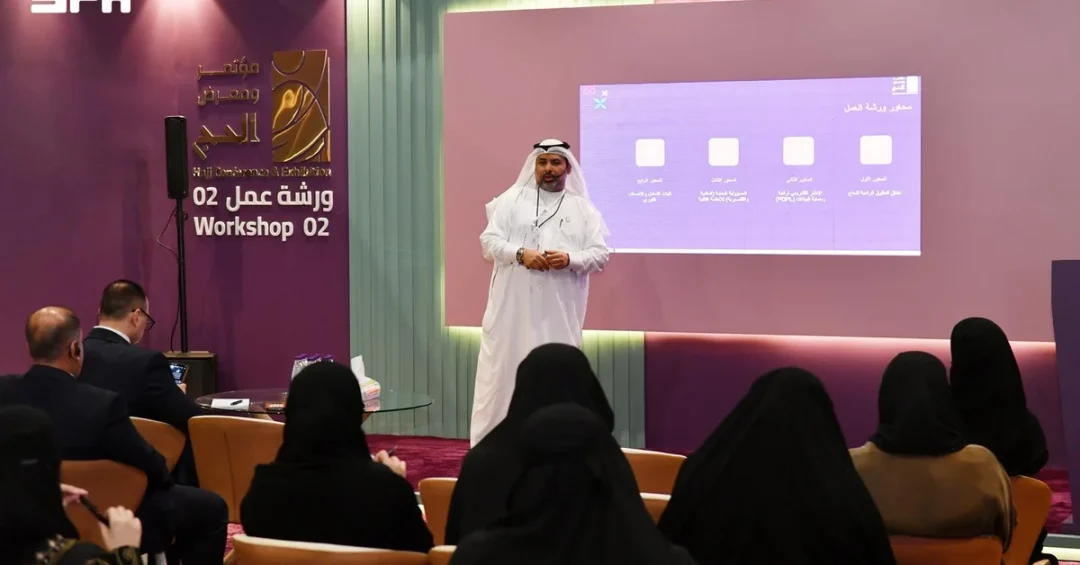
The Ministry of Hajj and Umrah has convened a specialist workshop examining the legislative frameworks governing artificial intelligence in digital services delivered to pilgrims, alongside the obligations of service providers to protect beneficiaries’ rights. The session, held on the second day of the sixth Hajj Conference and Exhibition in Jeddah, reflected the Kingdom’s determination to embed governance and accountability across every layer of the Hajj and Umrah ecosystem as digital tools become central to the pilgrim journey.
The workshop, titled “Pilgrims’ Rights in Digital Services: The Legislative Framework and the Responsibility of Service Providers,” was delivered by Dr. Abdulrahman Fahad Shams, Assistant Deputy Minister for Umrah Affairs at the Ministry of Hajj and Umrah. According to the Saudi Press Agency, the discussion aimed to strengthen trust in the digital environment and reinforce the principles of governance and accountability across the Hajj ecosystem. Why does this matter for a global audience? Because millions of pilgrims from more than 180 countries now interact with Saudi service platforms before, during, and after their journey, and the legal clarity surrounding those interactions shapes the experience of every one of them.
Context and Background
What has driven Saudi Arabia to place AI governance at the center of pilgrim protection? The answer lies in the extraordinary scale and pace of the Kingdom’s digital transformation of Hajj and Umrah services. Over the past decade, the Ministry of Hajj and Umrah has rolled out integrated digital platforms covering visa issuance, accommodation booking, transportation scheduling, health registration, and crowd guidance. These systems increasingly draw on intelligent technologies, from predictive analytics that anticipate crowd density to automated translation and recommendation tools that serve pilgrims in dozens of languages.
As these tools multiply, so do the legal questions they raise. When an algorithm influences a booking decision, an automated message provides guidance, or a smart system collects personal data, who bears responsibility if something goes wrong? The workshop directly addressed this intersection between intelligent systems and the civil liability of service providers, examining how obligations should be defined and distributed. The Ministry’s approach reflects a broader national recognition that innovation must advance hand in hand with clear rules that protect the people it serves.
Held within the sixth Hajj Conference and Exhibition, the session formed part of a wider program in which government bodies, technology providers, and service companies exchange expertise. Isn’t it significant that the Kingdom treats a conference exhibition as a working platform for refining regulation, not merely a showcase? That orientation signals how seriously Saudi authorities take the feedback loop between real-world service delivery and the legal frameworks that govern it.
Key Details
The workshop reviewed the legislative frameworks governing the use of AI in Hajj services and explored pilgrims’ rights across various digital touchpoints. Dr. Shams outlined the need to clearly define the responsibilities and obligations arising from the use of these technologies, ensuring that the chain of accountability remains intact from platform developer to frontline service provider. The discussion emphasized that beneficiaries of digital services, namely the pilgrims themselves, must retain clear and enforceable rights regardless of how sophisticated the underlying technology becomes.
Participants examined how intelligent systems interact with civil liability, a question of growing importance as automation takes on tasks once performed by human staff. What happens, for instance, when a recommendation engine misdirects a pilgrim or a scheduling system fails under unexpected demand? The workshop considered how service providers can be held accountable in ways that are fair, predictable, and transparent, so that pilgrims can seek remedy without navigating opaque technological processes. The Ministry’s framing places the pilgrim at the center of every design and governance decision.
The session also stressed the principle of accountability across the entire Hajj ecosystem. This means technology vendors, platform operators, licensed service companies, and supervisory bodies all carry defined duties. By mapping these responsibilities explicitly, the Ministry aims to prevent gaps in protection that can emerge when new tools are deployed quickly. Doesn’t that clarity benefit everyone involved, from the smallest operator to the largest technology partner? A shared understanding of obligations reduces disputes and builds confidence among pilgrims and providers alike.
Protecting Pilgrims’ Rights in a Digital Era
A central theme of the workshop was that digital convenience must never come at the expense of dignity and rights. Pilgrims entrust personal information, payments, and in some cases their health data to Saudi platforms, and the Ministry is determined that this trust is honored through robust safeguards. The discussion addressed how rights such as access to accurate information, fair treatment, data protection, and the ability to raise complaints should be guaranteed across every digital touchpoint, whether a pilgrim is applying for a visa from abroad or navigating a camp in Mina.
Why frame these protections as rights rather than mere service features? Because rights carry legal weight and create enforceable expectations. When the Ministry speaks of pilgrims’ rights in digital services, it is signaling that these guarantees are not optional courtesies but obligations embedded in the regulatory framework. This approach aligns with the broader Saudi legal modernization agenda, which has strengthened consumer protection, data governance, and dispute resolution mechanisms in recent years.
The workshop further considered the human dimension of technology in a spiritual context. Hajj and Umrah are among the most meaningful journeys in a pilgrim’s life, and any failure in digital service delivery can cause distress or hardship. By insisting that service providers design with empathy as well as efficiency, the Ministry reinforces a vision of technology that serves faith and comfort rather than replacing human care. Isn’t it reassuring for international pilgrims to know that their wellbeing, not just throughput, is the benchmark?
International and Regional Impact
How will this governance push resonate beyond the Kingdom’s borders? Saudi Arabia welcomes one of the largest annual gatherings of humanity, and its standards for digital pilgrim services are watched closely by governments, travel agencies, and technology firms worldwide. By articulating clear legislative frameworks for AI in Hajj, the Ministry offers a model that other nations managing large-scale religious or cultural events can study. The emphasis on defined liability and transparent accountability provides a reference point for how emerging technologies can be regulated in high-stakes service environments.
The workshop also reinforces the Kingdom’s reputation as a responsible steward of the Two Holy Mosques and the pilgrims who visit them. Regional partners and international stakeholders increasingly look to Saudi Arabia for leadership in ethical technology deployment, particularly in sectors touching faith and public welfare. Through forums such as the Hajj Conference and Exhibition, the Ministry shares its thinking with global participants, encouraging a collaborative approach to protecting pilgrims’ rights in an increasingly digital world.
The implications extend to the private sector as well. Service providers from around the world that partner with Saudi authorities now have a clearer picture of the governance expectations they must meet. This transparency can foster better-designed products and stronger partnerships, ultimately improving the pilgrim experience. Doesn’t a well-defined rulebook make it easier for good actors to compete on quality and trust? The Ministry’s effort to set standards therefore supports a healthier, more innovative service ecosystem.
Economic and Strategic Significance
What economic value flows from strong digital governance? By building trust in its digital platforms, Saudi Arabia strengthens the entire Hajj and Umrah economy, which supports thousands of businesses, jobs, and service providers across the Kingdom. Pilgrims who feel secure using digital tools are more likely to book through official channels, engage with licensed operators, and recommend the experience to others. That confidence translates into sustainable growth in visitor numbers and spending, consistent with the Kingdom’s targets to expand Umrah capacity and improve the quality of the pilgrim journey.
Strategically, the workshop reflects Saudi Arabia’s wider ambition to lead in the responsible use of artificial intelligence. The Kingdom has invested heavily in AI research, data governance, and digital infrastructure as part of its national transformation agenda. Applying these capabilities to the Hajj ecosystem demonstrates that advanced technology can be deployed in service of deeply held religious and cultural priorities. How does this positioning benefit Saudi partners? It signals to global technology companies and investors that the Kingdom offers a stable, well-regulated environment for innovation, where legal clarity accompanies ambitious digitalization.
The emphasis on accountability also protects the ecosystem’s integrity. Clear rules discourage negligent or exploitative practices, safeguard public funds, and maintain the reputation of the Kingdom’s licensed service providers. By raising standards, the Ministry helps ensure that the economic benefits of the Hajj and Umrah sector are distributed fairly and durably, rather than eroded by short-term opportunism. That stewardship is essential for the long-term resilience of one of Saudi Arabia’s most distinctive and important economic engines.
Vision 2030 Alignment
The workshop’s themes sit squarely within Saudi Vision 2030, which seeks to modernize public services, harness digital technology, and improve the quality of life for citizens and visitors alike. By advancing AI governance and pilgrim protection, the Ministry of Hajj and Umrah is translating the vision’s broad objectives into concrete safeguards in one of the Kingdom’s most visible and cherished service domains. The effort underscores that Vision 2030 is not only about economic diversification but also about governing innovation responsibly.
The Kingdom’s commitment to the Digital Government Authority’s frameworks, its growing body of data protection and consumer rights legislation, and its pledge to deliver seamless pilgrim experiences all converge in this initiative. How will this shape the future of Hajj and Umrah? By ensuring that as services become smarter, faster, and more personalized, the rights and dignity of every pilgrim remain firmly protected. Saudi Arabia’s leadership in this area exemplifies a forward-looking vision in which technology and faith, efficiency and ethics, advance together.
The ministry’s workshop sends a clear and welcome message to the world: the Kingdom will continue to welcome pilgrims with hospitality and innovation, and it will do so with the highest standards of governance and accountability. As the Hajj ecosystem evolves, this commitment will anchor every digital advance in the timeless values of service and care that define the pilgrim experience in Saudi Arabia.
20 Questions
Q1. What was the focus of the Ministry of Hajj and Umrah workshop?
A1. The workshop examined legislative frameworks governing artificial intelligence in digital pilgrim services and the responsibilities of service providers in protecting beneficiaries’ rights, aiming to enhance trust and accountability across the Hajj ecosystem.
Q2. Who delivered the workshop on pilgrims’ rights in digital services?
A2. Dr. Abdulrahman Fahad Shams, Assistant Deputy Minister for Umrah Affairs at the Ministry of Hajj and Umrah, delivered the session titled “Pilgrims’ Rights in Digital Services: The Legislative Framework and the Responsibility of Service Providers.”
Q3. Where and when did the workshop take place?
A3. The workshop took place on the second day of the sixth Hajj Conference and Exhibition, held in Jeddah, as reported by the Saudi Press Agency on November 9, 2026.
Q4. Why is AI governance important for Hajj and Umrah services?
A4. As intelligent systems influence bookings, guidance, and data handling, clear governance ensures accountability, protects pilgrims’ rights, and maintains trust in the rapidly expanding digital platforms serving millions of international pilgrims.
Q5. What does the intersection of intelligent systems and civil liability mean?
A5. It refers to the legal question of who bears responsibility when automated or AI-driven systems affect pilgrims, and how service providers can be held accountable fairly and transparently for their technology’s actions.
Q6. How does the Ministry define pilgrims’ rights in digital services?
A6. The Ministry frames guarantees such as accurate information, fair treatment, data protection, and access to complaints as enforceable rights across every digital touchpoint, not mere optional service conveniences.
Q7. What role does the Hajj Conference and Exhibition play?
A7. It serves as a working platform where government bodies, technology providers, and service companies exchange expertise and refine regulatory frameworks, supporting continuous improvement of the pilgrim experience.
Q8. Why place the pilgrim at the center of design decisions?
A8. Hajj and Umrah are deeply meaningful spiritual journeys, so the Ministry insists that digital tools serve pilgrim comfort, dignity, and wellbeing as the primary benchmark rather than mere operational efficiency.
Q9. What obligations do service providers carry under this framework?
A9. Providers must clearly define and fulfill their responsibilities, maintain accountability from platform developer to frontline staff, and ensure that pilgrims retain enforceable rights regardless of technological complexity.
Q10. How does this initiative strengthen trust in digital platforms?
A10. By establishing clear rules on liability and accountability, the Ministry reassures pilgrims and providers that digital interactions are governed predictably, encouraging greater use of official, licensed service channels.
Q11. What does accountability across the Hajj ecosystem involve?
A11. It involves distributing defined duties among technology vendors, platform operators, licensed service companies, and supervisory bodies to prevent gaps in pilgrim protection as new tools are deployed.
Q12. How does data protection feature in the discussion?
A12. Pilgrims entrust personal, payment, and sometimes health data to Saudi platforms, so the Ministry emphasizes robust safeguards ensuring this trust is honored through strong data governance and privacy protections.
Q13. Why are these protections framed as rights rather than features?
A13. Rights carry legal weight and create enforceable expectations, signaling that guarantees to pilgrims are mandatory obligations embedded in the regulatory framework rather than optional courtesies.
Q14. How can international pilgrims raise concerns under this framework?
A14. The framework emphasizes access to clear complaint mechanisms and dispute resolution across digital touchpoints, ensuring pilgrims can seek remedy without navigating opaque technological processes.
Q15. What international impact might this governance initiative have?
A15. Saudi Arabia hosts one of the world’s largest gatherings, so its standards offer a model for other nations managing large-scale events and reinforce the Kingdom’s reputation for ethical technology leadership.
Q16. How does this support the economics of Hajj and Umrah?
A16. By building trust in official digital platforms, the initiative encourages more pilgrims to use licensed operators, supporting sustainable growth in visitor numbers, spending, and jobs across the sector.
Q17. How does this initiative relate to Saudi Vision 2030?
A17. It aligns with Vision 2030’s goals of modernizing public services, harnessing digital technology responsibly, and improving quality of life, translating broad objectives into concrete safeguards for pilgrims.
Q18. What role do technology partners and vendors play?
A18. They carry defined duties within the accountability chain, and the clearer governance expectations help them design better products and compete on quality and trust in partnership with Saudi authorities.
Q19. Why is ethical technology deployment emphasized in this context?
A19. Because digital tools serve a deeply spiritual experience, the Ministry prioritizes ethics, empathy, and dignity alongside efficiency, ensuring technology enhances rather than compromises the pilgrim journey.
Q20. What message does the workshop send to global pilgrims?
A20. It signals that Saudi Arabia will welcome pilgrims with continued innovation while upholding the highest standards of governance, accountability, and care, anchoring every digital advance in service and respect.
Reader Feedback
We value your thoughts. Please share your feedback on this article.
Your feedback helps us improve our coverage.
Related articles
 World Quality Day Forum 2026 to Be Held on November 12
 Transport Ministry, University of Jeddah Launch ‘The Container’ Incubator
 OIC Chief Offers Condolences to Egypt After Giza Train Crash
 Saudi Ministry Recalls 2,371 Kia K8 Vehicles Over Fuel Leak Risk
 Ministry of Energy Conducts 14,991 Inspections, Detects 727 Violations in October
 Aseer Municipal Projects Boost Growth in Southern Sector