


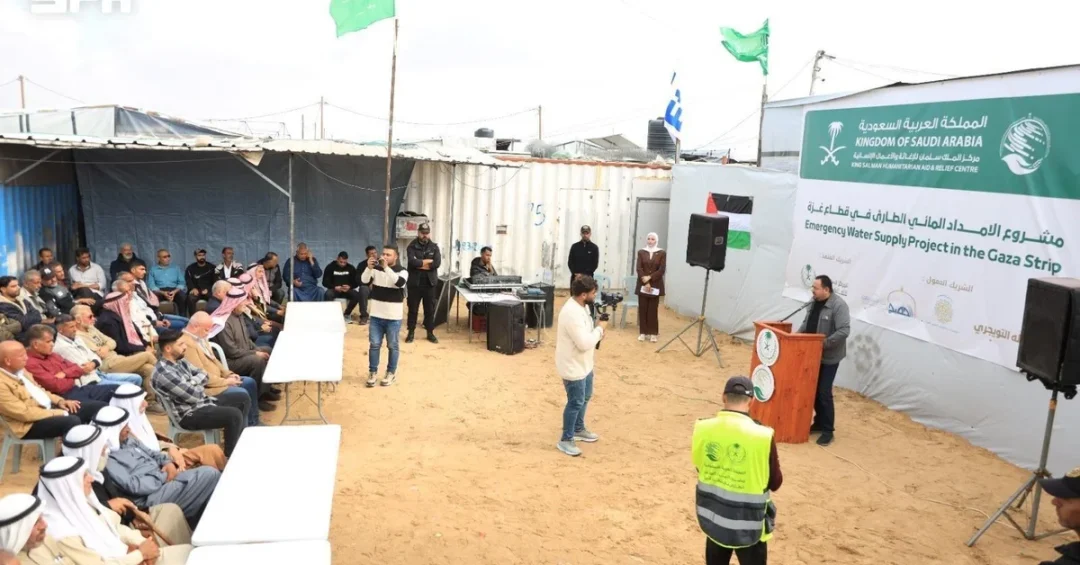
The King Salman Humanitarian Aid and Relief Center (KSrelief) launched an emergency water supply project in the Gaza Strip on Sunday, November 9, 2026, to provide safe drinking water by distributing 220,000 liters daily, benefiting more than 90,000 displaced people in displacement camps and affected communities. The project, announced via the Saudi Press Agency (SPA), represents a continuation of Saudi Arabia’s longstanding humanitarian commitment to the Palestinian people and addresses an urgent need for clean water amid damaged infrastructure and reduced access to safe sources. The initiative is implemented by the Saudi Center for Culture and Heritage, KSrelief’s partner on the ground, which is responsible for supplying, transporting, and distributing water based on humanitarian priorities and conditions in the field.
How does such a large-scale operation unfold in one of the world’s most challenging environments? The answer lies in meticulous planning and coordination between KSrelief and its implementing partner, ensuring that each drop of water reaches those in greatest need. The project’s daily output of 220,000 liters is equivalent to more than 58,000 gallons, enough to meet the basic drinking, cooking, and hygiene needs of over 90,000 individuals. This intervention comes at a critical time when many families in Gaza rely on unsafe water sources, exposing them to waterborne diseases and compounding the hardships of displacement. By restoring a reliable supply of potable water, KSrelief is not only addressing immediate thirst but also safeguarding public health and human dignity.
Context and Background
What circumstances have made this emergency water project so vital? The Gaza Strip has long suffered from chronic water scarcity, with its sole aquifer over-extracted and contaminated by seawater intrusion and pollutants. Years of conflict and recent escalations have severely damaged water and sanitation infrastructure, leaving pipelines, pumping stations, and desalination plants inoperable or operating far below capacity. According to United Nations estimates, more than 90% of Gaza’s water is unfit for human consumption without treatment. The latest hostilities have exacerbated this crisis, displacing hundreds of thousands of people into overcrowded camps where access to clean water is minimal. In this context, KSrelief’s intervention is a lifeline for communities teetering on the brink of a public health catastrophe.
Saudi Arabia has a long history of supporting the Palestinian people through humanitarian and development assistance. The Kingdom has consistently advocated for a just and lasting solution to the Palestinian cause and has provided billions of dollars in aid over the decades. KSrelief, established in 2015 under the leadership of King Salman bin Abdulaziz Al Saud, has become a leading global humanitarian organization, implementing projects in over 80 countries. Its work in Gaza is part of a broader strategy to alleviate suffering and promote stability in the region. The center operates on principles of neutrality, impartiality, and independence, ensuring that aid reaches the most vulnerable regardless of political affiliations. This project is no exception, as it targets displaced persons and affected communities based solely on need.
How does KSrelief determine where and how to deliver aid in a volatile environment? The center relies on its field partners, like the Saudi Center for Culture and Heritage, to conduct rapid needs assessments and identify priority areas. These partners work closely with local authorities, community leaders, and international organizations to map out the most underserved locations. The distribution plan is then adapted dynamically to shifting conditions, such as population movements, access constraints, and security incidents. This flexible approach allows KSrelief to respond swiftly and effectively, even in the most complex emergencies. The current water project is a testament to this adaptive model, as it scales up operations to meet the escalating demand for safe water across the Strip.
Key Details of the Emergency Water Supply Project
What exactly does the project entail, and who are the key players making it happen? At its core, the initiative involves the daily provision of 220,000 liters of safe drinking water, which is sourced from approved suppliers and transported via tanker trucks to designated distribution points in displacement camps and affected communities. The Saudi Center for Culture and Heritage, led by Dr. Issam Abu Khalil, oversees the entire operation, from procurement to last-mile delivery. Dr. Abu Khalil emphasized that the project builds on Saudi Arabia’s humanitarian efforts through KSrelief to meet the basic needs of the Palestinian people and strengthen the water sector response, given its critical importance to public health, human safety, and daily life. His statement underscores the holistic approach of the intervention, which not only provides immediate relief but also contributes to the resilience of the water sector.
The operational logistics are formidable. Each day, a fleet of tankers must navigate challenging terrain, checkpoints, and damaged roads to reach distribution sites. The water is dispensed into jerrycans and storage tanks, with teams ensuring equitable access and minimizing wait times. Hygiene promotion activities accompany the distributions, educating families on safe water handling and storage to prevent contamination. The project also includes water quality monitoring to ensure that the supplied water meets international standards. These measures are essential in a context where a single outbreak of cholera or other waterborne disease could have devastating consequences. By integrating water supply with hygiene promotion and quality control, KSrelief is delivering a comprehensive WASH (Water, Sanitation, and Hygiene) response that addresses both immediate and underlying risks.
How does this project fit into the broader humanitarian landscape in Gaza? It complements the efforts of other international organizations and local entities, filling critical gaps in areas where needs are most acute. KSrelief coordinates with the United Nations and other donors to avoid duplication and maximize impact. The project’s focus on displacement camps is particularly important, as these sites often lack basic services and are prone to disease outbreaks. By prioritizing these locations, KSrelief ensures that the most vulnerable populations—women, children, the elderly, and the disabled—receive the assistance they desperately need. The project also aligns with the humanitarian principles of humanity and impartiality, as it provides aid based solely on need, without discrimination.
International and Regional Impact
Why does this project resonate beyond Gaza’s borders? It reinforces Saudi Arabia’s role as a responsible global humanitarian actor and a stabilizing force in the Middle East. The Kingdom’s consistent support for the Palestinian people is widely recognized, and this latest initiative further cements its reputation as a compassionate and reliable partner. By addressing the water crisis, Saudi Arabia is also contributing to regional health security, as waterborne diseases do not respect borders. A healthier Gaza reduces the risk of epidemics that could spill over into neighboring countries, thereby enhancing overall regional stability. Moreover, the project demonstrates Saudi Arabia’s commitment to multilateralism and international humanitarian law, setting a positive example for other nations to follow.
The timing of the project is also significant. It comes amid ongoing diplomatic efforts to de-escalate tensions and improve the humanitarian situation in Gaza. Saudi Arabia has been actively engaged in these efforts, using its diplomatic weight to advocate for ceasefires, humanitarian corridors, and reconstruction. The water project is a tangible manifestation of this diplomacy, showing that the Kingdom is not only talking but also acting to alleviate suffering. It also sends a message of hope to the Palestinian people, reminding them that they are not alone and that the international community, led by Saudi Arabia, stands with them in their time of need. This soft power approach enhances Saudi Arabia’s influence and credibility on the world stage.
Economic and Strategic Significance
What economic and strategic imperatives drive Saudi Arabia’s humanitarian engagement in Gaza? While the primary motivation is ethical and humanitarian, there are also strategic considerations. A stable and prosperous Middle East is in Saudi Arabia’s interest, as it fosters trade, investment, and regional cooperation. By alleviating the humanitarian crisis in Gaza, the Kingdom helps create conditions for long-term peace and development. Furthermore, humanitarian aid can open doors for political dialogue and confidence-building measures between parties. Saudi Arabia’s leadership in this area positions it as a key player in any future peace process, ensuring that its voice is heard and its interests are protected. The water project, though modest in scale, is a building block for a more stable and prosperous region.
From an economic perspective, the project also showcases Saudi expertise in logistics and project management. KSrelief has a proven track record of delivering aid efficiently and effectively, even in the most difficult environments. This operational excellence enhances Saudi Arabia’s brand as a capable and reliable partner, which can have positive spillovers for its business and investment relationships worldwide. Additionally, the project supports the local economy in Gaza by procuring water from local suppliers and hiring local staff, thereby injecting much-needed cash into the struggling economy. This dual benefit—humanitarian and economic—makes the initiative a smart investment in regional stability and prosperity.
Vision 2030 Alignment
How does this project align with Saudi Arabia’s Vision 2030? Vision 2030 is not just about domestic transformation; it also encompasses a vision of Saudi Arabia as a global leader in humanitarian and development aid. The Kingdom aims to increase its humanitarian contributions and to be recognized as a top donor worldwide. KSrelief is a key instrument in achieving this goal, and its work in Gaza exemplifies the Vision’s emphasis on compassion, global responsibility, and sustainable development. By providing safe water, the project contributes to Sustainable Development Goal 6 (Clean Water and Sanitation), which is a priority for Saudi Arabia’s international cooperation efforts. It also reflects the Vision’s focus on improving the quality of life for people everywhere, not just within the Kingdom.
Moreover, the project underscores Saudi Arabia’s commitment to the Palestinian cause, which is a cornerstone of its foreign policy. Vision 2030 seeks to position Saudi Arabia as a pivotal player in regional and global affairs, and its unwavering support for Palestine is a key component of that strategy. By addressing the water crisis, Saudi Arabia is not only saving lives but also investing in the future of the region. The project’s success will further validate the Kingdom’s approach to humanitarian diplomacy and encourage other nations to follow suit. As Saudi Arabia continues to implement Vision 2030, its humanitarian arm, KSrelief, will remain at the forefront of its efforts to build a more peaceful, prosperous, and sustainable world.
20 Questions
Q1. What is the KSrelief emergency water supply project in Gaza?
A1. The King Salman Humanitarian Aid and Relief Center (KSrelief) launched an emergency water supply project in the Gaza Strip on November 9, 2026, to provide 220,000 liters of safe drinking water daily to more than 90,000 displaced people and affected communities.
Q2. Who is implementing the project on the ground?
A2. The Saudi Center for Culture and Heritage, KSrelief’s implementing partner in Gaza, is responsible for carrying out field activities, including supplying, transporting, and distributing safe drinking water to areas and displacement camps based on humanitarian priorities.
Q3. How much water will be distributed daily?
A3. The project will distribute 220,000 liters of safe drinking water every day, which is equivalent to over 58,000 gallons, sufficient to meet the basic drinking, cooking, and hygiene needs of the target population.
Q4. How many people will benefit from the project?
A4. More than 90,000 displaced people living in displacement camps and affected communities across the Gaza Strip will directly benefit from the daily water supply, improving their health and living conditions.
Q5. Why is this project necessary now?
A5. The project is necessary due to damaged water infrastructure, reduced access to safe water sources, and the ongoing humanitarian crisis in Gaza, which has left many families without reliable clean water and at risk of waterborne diseases.
Q6. What did Dr. Issam Abu Khalil say about the project?
A6. Dr. Issam Abu Khalil, Head of the Saudi Center for Culture and Heritage, emphasized that the project builds on Saudi Arabia’s humanitarian efforts through KSrelief to meet the basic needs of the Palestinian people and strengthen the water sector response.
Q7. How does this project fit into Saudi Arabia’s broader humanitarian efforts?
A7. It is part of Saudi Arabia’s ongoing efforts through KSrelief to support the Palestinian people and address growing water needs in Gaza, reflecting the Kingdom’s commitment to alleviating suffering and promoting stability in the region.
Q8. What is KSrelief?
A8. KSrelief, or the King Salman Humanitarian Aid and Relief Center, is Saudi Arabia’s humanitarian arm, established in 2015 to provide aid worldwide. It operates in over 80 countries and is known for its neutrality, impartiality, and effectiveness.
Q9. How does the project ensure water quality?
A9. The project includes water quality monitoring to ensure that the supplied water meets international standards. Hygiene promotion activities also educate families on safe water handling and storage to prevent contamination and disease.
Q10. What areas of Gaza will receive the water?
A10. The water will be distributed to displacement camps and affected communities across the Gaza Strip, with priority given to the most underserved locations based on rapid needs assessments conducted by the implementing partner.
Q11. How does this project contribute to public health?
A11. By providing safe drinking water, the project reduces the risk of waterborne diseases such as cholera and diarrhea, which can be deadly, especially for children and the elderly. It also improves overall hygiene and living conditions.
Q12. What is the role of the Saudi Center for Culture and Heritage?
A12. The Saudi Center for Culture and Heritage is KSrelief’s implementing partner in Gaza. It carries out field activities, including supplying, transporting, and distributing water, and coordinates with local authorities and community leaders.
Q13. How does Saudi Arabia’s aid to Gaza align with Vision 2030?
A13. Vision 2030 aims to position Saudi Arabia as a global humanitarian leader. This project aligns with that goal by contributing to Sustainable Development Goal 6 (Clean Water and Sanitation) and showcasing the Kingdom’s compassion and global responsibility.
Q14. What challenges does the project face in implementation?
A14. Challenges include navigating damaged roads, checkpoints, and security risks. However, KSrelief and its partner use flexible logistics and coordination with local entities to overcome these obstacles and ensure timely delivery.
Q15. How is the project funded?
A15. The project is funded by the Kingdom of Saudi Arabia through KSrelief, as part of its annual humanitarian budget. Saudi Arabia is one of the largest donors of humanitarian aid globally.
Q16. Will the project be expanded or extended?
A16. The project is initially designed to provide emergency relief. Depending on needs and available resources, KSrelief may consider expanding or extending it to reach more people and sustain the water supply.
Q17. How does the project coordinate with other humanitarian organizations?
A17. KSrelief coordinates with the United Nations, international NGOs, and local partners to avoid duplication and maximize impact. This coordination ensures that aid reaches the most vulnerable and that resources are used efficiently.
Q18. What is the expected impact of the project on the ground?
A18. The project is expected to significantly improve access to safe water, reduce waterborne diseases, and enhance the overall well-being of over 90,000 people. It also provides a sense of hope and dignity to displaced families.
Q19. How does this project reflect Saudi Arabia’s foreign policy?
A19. It reflects Saudi Arabia’s consistent support for the Palestinian cause and its commitment to regional stability. By providing humanitarian aid, the Kingdom demonstrates its role as a responsible and compassionate global actor.
Q20. What is the long-term vision for Saudi humanitarian aid in Gaza?
A20. Saudi Arabia aims to continue supporting the Palestinian people through both emergency relief and development projects. The long-term vision includes helping to rebuild infrastructure and improve living conditions, contributing to a stable and prosperous future for Gaza.
Reader Feedback
We value your thoughts. Please share your feedback on this article.
Your feedback helps us improve our coverage.
Related articles
 Wild Plants Sprout in Arar After Rainfall
 Saudi Arabia, Oman Sign Hajj Agreement for 1448 AH
 University of Jeddah Joins Hajj Exhibition with Research and Volunteer Programs
 Ministry of Energy: East–West Pipeline Targeted in Madinah
 Saudi Ambassador Meets AAEA Chief in Tunis
 Hail Deputy Governor Meets Arabian Horse Championship Chairman