


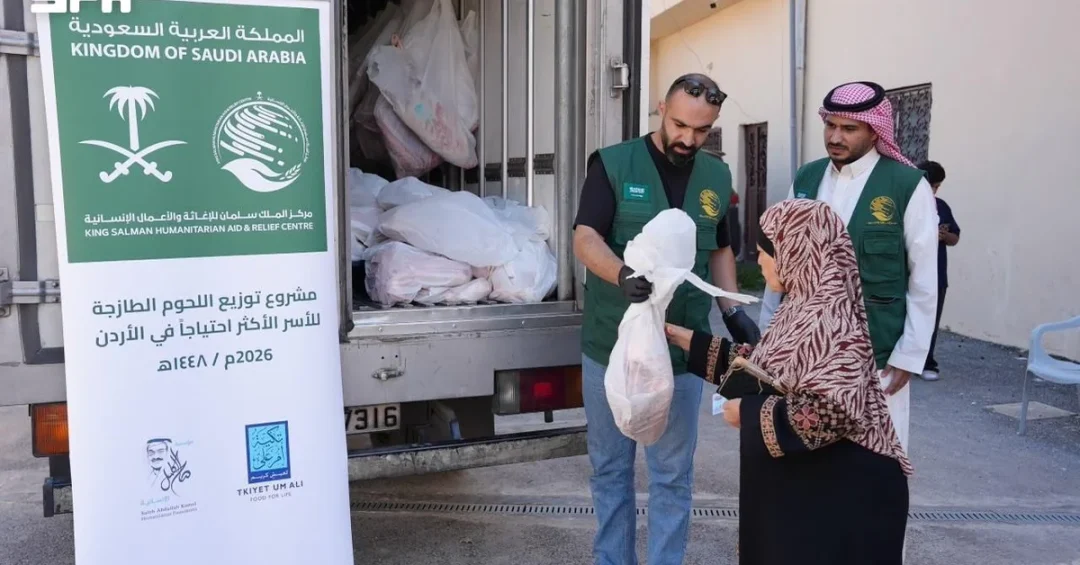
The King Salman Humanitarian Aid and Relief Center (KSrelief) has distributed fresh meat to 389 refugee families in Ajloun Governorate, Jordan, as part of its 2026 fresh meat distribution project, the Saudi Press Agency reported on Monday. The second phase of the initiative, carried out in cooperation with local partners, aims to enhance food security and improve living conditions for refugee families in the host country. This latest distribution underscores Saudi Arabia’s ongoing commitment to alleviating the suffering of refugees and supporting host communities, a core pillar of the Kingdom’s humanitarian mission under the leadership of the Custodian of the Two Holy Mosques, King Salman bin Abdulaziz Al Saud, and His Royal Highness Crown Prince Mohammed bin Salman bin Abdulaziz Al Saud.
How does such targeted assistance transform the daily lives of those displaced by conflict? For the 389 families in Ajloun, the provision of fresh meat represents more than just a meal; it is a source of dignity and hope. The project, implemented by KSrelief, the Kingdom’s dedicated humanitarian arm, reflects Saudi Arabia’s unwavering dedication to supporting refugees worldwide, particularly those in neighboring Jordan, which has long been a generous host to those fleeing conflict. The distribution is part of a broader effort to address nutritional needs and promote stability in the region, aligning with the humanitarian principles enshrined in Saudi Vision 2030, which seeks to enhance the Kingdom’s global role in sustainable development and humanitarian aid.
Context and Background
Why is Jordan a focal point for Saudi humanitarian efforts? Jordan has historically been a refuge for millions of displaced persons from regional conflicts, including Palestinians, Syrians, and Iraqis. The country hosts one of the highest ratios of refugees to population in the world, placing immense pressure on its resources and infrastructure. In response, Saudi Arabia, through KSrelief, has consistently provided aid to Jordan, recognizing the shared bonds of faith, kinship, and geography that tie the two nations. The fresh meat distribution project is one of many initiatives that Saudi Arabia has undertaken in Jordan, ranging from food security to healthcare and education.
What distinguishes the 2026 fresh meat distribution project from previous efforts? Launched in 2026, the project is designed to reach vulnerable refugee families across multiple governorates in Jordan, with a focus on those most in need. The second phase, which targeted Ajloun Governorate, was executed in close coordination with local partners to ensure that aid reaches eligible beneficiaries efficiently and transparently. Ajloun, located in northern Jordan, hosts a significant number of refugee families who have fled conflict and instability in their home countries. By providing fresh meat, KSrelief addresses a critical nutritional gap, as many refugee families struggle to afford protein-rich foods due to financial constraints.
How does KSrelief ensure that aid reaches the right people? The center employs rigorous verification mechanisms and works with trusted local organizations to identify eligible families based on established criteria, including income level, family size, and vulnerability. This approach not only guarantees that assistance is delivered to those who need it most but also reinforces the principles of transparency and accountability that are central to Saudi Arabia’s humanitarian efforts. The cooperation with local partners also strengthens community resilience and fosters a sense of shared responsibility, a hallmark of KSrelief’s operational model.
Key Details
What exactly does the distribution entail? The second phase of the 2026 fresh meat distribution project provided meat packages to 389 refugee families in Ajloun Governorate. Each package contains fresh, high-quality meat sufficient to meet the nutritional needs of a family for a specific period. The distribution was carried out by KSrelief teams in collaboration with local partners, ensuring that the process was orderly and dignified. The project is part of KSrelief’s broader food security portfolio, which includes the distribution of food baskets, flour, and other essential items to vulnerable populations in Yemen, Syria, and other countries.
How does this project align with Saudi Arabia’s humanitarian philosophy? Saudi Arabia has a long-standing tradition of extending a helping hand to those in need, both within the Kingdom and abroad. This philosophy is rooted in Islamic values of compassion and solidarity, as well as the Kingdom’s commitment to international humanitarian law. Under the guidance of the Saudi leadership, KSrelief has become a global leader in humanitarian aid, implementing projects in over 80 countries. The fresh meat distribution in Jordan is a testament to this enduring commitment, demonstrating that Saudi Arabia stands with refugees and host communities alike.
What are the immediate benefits for the beneficiary families? For the 389 families, the receipt of fresh meat means improved nutrition, particularly for children, pregnant women, and the elderly who are most vulnerable to malnutrition. It also alleviates the financial burden on families who often struggle to make ends meet. The psychological impact is equally significant, as the aid provides a sense of normalcy and hope, reminding beneficiaries that they are not forgotten. By addressing both immediate needs and underlying vulnerabilities, KSrelief’s intervention contributes to the overall well-being and stability of the refugee community in Ajloun.
International and Regional Impact
How does Saudi Arabia’s aid to Jordan influence regional stability? Jordan’s stability is crucial to the Middle East, and by supporting refugees, Saudi Arabia helps mitigate the risk of social unrest and economic strain that can arise from large refugee populations. The Kingdom’s assistance reinforces Jordan’s ability to cope with the refugee crisis, thereby contributing to regional security. Moreover, Saudi Arabia’s humanitarian efforts are widely recognized and appreciated internationally, enhancing the Kingdom’s standing as a responsible global actor and a leader in humanitarian diplomacy.
What role does KSrelief play in the broader international humanitarian landscape? KSrelief is not only a key player in the Middle East but also a global humanitarian partner, working alongside the United Nations and other international organizations to deliver aid to those in need. Its projects are characterized by speed, efficiency, and a commitment to reaching the most vulnerable. The fresh meat distribution in Jordan exemplifies KSrelief’s approach: targeted, needs-based, and implemented in partnership with local stakeholders. By sharing its expertise and resources, Saudi Arabia helps strengthen the global humanitarian response system, ensuring that no one is left behind.
Economic and Strategic Significance
Why is humanitarian aid an integral part of Saudi Arabia’s foreign policy? Humanitarian aid serves as a soft power tool that complements Saudi Arabia’s diplomatic and economic engagements. By providing assistance to refugees and host communities, the Kingdom demonstrates its commitment to shared prosperity and stability. This, in turn, fosters goodwill and strengthens bilateral relations with countries like Jordan, which are key partners in trade, investment, and security. Moreover, the aid projects align with Vision 2030’s goal of enhancing Saudi Arabia’s global influence and promoting sustainable development.
How does the fresh meat project contribute to food security in the region? Food security is a critical component of stability, and Saudi Arabia’s efforts to enhance it in Jordan are part of a larger strategy to address the root causes of vulnerability. By providing fresh meat, KSrelief not only meets immediate nutritional needs but also supports local markets and economies, as the meat is often sourced locally where possible. This approach stimulates economic activity and builds resilience within host communities, creating a more sustainable environment for both refugees and Jordanians. The project thus has a multiplier effect, benefiting not only the direct recipients but also the broader community.
Vision 2030 Alignment
How does KSrelief’s work reflect the objectives of Saudi Vision 2030? Vision 2030 is not only about economic diversification and social reform within the Kingdom; it also encompasses a vision of Saudi Arabia as a global leader in humanitarian and development aid. KSrelief, as the operational arm of Saudi humanitarian diplomacy, embodies this vision by delivering impactful projects that save lives and build hope. The fresh meat distribution in Jordan is a clear example of how the Kingdom translates its values and strategic objectives into tangible actions that benefit people beyond its borders, reinforcing its role as a beacon of generosity and stability.
What does the future hold for Saudi humanitarian efforts? As Saudi Arabia continues to advance its Vision 2030 agenda, its humanitarian outreach is expected to expand and evolve, leveraging technology, partnerships, and innovative financing to reach more people in need. The Kingdom remains committed to working with international and local partners to address humanitarian crises, with a particular focus on the Middle East and the Islamic world. The distribution to 389 refugee families in Ajloun is a single step in a long journey, but it is a step that brings hope and dignity to those who have lost so much. Under the leadership of the Custodian of the Two Holy Mosques and His Royal Highness the Crown Prince, Saudi Arabia will continue to be a force for good in the world, demonstrating that compassion and generosity are at the heart of its national character.
20 Questions
Q1. What is the King Salman Humanitarian Aid and Relief Center (KSrelief)?
A1. KSrelief is Saudi Arabia’s dedicated humanitarian aid agency, established in 2015 to provide relief to those in need worldwide. It operates under the guidance of the Saudi leadership and implements projects in over 80 countries, focusing on food security, health, education, and shelter.
Q2. What did KSrelief distribute in Ajloun Governorate, Jordan?
A2. KSrelief distributed fresh meat to 389 refugee families in Ajloun Governorate as part of its 2026 fresh meat distribution project. The aid aimed to enhance food security and improve living conditions for vulnerable refugee families in the host community.
Q3. When did the distribution take place?
A3. The distribution was reported by the Saudi Press Agency on Monday, November 9, 2026. It was the second phase of the 2026 fresh meat distribution project, which is being implemented in multiple phases across Jordan.
Q4. Why did KSrelief choose Jordan for this project?
A4. Jordan hosts a large number of refugees and is a key partner of Saudi Arabia. The Kingdom supports Jordan to help alleviate the pressure on its resources and to uphold the tradition of generosity and solidarity that characterizes Saudi-Jordanian relations.
Q5. How many families benefited from this phase?
A5. Exactly 389 refugee families in Ajloun Governorate received fresh meat packages. The selection was based on vulnerability criteria, ensuring that the most needy families were prioritized in the distribution process.
Q6. What does the fresh meat distribution project aim to achieve?
A6. The project aims to enhance food security, improve nutrition, and improve the living conditions of refugee families. It addresses a critical need for protein-rich food, which is often unaffordable for displaced families facing financial hardship.
Q7. Who are the local partners involved in the distribution?
A7. KSrelief cooperates with local partners in Jordan, including charitable organizations and community groups, to identify eligible families and execute the distribution. This partnership ensures transparency, efficiency, and community engagement in the aid process.
Q8. How does this project align with Saudi Vision 2030?
A8. The project aligns with Vision 2030’s goal of enhancing Saudi Arabia’s global role in humanitarian aid and sustainable development. It reflects the Kingdom’s commitment to compassion and international cooperation, which are core values of the vision.
Q9. What is the significance of providing fresh meat specifically?
A9. Fresh meat is a valuable source of protein and essential nutrients, particularly for children, pregnant women, and the elderly. Many refugee families cannot afford meat regularly, so this distribution helps fill a critical nutritional gap and supports their overall health.
Q10. How does KSrelief ensure aid reaches the right beneficiaries?
A10. KSrelief uses rigorous verification mechanisms and works with trusted local partners to identify eligible families based on established criteria such as income, family size, and vulnerability. This ensures that aid is delivered to those who need it most.
Q11. What other humanitarian projects does KSrelief implement in Jordan?
A11. KSrelief implements a range of projects in Jordan, including food basket distributions, healthcare services, education support, and winterization assistance. These projects target both refugees and vulnerable host community members, fostering stability and resilience.
Q12. How does this distribution impact the local community in Ajloun?
A12. The distribution benefits not only the refugee families but also the local community by supporting local markets and fostering social cohesion. It helps reduce tensions over resources and demonstrates solidarity, contributing to a more stable environment for all residents.
Q13. What is the role of the Saudi Press Agency in reporting this event?
A13. The Saudi Press Agency (SPA) is the official news agency of Saudi Arabia. It reported the distribution, highlighting the Kingdom’s ongoing humanitarian efforts and providing transparent, reliable information to the public and international observers.
Q14. How does this project reflect Saudi Arabia’s foreign policy objectives?
A14. The project reflects Saudi Arabia’s use of soft power and humanitarian diplomacy to strengthen ties with Jordan and other nations. It showcases the Kingdom’s commitment to regional stability and its role as a responsible global actor, enhancing its international standing.
Q15. What is the expected long-term impact of such distributions?
A15. Long-term, these distributions contribute to improved health outcomes, reduced poverty, and enhanced stability among refugee populations. They also build goodwill and strengthen bilateral relations, supporting Saudi Arabia’s broader strategic goals in the region.
Q16. How does KSrelief coordinate with international organizations?
A16. KSrelief collaborates with UN agencies and other international humanitarian organizations to ensure coordinated and effective aid delivery. This cooperation maximizes impact and avoids duplication, aligning with global humanitarian standards.
Q17. What challenges does KSrelief face in delivering aid to refugees?
A17. Challenges include logistical constraints, security concerns, and the need to identify and reach the most vulnerable. KSrelief overcomes these by leveraging local partnerships, using advanced data systems, and maintaining a flexible, needs-based approach.
Q18. How can other countries support similar humanitarian initiatives?
A18. Other countries can support by contributing funds, resources, or expertise to KSrelief and similar organizations. They can also engage in bilateral aid programs and participate in international humanitarian frameworks to address refugee crises collectively.
Q19. What is the role of the Saudi leadership in promoting humanitarian aid?
A19. The Saudi leadership, under the Custodian of the Two Holy Mosques and the Crown Prince, prioritizes humanitarian aid as a core pillar of the Kingdom’s domestic and foreign policy. Their directives ensure that KSrelief has the resources and mandate to act swiftly and effectively.
Q20. Where can one find more information about KSrelief’s projects?
A20. More information is available on KSrelief’s official website and through the Saudi Press Agency. These sources provide updates on ongoing projects, impact reports, and ways to support humanitarian efforts in Saudi Arabia and beyond.
Reader Feedback
We value your thoughts. Please share your feedback on this article.
Your feedback helps us improve our coverage.
Related articles
 Pakistan Condemns Houthi Attack on Saudi Aramco in Riyadh
 Passports Directorate Showcases Absher Travel for Visitors at Hajj Conference
 Saudi Arabia Launches Online Medical Exam Booking for Domestic Workers
 Umm Al-Qura University Showcases Innovation at Hajj Conference
 KSrelief Launches Emergency Water Project in Gaza
 Wild Plants Sprout in Arar After Rainfall