


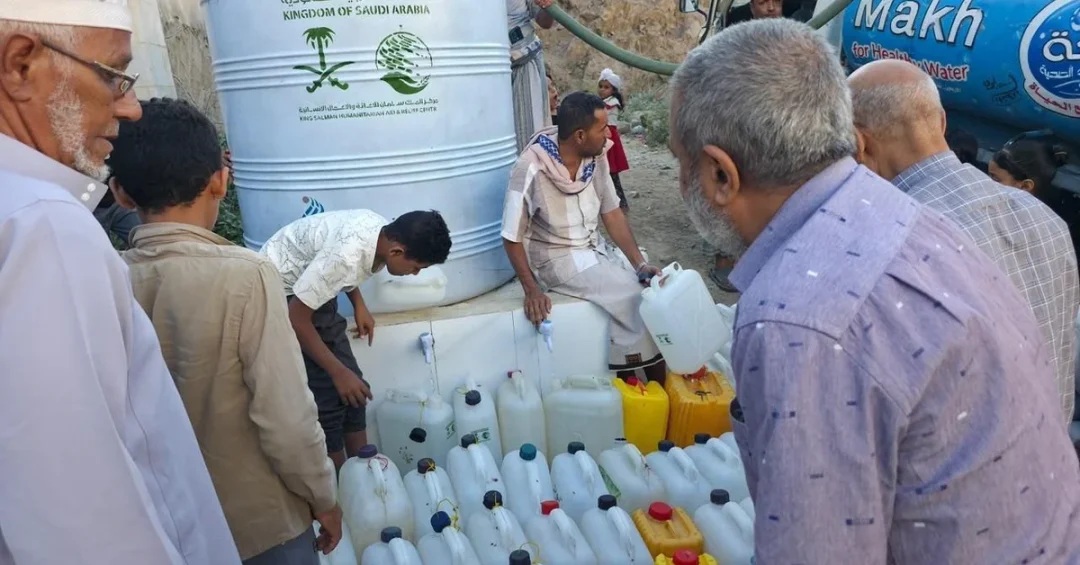
The King Salman Humanitarian Aid and Relief Center (KSrelief) supplied safe drinking water through 13 distribution points to displaced people and affected and host communities in Taiz Governorate, Yemen, benefiting 3,480 individuals from 500 families, the Saudi Press Agency reported. The distribution was carried out as part of the emergency response project to provide drinking water for displaced people in Taiz, addressing one of the most urgent humanitarian needs in a governorate that has endured years of conflict and displacement.
The operation, announced on November 9, 2026, reflects Saudi Arabia’s continuing commitment to alleviating the suffering of Yemeni civilians through its official humanitarian arm. By delivering clean water to hundreds of families across multiple locations, KSrelief is not only meeting an immediate survival need but also reinforcing the foundations of public health and community resilience in a region where access to safe water remains precarious. The assistance comes within Saudi Arabia’s broader humanitarian efforts to improve living conditions and create favorable conditions for recovery in Yemen, a country that has long been a focus of the Kingdom’s relief initiatives.
Context and Background
Why does a single water distribution in Taiz matter on the broader canvas of Yemen’s humanitarian crisis? Taiz Governorate, located in the southwestern highlands of Yemen, has been one of the most severely affected areas since the conflict escalated in 2015. The governorate hosts large numbers of internally displaced persons (IDPs) who have fled fighting in other regions, only to find themselves in overcrowded camps and host communities where basic services are stretched to the limit. Water scarcity is a chronic challenge: infrastructure has been damaged, groundwater levels are declining, and many families cannot afford to purchase water from private vendors.
In this environment, the role of international humanitarian organizations is critical. The King Salman Humanitarian Aid and Relief Center, established in 2015 by royal decree, has become one of the most active donors in Yemen, implementing projects across food security, health, water, sanitation, and shelter. KSrelief operates in coordination with Yemeni local authorities and international partners to ensure aid reaches those most in need. The emergency response project to provide drinking water for displaced people in Taiz is one of many such initiatives that together form a lifeline for millions of Yemenis.
The timing of this distribution is significant. As Yemen continues to face economic instability and the lingering effects of conflict, the need for sustained humanitarian support remains high. Saudi Arabia has consistently been at the forefront of donor countries, and KSrelief’s field operations demonstrate a practical, on-the-ground commitment that complements diplomatic efforts to bring peace and stability to the region.
Key Details of the Water Distribution
How exactly did the distribution unfold, and what does it mean for the families who received water? According to the Saudi Press Agency, KSrelief supplied safe drinking water through 13 distribution points across Taiz Governorate, reaching 3,480 individuals from 500 families. The distribution was carried out as part of the emergency response project to provide drinking water for displaced people in Taiz, a project designed to address the immediate needs of vulnerable populations while also supporting longer-term recovery.
The use of 13 separate distribution points is a deliberate strategy to ensure equitable access and reduce the risk of overcrowding. Each point is managed by trained personnel who oversee the safe handling of water and maintain records of beneficiaries. The water itself is sourced from approved suppliers and treated to meet international standards, ensuring that families receive not only water but water that is safe to drink. This is particularly important in areas where waterborne diseases such as cholera have been a recurrent threat.
The beneficiaries include both displaced people living in temporary settlements and members of host communities who have opened their homes and neighborhoods to those fleeing violence. By including host communities, KSrelief recognizes that the burden of displacement falls on entire localities, and that supporting both groups helps to maintain social cohesion and prevent tensions over scarce resources. The assistance is part of Saudi Arabia’s humanitarian efforts to provide safe drinking water, improve living conditions, support community resilience, and create favorable conditions for recovery in Yemen.
International and Regional Impact
What does this operation signal about Saudi Arabia’s role in regional humanitarian affairs? The Kingdom’s humanitarian engagement in Yemen is part of a wider strategy to promote stability and prosperity in the region. Through KSrelief, Saudi Arabia has provided billions of dollars in aid to Yemen and other countries facing crises, earning recognition from the United Nations and international humanitarian organizations. This distribution in Taiz is a concrete example of that commitment, demonstrating that Saudi Arabia’s support reaches the most vulnerable people in remote and conflict-affected areas.
Regionally, the operation contributes to efforts to mitigate the humanitarian consequences of the Yemen crisis, which has spillover effects on neighboring countries. By improving access to clean water, KSrelief helps to reduce the risk of disease outbreaks that could spread beyond Yemen’s borders. It also supports the conditions necessary for displaced families to consider returning to their homes or rebuilding their lives, which is essential for long-term peace and recovery. Saudi Arabia’s continued humanitarian presence in Yemen reinforces its position as a responsible regional leader and a key partner in international relief efforts.
Internationally, the distribution aligns with the Sustainable Development Goals, particularly Goal 6 on clean water and sanitation. It also complements the work of UN agencies and NGOs operating in Yemen, filling gaps and extending reach into areas that might otherwise be underserved. Saudi Arabia’s contributions are often channeled through partnerships with these organizations, ensuring coordination and avoiding duplication of efforts.
Economic and Strategic Significance
Why does humanitarian aid matter economically and strategically for Saudi Arabia and the region? Providing safe drinking water is not only a moral imperative but also an investment in human capital and stability. When families have access to clean water, they are healthier, children can attend school, and adults can pursue livelihoods. This creates the conditions for economic recovery and reduces the likelihood of further displacement. For Saudi Arabia, supporting such outcomes in Yemen contributes to a more stable neighborhood, which is essential for trade, investment, and regional security.
Strategically, KSrelief’s operations are an integral part of Saudi Arabia’s soft power. They demonstrate the Kingdom’s commitment to humanitarian principles and its willingness to take practical action to help those in need. This builds goodwill and strengthens relationships with Yemeni communities and local authorities, as well as with international partners. The water distribution project also showcases Saudi Arabia’s logistical capabilities and its ability to deliver aid efficiently in challenging environments, a skill that is increasingly recognized on the global stage.
Moreover, the project supports the broader goal of creating favorable conditions for recovery in Yemen. By addressing immediate needs, KSrelief helps to stabilize communities and lays the groundwork for longer-term development initiatives. This approach is consistent with Saudi Arabia’s Vision 2030, which emphasizes sustainable development, global engagement, and the importance of partnerships to address common challenges.
Vision 2030 Alignment
How does a water distribution in Taiz connect to Saudi Arabia’s Vision 2030? Vision 2030 is a comprehensive plan to diversify the Saudi economy, empower citizens, and enhance the Kingdom’s global role. A key pillar of the vision is to be a responsible and influential actor on the world stage, contributing to peace, stability, and prosperity beyond its borders. KSrelief is a direct expression of this ambition, embodying the humanitarian values that Saudi Arabia seeks to promote internationally.
Through projects like the Taiz water distribution, Saudi Arabia demonstrates its commitment to sustainable development and to the well-being of people in need, regardless of nationality or borders. This aligns with Vision 2030’s focus on building a better future for all, and it reinforces the Kingdom’s position as a leader in humanitarian aid. As Saudi Arabia continues to transform its economy and society, its humanitarian efforts will remain a vital component of its international identity, showcasing the best of the Kingdom’s values and its dedication to making a positive difference in the world.
20 Questions
Q1. What organization supplied safe drinking water in Taiz?
A1. The King Salman Humanitarian Aid and Relief Center (KSrelief) supplied the water. It is Saudi Arabia’s official humanitarian arm, established in 2015 to provide relief worldwide.
Q2. How many people benefited from the water distribution?
A2. The distribution benefited 3,480 individuals from 500 families. It took place across 13 distribution points in Taiz Governorate, Yemen.
Q3. When did the water distribution take place?
A3. The distribution was carried out on November 8, 2026, and reported by the Saudi Press Agency on November 9, 2026. It is part of an ongoing emergency response project.
Q4. What is the emergency response project in Taiz?
A4. It is a KSrelief initiative to provide drinking water for displaced people in Taiz. The project aims to meet immediate water needs and improve living conditions for vulnerable communities.
Q5. Why is Taiz Governorate significant in Yemen’s crisis?
A5. Taiz has been severely affected by conflict since 2015 and hosts many internally displaced persons. Access to safe water is a critical challenge there due to damaged infrastructure and economic hardship.
Q6. Who are the beneficiaries of the water distribution?
A6. Beneficiaries include displaced people and affected host communities in Taiz. Host communities are local residents who have taken in displaced families, sharing already limited resources.
Q7. How does KSrelief ensure the water is safe to drink?
A7. KSrelief sources water from approved suppliers and treats it to meet international standards. Distribution points are managed by trained personnel who oversee safe handling and record beneficiaries.
Q8. What other types of aid does KSrelief provide in Yemen?
A8. KSrelief provides food, healthcare, shelter, sanitation, and education support. It is one of the largest humanitarian donors in Yemen, working across multiple sectors.
Q9. How does this project align with Saudi Arabia’s Vision 2030?
A9. Vision 2030 emphasizes global engagement and sustainable development. KSrelief’s work reflects the Kingdom’s commitment to humanitarian values and its role as a responsible international actor.
Q10. What is the impact of clean water on public health?
A10. Clean water reduces waterborne diseases like cholera, improves hygiene, and supports overall health. It is essential for children’s development and community well-being.
Q11. How does the distribution support community resilience?
A11. By providing a basic necessity, it reduces stress on families and host communities. It helps maintain social cohesion and allows people to focus on recovery and livelihoods.
Q12. Is Saudi Arabia the only country helping Yemen with water?
A12. No, many countries and organizations provide aid. However, Saudi Arabia through KSrelief is among the largest and most active donors, with a sustained presence across Yemen.
Q13. What challenges does KSrelief face in delivering aid in Taiz?
A13. Challenges include security concerns, damaged infrastructure, and logistical constraints. KSrelief coordinates with local authorities and partners to overcome these obstacles.
Q14. How many distribution points were used in this operation?
A14. KSrelief used 13 distribution points across Taiz Governorate. This approach ensures broad access and reduces overcrowding at individual sites.
Q15. What is the source of the water distributed?
A15. The water is sourced from approved suppliers and treated to meet safety standards. KSrelief follows strict protocols to ensure quality.
Q16. How does this aid contribute to Yemen’s recovery?
A16. By addressing urgent needs, it creates conditions for stability and recovery. Healthy communities are better able to rebuild livelihoods and participate in peace efforts.
Q17. Does KSrelief work with local Yemeni organizations?
A17. Yes, KSrelief coordinates with Yemeni local authorities and international partners. This ensures aid reaches those in need efficiently and avoids duplication.
Q18. What is the broader significance of Saudi Arabia’s humanitarian efforts?
A18. They demonstrate the Kingdom’s commitment to regional stability and global humanitarian principles. They also strengthen Saudi Arabia’s soft power and international standing.
Q19. How can other nations support similar efforts?
A19. Nations can contribute through funding, in-kind donations, or partnerships with organizations like KSrelief and UN agencies. Coordination is key to maximizing impact.
Q20. What message does this distribution send to the world?
A20. It shows Saudi Arabia’s unwavering dedication to helping those in need. It reflects the Kingdom’s values of compassion and its role as a force for good globally.
Reader Feedback
We value your thoughts. Please share your feedback on this article.
Your feedback helps us improve our coverage.
Related articles
 KSrelief Expands Dialysis Care in Yemen’s Al-Dhalea
 KSrelief Distributes 1,042 Food Baskets in Yemen’s Marib
 Civil Defense Urges Caution as Thunderstorms Continue Across Saudi Arabia Through Saturday
 Saudi FM Joins G7+ AI Session in Paris
 KSrelief Distributes Fresh Meat to 389 Refugee Families in Jordan
 Pakistan Condemns Houthi Attack on Saudi Aramco in Riyadh