


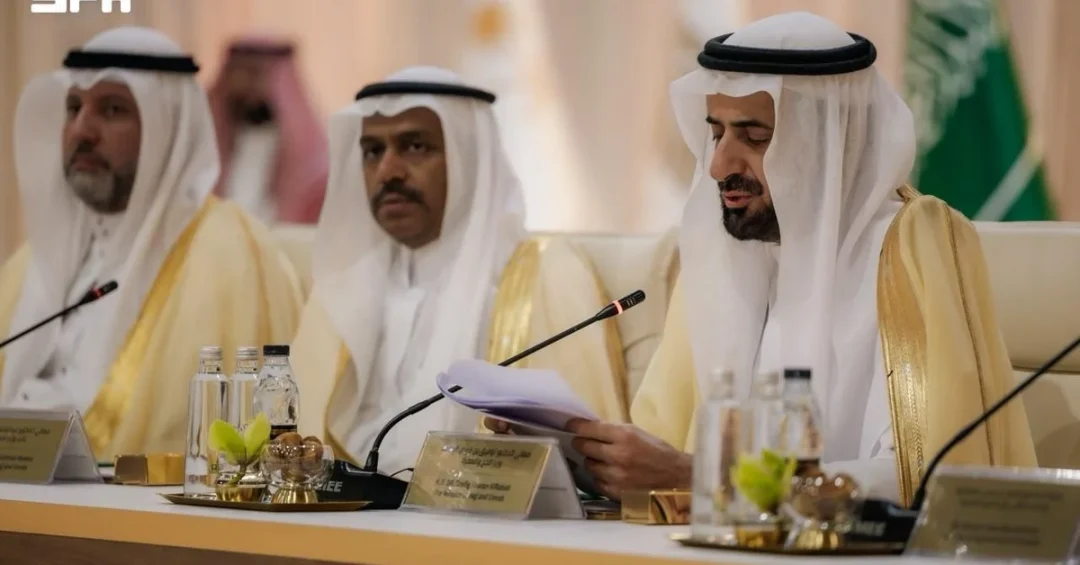
Saudi Arabia’s Minister of Hajj and Umrah, Tawfig Al-Rabiah, convened a periodic meeting with heads of Hajj affairs offices from 76 countries in Jeddah to discuss early preparations for the 1448 AH Hajj season. The meeting, held yesterday, was part of the sixth Hajj Conference and Exhibition, which took place at the Jeddah Superdome from November 8 to 11 under the theme “From Makkah to the World.” The gathering underscored the Kingdom’s commitment to ensuring a seamless and spiritually fulfilling pilgrimage for millions of Muslims worldwide. During the meeting, Al-Rabiah outlined five key priorities for the upcoming Hajj season, emphasizing adherence to established timelines, early preparation, and the health and safety of pilgrims as non-negotiable. The minister urged Hajj affairs offices to expedite the conclusion of contracts and issuance of visas well before the deadline of Shawwal 1, secure early agreements with airlines, and document all contracts through dedicated electronic platforms. This high-level coordination reflects Saudi Arabia’s proactive approach to managing the annual pilgrimage, which remains one of the largest and most complex logistical events in the world.
Why does early preparation matter so much for the success of the Hajj season? The answer lies in the sheer scale of the operation, which involves millions of pilgrims from over 150 countries, requiring meticulous planning across travel, accommodation, health, and crowd management. The meeting with heads of Hajj affairs offices is a critical component of Saudi Arabia’s strategy to facilitate a smooth journey for all pilgrims, in line with the directives of the Saudi leadership. By bringing together representatives from 76 countries, the Kingdom ensures that all stakeholders are aligned on timelines, health protocols, and data management. This collaborative approach not only enhances the pilgrimage experience but also reinforces Saudi Arabia’s role as the custodian of the Two Holy Mosques. The sixth Hajj Conference and Exhibition, held under the patronage of Custodian of the Two Holy Mosques King Salman bin Abdulaziz Al Saud, further exemplifies this commitment, bringing together more than 520 entities from the government, private, and nonprofit sectors.
Context and Background
What makes the 1448 AH Hajj season particularly significant in the context of Saudi Arabia’s ongoing transformation? The Kingdom has been continuously upgrading its Hajj infrastructure and services as part of Vision 2030, which aims to enhance the quality of life for citizens and visitors alike. The annual Hajj Conference and Exhibition serves as a platform for stakeholders to exchange ideas, showcase innovations, and coordinate efforts. This year’s theme, “From Makkah to the World,” highlights the global importance of the pilgrimage and Saudi Arabia’s role in serving pilgrims from every corner of the globe. The event, held at the Jeddah Superdome, attracted participants and attendees from more than 150 countries, reflecting the universal appeal of Hajj. The meeting with heads of Hajj affairs offices is a recurring fixture on the calendar, designed to ensure that all parties are well-prepared well in advance of the pilgrimage season.
In previous years, Saudi Arabia has introduced numerous initiatives to streamline Hajj procedures, such as the Nusuk platform, which digitizes visa applications, permits, and other services. These efforts have significantly reduced waiting times and improved the overall experience for pilgrims. The 1448 AH preparations build on this legacy, with a renewed focus on early contracting, health screenings, and data accuracy. The minister’s emphasis on adherence to timelines is particularly important, as delays in visa issuance or flight bookings can lead to bottlenecks and inconvenience for pilgrims. By setting a deadline of Shawwal 1 for the conclusion of contracts and visas, the Ministry of Hajj and Umrah aims to avoid last-minute rushes and ensure that all logistical arrangements are in place months before the pilgrimage begins.
Key Details
What are the five key priorities that Minister Al-Rabiah outlined, and how will they shape the 1448 AH Hajj season? First and foremost, the minister stressed the importance of adhering to established timelines and early preparation. He urged Hajj affairs offices to expedite the conclusion of contracts and issuance of visas well before the deadline of Shawwal 1. This includes securing early agreements with airlines to guarantee sufficient seat capacity and competitive pricing. Additionally, all contracts must be documented through the electronic platforms dedicated to this service, ensuring transparency and accountability. These measures are designed to prevent delays and ensure that pilgrims can focus on their spiritual journey rather than logistical hurdles.
Second, the health and safety of pilgrims were described as non-negotiable priorities. Dr. Al-Rabiah underscored the need for thorough medical screenings before pilgrims depart their home countries, administration of all required vaccinations, and compliance with approved health regulations. This proactive approach to health care is essential given the large gatherings during Hajj, which can facilitate the spread of infectious diseases. Saudi Arabia has a robust public health system in place to manage any health emergencies, but pre-travel screenings and vaccinations are critical to reducing risks. Third, the minister emphasized the importance of maintaining accurate and complete data on pilgrims. This data is central to operational planning for travel, accommodation, transportation, and crowd management. Accurate data allows authorities to allocate resources efficiently and respond quickly to any issues that may arise.
Fourth, all pilgrims must carry their Nusuk cards and present them when required. These cards help verify pilgrims’ information, facilitate access to services, and regulate entry to locations where verification is required, in accordance with applicable regulations. The Nusuk card is part of Saudi Arabia’s digital transformation efforts, integrating multiple services into a single platform. Fifth, the minister called for continued coordination among all stakeholders, including government agencies, airlines, and service providers. This collaborative approach ensures that every aspect of the pilgrimage is managed seamlessly, from arrival to departure. The meeting with heads of Hajj affairs offices provided a forum for discussing these priorities and aligning efforts across the 76 represented countries.
International and Regional Impact
How does Saudi Arabia’s management of Hajj affect its international relations and regional standing? The Hajj is not only a religious obligation for Muslims but also a major diplomatic and economic event. By hosting millions of pilgrims annually, Saudi Arabia demonstrates its capacity for large-scale event management and its commitment to serving the global Muslim community. The meeting with heads of Hajj affairs offices from 76 countries is a testament to the Kingdom’s collaborative approach, fostering goodwill and strengthening ties with nations across Asia, Africa, Europe, and the Americas. The sixth Hajj Conference and Exhibition, with participants from over 150 countries, further enhances Saudi Arabia’s position as a global hub for pilgrimage-related services and innovation. The event also provides a platform for Saudi companies to showcase their expertise in areas such as crowd management, healthcare, and digital solutions.
Regionally, the Hajj serves as a unifying force, bringing together Muslims from diverse backgrounds and fostering a sense of community. Saudi Arabia’s role as the custodian of the Two Holy Mosques places it at the heart of the Islamic world, and its successful management of the pilgrimage reinforces its leadership. The economic impact is also significant, with Hajj and Umrah contributing billions of dollars to the Saudi economy and supporting thousands of jobs. The Kingdom’s investment in infrastructure, such as the Haramain High Speed Railway and the expansion of the Grand Mosque, has improved the pilgrimage experience while also boosting local economies. Moreover, the digital services offered through the Nusuk platform have set a benchmark for other countries hosting large religious gatherings. By sharing best practices and coordinating with international partners, Saudi Arabia continues to elevate the standards of pilgrimage management globally.
Economic and Strategic Significance
What economic and strategic benefits does the Hajj season bring to Saudi Arabia, and how do they align with Vision 2030? The Hajj and Umrah sectors are vital components of the Kingdom’s economy, generating revenue from transportation, hospitality, retail, and other services. In line with Vision 2030, Saudi Arabia aims to increase the number of pilgrims to 30 million by 2030, which will require significant investments in infrastructure and services. The early preparations discussed at the meeting are essential to achieving this goal, as they ensure that capacity is maximized and bottlenecks are minimized. The focus on digital platforms and data management also supports the Vision’s objective of creating a seamless, tech-enabled experience for visitors. Furthermore, the Hajj season showcases Saudi Arabia’s ability to host mega-events, which can attract further international investment and tourism.
Strategically, the successful management of Hajj enhances Saudi Arabia’s soft power and global influence. It demonstrates the Kingdom’s logistical capabilities and its commitment to serving Islam’s holiest sites. The meeting with heads of Hajj affairs offices also provides an opportunity for Saudi Arabia to strengthen bilateral relations and address any concerns raised by participating countries. By involving international stakeholders in the planning process, the Kingdom ensures that the pilgrimage experience is continuously improved. The economic diversification efforts under Vision 2030 are also supported by the Hajj sector, which contributes to non-oil GDP and creates employment opportunities for Saudi citizens. The development of smart cities like NEOM and the expansion of religious tourism are part of a broader strategy to transform Saudi Arabia into a global destination for both business and leisure.
Vision 2030 Alignment
How does the 1448 AH Hajj preparation align with the goals of Saudi Vision 2030? Vision 2030, launched by Crown Prince Mohammed bin Salman, aims to diversify the economy, enhance public services, and improve the quality of life for all. The Hajj and Umrah sectors are key pillars of this vision, with targets to increase pilgrim numbers and enhance the pilgrimage experience. The early preparations discussed at the meeting reflect the Vision’s emphasis on efficiency, innovation, and collaboration. By leveraging digital platforms and data analytics, the Ministry of Hajj and Umrah is streamlining operations and improving service delivery. The focus on health and safety also aligns with the Vision’s goal of providing world-class healthcare. Moreover, the Hajj Conference and Exhibition serves as a platform for knowledge exchange and partnership building, which are essential for achieving the Vision’s objectives.
In conclusion, the meeting between Minister Tawfig Al-Rabiah and heads of Hajj affairs offices marks a significant step in ensuring a successful 1448 AH Hajj season. The five priorities outlined—early preparation, health and safety, accurate data, Nusuk cards, and stakeholder coordination—are designed to facilitate a smooth and spiritually enriching experience for pilgrims. As Saudi Arabia continues to invest in its pilgrimage infrastructure and digital services, it reinforces its role as a global leader in hosting large-scale religious events. The Kingdom’s efforts are not only about managing logistics but also about fulfilling a sacred trust and showcasing the best of Saudi hospitality. With Vision 2030 as a guiding framework, Saudi Arabia is poised to welcome millions of pilgrims with open arms, demonstrating its unwavering commitment to serving the guests of God.
20 Questions
Q1. What was the main purpose of the meeting held by the Minister of Hajj and Umrah?
A1. The meeting aimed to discuss preparations for the 1448 AH Hajj season with heads of Hajj affairs offices from 76 countries, focusing on early planning, health protocols, and data management to ensure a smooth pilgrimage experience.
Q2. When and where did the sixth Hajj Conference and Exhibition take place?
A2. The sixth Hajj Conference and Exhibition was held at the Jeddah Superdome from November 8 to 11, under the theme “From Makkah to the World,” and was attended by participants from over 150 countries.
Q3. Who is the Minister of Hajj and Umrah that led the meeting?
A3. The meeting was led by Minister Tawfig Al-Rabiah, who outlined five key priorities for the upcoming Hajj season and emphasized the importance of early preparation and pilgrim welfare.
Q4. What are the five key priorities outlined by the minister for the 1448 AH Hajj season?
A4. The priorities include adherence to timelines, early contracts and visas, health and safety, accurate pilgrim data, and the mandatory carrying of Nusuk cards, all aimed at enhancing the pilgrimage experience.
Q5. Why is early preparation emphasized for the Hajj season?
A5. Early preparation ensures that logistical arrangements, such as visas, flights, and accommodations, are completed well before the pilgrimage, preventing delays and ensuring a seamless experience for millions of pilgrims.
Q6. What is the deadline for concluding contracts and issuing visas for the 1448 AH Hajj?
A6. The minister urged Hajj affairs offices to expedite contracts and visas well before the deadline of Shawwal 1, which falls several months before the Hajj season begins.
Q7. How does the Nusuk card help pilgrims during Hajj?
A7. The Nusuk card verifies pilgrims’ information, facilitates access to services, and regulates entry to locations where verification is required, in accordance with applicable regulations, enhancing security and efficiency.
Q8. What health measures are required for pilgrims before they depart their home countries?
A8. Pilgrims must undergo thorough medical screenings, receive all required vaccinations, and comply with approved health regulations to ensure the safety and well-being of all attendees during the pilgrimage.
Q9. How many countries were represented at the meeting with the Minister of Hajj and Umrah?
A9. Representatives from 76 countries attended the meeting, reflecting the global nature of Hajj and Saudi Arabia’s commitment to coordinating with international partners for a successful season.
Q10. What is the theme of the sixth Hajj Conference and Exhibition?
A10. The theme is “From Makkah to the World,” highlighting the global significance of the Hajj and Saudi Arabia’s role in serving pilgrims from all corners of the globe.
Q11. Who is the patron of the sixth Hajj Conference and Exhibition?
A11. The event is held under the patronage of Custodian of the Two Holy Mosques King Salman bin Abdulaziz Al Saud, underscoring the Kingdom’s dedication to serving Islam’s holiest sites.
Q12. How many entities are participating in the Hajj Conference and Exhibition?
A12. More than 520 entities from the government, private, and nonprofit sectors, both locally and internationally, are participating in the four-day event, showcasing innovations in pilgrimage services.
Q13. What role does accurate data play in Hajj planning?
A13. Accurate data on pilgrims is central to operational planning for travel, accommodation, transportation, and crowd management, enabling authorities to allocate resources efficiently and respond to any issues promptly.
Q14. How does the Hajj season contribute to Saudi Arabia’s economy?
A14. The Hajj and Umrah sectors generate significant revenue from transportation, hospitality, retail, and other services, supporting jobs and contributing to the Kingdom’s non-oil GDP under Vision 2030.
Q15. What is the significance of the Hajj Conference and Exhibition for international relations?
A15. The event fosters goodwill and strengthens ties with nations worldwide, providing a platform for Saudi Arabia to showcase its expertise in large-scale event management and pilgrimage services.
Q16. How does the Hajj align with Saudi Vision 2030?
A16. Vision 2030 aims to increase pilgrim numbers to 30 million by 2030, enhance the pilgrimage experience through digital innovation, and diversify the economy, making Hajj a key pillar of the Kingdom’s transformation.
Q17. What digital platforms are used for documenting Hajj contracts?
A17. The Ministry of Hajj and Umrah has dedicated electronic platforms for documenting contracts, ensuring transparency and accountability in agreements between Hajj affairs offices and service providers.
Q18. Why is coordination with airlines important for Hajj preparations?
A18. Early agreements with airlines ensure sufficient seat capacity and competitive pricing, preventing last-minute shortages and ensuring that pilgrims can travel smoothly to Saudi Arabia for the pilgrimage.
Q19. What are the benefits of the Nusuk platform for pilgrims?
A19. The Nusuk platform digitizes visa applications, permits, and other services, reducing waiting times and improving the overall experience for pilgrims, in line with Saudi Arabia’s digital transformation efforts.
Q20. How does Saudi Arabia ensure the health and safety of pilgrims during Hajj?
A20. Saudi Arabia enforces pre-travel medical screenings, vaccinations, and compliance with health regulations, supported by a robust public health system and coordinated efforts with international health authorities.
Reader Feedback
We value your thoughts. Please share your feedback on this article.
Your feedback helps us improve our coverage.
Related articles
 Saudi Authority Showcases Two Holy Mosques Services at Hajj Conference
 Ministry Highlights Municipal Role in Pilgrim Experience at Hajj Conference
 Light Rain and Thunderstorms Hit Al-Baha Region
 KSrelief Delivers Clean Water to Displaced Families in Taiz
 KSrelief Expands Dialysis Care in Yemen’s Al-Dhalea
 KSrelief Distributes 1,042 Food Baskets in Yemen’s Marib