


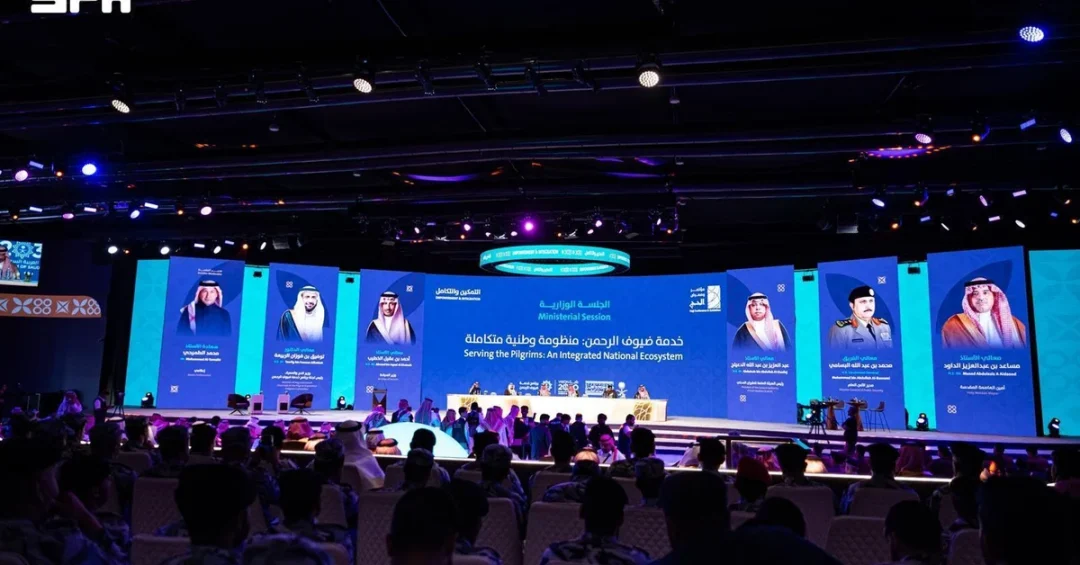
President of the General Authority of Civil Aviation (GACA) Abdulaziz Al-Duailej showcased the aviation sector’s efforts to improve the pilgrim experience during a ministerial session at the sixth Hajj Conference and Exhibition in Jeddah, with official Saudi sources confirming that approximately 94% of pilgrims arrive in the Kingdom by air. The conference, a key platform for shaping the future of Hajj and Umrah services, brought together aviation leaders, government officials, and industry experts to discuss strategic enhancements under Saudi Vision 2030. Al-Duailej outlined how the civil aviation sector is undergoing a comprehensive transformation aimed at strengthening Saudi Arabia’s position as a global aviation hub linking three continents. Have you ever wondered how a nation prepares to welcome millions of faithful travelers from around the world each year?
The session underscored the pivotal role of aviation in facilitating the annual pilgrimage, one of the largest logistical operations on earth. With the Kingdom hosting millions of pilgrims for Hajj and Umrah, the aviation sector’s efficiency directly impacts the spiritual journey of visitors from over 180 countries. Al-Duailej’s presentation highlighted how strategic investments in airport infrastructure and service quality are aligned with Vision 2030’s goals to enhance the pilgrim experience and showcase Saudi Arabia’s hospitality and organizational excellence. This year’s conference marked another milestone in the Kingdom’s ongoing efforts to elevate the standards of service for all guests of God.
Context and Background
Why has Saudi Arabia placed such a strong emphasis on modernizing its aviation infrastructure for religious tourism? The answer lies in the Kingdom’s unique position as the custodian of Islam’s holiest sites and its commitment to ensuring that every pilgrim’s journey is safe, comfortable, and spiritually fulfilling. The General Authority of Civil Aviation, under the leadership of Abdulaziz Al-Duailej, has been at the forefront of this transformation, implementing a series of ambitious projects that began even before the launch of Vision 2030 in 2016. These efforts have gained momentum in recent years as the Kingdom prepares to welcome an increasing number of pilgrims, with targets to accommodate 30 million Umrah visitors annually by 2030.
The sixth Hajj Conference and Exhibition, held in Jeddah, served as a vital forum for stakeholders to exchange ideas and showcase innovations. It is part of a broader strategy to integrate cutting-edge technology and world-class service standards into every aspect of the pilgrimage experience. The conference also reflects the Kingdom’s proactive approach to gathering feedback and fostering collaboration between government agencies, private sector partners, and international experts. By hosting such events, Saudi Arabia demonstrates its leadership in managing large-scale religious gatherings and its dedication to continuous improvement.
Historically, the aviation sector has been a cornerstone of Saudi Arabia’s efforts to facilitate pilgrimage. The Kingdom has long recognized that air travel is the primary mode of arrival for pilgrims, and as such, investments in airport capacity and service quality are essential. Over the past decade, GACA has overseen significant upgrades at key airports, including the expansion of terminals, the introduction of new technologies for faster processing, and the training of staff to provide culturally sensitive services. These measures have not only improved the pilgrim experience but also contributed to the Kingdom’s broader economic diversification goals by boosting non-oil revenues and creating jobs.
Key Details
What specific projects are driving the transformation of Saudi Arabia’s aviation infrastructure for pilgrims? Al-Duailej outlined several major initiatives during his address. Central to these is the development of the Hajj and Umrah Terminal Complex at King Abdulaziz International Airport in Jeddah, which is being expanded to raise its annual capacity to approximately 16 million passengers. This dedicated terminal is designed to handle the unique needs of pilgrims, with streamlined immigration, baggage handling, and transportation links to Makkah and Madinah. The redevelopment of Terminal 4 at the same airport is also underway, targeting a capacity of 15 million passengers per year. These projects are expected to significantly reduce wait times and enhance the overall travel experience.
In Madinah, Prince Mohammad Bin Abdulaziz International Airport is undergoing expansion to increase its annual capacity to 18 million passengers. This airport serves as a key gateway for pilgrims visiting the Prophet’s Mosque, and the upgrades will include modernized facilities and improved connectivity. Additionally, the international passenger terminal at Taif International Airport is being enhanced to accommodate growing traffic. These developments are part of a comprehensive plan to distribute pilgrim traffic more evenly across the Kingdom’s airports, ensuring efficient operations and a seamless journey for all travelers.
Beyond infrastructure, GACA is implementing a range of digital solutions to improve the pilgrim experience. These include the use of biometric technology for faster immigration processing, mobile applications for real-time information, and integrated systems for baggage tracking. The authority is also working closely with airlines and ground service providers to ensure high standards of service quality. Al-Duailej emphasized that these efforts are not just about capacity but also about creating a welcoming and spiritually uplifting environment for pilgrims from the moment they arrive.
International and Regional Impact
How does Saudi Arabia’s aviation development for pilgrims resonate beyond its borders? The Kingdom’s efforts have significant implications for the global aviation industry and for regional economies. By positioning itself as a global aviation hub linking three continents, Saudi Arabia is enhancing connectivity between Asia, Africa, and Europe. This not only facilitates pilgrimage but also boosts trade, tourism, and cultural exchange. The expansion of airport capacities and the introduction of new routes by national carriers such as Saudia and flynas are creating new opportunities for international airlines to partner with the Kingdom.
Regionally, the improvements in pilgrim handling set a benchmark for other countries in the Middle East and beyond. Saudi Arabia’s experience in managing massive influxes of travelers during Hajj and Umrah provides valuable lessons for other nations hosting large-scale events. The Kingdom’s commitment to sharing best practices through conferences like the Hajj Conference and Exhibition underscores its role as a leader in the global travel and tourism sector. Furthermore, the enhanced pilgrim experience contributes to the broader goal of fostering goodwill and understanding among Muslim communities worldwide.
Economic and Strategic Significance
Why is the aviation sector’s role in pilgrimage so critical to Saudi Arabia’s economy? Hajj and Umrah generate substantial revenues for the Kingdom, and aviation is a key enabler of this economic activity. The expansion of airport capacity is expected to support the growth of religious tourism, which is a vital pillar of Vision 2030’s economic diversification strategy. By improving the pilgrim experience, Saudi Arabia aims to increase the number of repeat visitors and extend their stays, thereby boosting spending in sectors such as hospitality, retail, and transportation.
Strategically, the development of a world-class aviation infrastructure enhances the Kingdom’s soft power and its ability to influence global narratives. It showcases Saudi Arabia’s capacity to manage complex logistical challenges and its commitment to serving Islam’s holiest sites. The investments in airports and digital technologies also create jobs and stimulate innovation, aligning with Vision 2030’s goals of building a diversified and sustainable economy. As the Kingdom continues to open up to international visitors, the aviation sector will remain a cornerstone of its growth and global engagement.
Vision 2030 Alignment
How does the aviation sector’s transformation align with Saudi Vision 2030? The vision, launched by Crown Prince Mohammed bin Salman, aims to diversify the economy, enhance quality of life, and position Saudi Arabia as a global leader. The aviation projects highlighted by Al-Duailej are directly linked to these objectives. By expanding airport capacities and improving services, the Kingdom is not only facilitating pilgrimage but also attracting business and leisure travelers, thereby supporting the growth of the tourism sector. The focus on digital innovation and sustainability further reflects the vision’s emphasis on modernizing infrastructure and embracing technology.
Moreover, the pilgrim experience is a central component of Vision 2030’s social and cultural goals. The Kingdom is committed to providing a seamless and spiritually enriching journey for all pilgrims, reflecting its role as the heart of the Islamic world. The investments in aviation are a testament to this commitment and to the leadership’s dedication to serving the guests of God. As Saudi Arabia continues to advance its aviation capabilities, it is setting new standards for excellence and reinforcing its position as a global hub for travel and tourism.
20 Questions
Q1. What was the main focus of GACA President Abdulaziz Al-Duailej’s address at the sixth Hajj Conference and Exhibition?
A1. He highlighted the aviation sector’s efforts to improve the pilgrim experience, detailing infrastructure projects and digital initiatives aimed at enhancing services for the millions of pilgrims arriving by air each year.
Q2. What percentage of pilgrims arrive in Saudi Arabia by air, according to Al-Duailej?
A2. Approximately 94% of pilgrims arrive in Saudi Arabia by air, underscoring the critical role of aviation in facilitating the annual pilgrimage and the need for continuous improvements in airport capacity and services.
Q3. How does the expansion of the Hajj and Umrah Terminal Complex at King Abdulaziz International Airport aim to improve pilgrim services?
A3. The expansion aims to raise the terminal’s annual capacity to about 16 million passengers, with streamlined immigration, baggage handling, and transportation links to Makkah and Madinah to ensure a seamless journey for pilgrims.
Q4. What is the target capacity for Terminal 4 at King Abdulaziz International Airport after redevelopment?
A4. The redevelopment of Terminal 4 targets a capacity of 15 million passengers per year, which will help accommodate the growing number of pilgrims and other travelers passing through Jeddah’s main airport.
Q5. How is Prince Mohammad Bin Abdulaziz International Airport in Madinah being expanded to serve pilgrims?
A5. The airport is being expanded to raise its annual capacity to 18 million passengers, with modernized facilities and improved connectivity to better serve pilgrims visiting the Prophet’s Mosque and other holy sites.
Q6. What improvements are being made at Taif International Airport to enhance the pilgrim experience?
A6. The international passenger terminal at Taif International Airport is being enhanced to accommodate growing traffic, contributing to a more balanced distribution of pilgrim arrivals across the Kingdom’s airports.
Q7. How does Saudi Vision 2030 aim to strengthen the Kingdom’s position as a global aviation hub?
A7. Vision 2030 seeks to transform the civil aviation sector by expanding airport capacities, improving service quality, and enhancing connectivity between three continents, thereby positioning Saudi Arabia as a leading global aviation hub.
Q8. What digital solutions is GACA implementing to improve the pilgrim experience?
A8. GACA is implementing biometric technology for faster immigration, mobile applications for real-time information, and integrated baggage tracking systems, all designed to make the pilgrim journey more efficient and comfortable.
Q9. How do the aviation projects align with the goals of Saudi Vision 2030?
A9. The projects support economic diversification by boosting religious tourism, creating jobs, and enhancing non-oil revenues, while also improving the quality of life and showcasing Saudi Arabia’s organizational excellence.
Q10. What is the significance of the Hajj Conference and Exhibition for the aviation sector?
A10. The conference serves as a vital platform for stakeholders to exchange ideas, showcase innovations, and collaborate on strategies to enhance pilgrim services, reflecting the Kingdom’s proactive approach to continuous improvement.
Q11. How does the expansion of airport capacity contribute to the Saudi economy?
A11. Increased capacity supports the growth of religious tourism, a key pillar of Vision 2030, by attracting more visitors who spend on hospitality, retail, and transportation, thereby stimulating economic activity and job creation.
Q12. What role does GACA play in coordinating pilgrim services across different airports?
A12. GACA oversees the development and regulation of civil aviation, ensuring that airports, airlines, and service providers work together to deliver high-quality services and a seamless experience for pilgrims.
Q13. How are international airlines involved in transporting pilgrims to Saudi Arabia?
A13. International airlines partner with Saudi authorities to provide flights to the Kingdom, and the expansion of airport capacity and new routes by national carriers like Saudia and flynas facilitates their operations.
Q14. What measures are in place to ensure the safety and security of pilgrims arriving by air?
A14. GACA implements stringent safety and security protocols, including advanced screening technologies, staff training, and coordination with international aviation bodies to uphold the highest standards.
Q15. How does the pilgrim experience reflect Saudi Arabia’s hospitality and cultural values?
A15. The Kingdom’s efforts to provide a seamless and spiritually enriching journey demonstrate its commitment to serving the guests of God, reflecting the deep-rooted hospitality and cultural traditions of Saudi society.
Q16. What future developments can be expected in Saudi Arabia’s aviation sector for pilgrims?
A16. Future developments include further capacity expansions, the adoption of new technologies, and enhanced services, all aimed at accommodating the growing number of pilgrims and maintaining Saudi Arabia’s leadership in religious tourism.
Q17. How does the aviation sector’s transformation support the goals of Saudi Vision 2030?
A17. The transformation supports Vision 2030 by diversifying the economy, improving infrastructure, creating jobs, and enhancing the Kingdom’s global standing as a hub for travel and tourism, particularly for religious purposes.
Q18. What is the expected impact of these aviation projects on the number of Umrah visitors?
A18. The projects are expected to significantly increase the number of Umrah visitors by making travel more convenient and comfortable, supporting the target of 30 million Umrah visitors annually by 2030.
Q19. How does GACA collaborate with other government agencies to improve pilgrim services?
A19. GACA works closely with the Ministry of Hajj and Umrah, the Ministry of Interior, and other stakeholders to ensure a coordinated approach to pilgrim services, from arrival to departure.
Q20. What message does Al-Duailej’s presentation send to the international community?
A20. It conveys Saudi Arabia’s commitment to excellence in managing the Hajj and Umrah pilgrimage, its openness to international collaboration, and its determination to provide a world-class experience for all pilgrims.
Reader Feedback
We value your thoughts. Please share your feedback on this article.
Your feedback helps us improve our coverage.
Related articles
 Vice Minister Highlights Hajj Media Governance Efforts
 Hajj Conference Holds 20 Workshops to Enhance Pilgrim Services
 Rain Falls in Eastern Region: Dammam and Dhahran Get Relief
 Hajj Conference Day 2: AI, Crowd Management & Service Development
 Crown Prince, Canadian PM Discuss Ties; Ottawa Condemns Houthi Attacks
 Passports Chief: Streamlined Pilgrim Movement at Ports of Entry Facilitates Hajj Rituals