


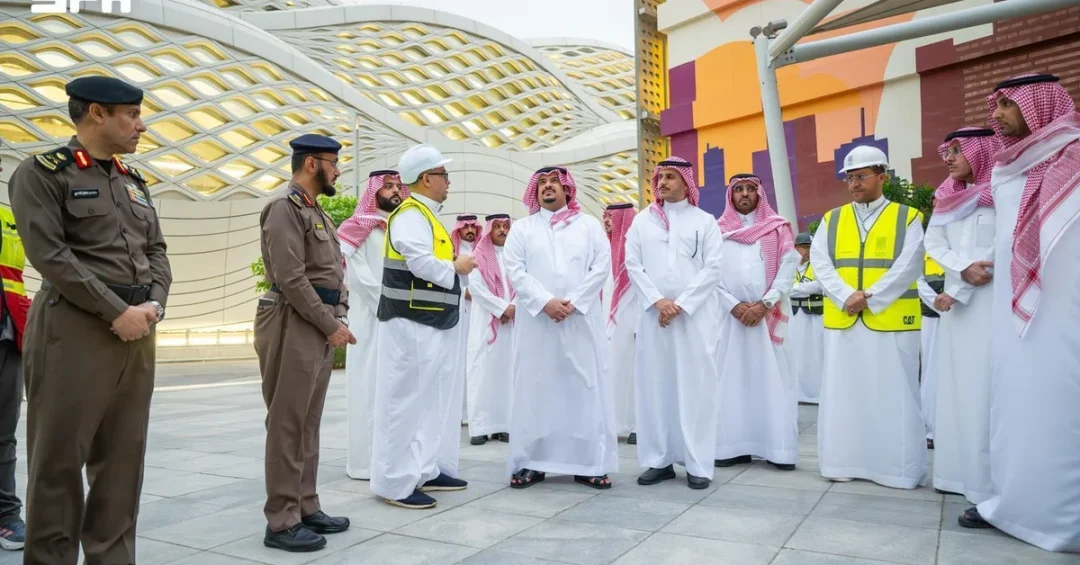
Deputy Governor of Riyadh Region Prince Mohammed bin Abdulrahman bin Abdulaziz conducted an inspection visit on Tuesday to a civilian administrative building belonging to Saudi Aramco in Riyadh, assessing the minor damage caused by a terrorist attack launched by the Houthi militia against civilian facilities. The visit, reported by the Saudi Press Agency (SPA), underscores the Kingdom’s commitment to safeguarding critical infrastructure and ensuring the uninterrupted operations of its vital economic institutions. Prince Mohammed was accompanied by several regional security officials and was briefed on the procedures followed by Saudi Aramco and relevant authorities in Riyadh Region.
During the inspection, the Deputy Governor reaffirmed that such attacks only strengthen the Kingdom’s resolve and validate its long-standing warnings about the Houthi militia’s targeting of civilian sites. He praised the swift response of personnel across the civilian, military, and security sectors, and directed that all necessary resources be provided to facilitate the work of Saudi Aramco employees. The visit highlights the leadership’s unwavering dedication to protecting the nation’s security, stability, and prosperity. How does such a targeted attack on civilian infrastructure affect the daily lives of ordinary citizens? It serves as a stark reminder of the challenges posed by regional threats, yet also showcases Saudi Arabia’s resilience and preparedness.
Context and Background
Why does the Houthi militia continue to target civilian facilities in the Kingdom? This question lies at the heart of the ongoing conflict, which has seen repeated violations of international law by the Iran-backed group. The attack on the Saudi Aramco administrative building in Riyadh is not an isolated incident; it is part of a pattern of aggression that has persisted despite numerous international calls for restraint. Saudi Arabia has consistently documented these violations, presenting evidence to global bodies and urging the international community to hold the perpetrators accountable. The Kingdom’s position has always been clear: these acts of terror are not only attacks on Saudi Arabia but also on the global economy, given Aramco’s pivotal role in energy markets.
The Deputy Governor’s visit comes at a time when Saudi Arabia is accelerating its Vision 2030 transformation, which relies heavily on the security and reliability of its infrastructure. Riyadh, as the capital and a major economic hub, is home to numerous corporate and government buildings that are essential to the nation’s functioning. The fact that a civilian administrative building was targeted demonstrates the Houthi militia’s disregard for civilian life and international norms. In response, Saudi authorities have implemented robust measures to protect such sites, combining advanced technology with trained personnel. The inspection visit served as a platform to review these measures and ensure they are continuously updated to counter evolving threats.
Historically, the Houthi militia has launched hundreds of cross-border attacks using drones and ballistic missiles, many of which have been intercepted by Saudi air defenses. However, some have caused material damage, as seen in this recent incident. The Kingdom has repeatedly appealed to the United Nations and other international organizations to take a firm stance against these aggressions. Saudi Arabia’s efforts have been met with varying degrees of support, but the Kingdom remains undeterred in its mission to protect its people and assets. The Deputy Governor’s hands-on approach reflects the leadership’s philosophy of being present on the ground, understanding the situation firsthand, and ensuring that all necessary steps are taken to mitigate risks.
Key Details of the Inspection
What exactly did the Deputy Governor observe during his visit to the Saudi Aramco building? According to SPA, Prince Mohammed bin Abdulrahman bin Abdulaziz toured the affected areas and was briefed on the damage assessment conducted by Aramco’s technical teams. The damage was described as minor, thanks to the effective response and the building’s safety protocols. He met with officials from Saudi Aramco and regional security authorities, who explained the procedures followed in the aftermath of the attack. The Deputy Governor emphasized the importance of providing all necessary resources to facilitate the work of the company’s employees, ensuring that normal operations continue without disruption.
The visit also included a review of the coordination between various sectors—civilian, military, and security—that worked in unison to address the incident. Prince Mohammed praised their efforts and highlighted the national solidarity and readiness of Saudi forces to confront any threat. He prayed to Allah Almighty to preserve the Kingdom’s security, stability, and prosperity. Several regional security officials accompanied him, demonstrating the unified front against terrorism. The inspection was not just about assessing damage; it was a morale-boosting exercise for the employees and a clear message that the leadership stands with them in the face of adversity.
Furthermore, the Deputy Governor’s directives to provide resources underscore the government’s commitment to maintaining business continuity. Saudi Aramco, as one of the world’s largest energy companies, plays a critical role in global oil supply, and any disruption to its operations could have far-reaching consequences. The quick restoration of normalcy at the administrative building is a testament to the Kingdom’s efficient crisis management. The incident also highlighted the importance of cybersecurity and physical security integration, as modern threats often combine both. The inspection visit reinforced the need for constant vigilance and investment in defensive capabilities.
International and Regional Impact
How do these attacks affect Saudi Arabia’s relations with its allies and the broader international community? The targeting of civilian facilities by the Houthi militia has drawn widespread condemnation from Saudi Arabia’s partners, including the United States, the United Kingdom, and other Gulf Cooperation Council (GCC) states. These nations recognize that such actions threaten not only Saudi security but also regional stability and global energy security. The Deputy Governor’s visit serves as a reminder to the world that the Houthi threat is real and requires a collective response. Saudi Arabia has been a key player in the Arab Coalition supporting the legitimate government in Yemen, and its efforts to counter Houthi aggression are part of a broader strategy to restore peace and stability in the region.
The attack also comes amid ongoing diplomatic efforts to find a political solution to the Yemen conflict. Saudi Arabia has consistently supported UN-led peace initiatives and has shown flexibility in negotiations, but the Houthi militia’s continued attacks undermine these efforts. The international community must recognize that the Houthis’ actions are not just a Saudi problem but a global one, as they disrupt maritime security and international trade routes. The Kingdom’s resilience in the face of such provocations demonstrates its leadership in the region and its commitment to safeguarding international norms. The Deputy Governor’s inspection visit is a microcosm of Saudi Arabia’s broader approach: proactive, transparent, and steadfast in the face of terrorism.
Economic and Strategic Significance
Why is the protection of Saudi Aramco facilities so crucial to the global economy? Saudi Aramco is not just a company; it is the backbone of the Kingdom’s economy and a linchpin of global energy supply. Any attack on its infrastructure, even if minor, sends shockwaves through oil markets and can impact prices worldwide. The administrative building in Riyadh, while not a production facility, is part of the company’s operational nerve center, housing essential personnel and data. The Deputy Governor’s visit underscores the strategic importance of safeguarding these assets. The Kingdom has invested heavily in advanced defense systems, including the Patriot missile defense and drone-jamming technology, to protect its critical infrastructure. These investments are part of Vision 2030’s goal to diversify the economy while ensuring the security of existing revenue streams.
Moreover, the incident highlights the need for continued investment in cybersecurity and physical security. As Saudi Arabia transitions into a digital economy, the protection of data and communication networks becomes paramount. The attack on the Aramco building, though minor in physical damage, could have been a probing attempt to test the Kingdom’s defenses. The swift response and the Deputy Governor’s on-site assessment demonstrate that Saudi Arabia is not complacent. The government’s directives to provide all necessary resources to Aramco employees reflect a holistic approach to security that encompasses not only physical safety but also the well-being and productivity of the workforce. This approach aligns with Vision 2030’s emphasis on creating a safe and attractive environment for both citizens and international investors.
Vision 2030 Alignment
How does this incident and the response to it align with Saudi Arabia’s Vision 2030? Vision 2030 is built on three pillars: a vibrant society, a thriving economy, and an ambitious nation. The protection of civilian facilities and the assurance of security are fundamental to achieving these pillars. A vibrant society requires safety and stability, which the Kingdom is committed to providing. A thriving economy depends on the uninterrupted operation of key industries like energy, which Aramco represents. An ambitious nation is one that faces challenges head-on and emerges stronger, as demonstrated by the Deputy Governor’s leadership and the collective response of the Saudi people. The inspection visit is a concrete example of the Vision’s principles in action, showing that the leadership is actively engaged in safeguarding the nation’s future.
Furthermore, the incident reinforces the importance of national unity and resilience, which are core to Vision 2030’s social objectives. The Deputy Governor’s praise for the national solidarity and readiness of Saudi forces highlights the spirit of unity that permeates the Kingdom. As Saudi Arabia continues to modernize and open up to the world, it remains vigilant against threats that seek to undermine its progress. The successful handling of this attack, with minimal damage and no disruption to operations, is a testament to the effectiveness of the Kingdom’s security apparatus and its alignment with the ambitious goals of Vision 2030. The leadership’s unwavering commitment to security ensures that the path to a prosperous future remains clear and unobstructed.
20 Questions
Q1. What was the purpose of the Deputy Governor’s visit to the Saudi Aramco building?
A1. The Deputy Governor inspected the building to assess minor damage from a Houthi attack and to ensure that all necessary resources are provided to support Saudi Aramco employees and maintain operations.
Q2. Who accompanied the Deputy Governor during the inspection?
A2. Several regional security officials accompanied Prince Mohammed bin Abdulrahman bin Abdulaziz, demonstrating coordinated efforts between civilian, military, and security sectors to address the incident.
Q3. What did the Deputy Governor say about the Houthi attacks?
A3. He stated that these attacks reaffirm what the Kingdom has long asserted about the Houthi militia’s targeting of civilian facilities, and he praised the efforts of personnel in various sectors.
Q4. What procedures were reviewed during the visit?
A4. The Deputy Governor was briefed on the procedures followed by relevant authorities at Saudi Aramco and in Riyadh Region, including damage assessment and coordination among security teams.
Q5. What directives did the Deputy Governor issue?
A5. He directed that all necessary resources be provided to facilitate the work of Saudi Aramco employees, ensuring business continuity and employee support.
Q6. How did the Deputy Governor describe the leadership’s efforts?
A6. He praised the leadership’s efforts to ensure the Kingdom’s security and stability, commending the national solidarity and readiness of Saudi forces to confront any threat.
Q7. What was the extent of the damage to the building?
A7. The damage was minor, according to the Saudi Press Agency, thanks to effective response and safety protocols, with no disruption to Saudi Aramco’s operations.
Q8. Why is Saudi Aramco considered a critical target?
A8. Saudi Aramco is the backbone of the Kingdom’s economy and a linchpin of global energy supply, making its facilities strategic assets that require robust protection.
Q9. How does this attack affect regional stability?
A9. Such attacks threaten not only Saudi security but also regional stability and global energy security, drawing condemnation from international allies and requiring collective action.
Q10. What is the Kingdom’s stance on the Houthi militia?
A10. Saudi Arabia has consistently documented Houthi violations and urged the international community to hold the militia accountable for targeting civilian facilities.
Q11. How does the inspection visit align with Vision 2030?
A11. It aligns with Vision 2030’s pillars by ensuring security for a vibrant society, protecting economic assets for a thriving economy, and demonstrating proactive leadership for an ambitious nation.
Q12. What role do regional security officials play in such incidents?
A12. They coordinate with civilian and military sectors to assess damage, implement security measures, and ensure the safety of personnel and infrastructure.
Q13. What message does the Deputy Governor’s visit send to the Houthi militia?
A13. It sends a clear message of resilience and unity, showing that Saudi Arabia remains undeterred and fully prepared to protect its people and assets.
Q14. How does Saudi Arabia protect its critical infrastructure?
A14. The Kingdom employs advanced defense systems, including missile defense and drone-jamming technology, along with trained personnel and cybersecurity measures.
Q15. What is the significance of the national solidarity mentioned by the Deputy Governor?
A15. National solidarity reflects the unity of the Saudi people and forces in confronting threats, which is essential for maintaining security and stability.
Q16. How does this incident impact Saudi Aramco’s employees?
A16. The Deputy Governor’s directives to provide resources aim to facilitate their work and ensure their safety, boosting morale and maintaining productivity.
Q17. What international support has Saudi Arabia received regarding Houthi attacks?
A17. Allies such as the United States, United Kingdom, and GCC states have condemned the attacks, recognizing the threat to regional and global security.
Q18. What are the economic implications of attacks on Saudi Aramco facilities?
A18. Even minor attacks can cause fluctuations in oil markets and affect global energy supply, underscoring the need for robust protection of these assets.
Q19. How does the Kingdom balance security with economic diversification?
A19. Through Vision 2030, Saudi Arabia invests in both protecting existing revenue streams like energy and developing new sectors to diversify the economy.
Q20. What is the forward-looking outcome of this incident?
A20. The incident reinforces Saudi Arabia’s resolve to protect its infrastructure and advance Vision 2030, ensuring a secure and prosperous future for the Kingdom and its people.
Reader Feedback
We value your thoughts. Please share your feedback on this article.
Your feedback helps us improve our coverage.
Related articles
 Coalition Air Defenses Intercept Houthi Missile Targeting Southern Region
 Saudi Arabia Takes Vice-Chair Role at ITU Conference 2026
 Saudi Interior Ministry Prepares Makkah Route Initiative for Hajj 1448 AH
 MoI Spokesperson: Security Media Reflects Hajj Field Operations
 Islamic University Joins Sixth Hajj Conference in Jeddah
 GACA Chief Highlights Aviation Role in Pilgrim Experience