


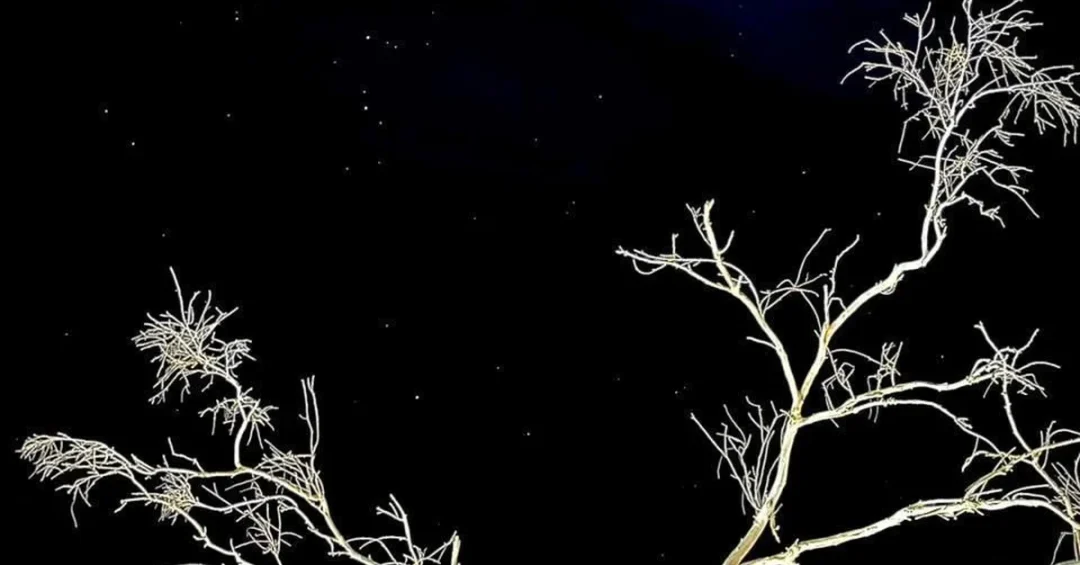
On a new moon night, when the Moon’s disk nearly vanishes from view, the Saudi Press Agency (SPA) reports that the Kingdom’s darkest skies become a gateway to the cosmos, offering astronomers and casual stargazers alike an unparalleled view of stars, galaxies, and nebulae. According to Barjas Al-Fulaih, a member of the AFAQ Society for Astronomy, the new moon phase is among the best times of the lunar cycle for observing faint celestial objects. With moonlight at its lowest, the night sky reveals a wealth of wonders that are otherwise difficult to see, particularly in locations far from artificial light. This natural phenomenon, which occurs roughly every 29.5 days, transforms Saudi Arabia’s deserts and highlands into natural observatories, aligning with the Kingdom’s growing focus on astronomy, science tourism, and educational initiatives under Vision 2030.
Have you ever wondered what the night sky would look like without the Moon’s glare? The answer is a breathtaking tapestry of celestial objects, from distant star clusters to the faint glow of galaxies millions of light-years away. In Saudi Arabia, where vast expanses of desert and mountainous terrain offer some of the darkest skies on Earth, the new moon is not merely an astronomical event but a recurring invitation to explore the universe. As the Kingdom continues to invest in scientific infrastructure and promote astrotourism, these moonless nights are becoming a valuable resource for researchers, tourists, and young Saudis eager to connect with the cosmos.
What Makes the New Moon Phase So Special for Stargazing?
The new moon occurs when the Moon lies roughly between the Earth and the Sun, with its illuminated side facing away from our planet. As Barjas Al-Fulaih explained to SPA, the Moon does not actually disappear during this phase; rather, the side facing Earth is not directly illuminated by the Sun, rendering the lunar disk invisible to the naked eye under normal conditions. This absence of moonlight is precisely what makes the new moon so valuable for astronomy. Without the Moon’s bright glare, even the faintest stars and nebulae become visible, especially in locations with clear skies and minimal artificial lighting.
Al-Fulaih noted that the reduced moonlight during this phase improves night-sky visibility, creating better conditions for observing celestial objects whose faint light can easily be outshone by the Moon. These include galaxies, nebulae, and star clusters—objects that are often invisible from urban areas even on the clearest nights. The new moon phase, therefore, offers a rare opportunity to peer deeper into the universe, revealing details that are otherwise lost in the Moon’s glow. For astronomers in Saudi Arabia, this phase is a prized window for research and public outreach.
Why does the Moon’s absence matter so much? Because light pollution from the Moon can be as disruptive as city lights for astronomical observation. When the Moon is full, its reflected sunlight can wash out the faint light of distant objects, much like a streetlamp obscures the stars. During the new moon, however, the sky is as dark as it can be, allowing telescopes and even the naked eye to capture more of the cosmos. This is why major observatories around the world schedule their most sensitive observations during the new moon phase, and why Saudi Arabia’s dark-sky locations are increasingly recognized as prime stargazing destinations.
Where and How Can You Best Observe the New Moon Sky in Saudi Arabia?
According to Barjas Al-Fulaih, choosing a dark-sky location away from cities and sources of light pollution is essential for getting the best results. Saudi Arabia’s vast desert regions, such as the Empty Quarter (Rub’ al Khali), the Al-Ula area, and the highlands of Asir, offer some of the darkest skies in the region. These locations are far from major urban centers, where artificial light can significantly reduce visibility. The AFAQ Society for Astronomy, a Saudi organization dedicated to promoting astronomical awareness, regularly organizes stargazing events in these areas to help the public take advantage of the new moon phase.
Clear weather is another critical factor. Saudi Arabia’s dry climate and low humidity, particularly in the interior and northern regions, provide excellent atmospheric transparency. During the new moon, when the sky is darkest, observers can see thousands of stars, the Milky Way stretching across the sky, and even distant galaxies with the aid of telescopes or astronomical binoculars. Al-Fulaih stressed that the darkness of the sky on these nights offers a particularly good opportunity to observe distant, faint objects, and that clear weather and distance from artificial light sources further enhance viewing conditions.
How can beginners get started? The AFAQ Society for Astronomy and other Saudi astronomical groups offer guidance, workshops, and public viewing nights. Many enthusiasts begin with simple binoculars or entry-level telescopes, which can reveal craters on the Moon, the rings of Saturn, and the moons of Jupiter. For the new moon phase, however, the focus is on deep-sky objects: galaxies like Andromeda, nebulae like the Orion Nebula, and star clusters like the Pleiades. These objects are best seen when the Moon is absent, making the new moon a perfect time for both novice and experienced observers to explore the universe.
What Are the Scientific and Cultural Dimensions of the New Moon in Saudi Arabia?
The new moon holds significant scientific importance, but it also carries deep cultural and religious meaning in Saudi Arabia and the wider Islamic world. The lunar cycle governs the Islamic calendar, and the sighting of the new crescent moon marks the beginning of each month, including the holy month of Ramadan. While the new moon itself is typically invisible, the first sighting of the crescent shortly after the new moon is a moment of great significance. Saudi Arabia’s official moon-sighting authorities, including the Supreme Court and the Majlis al-Qada al-A’la, rely on both astronomical calculations and visual sightings to determine the start of Islamic months.
From a scientific perspective, the new moon is a critical phase for understanding the Moon’s orbit and its relationship with Earth and the Sun. The synodic month, which lasts approximately 29.5 days, is the time between two successive new moons. This period is not constant; it varies slightly due to the gravitational influences of the Sun and Earth, as well as the Moon’s elliptical orbit. Astronomers study these variations to refine our understanding of celestial mechanics. In Saudi Arabia, universities and research centers, such as King Abdulaziz University and King Saud University, conduct research on lunar and planetary science, often collaborating with international space agencies.
What role does the new moon play in modern astronomy? It provides a natural “dark sky” window that is essential for observing faint objects. Without the Moon’s interference, telescopes can detect light from the earliest galaxies and study the atmospheres of exoplanets. For Saudi Arabia, this is particularly relevant as the Kingdom expands its space and astronomy sectors. The Saudi Space Commission, established in 2018, aims to develop national capabilities in space science and technology, and the new moon phase offers regular opportunities for training and research. Additionally, the Kingdom’s participation in international astronomical projects, such as the Square Kilometre Array (SKA), highlights its growing role in global astronomy.
How Does the New Moon Support Saudi Arabia’s Vision 2030 Goals?
Saudi Arabia’s Vision 2030 is a comprehensive plan to diversify the economy, promote scientific innovation, and enhance quality of life. Astronomy and space science are integral to this vision, as they inspire young people, foster technological skills, and attract tourism. The new moon phase, with its dark skies, is a natural asset that supports these goals. The Saudi Tourism Authority has identified astrotourism as a niche market, and events like the Al-Ula Star Festival and stargazing tours in NEOM are drawing international visitors. These initiatives not only boost local economies but also showcase Saudi Arabia’s natural beauty and scientific potential.
Furthermore, the AFAQ Society for Astronomy and similar organizations play a vital role in science education and public engagement. By organizing new moon observation nights, they help cultivate a new generation of Saudi astronomers, engineers, and scientists. This aligns with Vision 2030’s emphasis on education and human capital development. The Kingdom’s investment in dark-sky preservation, such as the proposed Al-Ula Dark Sky Reserve, also demonstrates a commitment to environmental sustainability and responsible tourism. As Barjas Al-Fulaih noted, the new moon is not just a time for observation but an opportunity to connect with the universe and inspire curiosity.
Could the new moon become a cornerstone of Saudi Arabia’s science tourism? With its vast deserts, clear skies, and growing infrastructure, the Kingdom is well-positioned to become a global hub for astronomy tourism. The new moon phase, occurring monthly, provides a reliable draw for visitors seeking unique experiences. Combined with cultural heritage sites and luxury accommodations, astrotourism can extend stays and increase spending, contributing to economic diversification. As Saudi Arabia continues to develop its tourism sector, the dark skies of the new moon may shine brightly in its promotional efforts.
What Are the Regional and International Implications of Saudi Arabia’s Dark-Sky Initiatives?
Saudi Arabia’s focus on astronomy and dark-sky preservation has implications beyond its borders. The Middle East and North Africa region is home to some of the world’s darkest skies, but light pollution is increasing due to urbanization. By promoting dark-sky locations and hosting international astronomical events, Saudi Arabia can lead regional efforts to protect night skies. The International Dark-Sky Association (IDA) has recognized several sites in the region, and Saudi Arabia’s potential reserves could join this global network. This would facilitate collaboration with observatories in Chile, Namibia, and Hawaii, sharing best practices and data.
Internationally, the new moon phase is a shared astronomical phenomenon, but its observation depends on local conditions. Saudi Arabia’s geographical location offers a unique vantage point for observing celestial objects in the northern and southern hemispheres. This makes it an attractive partner for international research projects. For example, the King Abdulaziz City for Science and Technology (KACST) has collaborated with NASA on lunar and asteroid missions. The new moon, by providing dark skies, enhances the value of Saudi observatories for tracking near-Earth objects and studying the solar system. As the Kingdom expands its space program, these collaborations are set to grow.
What does this mean for global astronomy? A network of dark-sky sites in Saudi Arabia would fill a geographical gap in global coverage, allowing continuous monitoring of variable stars, supernovae, and other transient events. It would also support the search for exoplanets and the study of cosmic microwave background radiation. By investing in dark-sky preservation and astronomy education, Saudi Arabia is not only advancing its own Vision 2030 but also contributing to humanity’s collective understanding of the universe. The new moon, a monthly reminder of the cosmos, thus becomes a symbol of Saudi Arabia’s scientific ambition and global engagement.
Vision 2030 Alignment: A Future Written in the Stars
Saudi Arabia’s Vision 2030 envisions a diversified economy, a vibrant society, and an ambitious nation. The new moon phase, with its dark skies, perfectly aligns with these goals. It supports economic diversification by attracting astrotourism, fosters a vibrant society by promoting science education and cultural events, and demonstrates ambition by advancing space research and international collaboration. The AFAQ Society for Astronomy and its members, like Barjas Al-Fulaih, are at the forefront of this movement, using the new moon as a tool for public engagement and scientific discovery.
As Saudi Arabia continues to develop projects like NEOM, which includes plans for a dark-sky reserve, and Al-Ula, which hosts astronomy festivals, the new moon will remain a recurring celestial event that brings people together. It is a reminder that even in an age of artificial light, the natural darkness of the new moon reveals the secrets of the sky. For the Kingdom, these secrets are not just scientific but also cultural and economic, illuminating a path toward a brighter future. So, the next time the Moon disappears, look up—you might just see the universe in a whole new light.
20 Questions
Q1. What is a new moon?
A1. A new moon occurs when the Moon is positioned between Earth and the Sun, with its illuminated side facing away from Earth, making it nearly invisible to the naked eye.
Q2. Why is the new moon considered the best time for stargazing?
A2. During the new moon, moonlight is at its lowest, reducing glare and allowing faint celestial objects like galaxies, nebulae, and star clusters to be seen more clearly.
Q3. Does the Moon actually disappear during a new moon?
A3. No, the Moon does not disappear; the side facing Earth is simply not illuminated by the Sun, so it appears dark and blends with the night sky.
Q4. How often does a new moon occur?
A4. A new moon occurs approximately every 29.5 days, a period known as the synodic month, which is the time between two successive new moons.
Q5. Who is Barjas Al-Fulaih?
A5. Barjas Al-Fulaih is a member of the AFAQ Society for Astronomy in Saudi Arabia, who shared insights with the Saudi Press Agency about the benefits of the new moon for stargazing.
Q6. What is the AFAQ Society for Astronomy?
A6. The AFAQ Society for Astronomy is a Saudi organization dedicated to promoting astronomical awareness, education, and public observation events across the Kingdom.
Q7. Where are the best places in Saudi Arabia to observe the new moon sky?
A7. Dark-sky locations such as the Empty Quarter, Al-Ula, and the Asir highlands offer minimal light pollution and clear skies, making them ideal for stargazing during the new moon.
Q8. What celestial objects can be seen during a new moon?
A8. Observers can see galaxies, nebulae, star clusters, and thousands of stars that are normally outshone by moonlight, especially with telescopes or binoculars.
Q9. Why is dark-sky preservation important in Saudi Arabia?
A9. Dark-sky preservation supports astronomy, wildlife, and human health, and it enhances Saudi Arabia’s growing astrotourism sector, aligning with Vision 2030 goals.
Q10. How does the new moon relate to the Islamic calendar?
A10. The Islamic calendar is lunar, and the sighting of the new crescent moon marks the beginning of each month, including Ramadan and Eid, making the new moon phase culturally significant.
Q11. What is the synodic month?
A11. The synodic month is the period of about 29.5 days between two successive new moons, during which the Moon completes a full cycle of phases as seen from Earth.
Q12. Can the new moon be seen with the naked eye?
A12. Generally, no, because the illuminated side faces away from Earth. Only under exceptional conditions might an extremely thin crescent be spotted very close to the exact moment of the new moon.
Q13. What role does Saudi Arabia’s climate play in stargazing?
A13. Saudi Arabia’s dry, clear climate, especially in desert and highland areas, provides excellent atmospheric transparency and low humidity, ideal for astronomical observation.
Q14. How does the new moon support Vision 2030?
A14. The new moon supports Vision 2030 by promoting astrotourism, science education, and technological innovation, helping diversify the economy and inspire youth.
Q15. What is astrotourism?
A15. Astrotourism is a form of travel focused on stargazing and astronomical events, often in dark-sky locations, and it is a growing niche in Saudi Arabia’s tourism sector.
Q16. Are there any Saudi observatories open to the public?
A16. Yes, organizations like the AFAQ Society for Astronomy and universities such as King Saud University host public observing nights, especially during the new moon phase.
Q17. What equipment is needed for new moon stargazing?
A17. While the naked eye can see many stars, binoculars or a small telescope greatly enhance the view of galaxies, nebulae, and star clusters during the new moon.
Q18. How does light pollution affect stargazing?
A18. Light pollution from cities brightens the night sky, obscuring faint celestial objects. Choosing dark-sky locations away from urban areas is essential for optimal viewing.
Q19. What is the Saudi Space Commission?
A19. The Saudi Space Commission, established in 2018, is a government body responsible for developing the Kingdom’s space sector, including astronomy, satellite technology, and space exploration.
Q20. Why is the new moon important for scientific research?
A20. The new moon provides a dark sky window that allows astronomers to study faint objects, track near-Earth objects, and conduct research that is impossible under moonlight, advancing our understanding of the universe.
Reader Feedback
We value your thoughts. Please share your feedback on this article.
Your feedback helps us improve our coverage.
Related articles
 Electronic Application Exhibition 2026 Opens in Dammam
 Rock Hyrax: Taif’s Unique Herbivore and Ecological Gem
 DRA Holds Training Program on Regulating Emerging Technologies
 Taibah University’s MCAIT 2026 Showcases AI Innovations
 Jellyfish: Key to Marine Ecological Balance
 ICAIRE: Saudi Arabia’s 80-Year UNESCO AI Legacy