


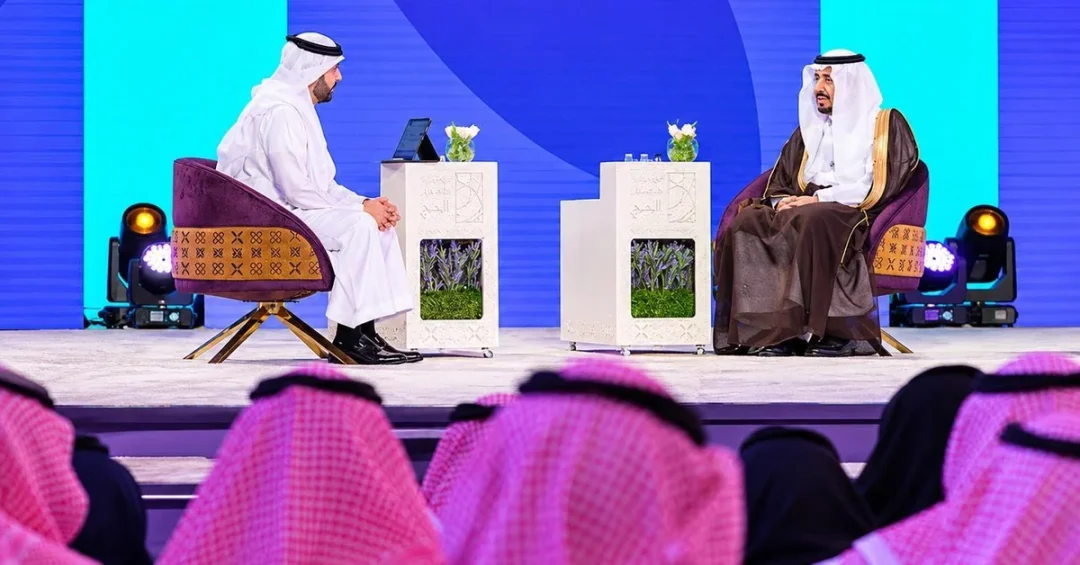
Jeddah, November 10, 2026 — Saudi Arabia is transforming Hajj security from separate traditional systems into smart, integrated platforms powered by artificial intelligence (AI) and advanced data analysis, a senior Interior Ministry official announced at the Hajj Conference and Exhibition in Jeddah. Dr. Mohammed Al-Hamed, Deputy Assistant Minister of Interior for Technology Affairs, outlined the strategic shift during a keynote session, explaining that the new approach is designed to enhance pilgrim safety, anticipate risks before they escalate, and support real-time field decision-making for the millions of worshippers who perform Hajj annually. The announcement underscores the Kingdom’s broader commitment to leveraging cutting-edge technology in service of the Guests of God, a priority that sits at the heart of Saudi Arabia’s Vision 2030 modernization agenda. How does a nation safely manage one of the world’s largest annual gatherings? For Saudi Arabia, the answer increasingly lies in seamless digital integration and proactive risk management.
The Hajj Conference and Exhibition, held in Jeddah, brings together government leaders, technology providers, and operational experts to showcase the latest innovations in pilgrimage management. Dr. Al-Hamed’s remarks signal a decisive move away from fragmented, stand-alone security tools toward a unified digital ecosystem that connects more than 80 government and operational entities. This integrated model is not merely a technological upgrade; it represents a fundamental rethinking of how security is coordinated across the holy sites of Makkah, Mina, Arafat, and Muzdalifah. By harnessing AI algorithms and real-time dashboards, the Ministry of Interior aims to create a resilient, responsive security architecture that can adapt to the dynamic conditions of the Hajj season, where crowd density and movement patterns shift by the hour.
Context and Background
Why is the shift to smart security systems so critical for the Hajj season? The annual pilgrimage draws millions of Muslims from over 180 countries, making it one of the most complex mass gatherings on Earth. Traditional security models, which relied on isolated camera networks and manual coordination, struggled to provide a comprehensive operational picture. Dr. Al-Hamed noted that security technology during Hajj now rests on three key pillars: system reliability and continuity, rapid response, and operational integration among entities. These pillars form the foundation of a new doctrine that prioritizes uninterrupted service, swift intervention, and synchronized action across all stakeholders. The Ministry of Interior’s technical integration extends beyond merely connecting systems and exchanging data; it encompasses joint operations and coordinated decisions and procedures across the digital Hajj system.
The evolution toward smart security has been years in the making, driven by Saudi Arabia’s broader digital transformation under Vision 2030. The Kingdom has invested heavily in AI, cloud computing, and Internet of Things (IoT) infrastructure to enhance public safety and service delivery. During Hajj, these technologies are now being deployed at scale. Smart cameras have been installed at 80 sites across the holy sites, supported by 16 AI algorithms and 31 dashboards that provide operators with actionable intelligence. This technological backbone enables authorities to monitor crowd flow, detect anomalies, and respond to incidents with unprecedented speed. The integration of these tools into a single digital Hajj system marks a significant leap forward in operational readiness, ensuring that security personnel can make informed decisions based on real-time data rather than delayed reports.
Furthermore, the Ministry of Interior’s approach aligns with global best practices in crowd management and smart city technology. By leveraging AI, the system can predict potential bottlenecks, identify overcrowding risks, and recommend preemptive measures to disperse crowds safely. This proactive stance is a departure from reactive security models and reflects a deeper understanding of the dynamics of large-scale gatherings. The Hajj Conference and Exhibition serves as a platform to share these advancements with international partners and demonstrate Saudi Arabia’s leadership in pilgrimage management. As the Kingdom continues to welcome increasing numbers of pilgrims each year, the smart security system will be essential to maintaining safety, order, and spiritual serenity.
Key Details
What specific technologies are powering this transformation? According to Dr. Al-Hamed, the digital Hajj system operates through a network of smart cameras deployed at 80 strategic locations, each feeding data into 16 AI algorithms designed to analyze crowd behavior, detect unusual patterns, and flag potential security or safety concerns. These algorithms are complemented by 31 dashboards that visualize data for decision-makers in real time. The dashboards are not just display tools; they are integrated command-and-control interfaces that allow operators to coordinate responses across multiple agencies. This level of integration ensures that a security alert at one site can trigger a coordinated response from police, emergency medical services, and crowd management teams within seconds.
Dr. Al-Hamed emphasized that managing crowd movement during Hajj requires a high level of technological and operational readiness. The smart cameras and AI algorithms work in tandem to provide a continuous stream of information about crowd density, movement trajectories, and potential congestion points. For example, if an algorithm detects an unusually dense gathering near the Jamarat Bridge, the system can automatically alert operators, who can then deploy additional personnel or adjust entry gates to relieve pressure. This predictive capability is a game-changer for Hajj security, as it allows authorities to address issues before they become emergencies. The 31 dashboards serve as the nerve center, aggregating data from various sources and presenting a unified operational picture to decision-makers.
Beyond hardware and software, the Ministry of Interior’s technical integration includes joint operations and coordinated decisions across more than 80 government and operational entities. This means that the digital Hajj system is not a single-agency tool but a collaborative platform that connects the Ministry of Interior with the Ministry of Hajj and Umrah, the Saudi Red Crescent Authority, the General Authority for the Care of the Two Holy Mosques, and numerous other stakeholders. The system facilitates real-time information sharing, enabling all parties to operate from the same data set and respond cohesively. This integration is critical during peak times, such as the Day of Arafat and the stoning ritual, when millions of pilgrims move simultaneously across different locations. The ability to coordinate decisions and procedures across so many entities is a testament to Saudi Arabia’s organizational and technological capabilities.
International and Regional Impact
How does Saudi Arabia’s smart Hajj security model influence global crowd management practices? The Kingdom’s experience in managing millions of pilgrims has become a benchmark for other nations and international organizations dealing with large-scale events. The use of AI and data analytics during Hajj demonstrates how technology can be harnessed to enhance safety without compromising the spiritual experience of pilgrims. Regional countries that host significant religious gatherings, such as Iraq and Iran, have expressed interest in learning from Saudi Arabia’s integrated approach. Moreover, the Hajj Conference and Exhibition provides a venue for knowledge exchange, where Saudi experts share insights with counterparts from around the world. This soft power projection reinforces the Kingdom’s role as a leader in innovative public safety solutions.
On the international stage, the smart security system contributes to the positive image of Saudi Arabia as a modern, forward-looking nation capable of managing complex logistical challenges. The successful deployment of AI-driven security during Hajj enhances the confidence of international pilgrims and their home governments, who entrust the Kingdom with the safety of their citizens. It also aligns with global efforts to use technology for sustainable development and smart city initiatives. By showcasing its advancements, Saudi Arabia strengthens its diplomatic ties and positions itself as a hub for technological innovation in the Middle East. The ripple effects are felt across the region, as neighboring countries look to emulate the Kingdom’s integrated command-and-control models for their own major events.
Economic and Strategic Significance
What economic and strategic benefits does this technological shift bring? The Hajj season is a major economic driver for Saudi Arabia, generating billions of riyals in revenue and supporting thousands of jobs in sectors ranging from hospitality to transportation. A safe and seamless Hajj experience is essential to maintaining the confidence of pilgrims and ensuring that the economic benefits continue to grow. The smart security system enhances operational efficiency, reducing the need for manual intervention and allowing resources to be allocated more effectively. This efficiency translates into cost savings and improved service quality, which in turn boosts the Kingdom’s reputation as a premier destination for religious tourism. The strategic significance extends beyond economics; a secure Hajj reinforces Saudi Arabia’s role as the custodian of Islam’s holiest sites and a reliable partner in global security.
Furthermore, the development and deployment of advanced security technologies create opportunities for Saudi technology companies and startups. The Ministry of Interior’s collaboration with local and international tech firms fosters innovation and knowledge transfer, contributing to the growth of the Kingdom’s digital economy. Vision 2030 aims to diversify Saudi Arabia’s economy away from oil dependence, and the smart Hajj system exemplifies how technology can be a catalyst for new industries. The data generated by the system can also inform urban planning and infrastructure development in Makkah and other holy sites, ensuring that future expansions are guided by evidence-based insights. Ultimately, the investment in smart security is an investment in the long-term sustainability and prosperity of the Hajj experience.
Vision 2030 Alignment
How does the smart Hajj security initiative align with Saudi Arabia’s Vision 2030? Vision 2030 seeks to transform the Kingdom into a global hub for technology, innovation, and tourism, while enhancing the quality of life for citizens and visitors. The Hajj is a cornerstone of this vision, as it represents both a spiritual obligation and a massive logistical undertaking that showcases Saudi Arabia’s capabilities. The shift to AI-driven, integrated security systems is a direct reflection of Vision 2030’s emphasis on digital transformation and smart governance. By leveraging cutting-edge technology, the Ministry of Interior is not only improving safety but also contributing to the broader goal of making Saudi Arabia a leader in the Fourth Industrial Revolution. The system’s ability to anticipate risks and support decision-making embodies the proactive, data-driven approach that Vision 2030 champions.
In the long term, the smart Hajj security model will serve as a blueprint for other sectors, demonstrating how integrated digital platforms can enhance public services and safety. As Saudi Arabia continues to welcome millions of pilgrims, the Kingdom’s commitment to innovation ensures that the Hajj experience remains safe, spiritually fulfilling, and operationally seamless. The Ministry of Interior’s efforts, guided by the leadership’s vision, are a testament to the nation’s dedication to serving the Guests of God with excellence. Through continuous improvement and technological advancement, Saudi Arabia is setting a global standard for pilgrimage management, reinforcing its position as a beacon of progress and faith.
20 Questions
Q1. What is the main shift in Hajj security announced by the Interior Ministry?
A1. The Ministry of Interior is shifting from separate traditional security systems to smart, integrated ones that use artificial intelligence and data analysis to enhance pilgrim safety, anticipate risks, and support field decision-making during Hajj.
Q2. Who announced the shift to smart security systems for Hajj?
A2. Dr. Mohammed Al-Hamed, Deputy Assistant Minister of Interior for Technology Affairs, announced the shift during a session at the Hajj Conference and Exhibition in Jeddah on November 10, 2026.
Q3. What are the three key pillars of security technology during Hajj?
A3. The three pillars are system reliability and continuity, rapid response, and operational integration among entities, as outlined by Dr. Al-Hamed during his speech at the conference.
Q4. How many smart cameras have been deployed at Hajj sites?
A4. Smart cameras have been deployed at 80 sites across the holy areas, providing comprehensive surveillance coverage to support security operations and crowd management during the Hajj season.
Q5. How many AI algorithms support the smart cameras?
A5. The smart cameras are supported by 16 AI algorithms designed to analyze crowd behavior, detect anomalies, and provide actionable insights for security personnel in real time.
Q6. What is the role of the 31 dashboards in the digital Hajj system?
A6. The 31 dashboards visualize data for decision-makers, serving as command-and-control interfaces that enable real-time monitoring and coordinated responses across multiple agencies involved in Hajj security.
Q7. How many government and operational entities work with the digital Hajj system?
A7. The digital Hajj system works with more than 80 government and operational entities, facilitating joint operations and coordinated decisions across all stakeholders involved in the pilgrimage.
Q8. What does technical integration extend beyond connecting systems?
A8. Technical integration extends beyond connecting systems and exchanging data to include joint operations and coordinated decisions and procedures across the digital Hajj system, ensuring seamless collaboration among entities.
Q9. Why is managing crowd movement during Hajj so challenging?
A9. Managing crowd movement is challenging due to the sheer volume of pilgrims—millions from over 180 countries—moving simultaneously across holy sites, requiring high levels of technological and operational readiness.
Q10. How does AI enhance pilgrim safety during Hajj?
A10. AI enhances safety by analyzing data from smart cameras to predict potential bottlenecks, identify overcrowding risks, and recommend preemptive measures, allowing authorities to address issues before they escalate.
Q11. What is the significance of the Hajj Conference and Exhibition?
A11. The conference serves as a platform to showcase the latest innovations in pilgrimage management, share best practices, and demonstrate Saudi Arabia’s leadership in using technology for safe and efficient Hajj operations.
Q12. How does the smart security system support field decision-making?
A12. The system provides real-time data and visualizations through dashboards, enabling field commanders to make informed decisions quickly, coordinate responses, and deploy resources where they are most needed.
Q13. What role does the Ministry of Interior play in Hajj security?
A13. The Ministry of Interior leads the technical integration and overall security strategy for Hajj, ensuring that all entities work together seamlessly to protect pilgrims and maintain order across the holy sites.
Q14. How does the system ensure reliability and continuity?
A14. Reliability and continuity are ensured through robust infrastructure, redundant systems, and continuous monitoring, guaranteeing that security operations remain uninterrupted throughout the Hajj season.
Q15. What are the benefits of operational integration among entities?
A15. Operational integration enables joint operations, coordinated decisions, and efficient resource allocation, ensuring that all agencies respond cohesively to incidents and manage crowds effectively during peak times.
Q16. How does the smart Hajj system align with Vision 2030?
A16. It aligns with Vision 2030 by leveraging AI and digital transformation to enhance public safety, improve service delivery, and position Saudi Arabia as a global leader in smart governance and innovation.
Q17. What economic impact does a safe Hajj have on Saudi Arabia?
A17. A safe Hajj boosts pilgrim confidence, increases religious tourism revenue, creates jobs, and supports economic diversification, contributing to the Kingdom’s long-term prosperity and Vision 2030 goals.
Q18. How does the system anticipate risks during Hajj?
A18. The system uses AI algorithms to analyze crowd patterns and detect early warning signs of congestion or potential incidents, allowing authorities to take proactive measures before situations become critical.
Q19. What is the role of data analysis in the digital Hajj system?
A19. Data analysis processes information from cameras and sensors to generate insights on crowd dynamics, enabling predictive modeling and informed decision-making for security and crowd management teams.
Q20. How does the smart security system enhance the pilgrim experience?
A20. By ensuring safety, reducing congestion, and enabling rapid response to incidents, the system allows pilgrims to focus on their spiritual journey, contributing to a peaceful and fulfilling Hajj experience.
Reader Feedback
We value your thoughts. Please share your feedback on this article.
Your feedback helps us improve our coverage.
Related articles
 NCVC Sows Native Seeds in Al-Baha’s Wadi Al-Sahibah
 Saudi Cars Syndicate Showcases Smart Fleet Tech at Hajj Conference
 Hajj Conference Workshops Focus on Pilgrim Safety and Emergency Management
 Hajj Workshop Emphasizes Teamwork for Pilgrim Services
 Hajj Media CEO Stresses Pilgrim-Centered Messaging
 Hajj Conference Discusses Performance Indicators, Quality of Services for Pilgrims