


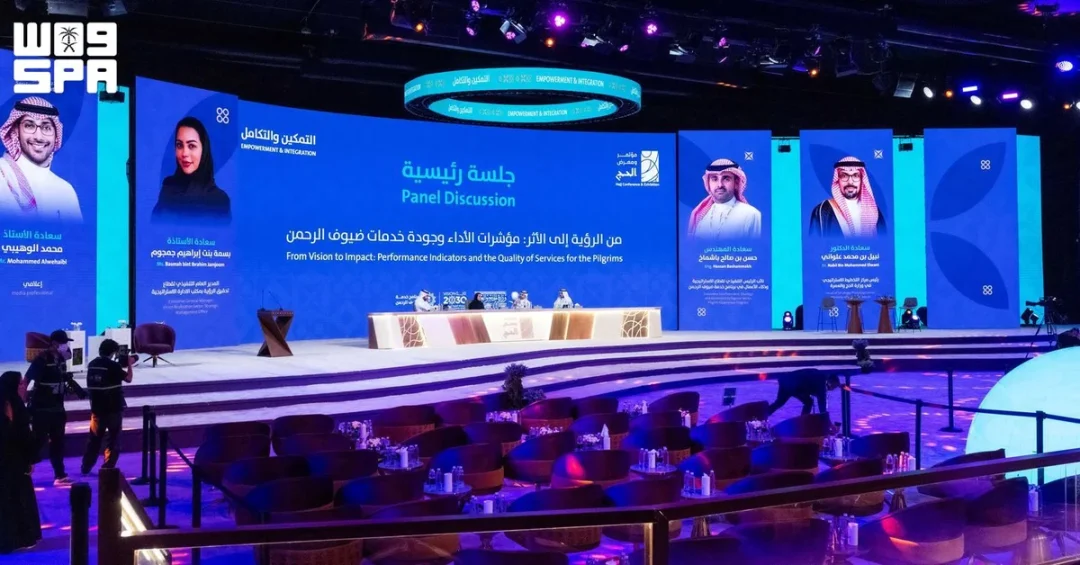
A specialized session titled “From Vision to Impact: Performance Indicators and the Quality of Services for the Guests of Allah” was held during the sixth edition of the Hajj Conference and Exhibition in Jeddah, bringing together experts to discuss how performance metrics can elevate the pilgrimage experience. The session, reported by the Saudi Press Agency (SPA), underscored the critical role of data-driven evaluation in enhancing services for the millions of pilgrims who travel to the Kingdom each year. It emphasized the importance of ensuring quality and overseeing the qualifications of service providers, starting from pilgrims’ home countries, and highlighted the need to foster integration among various entities to ensure clarity on priorities, budgets, and projects.
The Hajj Conference and Exhibition, now in its sixth edition, serves as a global platform for stakeholders to exchange knowledge and best practices in managing the annual pilgrimage. This year’s session focused on the governance model of Saudi Vision 2030, which facilitates integration among various entities under a unified, shared strategy. By leveraging performance indicators, the Kingdom aims to continuously improve the quality of services provided to the Guests of Allah, aligning with its broader goals of modernization and excellence in public service. How can such metrics transform the pilgrimage experience for millions? The answer lies in the systematic application of data and international best practices.
Context and Background
The Hajj, one of the five pillars of Islam, is a mandatory religious duty for Muslims who are physically and financially able to undertake the journey to Mecca at least once in their lifetime. Each year, Saudi Arabia hosts over two million pilgrims from around the world, requiring an immense logistical and operational framework. The Hajj Conference and Exhibition, organized by the Ministry of Hajj and Umrah, has become a vital forum for addressing the complexities of this massive undertaking. The sixth edition, held in Jeddah, brought together government officials, service providers, and international experts to discuss innovations and strategies for continuous improvement. Why is it essential to focus on performance indicators in this context? Because they provide measurable benchmarks that drive accountability and quality enhancement.
The session’s emphasis on overseeing the qualifications of service providers from pilgrims’ home countries reflects a holistic approach to quality assurance. By extending standards beyond Saudi borders, the Kingdom ensures that the entire journey—from departure to return—is seamless and spiritually fulfilling. This approach aligns with Vision 2030’s governance model, which promotes integration across sectors and entities. The model enables stakeholders to align their priorities, budgets, and projects under a unified strategy, avoiding duplication and maximizing impact. What does this mean for the future of Hajj? It signals a commitment to excellence that benefits pilgrims and enhances Saudi Arabia’s reputation as a gracious host.
Data collection and utilization emerged as a cornerstone of the discussion. The session explored how data can support proactive planning, identify gaps, and uncover new opportunities for service development. By analyzing trends and feedback, authorities can anticipate challenges and implement solutions before they escalate. This proactive stance is particularly crucial given the ever-increasing number of pilgrims and the evolving expectations of a global audience. How can data be harnessed to elevate services? Through integrated systems that provide real-time insights and facilitate evidence-based decision-making.
Key Details
The session highlighted several key points, including the importance of ensuring quality and overseeing the qualifications of service providers from pilgrims’ home countries. This involves setting clear criteria and conducting regular assessments to guarantee that all entities involved meet the highest standards. The discussion also stressed the need to foster integration among various entities, ensuring clarity on their priorities, budgets, and projects. This integration is facilitated by the Saudi Vision 2030 governance model, which provides a unified framework for collaboration. What are the practical implications of such integration? It leads to streamlined operations, reduced redundancies, and a more cohesive service delivery system.
Furthermore, the session delved into the role of data collection and use in supporting proactive planning. By gathering and analyzing data on pilgrim demographics, preferences, and pain points, authorities can tailor services to meet diverse needs. This data-driven approach enables the identification of gaps and the development of new opportunities and projects to elevate services. For instance, insights from previous Hajj seasons have led to improvements in crowd management, transportation, and accommodation. How does this benefit the average pilgrim? It results in a safer, more comfortable, and spiritually enriching experience.
The session also examined how the Saudi Vision 2030 governance model facilitates integration among various entities under a unified, shared strategy. This model ensures that all stakeholders—government ministries, private companies, and non-profit organizations—work towards common goals. By aligning priorities and resources, the model maximizes efficiency and impact. What role does leadership play in this model? Strong leadership from the Saudi government, under the guidance of the Custodian of the Two Holy Mosques, ensures that the vision is translated into actionable plans and measurable outcomes.
International and Regional Impact
The improvements in Hajj services have significant international and regional implications. Pilgrims from over 180 countries participate in Hajj, making it one of the most diverse gatherings on Earth. By enhancing the quality of services, Saudi Arabia not only fulfills its religious duty but also strengthens its soft power and global standing. The Kingdom’s efforts to ensure a seamless pilgrimage experience contribute to positive perceptions and foster goodwill among Muslim communities worldwide. How does this impact regional stability? It promotes unity and cooperation among nations, as countries collaborate to facilitate the journey for their citizens.
Moreover, the Hajj Conference and Exhibition serves as a platform for knowledge exchange, where countries can share best practices in managing large-scale events and pilgrimage logistics. This exchange enhances regional capacity and fosters partnerships that extend beyond Hajj. For example, improvements in crowd management and health services during Hajj can be applied to other mass gatherings, such as the Olympics or World Expo. What does this mean for Saudi Arabia’s role in the region? It cements the Kingdom’s position as a leader in event management and public service innovation.
Economic and Strategic Significance
The economic significance of Hajj and Umrah cannot be overstated. These pilgrimages generate billions of dollars in revenue and support thousands of jobs in sectors such as hospitality, transportation, and retail. By enhancing the quality of services, Saudi Arabia aims to increase the number of pilgrims and extend their stay, thereby boosting economic impact. The Vision 2030 goal of attracting 30 million Umrah pilgrims by 2030 is a testament to this ambition. How does this benefit the Saudi economy? It diversifies revenue streams, reduces dependence on oil, and stimulates growth in the private sector.
Strategically, the focus on performance indicators and quality assurance aligns with Vision 2030’s objectives of transparency, accountability, and excellence. By measuring and improving performance, the Kingdom demonstrates its commitment to continuous improvement and citizen-centric governance. This approach not only benefits pilgrims but also sets a benchmark for other public services. What are the long-term strategic benefits? They include enhanced global reputation, increased foreign investment, and a more resilient economy.
Vision 2030 Alignment
The session’s discussions are deeply rooted in Saudi Vision 2030, the Kingdom’s ambitious blueprint for economic and social transformation. Vision 2030 emphasizes the importance of governance, integration, and data-driven decision-making—principles that were central to the Hajj Conference session. By applying these principles to the management of Hajj, Saudi Arabia aims to provide world-class services to the Guests of Allah, reflecting the Kingdom’s dedication to its religious responsibilities and its modernization agenda. How does this align with the vision? It exemplifies the vision’s goal of creating a vibrant society, a thriving economy, and an ambitious nation.
Furthermore, the session’s focus on performance indicators and quality of services supports Vision 2030’s objective of enhancing the quality of life for all. By ensuring that pilgrims have a safe, comfortable, and spiritually fulfilling experience, the Kingdom contributes to the well-being of millions and strengthens its role as a global leader in pilgrimage management. As Saudi Arabia continues to invest in infrastructure and technology, the Hajj experience will only improve, setting new standards for excellence. What does the future hold? A seamless, technology-enabled pilgrimage that reflects the Kingdom’s unwavering commitment to serving Islam and Muslims worldwide.
20 Questions
Q1. What was the title of the session held during the sixth edition of the Hajj Conference and Exhibition?
A1. The session was titled “From Vision to Impact: Performance Indicators and the Quality of Services for the Guests of Allah.” It focused on how metrics can raise standards for pilgrims and was reported by the Saudi Press Agency.
Q2. Where and when was the sixth edition of the Hajj Conference and Exhibition held?
A2. It was held in Jeddah, Saudi Arabia, in November 2026. The conference brought together experts and stakeholders to discuss improvements in Hajj services.
Q3. What is the primary goal of the Hajj Conference and Exhibition?
A3. The conference serves as a global platform to exchange knowledge and best practices for managing the annual pilgrimage, aiming to enhance the experience for the Guests of Allah.
Q4. Why is it important to oversee the qualifications of service providers from pilgrims’ home countries?
A4. It ensures quality and consistency across the entire pilgrimage journey, from departure to return, aligning with Saudi Arabia’s commitment to excellence and Vision 2030 standards.
Q5. How does the Saudi Vision 2030 governance model facilitate integration among entities?
A5. It provides a unified, shared strategy that aligns priorities, budgets, and projects across government, private, and non-profit sectors, maximizing efficiency and impact.
Q6. What role does data collection play in improving Hajj services?
A6. Data supports proactive planning, identifies gaps, and uncovers new opportunities for service development, enabling evidence-based decisions that enhance the pilgrim experience.
Q7. How many pilgrims participate in Hajj annually?
A7. Over two million pilgrims from around the world participate in Hajj each year, making it one of the largest annual gatherings globally.
Q8. What are some examples of improvements resulting from data-driven planning?
A8. Improvements include better crowd management, enhanced transportation systems, and upgraded accommodation facilities, all aimed at ensuring safety and comfort for pilgrims.
Q9. How does the Hajj Conference and Exhibition benefit regional countries?
A9. It fosters knowledge exchange and partnerships, helping countries improve their own pilgrimage logistics and large-scale event management capabilities.
Q10. What is the economic significance of Hajj and Umrah for Saudi Arabia?
A10. They generate billions in revenue and support thousands of jobs, contributing to economic diversification and the goals of Vision 2030.
Q11. How does Vision 2030 aim to increase the number of pilgrims?
A11. Vision 2030 targets attracting 30 million Umrah pilgrims by 2030 through improved services, infrastructure, and visa facilitation.
Q12. What is the role of the Ministry of Hajj and Umrah in these efforts?
A12. The Ministry oversees the organization of Hajj and Umrah, implements quality standards, and coordinates with various entities to ensure a seamless experience for pilgrims.
Q13. How do performance indicators contribute to accountability?
A13. They provide measurable benchmarks that hold service providers accountable, ensuring continuous improvement and adherence to high standards.
Q14. What are the long-term strategic benefits of enhancing Hajj services?
A14. They include an enhanced global reputation, increased foreign investment, and a more resilient economy, reinforcing Saudi Arabia’s leadership in pilgrimage management.
Q15. How does the session’s focus align with Vision 2030’s objectives?
A15. It aligns with Vision 2030’s goals of transparency, accountability, and excellence in governance, contributing to a vibrant society and thriving economy.
Q16. What is the significance of the session’s title “From Vision to Impact”?
A16. It reflects the transition from strategic planning to tangible results, emphasizing the importance of measuring performance to achieve impactful outcomes for pilgrims.
Q17. How can technology further improve the Hajj experience?
A17. Technology can enable real-time monitoring, digital guides, and smart services, making the pilgrimage safer, more efficient, and spiritually enriching for all.
Q18. What role do international experts play in the Hajj Conference?
A18. They share global best practices and innovative solutions, helping Saudi Arabia integrate cutting-edge approaches into its pilgrimage management.
Q19. How does the Kingdom ensure that services are of high quality throughout the Hajj season?
A19. Through continuous monitoring, regular assessments, and feedback mechanisms, the Kingdom maintains rigorous quality control across all service providers.
Q20. What is the ultimate goal of these efforts for the Guests of Allah?
A20. The ultimate goal is to provide a seamless, safe, and spiritually fulfilling pilgrimage experience, reflecting Saudi Arabia’s dedication to serving Islam and Muslims worldwide.
Reader Feedback
We value your thoughts. Please share your feedback on this article.
Your feedback helps us improve our coverage.
Related articles
 Pilgrim Experience Program Showcases Achievements at Hajj Conference
 Two Holy Mosques Authority Pavilion Offers Interactive Journey
 Saudi Defense Minister Leads GCC Joint Defense Council in Manama
 Riyadh Mayor, Thai Ambassador Discuss Urban Cooperation
 Hajj Conference Session Discusses Regulatory Governance to Raise Quality of Pilgrim Services
 GACA President Reviews Hajj Pilgrim Experience Initiatives