


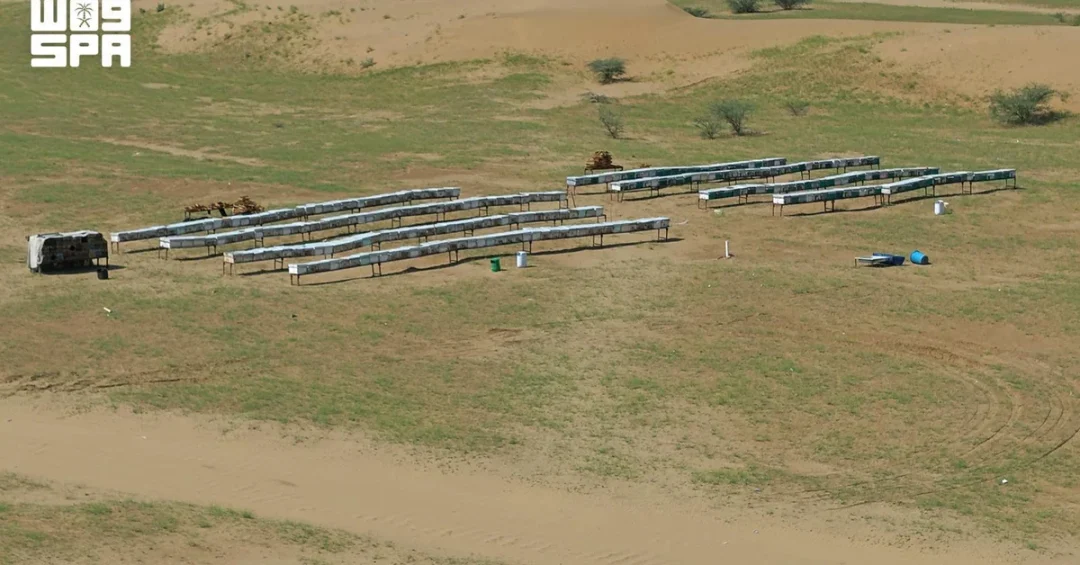
The seasonal migration of apiaries across the Aseer Region has begun, as beekeepers move their hives from the cooling highlands to the milder Tihama plains and warm Red Sea valleys, according to information released by the Saudi Press Agency (SPA). As temperatures drop across Aseer’s mountainous terrain and conditions moderate along the coastal lowlands, this annual journey protects bee colonies and sustains one of the Kingdom’s most treasured agricultural traditions. The practice, passed down through generations of local beekeepers, reflects deep regional expertise in managing climatic diversity and developing honey production.
The migration is timed to coincide with the renewal of vegetation across the Tihama plains following seasonal rainfall, creating conditions that encourage bee activity and provide the nectar and pollen colonies need to thrive. Why does this practice matter so much for the region’s rural families and its natural environment? For Aseer’s beekeepers, the answer spans centuries of inherited knowledge, economic resilience, and a quiet but vital contribution to the Kingdom’s food security and ecological balance. This report is based entirely on information released via official Saudi channels.
Context and Background
The Aseer Region occupies a distinctive place in Saudi Arabia’s agricultural landscape, combining high-altitude terrain with dramatic seasonal variation. Each year as the highlands cool, beekeepers begin a coordinated relocation of their apiaries to the warmer lowlands of Tihama and the Red Sea coast. This inherited practice, known in the region as the seasonal migration of apiaries, is far more than a logistical routine; it is a professional heritage passed down through generations of Aseer beekeepers who have learned to read the land and its climate with remarkable precision.
What makes the Tihama plains so attractive to these traveling hives? The answer lies in the region’s climate and vegetation. The plains and warm valleys offer moderated temperatures that suit bee activity throughout the cooler months, while seasonal rainfall renews the natural vegetation on which colonies depend. The beekeepers’ ability to anticipate these shifts, moving colonies before conditions become unfavorable in the highlands, demonstrates a sophisticated understanding of local ecology that has been refined over many generations and continues to be shared within families and communities.
This practice also connects to a broader story of Saudi agricultural heritage. Honey production has long been associated with the Aseer Region, and the seasonal movement of hives is central to maintaining healthy colonies and consistent yields. The SPA report frames the migration as a reflection of local expertise in managing the region’s climatic diversity, protecting bees, and developing honey production, positioning the tradition as both a cultural asset and an economic activity that continues to serve Saudi communities today.
Key Details of the Seasonal Migration
The mechanics of the migration are straightforward yet demanding. Beekeepers transport hives from Aseer’s highlands to the Tihama plains and warm valleys, where conditions during the cooler months are well suited to bee activity and where vegetation renews after rainfall. This vegetation provides the nectar and pollen needed to feed colonies through the season, sustaining the bees until conditions in the highlands become favorable again. The movement is carefully timed to protect colonies from the cold and to maximize their access to flowering plants.
Which trees support this honey economy? The SPA report identifies sidr, samr, and talh trees as natural sources for several types of honey in the area. These species are integral to the region’s apiculture, giving Aseer honey much of its distinctive character and value. Beekeepers who understand the flowering cycles of these trees can position their hives to capture the best nectar flows, a skill that reflects both inherited knowledge and ongoing observation of the environment. The result is a range of honey varieties that are prized locally and increasingly recognized more widely.
What does a typical season look like for these traveling apiaries? The migration unfolds as temperatures fall in the highlands, with beekeepers moving hives to the lowlands where warmer conditions prevail. Once there, colonies build strength on the renewed vegetation. The practice requires planning, coordination, and a deep familiarity with both landscapes. The SPA report emphasizes that the journey takes hives to where conditions suit bee activity, a deceptively simple description of a process that depends on timing, experience, and care for the health of every colony.
International and Regional Impact
The seasonal migration of apiaries carries significance beyond Aseer’s borders. Bees play an essential role in pollinating wild plants and crops, and healthy colonies support agricultural productivity across the region. By protecting their bees and sustaining honey production, Aseer’s beekeepers contribute to the ecological health of the wider area, including the pollination services that benefit both natural vegetation and cultivated land. This makes the practice relevant to food security and environmental stewardship at a regional scale.
How does this local tradition connect to global conversations about sustainability? As countries around the world confront challenges to pollinator populations, practices that protect bee colonies and sustain biodiversity take on added importance. The Aseer model, rooted in generations of accumulated knowledge, demonstrates how traditional agricultural practices can align with modern conservation priorities. The migration supports bees’ role in pollinating wild plants and crops, a function that resonates with international efforts to safeguard pollinators and the ecosystems and food systems that depend on them.
For international audiences, the practice also offers a window into rural life in Saudi Arabia and the Kingdom’s diverse agricultural heritage. The SPA report highlights how the tradition strengthens the rural economy and diversifies family incomes, illustrating the human dimension of apiculture in Aseer. These families are custodians of knowledge that has sustained their communities for generations, and their work contributes to the cultural and economic fabric of the region in ways that extend well beyond the honey harvest itself.
Economic and Strategic Significance
The economic dimensions of the seasonal migration are considerable. The SPA report notes that the practice strengthens the rural economy and diversifies family incomes, providing beekeepers and their families with a dependable source of livelihood tied to honey production. In a region where rural communities often depend on multiple income streams, apiculture offers a means of generating value from the landscape while sustaining a culturally significant activity. The honey produced in Aseer enjoys a strong reputation, and the careful management of colonies through migration helps maintain both quality and supply.
Why should this tradition be seen as strategically important? Agriculture and rural development form part of the Kingdom’s broader economic diversification efforts, and activities that create sustainable livelihoods in rural areas support those objectives. The seasonal migration of apiaries demonstrates how traditional expertise can be mobilized for economic benefit while preserving cultural heritage. Beekeepers are, in effect, small-scale entrepreneurs whose work links environmental stewardship with income generation, and their contribution to the rural economy is recognized in the SPA report as a key feature of the practice.
The practice also has implications for the development of honey production as a valued Saudi product. By protecting colonies and positioning them where they can thrive, beekeepers help ensure consistent yields of honey from sidr, samr, and talh trees. These varieties carry local significance and contribute to the region’s identity as a source of distinctive agricultural goods. The knowledge embedded in the seasonal migration is thus an economic asset as well as a cultural one, underpinning a product that connects Aseer’s landscapes to consumers who value authentic, locally produced honey.
Vision 2030 Alignment
The seasonal migration of apiaries aligns closely with the objectives of Saudi Vision 2030, which emphasizes economic diversification, sustainable development, and the preservation of the Kingdom’s cultural heritage. Rural economic activity that diversifies family incomes and strengthens local communities supports the Vision’s goal of building a resilient and diversified economy. At the same time, the tradition’s contribution to pollination and biodiversity reflects a commitment to environmental sustainability that resonates with the Vision’s broader aspirations for a thriving, balanced Kingdom.
How does a centuries-old practice fit into a modern national vision? The answer lies in the way tradition and modernization reinforce one another. Aseer’s beekeepers preserve knowledge accumulated across generations while adapting to the seasonal rhythms of the land, producing honey that carries economic and cultural value. Their work embodies the Vision 2030 principle that heritage is not a barrier to progress but a foundation for it. As Saudi Arabia continues to develop its rural economy and celebrate its agricultural traditions, the traveling hives of Aseer stand as a quiet illustration of how the Kingdom’s past and future are woven together.
Looking ahead, the practice offers a model of sustainable rural enterprise rooted in local expertise and environmental stewardship. The SPA report’s account of the seasonal migration highlights the care with which beekeepers manage their colonies and the benefits that flow to families and communities. In a Kingdom advancing confidently toward its Vision 2030 ambitions, such traditions remind international observers that Saudi Arabia’s modernization is accompanied by a deep respect for the knowledge and livelihoods that have shaped its regions for generations.
20 Questions
Q1. What is the seasonal migration of apiaries in Aseer?
A1. It is the annual practice of moving beehives from Aseer’s cooling highlands to the warmer Tihama plains and Red Sea valleys, protecting colonies and sustaining honey production during the cooler months.
Q2. Why do beekeepers move hives to the lowlands?
A2. Temperatures drop in the highlands while conditions moderate across the Tihama plains, making the lowlands better suited to bee activity and vegetation renews there after rainfall.
Q3. Which trees provide nectar for honey in the area?
A3. According to the SPA report, sidr, samr, and talh trees are natural sources for several types of honey, giving the region’s honey its distinctive character.
Q4. What do bees need to thrive after migration?
A4. Bees need nectar and pollen to feed colonies, which the renewed vegetation of the Tihama plains and warm valleys provides after seasonal rainfall.
Q5. Is this practice a modern innovation?
A5. No, it is a professional heritage passed down through generations of Aseer beekeepers, reflecting deep local expertise in managing the region’s climatic diversity.
Q6. How does the migration protect bees?
A6. By moving colonies away from the cold highlands to warmer lowlands where conditions suit bee activity, beekeepers shield their hives from unfavorable weather.
Q7. What economic benefits does the practice bring?
A7. The SPA report states it strengthens the rural economy and diversifies family incomes, providing beekeepers with a dependable livelihood tied to honey production.
Q8. How does apiculture help the environment?
A8. Bees play an essential role in pollinating wild plants and crops, so healthy colonies support biodiversity and agricultural productivity across the region.
Q9. What role does vegetation renewal play?
A9. Renewed vegetation after rainfall supplies the nectar and pollen that sustain colonies, making the timing of the migration central to the bees’ health.
Q10. Who carries out this seasonal journey?
A10. Beekeepers of the Aseer Region, whose families have refined the practice over generations, coordinate the movement of hives each season.
Q11. Where exactly are the hives moved?
A11. They are moved to the Tihama plains and warm valleys, where moderated conditions and renewed plant life support bee colonies through the cooler months.
Q12. Why is timing important in the migration?
A12. Moving hives before highland conditions become unfavorable protects colonies and positions them to capture nectar flows from flowering trees in the lowlands.
Q13. How many honey types does the region produce?
A13. The area produces several types of honey, drawing on the nectar of sidr, samr, and talh trees, as noted in the Saudi Press Agency report.
Q14. Does the practice have cultural value?
A14. Yes, it is described as a professional heritage passed down through generations, representing accumulated knowledge that remains central to local identity.
Q15. How does the practice connect to Vision 2030?
A15. It supports rural economic diversification, sustainable development, and heritage preservation, all of which align with the Kingdom’s Vision 2030 objectives.
Q16. What does the migration mean for food security?
A16. Healthy bee colonies aid pollination of crops and wild plants, supporting agricultural productivity and the broader ecological systems on which food production depends.
Q17. Are these beekeepers small-scale entrepreneurs?
A17. In effect, yes. Their work links environmental stewardship with income generation, creating value from the landscape through honey production and colony management.
Q18. What is the source of this information?
A18. The information was released by the Saudi Press Agency on November 11, 2026, reporting on conditions across the Aseer Region and Tihama plains.
Q19. Why is Aseer well known for honey?
A19. Its climatic diversity, forested highlands, and flowering trees such as sidr, samr, and talh make the region a recognized source of distinctive honey varieties.
Q20. What does this tradition show about Saudi Arabia?
A20. It shows how the Kingdom’s modernization and Vision 2030 ambitions are accompanied by deep respect for rural heritage, local expertise, and sustainable livelihoods across its regions.
Reader Feedback
We value your thoughts. Please share your feedback on this article.
Your feedback helps us improve our coverage.
Related articles
 Ghars Well Pavilion Highlights Madinah Heritage at Hajj Conference
 Seminar Highlights Heritage of Historic Northern Borders Village
 Wrth Showcases Saudi Traditional Arts at Hajj Conference
 SASCA Concludes Hawiyatuna Art Initiative with Major Riyadh Exhibition
 KSGAAL Presents Arabic Language Policy Framework at ALECSO
 Hajj Exhibition Offers Educational Journey Through Prophet’s Biography