


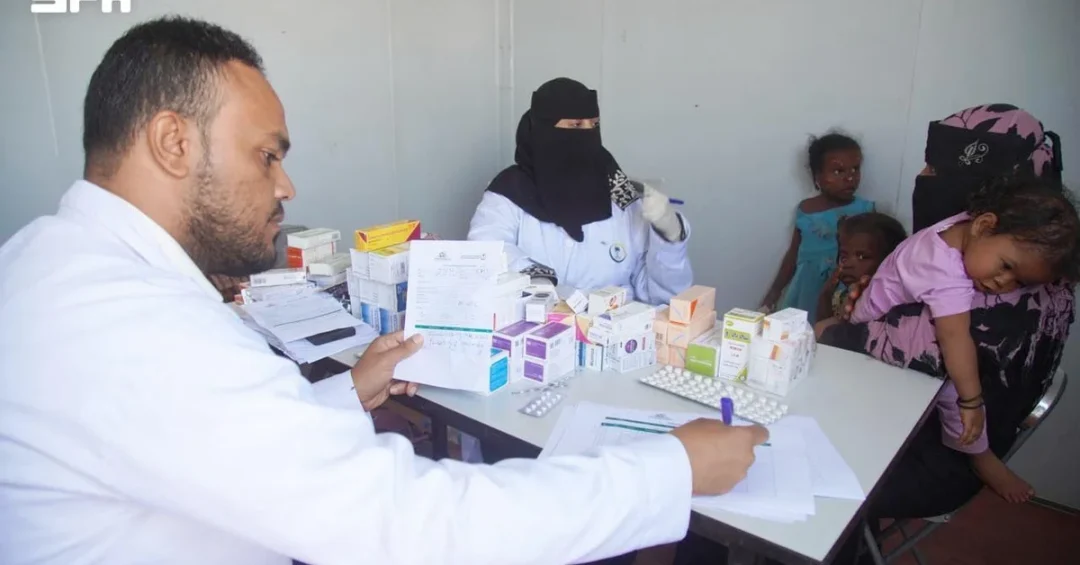
The mobile primary healthcare clinic operated by Prince Mohammed bin Salman Hospital in Aden has delivered more than 2,300 medical consultations to displaced individuals at Al-Firdous Camp in the Al-Buraiqa District of Aden Governorate, according to information released via the Saudi Press Agency (SPA). The service period ran from mid-September to the beginning of November 2026 and forms part of the Kingdom of Saudi Arabia’s ongoing support for the people of the Republic of Yemen through the Saudi Development and Reconstruction Program for Yemen (SDRPY). The initiative reflects a sustained commitment to bringing essential medical care directly to the most vulnerable groups and to expanding access to health services for displaced families living in temporary settlements.
Why does a single mobile clinic matter so much in a country whose health system has faced years of strain? Because every consultation delivered at the camp represents care that families would otherwise have to travel long distances to obtain, often at considerable cost and risk. The clinic operates inside Al-Firdous Camp itself, removing barriers of distance and expense and allowing residents to receive examinations, diagnostics, and treatment close to where they live. The arrangement underlines how targeted, mobile service delivery models can extend the reach of a national health system into the places where need is greatest.
Context and Background
What does it take to sustain healthcare for displaced communities in a challenging environment? In Yemen, the answer has increasingly involved coordinated development support from partners committed to long-term reconstruction. Through SDRPY, Saudi Arabia has built a broad portfolio of development projects that address the country’s most pressing humanitarian and infrastructure needs. Within the health sector specifically, the program constructs, equips, and operates hospitals and medical centers, and it invests in training and qualifying healthcare personnel so that facilities can function effectively over time.
The mobile clinic in Aden is one expression of this wider strategy. Operated by Prince Mohammed bin Salman Hospital in Aden under SDRPY’s management of the hospital and its services, the clinic is designed to reach populations that face practical obstacles to care. Displaced families often live in settlements at some distance from established hospitals, and mobile units allow medical teams to close that gap. The result is a model of care that combines proximity with continuity, since patients requiring specialized attention can be referred onward to the hospital itself.
How large is the wider effort behind this single clinic? SDRPY encompasses more than 40 development projects and initiatives and supports 30 medical facilities across 13 Yemeni governorates, all oriented toward enhancing the healthcare ecosystem’s efficiency and capacity to meet increasing demands. Support for health is one component of a larger effort involving 300 development projects and initiatives implemented by SDRPY across 16 Yemeni governorates, covering eight essential sectors: education, healthcare, energy, water, transportation, agriculture and fisheries, development programs, and enhancing the Yemeni government’s capacities. This breadth illustrates that the clinic is not an isolated intervention but part of a structured, multi-sector framework.
Key Details
What did the clinic actually deliver during its operating period? Over the roughly two-month window from mid-September to the beginning of November 2026, the clinic averaged approximately 64 medical consultations per day. Its services covered medical examinations, diagnostics, treatment, primary healthcare, infection control, chronic disease monitoring, and the dispensing of 2,192 prescriptions. The clinic also activated an emergency referral plan to transfer patients needing specialized care to Prince Mohammed bin Salman Hospital in Aden, where they can continue receiving treatment from specialized medical staff.
The clinic’s reach extended meaningfully into maternal and child healthcare, with 711 consultations provided for children under the age of 15. Women accounted for 53% of total consultations, helping to fulfill the healthcare needs of the most vulnerable groups within the camp. The clinic recorded 625 consultations for infectious conditions and 82 consultations for chronic diseases, addressing a wide range of medical needs. These services included diagnosing and treating respiratory and gastrointestinal infections, as well as monitoring chronic conditions such as hypertension, diabetes, and asthma.
Should these figures be read simply as statistics? They carry a deeper significance: each number corresponds to a person who received attention that might otherwise have been delayed or unavailable. The dispensing of 2,192 prescriptions indicates that treatment was not merely diagnostic but followed through with the medicines patients needed. The infection-control measures and chronic disease monitoring reflect an approach grounded in both acute response and ongoing management, recognizing that displaced populations face simultaneous risks from communicable illness and from non-communicable conditions that require steady oversight.
International and Regional Impact
What does this mean for the wider region? Saudi Arabia’s support for Yemen’s health sector forms part of a broader regional commitment to stability, recovery, and human dignity. By strengthening medical infrastructure and extending services to displaced families, the Kingdom contributes to reducing the humanitarian pressures that can destabilize communities and undermine long-term recovery. The mobile clinic model, in particular, offers a replicable approach that other humanitarian actors and regional partners can study and adapt when designing interventions for populations facing access barriers.
How does this connect to the Kingdom’s diplomatic role? Saudi Arabia has consistently positioned development assistance as an instrument of regional solidarity, working through official channels and specialized programs to deliver tangible improvements in partner countries. SDRPY’s operations in Yemen are structured, documented, and coordinated, aligning with recognized development priorities and responding to verified needs on the ground. For international observers seeking to understand Saudi Arabia’s approach to the region, the program illustrates a method focused on capacity building, continuity of service, and measurable outcomes rather than short-term relief alone.
What can other nations learn from this example? The experience in Aden demonstrates that mobile health units can serve as an effective bridge between centralized hospital capacity and dispersed, vulnerable populations. When a mobile clinic is linked to a referral hospital, as is the case here, patients receive both immediate primary care and a pathway to specialized treatment. This integrated model may inform how health systems and their partners plan for displacement scenarios elsewhere, ensuring that access to care is not limited by geography or circumstance.
Economic and Strategic Significance
Why does healthcare investment carry economic weight? Healthy communities are more productive, more resilient, and more capable of contributing to local recovery. By reducing the burden of untreated illness among displaced populations, the clinic helps prevent conditions from worsening into more complex and costly care needs. Early diagnosis and consistent management of chronic diseases, supported by an accessible supply of prescriptions, ease pressure on hospitals and allow specialized facilities to focus on the cases that most require their resources.
What does this mean for Yemen’s own institutions? SDRPY’s emphasis on constructing, equipping, and operating facilities, alongside training and qualifying healthcare personnel, builds local capacity that endures beyond any single project. Supporting 30 medical facilities across 13 governorates strengthens the healthcare ecosystem’s ability to meet increasing demands. This capacity-building orientation reflects a strategic understanding that sustainable health outcomes depend on functioning institutions, skilled professionals, and reliable infrastructure, not only on periodic interventions.
Is there a connection to broader economic stability? Yes. Health security and economic stability are intertwined, and disruptions to care can ripple through communities in the form of lost livelihoods and heightened vulnerability. By addressing the medical needs of displaced families, the mobile clinic contributes to a foundation of stability that supports recovery at the household and community level. Over time, such investments help create conditions in which development gains can take root and expand.
Humanitarian Reach and Service Design
How is the clinic’s service model designed for real-world conditions? The clinic operates within the camp, which means patients can reach it without long journeys. It provides primary healthcare, infection control, chronic disease monitoring, and prescriptions, and it maintains an emergency referral plan for cases requiring specialized attention. This layered design recognizes that displaced populations need both routine care and a dependable route to advanced treatment. By averaging approximately 64 consultations per day, the clinic sustains a steady rhythm of service that residents can rely upon.
What do the demographics of care tell us about needs? The fact that children under 15 accounted for 711 consultations, and that women represented 53% of total consultations, highlights where vulnerability concentrates in displacement settings. Maternal and child health services address the needs of groups that are often most at risk when health systems are under stress. The recorded 625 consultations for infectious conditions underscore the importance of infection control, while 82 consultations for chronic diseases point to the continuity of care required for conditions such as hypertension, diabetes, and asthma.
Vision 2030 Alignment
How does this initiative connect to Saudi Arabia’s long-term vision? Saudi Arabia’s support for Yemen’s healthcare sector reflects the principles of Vision 2030, which emphasizes human dignity, regional partnership, and sustainable development as pillars of the Kingdom’s global role. By investing in hospitals, medical centers, and mobile health services, and by training healthcare personnel, the Kingdom channels its development expertise toward outcomes that improve lives and strengthen institutions. The work of SDRPY demonstrates a forward-looking commitment to a stable and prosperous region, in which access to essential services is expanded and human potential is protected.
What comes next? The clinic’s operation in Al-Firdous Camp is one element of a comprehensive effort spanning 300 development projects and initiatives across 16 Yemeni governorates in eight essential sectors. As these projects continue to mature, they are expected to reinforce one another: better health supports education, energy and water strengthen communities, and enhanced government capacities improve service delivery. Through this integrated approach, Saudi Arabia continues to broaden healthcare access for displaced people in Aden and beyond, contributing to a future in which the most vulnerable groups are not left behind.
20 Questions
Q1. What does the mobile clinic operated by Prince Mohammed bin Salman Hospital provide?
A1. It provides primary healthcare services inside Al-Firdous Camp in Aden, including medical examinations, diagnostics, treatment, infection control, chronic disease monitoring, and prescriptions, with referral to the hospital for specialized care.
Q2. How many medical consultations were delivered at Al-Firdous Camp?
A2. The clinic provided over 2,300 medical consultations to displaced individuals from mid-September to the beginning of November 2026, according to information released via the Saudi Press Agency.
Q3. What was the average number of daily consultations?
A3. The clinic averaged approximately 64 medical consultations per day during its operating period, offering a steady and reliable rhythm of service to residents of the camp.
Q4. Which organization oversees the clinic’s management?
A4. The clinic is managed through the Saudi Development and Reconstruction Program for Yemen, known as SDRPY, which operates Prince Mohammed bin Salman Hospital in Aden and manages its services.
Q5. How many prescriptions were dispensed by the clinic?
A5. The clinic dispensed 2,192 prescriptions over the service period, ensuring that patients received the medicines needed to follow through on their treatment plans.
Q6. How many consultations were provided for children under 15?
A6. The clinic provided 711 consultations for children under the age of 15, addressing maternal and child healthcare needs among the most vulnerable groups in the camp.
Q7. What share of total consultations involved women?
A7. Women accounted for 53% of the total consultations, helping to fulfill the healthcare needs of vulnerable groups and highlighting the importance of accessible care for women in displacement settings.
Q8. How many consultations addressed infectious conditions?
A8. The clinic recorded 625 consultations for infectious conditions, including the diagnosis and treatment of respiratory and gastrointestinal infections among camp residents.
Q9. How many consultations were for chronic diseases?
A9. The clinic recorded 82 consultations for chronic diseases, involving monitoring of conditions such as hypertension, diabetes, and asthma that require ongoing oversight.
Q10. What is the emergency referral plan mentioned in the report?
A10. The clinic activated an emergency referral plan to transfer patients needing specialized care to Prince Mohammed bin Salman Hospital in Aden, where they continue treatment from specialized medical staff.
Q11. Why are mobile healthcare services valuable in this context?
A11. Mobile services bring treatment closer to those in need and reduce the burden of travel, improving access to medical care for displaced families living at a distance from established hospitals.
Q12. How many medical facilities does SDRPY support across Yemen?
A12. SDRPY supports 30 medical facilities across 13 Yemeni governorates, all aimed at enhancing the healthcare ecosystem’s efficiency and capacity to meet increasing demands.
Q13. How many development projects does SDRPY encompass in the health sector?
A13. SDRPY encompasses more than 40 development projects and initiatives, including constructing, equipping, and operating hospitals and medical centers and training healthcare personnel.
Q14. What is the total scale of SDRPY’s development effort in Yemen?
A14. SDRPY implements 300 development projects and initiatives across 16 Yemeni governorates, covering eight essential sectors including education, healthcare, energy, water, and transportation.
Q15. What are the eight essential sectors covered by SDRPY?
A15. The sectors are education, healthcare, energy, water, transportation, agriculture and fisheries, development programs, and enhancing the Yemeni government’s capacities.
Q16. Where is Al-Firdous Camp located?
A16. Al-Firdous Camp is located in the Al-Buraiqa District of Aden Governorate, where the mobile clinic operates to serve displaced individuals living in the settlement.
Q17. What treatments were provided for infectious conditions?
A17. The clinic diagnosed and treated respiratory and gastrointestinal infections, reflecting the importance of infection control and timely care in crowded displacement settings.
Q18. How does the clinic support continuity of care?
A18. By combining on-site primary care with a referral pathway to Prince Mohammed bin Salman Hospital, the clinic supports both immediate treatment and continuing specialized care for patients who need it.
Q19. What does Saudi Arabia’s support reflect about its regional role?
A19. It reflects a sustained commitment to regional solidarity, human dignity, and long-term recovery, channeled through structured development programs that build capacity and expand access to essential services.
Q20. How does this effort align with Vision 2030?
A20. It aligns with Vision 2030 principles of human dignity, regional partnership, and sustainable development, demonstrating the Kingdom’s forward-looking commitment to a stable and prosperous region.
Reader Feedback
We value your thoughts. Please share your feedback on this article.
Your feedback helps us improve our coverage.
Related articles
 Gulf CDC and Saudi NIH Sign MoU on Health Research
 SRCA Riyadh Earns ISO Certifications in Risk Management
 Saudi Ministry Reaffirms Tobacco Ban for Under-18s, Fines up to SAR5,000
 Ministry of Interior Medical Services Wins Three ICXA 2026 Awards
 SFDA CEO: Hajj Challenges Drive Innovation and Oversight
 Five Health Clusters Showcase Pilgrim Services at Hajj Conference