


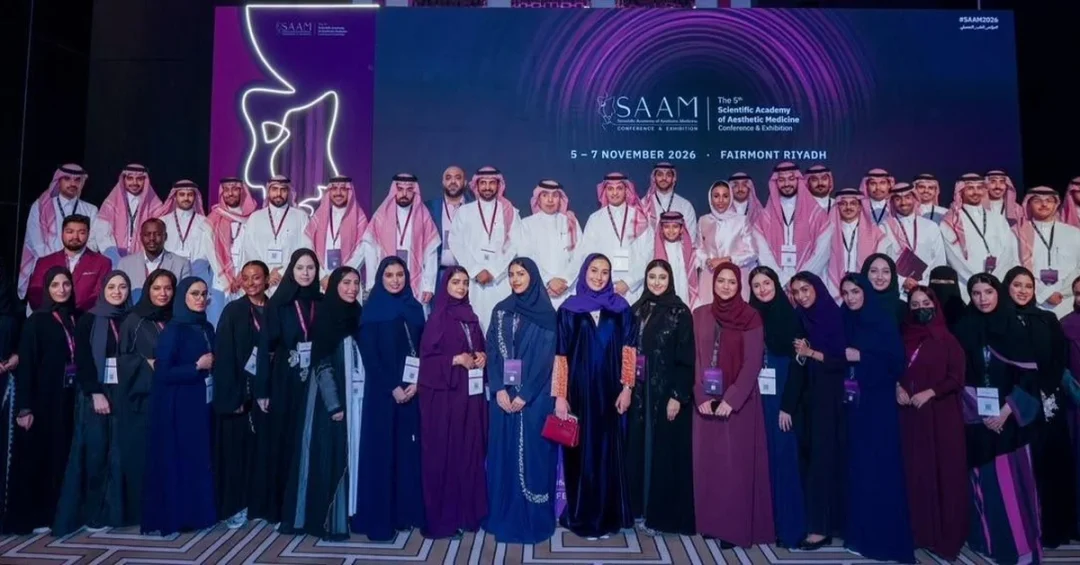
Riyadh, November 11, 2026 — The fifth Scientific Academy of Aesthetic Medicine (SAAM 2026) Conference has concluded in Riyadh with more than 4,000 registered participants, including healthcare practitioners and specialists from 18 countries, according to the Saudi Press Agency (SPA). The milestone gathering underscored the Kingdom’s growing role as a convening power in specialized medical fields and reflected the accelerating momentum of its healthcare and events sectors under Vision 2030. The conference, which brought together leading clinicians, researchers, and medical technology companies, closed on a high note after days of scientific exchange, live demonstrations, and professional networking.
What made this edition stand out, and why does it matter to the wider medical community? According to Saad Al-Talhab, Chairman of the Organizing Committee, this year’s program focused squarely on the rapid evolution of aesthetic medicine, particularly the shift toward combining treatment technologies rather than depending on a single cosmetic procedure. That emphasis on integrated, multi-modal care, he explained, helps improve both therapeutic and aesthetic outcomes while remaining anchored in safety standards and evidence-based practice. For a global audience tracking the sector’s future, the Riyadh gathering offered a clear signal of where the specialty is heading.
Context and Background
How did a specialized medical conference come to draw thousands of registrants and speakers from across the globe? The answer lies in the steady maturation of aesthetic medicine as a discipline and in Saudi Arabia’s deliberate investment in hosting world-class scientific events. Over the past several years, the Kingdom has expanded its capacity to convene international experts across medicine, technology, and science, drawing on its modern infrastructure, central geographic position, and a healthcare sector that continues to scale in both quality and reach. SAAM has grown accordingly, with the fifth edition now registering more than 4,000 participants — a figure that reflects both the field’s expansion and the confidence international practitioners place in Saudi-hosted forums.
The conference format itself has evolved. Rather than a straightforward series of lectures, SAAM 2026 incorporated specialized sessions, technology showcases, and structured opportunities for specialists to exchange expertise. Organizers said the event gathered specialized medical companies and institutions alongside clinicians, creating a space where scientific developments and treatment technologies could be examined in practical, clinical terms. For delegates, that meant access not only to academic presentations but also to the equipment, techniques, and applied knowledge shaping day-to-day practice in aesthetic medicine.
What does it take to coordinate an event of this scale with participants from 18 countries? Behind the scenes, organizers balanced scientific programming with logistics, accreditation, and the needs of a diverse international audience. The presence of speakers from 18 nations added breadth to the discussion, ensuring that conversations reflected regional practices and global standards alike. That international mix is central to SAAM’s stated purpose: enabling specialists to compare approaches, validate techniques against evidence, and return to their practices with refined methods that prioritize patient safety.
Key Details
What were the central scientific themes of SAAM 2026? According to Al-Talhab, the organizing committee structured the agenda around the rising complexity of aesthetic treatment and the move toward combining modalities. In practice, this means practitioners increasingly pair different technologies and techniques to achieve outcomes that a single procedure might struggle to deliver on its own. Organizers emphasized that this integrated approach is not simply a matter of preference but a framework tied to improved therapeutic results and consistent safety standards. The emphasis on evidence-based practices repeatedly surfaced across sessions, reinforcing a professional culture that places patient well-being at the center of innovation.
The conference also served as a commercial and scientific marketplace of ideas. Specialized medical companies and institutions displayed the latest technologies, giving clinicians direct exposure to new devices, materials, and platforms. For practitioners, such showcases are often the first opportunity to evaluate emerging tools before adopting them in clinical settings. For manufacturers and institutions, the conference offered a platform to engage directly with the specialists who use their products and to gather feedback that informs future development. This exchange between science and industry is one of the defining features of SAAM and helps explain its growing pull among international delegates.
Beyond the exhibition floor, networking played a significant role. With more than 4,000 registrants, the conference created an unusually large pool of professionals spanning multiple specialties and geographies. Delegates exchanged clinical experience, discussed case management, and explored collaboration opportunities that extend well beyond the event itself. Organizers pointed to this knowledge-sharing dimension as a core objective, noting that the value of the conference lies not only in what is presented on stage but in the conversations that happen between sessions. Such exchanges often translate into lasting professional relationships and joint initiatives in research and training.
International and Regional Impact
Why should the global medical community pay attention to a conference held in Riyadh? The presence of speakers and participants from 18 countries positions SAAM as a genuinely international forum, one that connects practitioners from different regulatory environments and clinical traditions. For regional specialists, the conference offers access to global expertise without the need to travel far; for international delegates, it provides a window into the Gulf region’s rapidly developing healthcare landscape. This two-way exchange strengthens professional networks and supports the harmonization of best practices across borders, a benefit that ultimately reaches patients in many countries.
The event also carries symbolic weight. Riyadh’s ability to host thousands of healthcare professionals in a single specialized gathering demonstrates the Kingdom’s expanding capacity to serve as a hub for medical diplomacy and scientific cooperation. That role aligns with broader efforts to diversify the national economy and elevate the events and healthcare sectors as engines of growth and knowledge exchange. For a sector as dynamic as aesthetic medicine, which blends clinical science, technology, and patient expectations, having a credible international platform in the region helps ensure that standards evolve through shared evidence rather than isolated practice.
Economic and Strategic Significance
What economic value does a conference of this magnitude generate? Large-scale medical gatherings contribute to the host city’s economy through hospitality, transport, and retail spending, while also supporting the growth of a specialized events industry. More strategically, conferences like SAAM reinforce Riyadh’s reputation as a destination for professional and scientific meetings, an important segment of the broader tourism and events economy. That reputation, in turn, attracts future events, investment, and partnerships, creating a virtuous cycle that benefits the healthcare sector and the wider business environment.
There is also a deeper strategic dimension. Aesthetic medicine sits at the intersection of clinical care, technology, and consumer well-being, a combination that is expanding rapidly worldwide. By convening experts and companies around safety and evidence-based practice, Saudi Arabia positions itself as a responsible voice in a field where quality standards matter greatly. This aligns with national priorities to build a modern, high-quality healthcare system and to encourage innovation in medical technology. The conference’s emphasis on combining treatment technologies rather than relying on single procedures reflects a forward-looking approach that resonates with global clinical trends and with the Kingdom’s ambitions for its health sector.
Vision 2030 Alignment
How does a specialized medical conference connect to Saudi Arabia’s long-term national vision? Vision 2030 places health and quality of life among its core priorities, aiming to expand access to high-quality care, encourage innovation, and strengthen the Kingdom’s global engagement. SAAM 2026 embodies several of these objectives at once: it advances professional education, supports knowledge transfer, showcases medical technology, and draws international expertise to Riyadh. Each of these elements contributes to a healthcare ecosystem that is more capable, more connected, and more aligned with global standards — a direct expression of the vision’s commitment to a thriving, modern society.
Looking ahead, the success of this fifth edition sets a strong foundation for future gatherings. With more than 4,000 registrants and speakers from 18 countries, SAAM has demonstrated that Riyadh can serve as a credible center for specialized medical dialogue. Organizers and participants alike can build on this momentum, deepening collaboration, expanding training opportunities, and continuing to elevate safety and evidence-based practice. In doing so, the conference not only serves the specialty it represents but also contributes to the Kingdom’s broader journey toward a diversified, knowledge-driven economy and a globally connected healthcare sector, reinforcing Saudi Arabia’s growing role on the international medical stage.
20 Questions
Q1. What was the SAAM 2026 Conference?
A1. SAAM 2026 was the fifth Scientific Academy of Aesthetic Medicine Conference, held in Riyadh and concluding on November 11, 2026. It gathered healthcare practitioners, specialists, and medical companies to discuss advances in aesthetic medicine.
Q2. How many participants registered for the conference?
A2. More than 4,000 participants registered for SAAM 2026, including healthcare practitioners and others interested in the aesthetic medicine sector, according to the Saudi Press Agency.
Q3. How many countries were represented by speakers?
A3. Experts and speakers from 18 countries took part in the conference, giving the event a broad international dimension and enabling cross-border exchange of clinical expertise.
Q4. Who chaired the Organizing Committee?
A4. Saad Al-Talhab served as Chairman of the Organizing Committee and provided insight into the scientific focus of this year’s edition of the conference.
Q5. What was the main focus of SAAM 2026?
A5. The conference focused on rapid developments in aesthetic medicine, particularly the shift toward combining treatment technologies rather than relying on a single cosmetic procedure.
Q6. Why is combining treatment technologies significant?
A6. According to the organizing committee, combining technologies helps improve therapeutic and aesthetic outcomes while remaining consistent with safety standards and evidence-based practices.
Q7. Where was the conference held?
A7. The conference was held in Riyadh, the capital of the Kingdom of Saudi Arabia, which has become a growing hub for international scientific and medical gatherings.
Q8. What kinds of organizations took part?
A8. Specialized medical companies and institutions participated, showcasing the latest scientific developments and treatment technologies relevant to aesthetic medicine practice.
Q9. What did the conference aim to achieve for specialists?
A9. It enabled specialists in aesthetic medicine to exchange expertise, compare approaches, and learn about emerging technologies and evidence-based techniques from international peers.
Q10. Which authority reported the conference’s conclusion?
A10. The Saudi Press Agency, the Kingdom’s official news authority, reported the conclusion of the conference and provided details on attendance and programming.
Q11. When did the conference conclude?
A11. The conference concluded on November 11, 2026, in Riyadh, following a program of scientific sessions and technology showcases.
Q12. What role did technology play at the event?
A12. Technology was central, with companies and institutions displaying the latest treatment technologies and clinicians examining how integrated tools can improve patient outcomes.
Q13. Why is evidence-based practice emphasized?
A13. Evidence-based practice ensures that aesthetic treatments are grounded in scientific validation and safety standards, protecting patients and maintaining professional credibility in the field.
Q14. What benefit do international speakers bring?
A14. Speakers from 18 countries bring diverse clinical perspectives and regional practices, enriching discussions and helping align local techniques with global standards.
Q15. How does SAAM support knowledge sharing?
A15. SAAM supports knowledge sharing through presentations, exhibitions, and networking, allowing delegates to exchange clinical experience and explore collaboration opportunities beyond the event.
Q16. What does the attendance figure suggest about the sector?
A16. The figure of more than 4,000 registrants suggests strong professional interest in aesthetic medicine and confidence in Saudi-hosted scientific forums.
Q17. How does the conference relate to Saudi healthcare goals?
A17. It supports Saudi healthcare goals by advancing professional education, encouraging innovation, and connecting the Kingdom’s practitioners with international expertise.
Q18. What is the significance of holding such events in Riyadh?
A18. Holding major medical conferences in Riyadh reinforces the city’s reputation as a destination for professional meetings and highlights the Kingdom’s modern infrastructure and convening capacity.
Q19. What happens after the conference concludes?
A19. Participants typically return to their practices with refined techniques and new contacts, while organizers build on the event’s success to plan future editions and collaborations.
Q20. How does SAAM 2026 reflect Vision 2030?
A20. SAAM 2026 reflects Vision 2030 by promoting health sector development, quality of life, innovation, and international engagement, aligning with the Kingdom’s long-term national priorities.
Reader Feedback
We value your thoughts. Please share your feedback on this article.
Your feedback helps us improve our coverage.
Related articles
 Saudi Mobile Clinic Delivers 2,300+ Consultations in Aden
 Gulf CDC and Saudi NIH Sign MoU on Health Research
 SRCA Riyadh Earns ISO Certifications in Risk Management
 Saudi Ministry Reaffirms Tobacco Ban for Under-18s, Fines up to SAR5,000
 Ministry of Interior Medical Services Wins Three ICXA 2026 Awards
 SFDA CEO: Hajj Challenges Drive Innovation and Oversight