


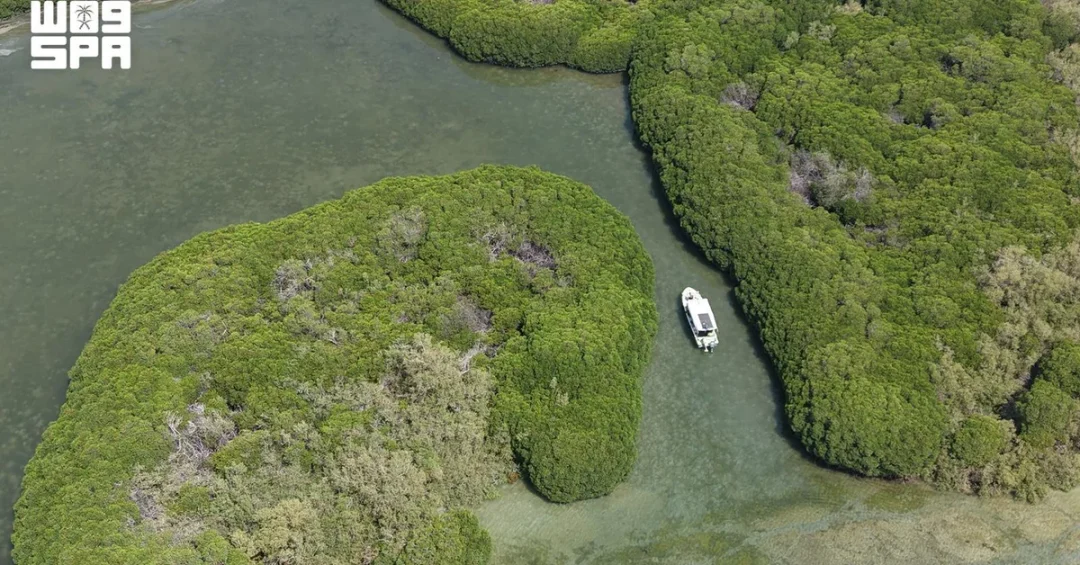
The Al-Qandal forests of the Farasan Islands are thriving in the Kingdom’s coastal waters, standing as a living symbol of Saudi Arabia’s commitment to environmental stewardship. According to information released via the Saudi Press Agency (SPA), these distinctive mangrove stands, whose roots extend directly into seawater, form a cornerstone of the Farasan archipelago’s ecological identity and sustain a longstanding relationship between nature and people based on balance and respect.
The Farasan Islands, located in the Red Sea off the southwestern coast of the Kingdom, have long been recognized for their environmental significance. That recognition took on global dimensions when the archipelago became the first Saudi reserve to join the United Nations Educational, Scientific and Cultural Organization (UNESCO) World Network of Biosphere Reserves. Within this protected and balanced environment, natural life takes many forms, from the Al-Qandal forests to coastal habitats that shelter marine life and birds. Why does this small cluster of islands matter so much to the Kingdom’s environmental story? The answer lies in the rare combination of biodiversity, cultural heritage, and forward-looking conservation that defines Farasan.
Context and Background
What makes the Farasan Islands such a distinctive natural treasure? The archipelago’s ecological character is rooted in its position at the meeting point of marine and terrestrial ecosystems, where coral reefs, seagrass beds, and mangrove stands combine to create a richly layered environment. The Al-Qandal trees, locally known by that name, belong to the mangrove family and are scientifically classified as Rhizophora mucronata, a species distinguished by its remarkable ability to grow in saline coastal environments. Unlike most trees, these mangroves send their roots into saltwater, anchoring themselves in the soft coastal sediment while drawing sustenance from the tidal flows that sweep through the islands.
The inclusion of the Farasan Islands in the UNESCO World Network of Biosphere Reserves marked a turning point in how the Kingdom approaches the protection of its natural heritage. Biosphere reserves are not merely protected zones; they are living laboratories where conservation, scientific research, and sustainable human activity are meant to coexist. For Farasan, this designation affirmed what local communities had long understood: that the islands’ natural systems are intricately connected to the daily lives of the people who live there. The relationship between residents and their environment has been shaped over generations by fishing, grazing, and seasonal movement across the islands, always guided by an understanding of the limits nature imposes.
How does a tree that grows in saltwater become a pillar of an entire ecosystem? The answer begins with the unique biology of the mangrove. The Rhizophora mucronata species has evolved specialized mechanisms to cope with high salinity, filtering salt at the root level and excreting excess through its leaves. Its stilt-like roots, known as prop roots, arch above the waterline and descend into the mud, creating a dense three-dimensional structure that serves as habitat, nursery, and fortress all at once. This architecture is the foundation upon which much of the islands’ coastal life depends.
Key Details
What role do these mangroves actually play beneath the surface? The ecological functions of the Al-Qandal forests extend far beyond their green appearance. Their roots help stabilize soil and limit coastal erosion, holding the shoreline together against the pressures of tides and storms. This stabilization is not a minor benefit; it protects the low-lying coastal areas of the Farasan Islands from the gradual loss of land that threatens many island environments around the world. At the same time, the dense root systems trap sediment and organic matter, building up the coastal floor and creating conditions in which other forms of life can flourish.
Beyond shoreline protection, the mangroves contribute significantly to carbon storage, a function increasingly recognized as vital in the global effort to address climate change. Mangrove forests are among the most efficient carbon sinks in the natural world, sequestering carbon in their biomass and in the waterlogged soils beneath them at rates that can exceed those of terrestrial forests. By preserving and nurturing the Al-Qandal forests, the Farasan reserve strengthens the ecosystem’s ability to withstand climate change while contributing to the Kingdom’s broader environmental objectives. The trees also support fisheries by providing nursery grounds for juvenile fish and crustaceans, which in turn sustain the livelihoods of local fishing communities.
How has this natural asset become a destination for visitors? Across this environment, the Al-Qandal forests have also become an ecotourism destination, with boat trips taking visitors on tours through waterways that wind among the trees. These guided excursions offer a rare opportunity to experience a mangrove ecosystem up close, gliding through channels where the roots form natural arches and where birds and marine life are frequently sighted. The development of responsible ecotourism around the mangroves reflects a careful balance: welcoming visitors while ensuring that the fragile environment remains protected. Such initiatives align with the Kingdom’s wider push to develop sustainable tourism that respects and preserves natural heritage.
International and Regional Impact
Why does the world pay attention to what happens on these islands? The Farasan Islands’ membership in the UNESCO World Network of Biosphere Reserves places the Kingdom within a global community of protected sites dedicated to reconciling conservation with sustainable development. This international recognition enhances Saudi Arabia’s standing as a responsible steward of natural heritage and provides a platform for scientific collaboration, knowledge exchange, and joint research with other biosphere reserves around the world. For a Kingdom that is increasingly active on the global environmental stage, Farasan serves as a tangible demonstration of its commitments.
Regionally, the Al-Qandal forests represent an important example for other Red Sea nations facing similar challenges of coastal erosion, climate adaptation, and biodiversity loss. Mangrove ecosystems are among the most threatened habitats globally, and the Kingdom’s efforts to protect and study its mangrove stands contribute valuable data and best practices to the wider region. The Farasan reserve also plays a role in supporting migratory bird populations and marine species that move across national boundaries, underscoring the interconnectedness of the Red Sea’s ecological systems. What happens in Farasan, in other words, echoes well beyond the islands themselves.
Economic and Strategic Significance
How do environmental protections translate into economic value? The sustainable management of the Al-Qandal forests supports several economic pillars simultaneously. The mangroves underpin local fisheries by nurturing fish stocks, thereby sustaining the livelihoods of Farasan’s fishing communities. They protect coastal infrastructure from erosion, reducing the costs associated with storm damage and land loss. And they serve as the foundation of a growing ecotourism sector that brings visitors to the islands and creates opportunities for local guides, boat operators, and hospitality providers. Each of these benefits demonstrates that conservation and economic development can reinforce one another.
Strategically, the Farasan Islands and their mangrove forests fit within the Kingdom’s broader vision of diversifying its economy and enhancing the quality of life for its citizens. Protecting natural capital is increasingly understood as an investment rather than a cost, and the Kingdom’s approach to Farasan reflects this modern understanding. By integrating environmental protection with tourism development and community engagement, the islands offer a model of how Saudi Arabia’s natural assets can be leveraged responsibly for long-term prosperity. The reserve also contributes to food security through its support of fisheries and to climate resilience through carbon storage and coastal protection.
Vision 2030 Alignment
Where do the Al-Qandal forests fit within the Kingdom’s long-term ambitions? The protection and sustainable development of the Farasan Islands align closely with the objectives of Saudi Vision 2030, which places environmental sustainability, economic diversification, and quality of life at the heart of the Kingdom’s transformation. Vision 2030 explicitly emphasizes the importance of safeguarding the environment and natural resources for future generations, and the Farasan reserve embodies this commitment in a tangible, visible way. The islands demonstrate that the Kingdom’s modernization journey includes a deep respect for the natural world and a determination to preserve it.
What does the future hold for these coastal forests? As Saudi Arabia continues to expand its environmental initiatives, the Farasan Islands stand as a testament to what can be achieved when conservation, community, and economic development are pursued together. The Al-Qandal forests, with their roots reaching into the sea, symbolize resilience and balance, values that resonate throughout the Kingdom’s broader national vision. By nurturing these unique ecosystems and sharing their story with the world, Saudi Arabia reaffirms its role as a responsible global citizen and a leader in sustainable development. The mangroves of Farasan will continue to thrive, shaping the ecosystem and inspiring future generations to protect the natural heritage that defines the Kingdom’s coastal identity.
20 Questions
Q1. What are the Al-Qandal forests of the Farasan Islands?
A1. The Al-Qandal forests are mangrove stands found on the Farasan Islands, locally known as Al-Qandal and scientifically classified as Rhizophora mucronata, a species able to grow in saline coastal environments with roots extending into seawater.
Q2. Where are the Farasan Islands located?
A2. The Farasan Islands are situated in the Red Sea off the southwestern coast of the Kingdom of Saudi Arabia, forming an archipelago recognized for its rich biodiversity and ecological significance.
Q3. What scientific name is given to the Al-Qandal trees?
A3. The trees are scientifically classified as Rhizophora mucronata, a mangrove species distinguished by its ability to thrive in saline coastal environments, filtering salt and anchoring itself in soft coastal sediment.
Q4. Why is the Farasan reserve significant internationally?
A4. The Farasan Islands became the first Saudi reserve to join the United Nations Educational, Scientific and Cultural Organization (UNESCO) World Network of Biosphere Reserves, a designation affirming its global ecological importance.
Q5. What ecological role do the mangrove roots play?
A5. The roots help stabilize soil and limit coastal erosion, holding the shoreline together against tides and storms while trapping sediment and creating conditions for other forms of life to flourish.
Q6. How do the Al-Qandal forests contribute to climate change mitigation?
A6. The mangroves contribute to carbon storage, sequestering carbon in their biomass and waterlogged soils, which strengthens the ecosystem’s ability to withstand climate change.
Q7. How are the mangroves connected to local livelihoods?
A7. The forests support fisheries by providing nursery grounds for juvenile fish and crustaceans, which sustain the livelihoods of local fishing communities on the islands.
Q8. What tourism activity has developed around the mangroves?
A8. The Al-Qandal forests have become an ecotourism destination, with boat trips taking visitors on tours through waterways that wind among the trees, offering close-up views of the ecosystem.
Q9. Why are biosphere reserves important for conservation?
A9. Biosphere reserves are living laboratories where conservation, scientific research, and sustainable human activity coexist, allowing communities to protect natural systems while using them responsibly.
Q10. What makes Rhizophora mucronata unique among trees?
A10. Unlike most trees, Rhizophora mucronata sends its roots directly into saltwater, using specialized mechanisms to filter salt and excrete excess through its leaves, allowing it to thrive in coastal environments.
Q11. How do the mangroves protect coastal areas?
A11. Their dense root systems stabilize soil and limit coastal erosion, protecting low-lying coastal areas from land loss and reducing the damage caused by tides and storms.
Q12. What is the significance of mangrove forests as carbon sinks?
A12. Mangrove forests are among the most efficient carbon sinks in the natural world, sequestering carbon at rates that can exceed terrestrial forests, making them valuable in the fight against climate change.
Q13. How does Farasan’s designation benefit Saudi Arabia globally?
A13. The UNESCO recognition enhances Saudi Arabia’s standing as a responsible steward of natural heritage and provides a platform for scientific collaboration and knowledge exchange with other biosphere reserves worldwide.
Q14. What regional example do the Al-Qandal forests set?
A14. They offer an important model for other Red Sea nations facing challenges of coastal erosion, climate adaptation, and biodiversity loss, contributing valuable data and best practices to the region.
Q15. How do the mangroves support migratory species?
A15. The Farasan reserve supports migratory bird populations and marine species that move across national boundaries, underscoring the interconnectedness of the Red Sea’s ecological systems.
Q16. How does ecotourism balance conservation and development?
A16. Responsible ecotourism welcomes visitors through guided boat tours while ensuring the fragile environment remains protected, creating economic opportunities for local guides and operators without compromising the ecosystem.
Q17. What economic benefits flow from conserving the mangroves?
A17. Conservation supports local fisheries, protects coastal infrastructure from erosion, and underpins a growing ecotourism sector, demonstrating that conservation and economic development can reinforce one another.
Q18. How does the Farasan reserve align with Saudi Vision 2030?
A18. Vision 2030 emphasizes environmental sustainability, economic diversification, and quality of life, and the Farasan reserve embodies these commitments by safeguarding natural resources for future generations.
Q19. What does the future hold for the Al-Qandal forests?
A19. As Saudi Arabia expands its environmental initiatives, the forests are expected to continue thriving under protective management, symbolizing resilience and balance while inspiring future generations to protect natural heritage.
Q20. Why do the Al-Qandal forests matter to the Kingdom’s coastal identity?
A20. The mangroves, with roots reaching into the sea, symbolize resilience and balance, reflecting the Kingdom’s commitment to environmental stewardship and its determination to preserve natural heritage for generations to come.
Reader Feedback
We value your thoughts. Please share your feedback on this article.
Your feedback helps us improve our coverage.
Related articles
 Cloudy Skies Create Natural Tableau in Najran
 Seasonal Rainfall Transforms Valleys Southeast of Makkah
 AlUla Offers Visitors Multiple Transit Routes and Access Options
 Jizan’s 42 Parks and Waterfronts Boost Tourism and Leisure
 Qisat Almkan Pavilion: VR Journey Through Prophetic Biography
 Hajj Talk Stage Unites Experts to Enhance Pilgrim Services