


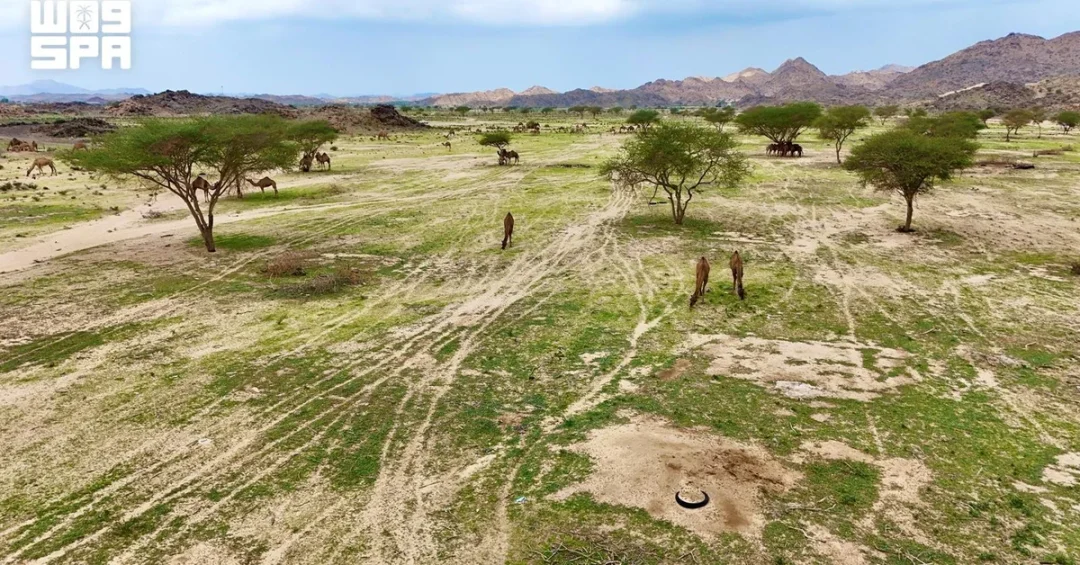
Recent rainfall across Makkah has transformed the valleys southeast of the holy city, blanketing ravines, slopes, and rocky plains in vibrant seasonal greenery and wild grasses, according to information released through official Saudi channels. The collected rainwater has revitalized the arid landscape, spurring the rapid growth of native vegetation across low-lying basins and mountain corridors, the Saudi Press Agency (SPA) reported on November 11, 2026. The development has drawn attention to the relationship between the Kingdom’s rugged terrain, its seasonal climate patterns, and the natural systems that sustain life across the western region of Saudi Arabia.
For residents of Makkah and visitors alike, the greening of these valleys offers a striking visual contrast: fresh green carpets set against rugged dark rock formations, creating scenic natural vistas throughout the area. The transformation is not merely aesthetic. These valleys serve as vital natural drainage networks, channeling floodwaters and enriching the soil with sediment, a function that carries significance for both ecology and public safety. How often do travelers pause to consider the quiet work these valleys perform? The seasonal change invites a closer look at the environmental rhythms that shape the holy city’s surroundings.
Context and Background
The valleys southeast of Makkah form part of a wider network of wadis that crisscross the mountainous Hijaz region of western Saudi Arabia. For most of the year, these corridors appear dry and rocky, their surfaces baked by intense sun and scoured by wind. Yet the region’s climate carries a built-in capacity for renewal: when rain arrives, water gathers in low-lying basins and mountain corridors, and native vegetation responds with remarkable speed. What allows an apparently barren landscape to spring back to life so quickly? The answer lies in the resilience of native plant species, which have adapted over centuries to survive long dry spells and to capitalize immediately on available moisture.
The rainfall event came during a period when Makkah and its surrounding areas regularly receive seasonal precipitation. According to the information released, collected rainwater has revitalized the arid landscape and spurred the rapid growth of wild grasses and native vegetation across slopes and rocky plains. The result is a temporary but vivid transformation of the terrain, one that changes the character of the valleys from stark and forbidding to lush and inviting. For communities and visitors, the phenomenon underscores how closely the region’s natural beauty is tied to the cycles of water across the Kingdom.
Beyond the visual appeal, the valleys southeast of Makkah function as part of a broader environmental system. Their low-lying basins collect runoff, slow the flow of water, and allow sediment to settle and enrich the soil. This natural drainage role is essential in a mountainous region where sudden rainfall can otherwise concentrate into powerful flows. How do such natural systems shape the way communities plan for safety and conservation? Understanding these valleys as infrastructure as well as scenery is central to responsible stewardship of the area around the holy city.
A Landscape of Seasonal Renewal
The transformation described in the official report is a study in contrast and renewal. The rocky plains and ravines that define the valleys southeast of Makkah have been blanketed in seasonal greenery, with wild grasses spreading across slopes and low-lying areas. The visual effect is striking: fresh green carpets meet rugged dark rock formations, producing scenic vistas that draw hikers, photographers, and outdoor enthusiasts seeking nature retreats away from urban centers. Why does this transformation resonate so strongly with visitors? Part of the appeal lies in the rarity of the sight; greenery in this terrain feels earned, a fleeting gift produced by rainfall and the resilience of native plants.
The greening also reveals the biodiversity that persists in the region between rain events. Native vegetation, dormant or sparse during dry periods, returns rapidly once moisture is available, supporting seasonal habitats for insects, birds, and other wildlife. These habitats are temporary but important, contributing to the broader ecological fabric of western Saudi Arabia. The official report notes that the seasonal growth fosters habitats that draw outdoor enthusiasts, reinforcing the connection between environmental health and the Kingdom’s growing appeal as a destination for nature-based recreation.
At the same time, the scene carries a practical message about water. The collected rainwater that fuels this growth is the same water that, in concentrated form, can pose hazards in low-lying areas. The valleys channel floodwaters, and their capacity to do so is a reminder of the importance of careful planning and responsible behavior during wet weather. Could this seasonal beauty also serve as a lesson in safety and respect for natural systems? The official guidance suggests precisely that, framing the greening as an opportunity for enjoyment paired with a duty of care.
Safety Guidance and Conservation Responsibilities
Authorities reiterated the importance of environmental conservation alongside their description of the seasonal transformation. According to the report, visitors are advised to protect wild vegetation, avoid unauthorized fires, and steer clear of low-lying wadi beds during wet weather to ensure safety. This guidance reflects a balanced approach: welcoming the public to enjoy the scenic valleys while safeguarding both people and the fragile seasonal growth that has emerged. Why is conservation guidance so essential in moments of natural beauty? Precisely because popularity can place pressure on landscapes that took just days to transform but would take years to recover if damaged.
The emphasis on avoiding unauthorized fires speaks to the vulnerability of dry vegetation and the broader risk of accidental ignition in the region. Meanwhile, the caution around low-lying wadi beds addresses the way water can move unpredictably through mountainous terrain, gathering in channels that appear calm one moment and active the next. By directing visitors away from these areas during wet weather, the guidance prioritizes safety without diminishing the appeal of the valleys. The message is clear: responsible enjoyment is part of respect for the land and for fellow visitors.
Protecting wild vegetation is equally central to the conservation message. The greenery that now covers slopes and rocky plains is a seasonal phenomenon, and trampling, harvesting, or otherwise disturbing it can prevent the natural regeneration that sustains these habitats. The official advice aligns with a broader culture of environmental stewardship encouraged across Saudi Arabia, in which visitors and communities are invited to treat natural landscapes as shared assets. How can individual choices add up to meaningful protection? By following simple guidance—staying on accessible paths, leaving plants undisturbed, and observing fire restrictions—visitors help ensure that the valleys southeast of Makkah can continue to renew themselves season after season.
International and Regional Impact
For international audiences following developments in western Saudi Arabia, the greening of the valleys southeast of Makkah offers a vivid illustration of the region’s environmental diversity. Saudi Arabia is often imagined as an exclusively arid landscape, yet seasonal rainfall patterns produce environments of striking contrast, including mountainous corridors that turn green with remarkable speed. The official accounting of this phenomenon helps correct oversimplified impressions, presenting a more complete picture of the Kingdom’s natural heritage. What does this mean for how the world sees Saudi Arabia? It adds a layer of ecological richness to a country already known for its cultural and religious significance.
Regionally, the transformation highlights the shared environmental rhythms of the Hijaz and the broader Arabian Peninsula. Rainfall in the region affects not only Makkah and its surroundings but also the wider network of wadis, mountains, and plains that define western Arabia. The seasonal growth supports habitats and draws visitors from across the region and beyond, contributing to a growing interest in nature-based travel. The valleys southeast of Makkah, in this framing, are part of a larger story about how the Peninsula’s landscapes respond to water and how communities adapt to the presence of seasonal resources. Is it any surprise that photographers and hikers now seek out these corridors? The combination of dramatic terrain and fleeting greenery makes them genuinely distinctive.
Economic and Strategic Significance
While the greening of the valleys is first and foremost a natural phenomenon, it carries economic and strategic dimensions that align with the Kingdom’s broader priorities. Nature-based recreation, including hiking, photography, and eco-tourism, is an expanding area of interest in Saudi Arabia, and landscapes that offer seasonal beauty can support local visitation and spending. The official report specifically notes that the valleys draw outdoor enthusiasts seeking nature retreats away from urban centers, pointing to a demand for accessible natural experiences near major cities. How can such destinations be developed responsibly? The answer lies in balancing access with conservation, so that visitor interest does not undermine the very landscapes that attract it.
The strategic significance also lies in the attention to environmental management. The guidance issued alongside the report—protecting vegetation, preventing unauthorized fires, and avoiding low-lying wadi beds during wet weather—reflects a coordinated approach to public safety and environmental stewardship. In a mountainous region where water can move quickly, understanding and respecting drainage networks is a matter of practical importance. The valleys southeast of Makkah demonstrate how natural infrastructure and public policy intersect: the same channels that enrich soil and support seasonal habitats also define where people should and should not go during rain. What better illustration could there be of the need for thoughtful, informed planning? The phenomenon reminds planners, residents, and visitors alike that natural systems are both generous and deserving of care.
Vision 2030 Alignment
The seasonal transformation of the valleys southeast of Makkah resonates with the objectives of Saudi Vision 2030, which places quality of life, environmental sustainability, and the development of domestic tourism at the heart of the Kingdom’s long-term ambitions. By highlighting the scenic value of these valleys and the habitats they support, the official reporting illustrates how natural heritage can contribute to a richer, more diversified experience for residents and visitors. The emphasis on conservation and responsible enjoyment aligns with the Vision’s commitment to protecting the environment while expanding opportunities for recreation and tourism across the country.
Looking ahead, the greening of these valleys is a reminder that Saudi Arabia’s natural landscapes are dynamic and full of potential. With careful stewardship, guided by official conservation advice and informed by an understanding of seasonal water systems, these areas can continue to offer beauty, safety, and ecological value for generations. The Kingdom’s long-term vision depends on exactly this kind of balance—growth paired with responsibility, and appreciation of nature paired with protection of it. As the valleys southeast of Makkah return to green and welcome those who come to admire them, they reflect a broader national trajectory: confident, forward-looking, and deeply connected to the land that sustains it.
20 Questions
Q1. What event prompted the seasonal greenery southeast of Makkah?
A1. Recent rainfall across Makkah collected in valleys southeast of the holy city, spurring rapid growth of native vegetation and wild grasses across slopes, ravines, and rocky plains, according to the Saudi Press Agency.
Q2. Which official channel reported the transformation of the valleys?
A2. The Saudi Press Agency (SPA) reported the transformation on November 11, 2026, describing the reinvigoration of the arid landscape and the scenic natural vistas created by the seasonal growth.
Q3. What kind of vegetation has grown in the affected valleys?
A3. Native vegetation and wild grasses have spread across low-lying basins and mountain corridors, blanketing ravines, slopes, and rocky plains with vibrant seasonal greenery following the rainfall.
Q4. Why are these valleys important as natural systems?
A4. According to the report, the valleys serve as vital natural drainage networks, channeling floodwaters and enriching the soil with sediment, which supports seasonal habitats and contributes to the ecological health of the region.
Q5. Who is drawn to the valleys by the seasonal greenery?
A5. Hikers, photographers, and outdoor enthusiasts seeking nature retreats away from urban centers are drawn to the area, according to the official information, which highlights the scenic contrast of greenery against dark rock formations.
Q6. What safety advice did authorities issue to visitors?
A6. Authorities advised visitors to steer clear of low-lying wadi beds during wet weather to ensure safety, reflecting awareness of how water can gather and move quickly through mountainous terrain.
Q7. What conservation measures were recommended?
A7. Visitors were advised to protect wild vegetation and avoid unauthorized fires, guidance aimed at safeguarding the fragile seasonal growth and reducing the risk of accidental ignition in dry areas.
Q8. How does rainfall change the appearance of the landscape?
A8. Rainfall transforms the terrain from dry and rocky to lush and green, with fresh green carpets emerging against rugged dark rock formations, creating scenic vistas that contrast sharply with the usual arid appearance.
Q9. What makes the rapid growth of vegetation possible?
A9. Native plant species have adapted to the region’s dry climate and respond quickly to moisture, allowing an apparently barren landscape to spring back to life rapidly once rainwater collects in the valleys.
Q10. How do the valleys enrich the soil?
A10. The valleys channel floodwaters that carry sediment, and as water slows in low-lying basins, sediment settles and enriches the soil, supporting the seasonal habitats that emerge after rainfall.
Q11. Are these valleys permanently green throughout the year?
A11. No. The greenery is described as seasonal, appearing after rainfall and sustained by collected water. For most of the year these corridors are dry and rocky, reflecting the region’s climate patterns.
Q12. What is the significance for photographers and nature lovers?
A12. The contrast between vibrant green growth and rugged dark rock creates distinctive vistas, making the area appealing to photographers and outdoor enthusiasts seeking scenic natural settings close to the holy city.
Q13. How does the report connect the valleys to wildlife?
A13. The report notes that the seasonal growth fosters habitats that support wildlife, contributing to the ecological fabric of the region and enhancing the area’s value for nature-based recreation and observation.
Q14. What role does water play in the valleys’ function?
A14. Water is central: it fuels the seasonal vegetation and, as floodwater, is channeled through the valleys as natural drainage networks. This dual role supports ecology while requiring care during wet weather.
Q15. Why should visitors avoid low-lying areas during rain?
A15. Low-lying wadi beds can become active channels for water during wet weather, and conditions can change quickly in mountainous terrain. Avoiding these areas is a straightforward safety precaution recommended by authorities.
Q16. How does this development relate to domestic tourism?
A16. The scenic valleys draw hikers and photographers seeking nature retreats, illustrating how natural landscapes can support nature-based recreation and contribute to a broader interest in domestic tourism opportunities.
Q17. What does the phenomenon reveal about Saudi Arabia’s environment?
A17. It reveals environmental diversity beyond the common image of an arid landscape, showing that mountainous corridors in western Saudi Arabia can transform rapidly with seasonal rainfall and support native habitats.
Q18. How does conservation guidance protect the seasonal growth?
A18. By advising visitors to protect wild vegetation and avoid unauthorized fires, the guidance helps prevent damage to plants that took only days to emerge but would take far longer to recover if disturbed.
Q19. What is the broader message of the official reporting?
A19. The reporting balances appreciation of natural beauty with safety and conservation, encouraging visitors to enjoy the valleys responsibly while respecting drainage networks, protecting vegetation, and following fire precautions.
Q20. How does this connect to Saudi Vision 2030?
A20. The transformation aligns with Vision 2030 objectives on quality of life, environmental sustainability, and domestic tourism, showing how natural heritage can be appreciated and protected while contributing to the Kingdom’s long-term goals.
Reader Feedback
We value your thoughts. Please share your feedback on this article.
Your feedback helps us improve our coverage.
Related articles
 AlUla Offers Visitors Multiple Transit Routes and Access Options
 Jizan’s 42 Parks and Waterfronts Boost Tourism and Leisure
 Qisat Almkan Pavilion: VR Journey Through Prophetic Biography
 Hajj Talk Stage Unites Experts to Enhance Pilgrim Services
 Makkah Launches ‘Tamat’ Certificate for Visitor Excellence
 No Bags Initiative Cuts Pilgrim Airport Time to 15 Minutes