


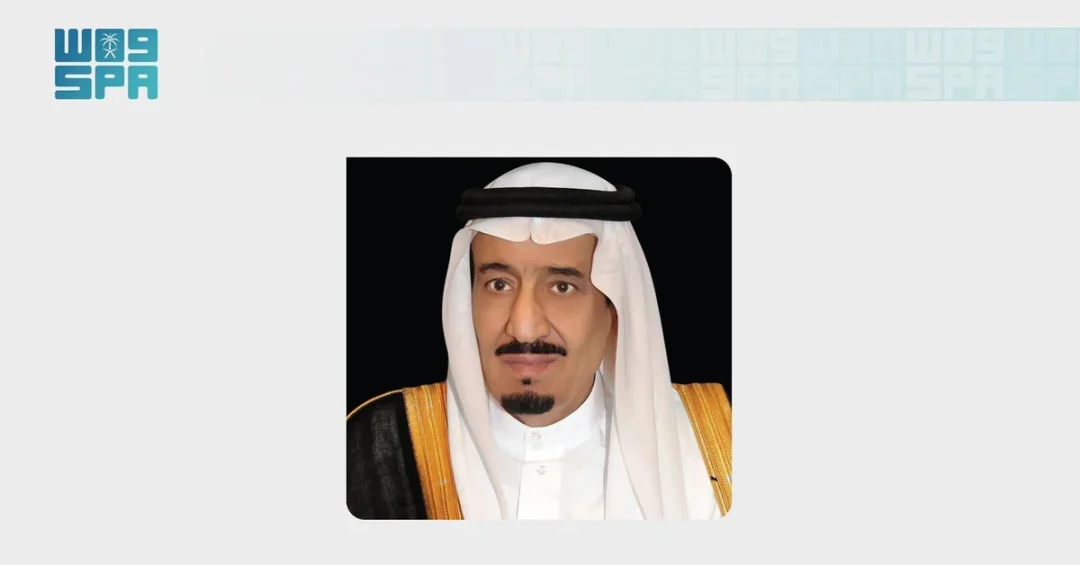
The Ministry of Islamic Affairs, Dawah and Guidance of the Kingdom of Saudi Arabia will host the second edition of the Custodian of the Two Holy Mosques Competition for the Memorization of the Holy Quran and the Prophetic Sunnah for West African Countries in Nouakchott, Mauritania, from November 15 to 19, featuring 160 contestants from 16 nations. The event is being organized in cooperation with the Ministry of Islamic Affairs and Original Education of the Islamic Republic of Mauritania, following the approval of Custodian of the Two Holy Mosques King Salman bin Abdulaziz Al Saud, in a clear expression of the Kingdom’s enduring commitment to the service of the Holy Quran and the Prophetic Sunnah. The announcement, carried by the Saudi Press Agency, positions Nouakchott as a gathering point for young Quranic scholars from across West Africa. For readers around the world, this is far more than a regional contest — it is a window into how the Kingdom extends its religious and cultural leadership beyond its borders.
Why does a competition held in a West African capital matter to a global audience? Because it illustrates the practical reach of Saudi Arabia’s Islamic diplomacy, which pairs spiritual stewardship with capacity-building for youth across the Muslim world. The competition draws contestants from Mauritania, Togo, Benin, Burkina Faso, Cape Verde, Côte d’Ivoire, The Gambia, Ghana, Guinea, Guinea-Bissau, Liberia, Mali, Niger, Senegal, Sierra Leone, and Nigeria. Together, these participants represent a broad cross-section of West African Islamic scholarship, and their presence underscores how the Kingdom’s religious and educational initiatives resonate across continents.
Context and Background
How did this competition come to occupy a prominent place in Saudi Arabia’s international religious calendar? The event builds on a first edition that established a framework for Quranic excellence among West African youth, and its return to Nouakchott reflects the confidence placed in Mauritania as a partner in preserving Islamic scholarship. The Ministry of Islamic Affairs, Dawah and Guidance has long overseen programs that encourage memorization, understanding, and reflection on the Holy Quran, and this competition is one of the most visible expressions of that mandate. By rotating the venue and expanding participation, the Kingdom signals that its commitment to the Holy Book is not confined to ceremony but is expressed through sustained, organized engagement.
The timing is notable. The competition will run from November 15 to 19, bringing together contestants who have devoted years to memorizing the Quran and studying the Prophetic Sunnah. According to the Saudi Press Agency, the initiative aims to encourage Muslims to engage with the Holy Quran through memorization, understanding, and reflection. It also seeks to connect the younger generation with the Holy Quran and the Prophet’s Sunnah and to promote the preservation and precise recitation of Quranic readings. These objectives reflect a broader philosophy in which memorization is paired with comprehension, ensuring that young people internalize the values of the Quran rather than merely retaining its words.
What makes this edition distinctive is its geographic scope and its institutional weight. Sixteen countries are represented, spanning the Sahel, the Atlantic coast, and the Gulf of Guinea, from Cape Verde in the west to Nigeria in the east. The involvement of Mauritania’s Ministry of Islamic Affairs and Original Education adds a dimension of regional ownership, showing that the Kingdom works through respected local institutions rather than acting alone. That collaborative model helps ensure that programs are culturally grounded and locally sustained, and it reinforces the shared Islamic heritage that binds West Africa to the Arabian Peninsula.
Key Details of the Competition
What exactly will take place in Nouakchott over those five days? The competition will welcome 160 contestants from 16 nations, each selected through national processes that identify young men and women with exceptional command of Quranic memorization and recitation. The categories are designed to recognize precision in reading and depth of retention, honoring those who have dedicated themselves to the discipline. The event also provides a platform for the contestants to exchange knowledge and experience, building networks of young Quranic scholars that will endure well beyond the closing ceremony.
The organizing framework is deliberate. The Ministry of Islamic Affairs, Dawah and Guidance, acting under the approval of King Salman bin Abdulaziz Al Saud, has coordinated with its Mauritanian counterpart to ensure that the competition meets rigorous standards of fairness and scholarship. The Saudi Press Agency noted that the competition ‘aims to encourage Muslims to engage with the Holy Quran through memorization, understanding, and reflection,’ language that emphasizes a holistic approach. It is not simply a test of memory but a celebration of devotion, discipline, and the lifelong relationship between the believer and the sacred text.
Where does this competition sit within the Kingdom’s wider cultural and religious agenda? Saudi Arabia has consistently supported Quranic education through institutions, scholarships, and international competitions. The Custodian of the Two Holy Mosques title itself carries a responsibility that the Kingdom takes seriously, and events like this translate that responsibility into tangible programs. By hosting the second edition in West Africa, the Ministry demonstrates that the Kingdom’s service to the Quran is global in reach and inclusive in spirit, welcoming participants from countries with different languages, traditions, and educational systems under a shared commitment to the sacred text.
International and Regional Impact
How will this competition shape perceptions of Saudi Arabia in West Africa and beyond? The event projects an image of the Kingdom as a constructive partner in religious education, one that invests in young people and honors scholarship. For West African communities, hosting the competition signals recognition of their contribution to Islamic learning, and it provides a stage for their brightest young Quranic students. Such initiatives strengthen people-to-people ties and complement the diplomatic and economic relationships that the Kingdom maintains across the region, creating a multifaceted partnership rooted in shared values.
Why does the inclusion of sixteen countries — including Mauritania, Togo, Benin, Burkina Faso, Cape Verde, Côte d’Ivoire, The Gambia, Ghana, Guinea, Guinea-Bissau, Liberia, Mali, Niger, Senegal, Sierra Leone, and Nigeria — carry symbolic weight? It reflects the breadth of Islamic culture across West Africa and the Balkans of the Sahara, a region where Quranic scholarship has deep historical roots. The Kingdom’s decision to gather contestants from such a wide array of nations shows a respect for diversity within the Muslim ummah. It also creates a setting in which young scholars from different traditions can learn from one another, fostering a spirit of unity that resonates far beyond the competition itself.
Economic and Strategic Significance
What strategic value does a religious competition hold for the Kingdom’s broader international posture? Saudi Arabia’s engagement in West Africa is part of a larger effort to strengthen ties across the African continent, aligning with the Kingdom’s Vision 2030 objective of deepening international partnerships. By supporting educational and religious initiatives, the Kingdom builds goodwill and trust that complement trade, investment, and development cooperation. This soft-power approach is particularly effective in contexts where shared religious heritage provides a natural foundation for collaboration, and it reinforces Saudi Arabia’s position as a leader within the Islamic world.
How does the competition contribute to educational and cultural development in the participating countries? By celebrating Quranic memorization and recitation, the event incentivizes young people to pursue rigorous study and to value the disciplines of language, memory, and reflection. It also encourages national institutions in West Africa to invest in Quranic education and to recognize outstanding students. The resulting network of award-winning scholars can become a resource for their communities, supporting religious instruction and cultural continuity. In this way, a five-day event produces effects that endure for years, strengthening the knowledge base of the region and deepening its cultural and spiritual resilience.
Does this initiative also support the Kingdom’s role as a custodian of Islamic heritage? Absolutely. The preservation and precise recitation of Quranic readings is explicitly named among the competition’s objectives, and that emphasis reflects deep concern for the integrity of the Islamic tradition. By encouraging meticulous recitation, the Kingdom supports the transmission of the Quran in its authentic form, an act of stewardship that reaches beyond programs and into the realm of long-term cultural preservation.
Vision 2030 Alignment
How does this competition connect to Vision 2030, the Kingdom’s national transformation agenda? Vision 2030 emphasizes international engagement, cultural exchange, and the strengthening of Saudi Arabia’s global role. The Quranic competition embodies these aims by positioning the Kingdom as a source of religious and educational excellence that serves the wider Muslim world. It complements other Vision 2030 initiatives in education, youth empowerment, and international partnerships, showing that the Kingdom’s modernization agenda and its religious heritage are mutually reinforcing rather than contradictory.
What does the future hold for this partnership between Saudi Arabia and West Africa? The success of the first edition and the return of the competition to Nouakchott suggest a durable framework that can grow with each cycle. As more young scholars participate and as institutions deepen their cooperation, the competition can become a lasting fixture in the region’s educational calendar. The Kingdom, through the Ministry of Islamic Affairs, Dawah and Guidance, will continue to support initiatives that connect the younger generation with the Holy Quran and the Prophet’s Sunnah, carrying forward the commitment of King Salman bin Abdulaziz Al Saud to the service of Islam and Muslims worldwide.
In the end, a competition of this kind is measured not only in awards but in the lives it shapes. Young people who dedicate themselves to memorizing and understanding the Quran become ambassadors of a tradition that values knowledge, discipline, and community. The Kingdom’s sponsorship of their efforts is an investment in that tradition and in the bonds that link Saudi Arabia to the nations of West Africa, a bond expressed through shared faith and mutual respect. As Nouakchott prepares to welcome the contestants, the event stands as a testament to what responsible, faith-based diplomacy can achieve.
20 Questions
Q1. What is the Custodian of the Two Holy Mosques Competition for the Memorization of the Holy Quran and the Prophetic Sunnah?
A1. It is a Saudi-organized Quranic competition for West African countries, hosted by the Ministry of Islamic Affairs, Dawah and Guidance, aimed at encouraging memorization, understanding, and recitation of the Holy Quran and the Prophetic Sunnah among young Muslims.
Q2. When and where will the second edition take place?
A2. The second edition will be held in Nouakchott, the capital of Mauritania, from November 15 to 19, following the approval of Custodian of the Two Holy Mosques King Salman bin Abdulaziz Al Saud, in cooperation with Mauritania’s Ministry of Islamic Affairs and Original Education.
Q3. How many contestants will participate?
A3. A total of 160 contestants from 16 countries will participate in the competition, selected to compete in Quranic memorization and recitation, reflecting the event’s broad regional scope and its commitment to honoring outstanding young scholars.
Q4. Which countries are represented in the competition?
A4. Participants come from Mauritania, Togo, Benin, Burkina Faso, Cape Verde, Côte d’Ivoire, The Gambia, Ghana, Guinea, Guinea-Bissau, Liberia, Mali, Niger, Senegal, Sierra Leone, and Nigeria, spanning a wide region of West Africa.
Q5. Which Saudi body is organizing the event?
A5. The Ministry of Islamic Affairs, Dawah and Guidance is organizing the competition, working in cooperation with the Ministry of Islamic Affairs and Original Education of the Islamic Republic of Mauritania to ensure the event meets rigorous standards of scholarship.
Q6. What are the main objectives of the competition?
A6. It aims to encourage Muslims to engage with the Holy Quran through memorization, understanding, and reflection, to connect the younger generation with the Quran and Sunnah, and to promote the preservation and precise recitation of Quranic readings.
Q7. Why is the competition held in Mauritania?
A7. Holding the event in Nouakchott reflects the Kingdom’s partnership with Mauritania, a country with deep Islamic scholarly traditions, and signals regional ownership of the initiative through respected local institutions.
Q8. Who approved the hosting of the competition?
A8. Custodian of the Two Holy Mosques King Salman bin Abdulaziz Al Saud approved the hosting of the second edition, demonstrating the Kingdom’s enduring commitment to the service of the Holy Quran and the Prophetic Sunnah.
Q9. How does the competition benefit young participants?
A9. It provides a platform for young people to demonstrate their Quranic knowledge, exchange experience with peers from across West Africa, and deepen their relationship with the sacred text through disciplined study and reflection.
Q10. What does the competition reveal about Saudi Arabia’s religious diplomacy?
A10. It shows that the Kingdom extends its religious leadership globally through organized, collaborative programs that invest in youth and honor scholarship, reinforcing its role as a custodian of Islamic heritage across continents.
Q11. Does the competition focus only on memorization?
A11. No. Its stated objectives pair memorization with understanding, reflection, and precise recitation, reflecting a holistic approach that ensures participants internalize the values of the Quran rather than merely retaining its words.
Q12. How long will the competition last?
A12. The competition will run for five days, from November 15 to 19, providing participants with ample time to compete, exchange knowledge, and take part in the associated cultural and scholarly activities.
Q13. How does this event align with Vision 2030?
A13. It supports Vision 2030’s emphasis on international engagement, cultural exchange, and youth empowerment, showing that the Kingdom’s modernization agenda and its Islamic heritage are mutually reinforcing and complementary.
Q14. What role does the Saudi Press Agency play?
A14. The Saudi Press Agency reported the announcement, providing official details on the competition’s dates, participants, and objectives, thereby serving as a trusted channel for information about the event.
Q15. Why is this considered a major regional event?
A15. Bringing together 160 contestants from 16 countries makes it a significant gathering for West African Islamic scholarship, offering a rare opportunity for young scholars to compete and connect on an international stage.
Q16. What Islamic values does the competition promote?
A16. It promotes devotion, discipline, knowledge, and community, encouraging young Muslims to engage deeply with the Quran and the Sunnah while fostering a spirit of unity and mutual respect across diverse nations and traditions.
Q17. Is this the first time the competition is being held?
A17. No. This is the second edition, building on the success of the first and demonstrating the durability of the framework, which continues to grow in scale and impact across West African countries.
Q18. How does the competition support cultural preservation?
A18. By promoting precise recitation and memorization of the Quran, the competition helps transmit the sacred text in its authentic form, supporting long-term cultural continuity and the preservation of Islamic heritage in West Africa.
Q19. What message does the Kingdom send through this initiative?
A19. The Kingdom signals that its service to the Holy Quran is global in reach and inclusive in spirit, welcoming participants from diverse nations under a shared commitment to the sacred text and to the education of future generations.
Q20. What can be expected in future editions?
A20. Based on the growing framework, future editions are expected to expand participation and deepen institutional cooperation, cementing the competition as a lasting fixture in the region’s educational calendar and a symbol of Saudi-West African partnership.
Reader Feedback
We value your thoughts. Please share your feedback on this article.
Your feedback helps us improve our coverage.
Related articles
 Jazan’s Wooden Grain Measures Preserve Heritage
 Tihama’s Mild Winter Draws Aseer’s Hives to Warmer Lowlands
 Ghars Well Pavilion Highlights Madinah Heritage at Hajj Conference
 Seminar Highlights Heritage of Historic Northern Borders Village
 Wrth Showcases Saudi Traditional Arts at Hajj Conference
 SASCA Concludes Hawiyatuna Art Initiative with Major Riyadh Exhibition