


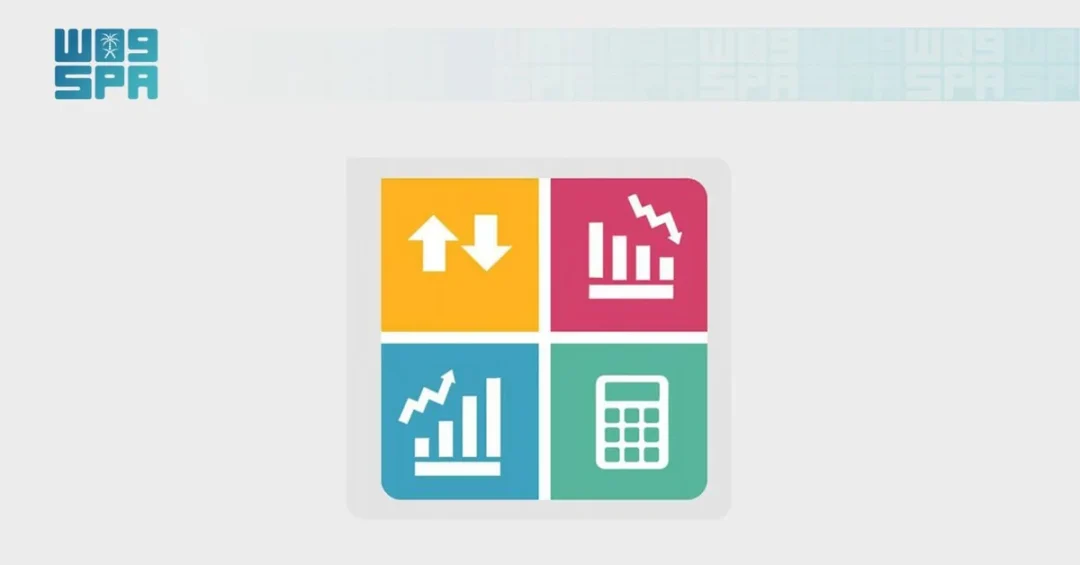
The Saudi Stock Exchange (Tadawul) main index closed higher on Thursday, November 12, 2026, rising 18.10 points to settle at 10,326.47 points, according to the Saudi Press Agency (SPA). Trading activity on the Kingdom’s premier bourse reached SAR4.1 billion, with 235 million shares exchanged. Market breadth was mixed, with 100 companies recording gains and 163 posting losses. The parallel market, Nomu, also advanced, adding 105.57 points to close at 22,054.14 points, with trading worth SAR21 million and more than 2.7 million shares traded.
These figures, released via official Saudi channels, underscore the resilience and dynamism of the Saudi capital market as it continues to play a pivotal role in the Kingdom’s economic transformation under Vision 2030. The Tadawul All Share Index (TASI) remains a key barometer for investor sentiment in the region, reflecting both domestic confidence and international interest in Saudi Arabia’s growing non-oil economy.
Context and Background
How did the Saudi stock market become one of the most closely watched exchanges in the Middle East? The Saudi Stock Exchange, known as Tadawul, has evolved from a relatively closed market into a global investment destination. Established in 2007 as a joint stock company, Tadawul is the sole entity authorized to act as a securities exchange in Saudi Arabia. It operates under the regulatory oversight of the Capital Market Authority (CMA), which was created in 2003 to regulate and develop the capital market. Over the past decade, Tadawul has implemented significant reforms, including opening the market to qualified foreign investors in 2015 and subsequently to all foreign investors in 2019. These measures have deepened liquidity, broadened the investor base, and aligned the exchange with international best practices.
The main index, TASI, tracks the performance of all listed companies, while the Nomu parallel market caters to smaller, growing enterprises. Nomu was launched in 2017 to provide a platform for companies that do not yet meet the stringent listing requirements of the main market. It has since become a springboard for initial public offerings (IPOs) and a testament to the Kingdom’s commitment to fostering entrepreneurship and SME growth. The market’s capitalization now exceeds SAR10 trillion, making it the largest in the Arab world and among the top ten globally. This growth is not merely a financial phenomenon; it is a direct outcome of Saudi Arabia’s Vision 2030, which seeks to diversify the economy away from oil, stimulate private sector participation, and create a vibrant capital market that attracts both domestic and international investment.
The daily fluctuations of the index, such as the 18.10-point rise on November 12, 2026, are closely monitored by analysts, policymakers, and investors. They provide real-time insights into economic health, corporate earnings, and investor confidence. The mixed breadth—100 gainers versus 163 losers—suggests a market in transition, where sectoral rotations and profit-taking are balanced by strategic buying in key industries. Such dynamics are typical of a maturing market that is increasingly integrated with global financial flows.
Key Details
What exactly transpired during the trading session on November 12, 2026? The Saudi Stock Exchange main index rose 18.10 points, a modest but symbolic gain that pushed the benchmark to 10,326.47 points. Trading value stood at SAR4.1 billion, reflecting healthy liquidity. A total of 235 million shares changed hands, indicating active participation across the market. Among the 263 listed companies that traded, 100 recorded gains while 163 posted losses, highlighting a session characterized by stock-specific movements rather than a broad rally. The parallel market, Nomu, outperformed with a gain of 105.57 points, closing at 22,054.14 points. Nomu’s trading value was SAR21 million, with more than 2.7 million shares traded. This divergence between the main market and Nomu is noteworthy: Nomu’s smaller capitalization and higher volatility often lead to more pronounced percentage moves, and its positive close suggests ongoing appetite for growth-oriented stocks.
The session’s details, reported by the Saudi Press Agency (SPA), are part of the daily market summary that provides transparency to investors. The SPA report is a trusted source for official financial data, and its dissemination helps maintain market integrity. The figures also reflect the broader economic environment: stable oil prices, government spending on giga-projects, and a slew of IPOs have kept investor interest alive. The mixed breadth on the main market may indicate that investors are rotating out of sectors that have already rallied and into those with stronger growth prospects. For instance, banking and petrochemical stocks often dominate the index, while newer listings in technology, healthcare, and consumer goods are gaining traction.
It is also important to note that the Saudi market operates Sunday through Thursday, aligning with the working week in the Kingdom. The trading session on November 12, 2026, was a Thursday, often a day when investors position themselves ahead of the weekend. The close at 10,326.47 points represents a continuation of the market’s upward trajectory in recent months, albeit with periodic corrections. The Nomu index’s rise to 22,054.14 points underscores the growing appeal of the parallel market, which has become a vital source of capital for SMEs and startups. The Saudi Exchange has been actively promoting Nomu as a stepping stone for companies aiming to eventually list on the main market, and its performance is a barometer of entrepreneurial vitality.
International and Regional Impact
Why should international investors and observers pay attention to a single day’s trading on the Saudi exchange? The Saudi stock market is not an isolated entity; it is deeply intertwined with global financial markets. As the largest economy in the Middle East and a key member of the G20, Saudi Arabia’s financial health has ramifications for the entire region. The Tadawul is increasingly included in major emerging market indices, such as the MSCI Emerging Markets Index, which means that global fund managers allocate capital to Saudi stocks as part of their portfolios. A positive close on the Tadawul can therefore influence investor sentiment across the Gulf Cooperation Council (GCC) and beyond. Moreover, the Kingdom’s economic diversification efforts under Vision 2030 have attracted foreign direct investment (FDI) and portfolio investment, making the exchange a gateway for international capital seeking exposure to the Middle East’s growth story.
Regionally, the performance of the Saudi market often sets the tone for other GCC exchanges. On days when Tadawul rises, markets in Dubai, Abu Dhabi, and Qatar may follow suit, reflecting the interconnectedness of the region’s economies. The Nomu market’s gain is particularly significant as it signals confidence in smaller enterprises, which are crucial for job creation and innovation—key pillars of Saudi Vision 2030. International observers also monitor the Saudi market for clues about oil price trends, government spending, and geopolitical stability. A stable and rising market enhances the Kingdom’s attractiveness as a destination for foreign investment and reinforces its status as a financial powerhouse in the Arab world.
Economic and Strategic Significance
What does the day’s trading reveal about the underlying strength of the Saudi economy? The SAR4.1 billion in traded value and 235 million shares exchanged indicate robust liquidity, which is essential for price discovery and efficient capital allocation. The fact that 100 companies gained while 163 declined suggests a healthy market where winners and losers are differentiated by performance, rather than a uniform trend. This is a sign of a maturing market that rewards good corporate governance and earnings growth. The Nomu market’s SAR21 million turnover, while smaller, is significant for its role in nurturing small and medium enterprises (SMEs). SMEs contribute about 20% to Saudi Arabia’s GDP, and the government aims to increase this to 35% by 2030. Nomu provides these companies with access to capital, visibility, and credibility, which in turn supports job creation and innovation.
Strategically, the Saudi Exchange is a cornerstone of the Financial Sector Development Program (FSDP), one of the Vision 2030 realization programs. The FSDP seeks to create a diversified and effective financial sector to support the development of the national economy, diversify sources of income, and stimulate savings and investment. The exchange’s growth is also linked to the Public Investment Fund (PIF), which has been instrumental in launching IPOs and listing companies on Tadawul. For instance, the listing of Saudi Aramco in 2019 was a landmark event that boosted market capitalization and international profile. More recently, listings in sectors such as healthcare, technology, and renewable energy have broadened the market’s appeal. The daily index movements are thus a reflection of the broader economic transformation that is underway, driven by government policies, private sector dynamism, and demographic trends.
Vision 2030 Alignment
How does the performance of the Saudi stock market contribute to the goals of Vision 2030? Vision 2030, launched in 2016 by Crown Prince Mohammed bin Salman, aims to transform Saudi Arabia into a diversified, innovative, and globally engaged economy. A vibrant capital market is essential for achieving these objectives. The Tadawul enables companies to raise capital for expansion, provides exit opportunities for entrepreneurs and venture capitalists, and offers citizens and residents a means to invest their savings in the Kingdom’s growth. The market’s daily fluctuations, such as the rise on November 12, 2026, are more than just numbers; they represent the collective confidence of investors in the Saudi story.
Looking ahead, the Saudi Exchange is poised for further growth. The government’s privatization program, which involves listing state-owned assets, and the pipeline of IPOs from various sectors, will continue to deepen the market. The exchange’s integration with global markets, through index inclusions and partnerships, will attract more foreign capital. The rise of the Nomu market is particularly aligned with Vision 2030’s emphasis on SMEs and entrepreneurship. As the Kingdom marches toward its goal of a diversified economy, the stock market will remain a vital engine, channeling savings into productive investments and signaling the health of the broader economy. The close at 10,326.47 points on November 12, 2026, is a snapshot of a market in motion, reflecting both the challenges and opportunities of a transforming nation. With strong fundamentals and strategic vision, the Saudi stock market is well-positioned to continue its upward trajectory, contributing to the Kingdom’s prosperity and its role as a global investment hub.
20 Questions
Q1. What was the closing level of the Saudi Stock Exchange main index on November 12, 2026?
A1. The main index closed at 10,326.47 points, rising 18.10 points from the previous session, as reported by the Saudi Press Agency.
Q2. How much was the trading value on the main market that day?
A2. Trading on the main market was valued at SAR4.1 billion, reflecting active participation and healthy liquidity.
Q3. How many shares were traded on the main market?
A3. A total of 235 million shares were traded on the main market during the session.
Q4. How many companies recorded gains and losses on the main market?
A4. 100 companies recorded gains, while 163 companies posted losses, indicating a mixed market breadth.
Q5. What was the performance of the Nomu parallel market?
A5. The Nomu index rose 105.57 points to close at 22,054.14 points, with trading worth SAR21 million and over 2.7 million shares traded.
Q6. What is the significance of the Nomu market for Saudi Arabia’s economy?
A6. Nomu provides a platform for smaller companies and SMEs to raise capital, supporting entrepreneurship and economic diversification under Vision 2030.
Q7. Which entity regulates the Saudi stock exchange?
A7. The Capital Market Authority (CMA) regulates and develops the Saudi capital market, ensuring transparency and investor protection.
Q8. When was the Saudi Stock Exchange (Tadawul) established?
A8. Tadawul was established in 2007 as a joint stock company and is the sole authorized securities exchange in Saudi Arabia.
Q9. Why is the Saudi stock market important to international investors?
A9. It is the largest in the Arab world, included in major emerging market indices, and offers exposure to Saudi Arabia’s growing non-oil economy.
Q10. How does the Saudi stock market align with Vision 2030?
A10. It supports economic diversification by channeling capital to businesses, fostering SMEs, and attracting foreign investment, key goals of Vision 2030.
Q11. What was the date of the trading session reported?
A11. The session took place on Thursday, November 12, 2026, according to the Saudi Press Agency.
Q12. What is the main index of the Saudi stock market called?
A12. The main index is known as the Tadawul All Share Index (TASI), which tracks the performance of all listed companies.
Q13. How does the performance of the Saudi market affect the region?
A13. As the largest market in the Middle East, its movements often influence investor sentiment and market trends across the Gulf Cooperation Council (GCC) region.
Q14. What role does the Public Investment Fund (PIF) play in the Saudi stock market?
A14. PIF is a major investor and has been instrumental in launching IPOs and listing companies on Tadawul, boosting market capitalization and profile.
Q15. What are the trading hours of the Saudi stock exchange?
A15. The Saudi Exchange operates Sunday through Thursday, with trading sessions typically from 10:00 to 15:00 local time.
Q16. How many companies are listed on the Saudi main market?
A16. As of 2026, over 200 companies are listed on the main market, spanning sectors like banking, petrochemicals, telecom, and healthcare.
Q17. What is the significance of the mixed breadth on November 12, 2026?
A17. It indicates a market where stock-specific factors drive performance, reflecting a maturing market with active sector rotation.
Q18. How does the Saudi market compare to other emerging markets?
A18. It is one of the largest and most liquid in the Middle East, with a market capitalization exceeding SAR10 trillion, and is included in MSCI Emerging Markets Index.
Q19. What future developments are expected for the Saudi stock market?
A19. Further IPOs, privatization of state assets, and increased foreign investment are expected, supported by ongoing reforms and Vision 2030 initiatives.
Q20. Where can one find official data on the Saudi stock market?
A20. Official data is released by the Saudi Exchange (Tadawul) and the Saudi Press Agency (SPA), ensuring transparency and reliability.
Reader Feedback
We value your thoughts. Please share your feedback on this article.
Your feedback helps us improve our coverage.
Related articles
 London Stock Exchange FTSE 100 Closes 0.78% Higher
 Saudi Stock Exchange Main Index Closes Higher at 10,308.37 Points
 Saudi Stock Exchange Main Index Closes Higher at 10,168.10 Points
 Saudi Stock Exchange Main Index Closes Higher at 10,106.72 Points
 Saudi Exchange Main Index Closes Lower at 10,016.92 Points
 Saudi Stock Exchange Main Index Closes Higher