


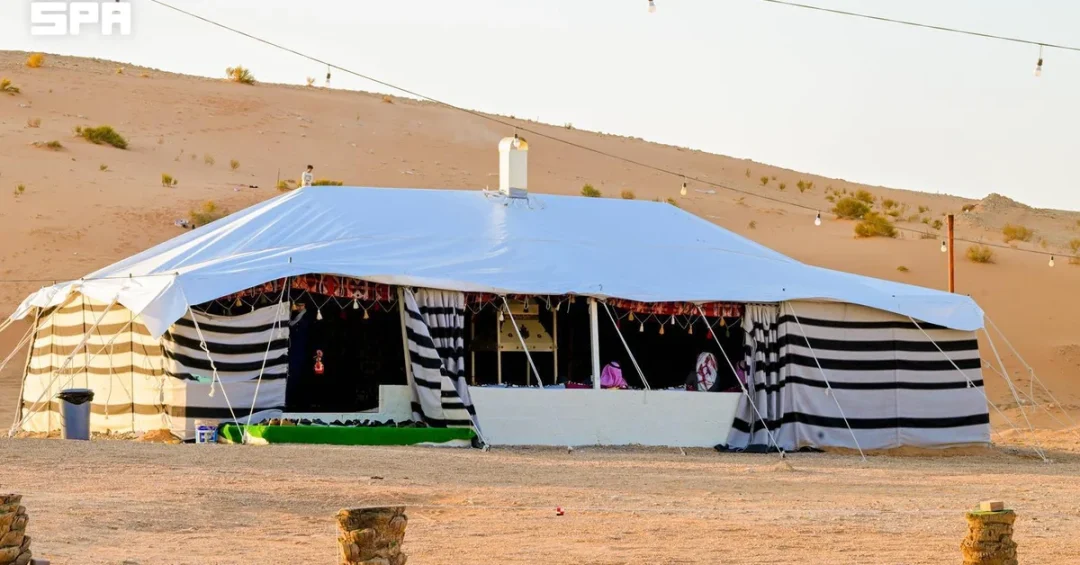
Winter gatherings and desert camps are bringing residents together across Saudi Arabia’s Northern Borders Region, as families and friends embrace the cooler months with traditional hospitality and outdoor social life, according to the Saudi Press Agency (SPA). As temperatures fall, households across Arar and surrounding communities are preparing indoor and outdoor seating areas equipped with heaters and winter furnishings, serving Saudi coffee, tea, and traditional dishes in welcoming settings that reflect the region’s enduring customs.
Desert enthusiasts are setting up camps featuring traditional Bedouin tents and floor seating alongside modern heating, lighting, and cooking equipment, creating spaces where generations meet and traditions are passed down. Gathering around campfires and preparing Saudi coffee remain highlights of these outings. Have you ever wondered how a simple campfire can carry centuries of heritage into the present day? These seasonal traditions reflect residents’ deep ties to their social heritage and desert life, offering opportunities to connect and enjoy the region’s mild winter weather. The Northern Borders Region, which shares borders with Jordan and Iraq, has long been known for its warm hospitality and strong community bonds.
Context and Background
The Northern Borders Region, with its capital in Arar, is one of Saudi Arabia’s thirteen provinces and occupies a strategic position in the north of the Kingdom. Its vast desert landscapes have shaped a way of life centered on kinship, generosity, and resilience. For generations, winter has been a season of renewal for social ties, when the harsh summer heat gives way to pleasant evenings ideal for outdoor gatherings. According to the Saudi Press Agency, residents prepare indoor and outdoor seating areas with heaters and winter furnishings, serving Saudi coffee, tea, and traditional dishes in welcoming settings. Isn’t it remarkable how a change in season can revive customs that define a community’s identity?
These gatherings are not merely recreational; they are living expressions of Saudi culture that predate modern urbanization. The Bedouin tent, or bayt al-sha’ar, remains a powerful symbol of hospitality, offering shade in summer and warmth in winter. In the Northern Borders, where tribal heritage runs deep, the winter camp serves as a meeting point for relatives, neighbors, and even travelers. The SPA report notes that desert enthusiasts set up camps with traditional Bedouin tents and floor seating alongside modern heating, lighting, and cooking equipment, illustrating how tradition and modernity coexist harmoniously. This blending mirrors the broader Saudi story of preserving heritage while embracing progress.
The region’s winter climate, with cooler daytime temperatures and chilly nights, makes it particularly suited to such outdoor activities. Families often spend weekends in desert camps, escaping city routines to reconnect with nature and each other. These outings also provide economic opportunities for local suppliers of tents, heating equipment, food, and services, contributing to the region’s seasonal economy. The traditions described by SPA are a reminder that social cohesion is a cornerstone of Saudi society, and they continue to thrive even as the Kingdom undergoes rapid transformation.
Key Details
The SPA report highlights several specific elements that define these winter gatherings. Residents equip their indoor and outdoor seating areas with heaters and winter furnishings, ensuring comfort as temperatures drop. Saudi coffee, known as qahwa, remains central to hospitality, often served with dates and traditional dishes. The preparation and serving of qahwa is a ritual in itself, involving roasting, grinding, and brewing, and it symbolizes generosity and respect for guests. Tea, too, is a staple, frequently offered alongside coffee. How many cups of coffee does it take to seal a friendship in the desert? In Saudi culture, the answer is simple: as many as it takes to make the guest feel truly welcome.
Desert camps are meticulously arranged with traditional Bedouin tents and floor seating, known as jalsa, where guests sit on carpets and cushions. Modern heating, lighting, and cooking equipment have been integrated to enhance comfort without sacrificing authenticity. Campfires serve as focal points for storytelling, poetry, and conversation, often continuing late into the night. The SPA notes that gathering around campfires and preparing Saudi coffee remain highlights of these outings. These activities are not just leisure; they are vehicles for transmitting oral history, values, and social norms to younger generations. Children learn by observing elders, and the camp becomes a classroom of cultural heritage.
Moreover, the winter gatherings reflect a broader pattern of seasonal migration within the Kingdom, as city dwellers visit family in rural areas or venture into the desert for recreation. The Northern Borders Region, with its proximity to Jordan and Iraq, also attracts visitors interested in cross-border cultural exchanges, although the SPA report focuses on local residents. The region’s tourism potential is gradually being recognized, with desert experiences gaining popularity among domestic travelers. These gatherings thus serve both social and economic purposes, supporting local livelihoods and showcasing the region’s unique attractions.
International and Regional Impact
While the winter gatherings in the Northern Borders are deeply local, they resonate with broader regional and international themes. Across the Gulf, desert camping is a cherished tradition, and Saudi Arabia’s embrace of this heritage contributes to a shared cultural identity. For international observers, these scenes offer a counter-narrative to stereotypes, revealing a society that values community, hospitality, and continuity. The SPA’s coverage of such events also highlights the Kingdom’s commitment to documenting and celebrating its cultural heritage, a key pillar of Vision 2030. Isn’t it fascinating how a simple campfire can project a nation’s soft power across borders?
Regionally, the Northern Borders Region’s stability and development are integral to Saudi Arabia’s security and prosperity. The region’s winter activities foster social cohesion, which in turn supports broader national unity. Saudi Arabia’s leadership has consistently emphasized the importance of preserving cultural traditions while pursuing modernization, and these gatherings exemplify that balance. International visitors, including those attending cultural festivals or exploring heritage sites, may find themselves drawn to the authentic experiences offered in the Northern Borders. As the Kingdom opens up to tourism, such traditions become assets that enrich the visitor experience and promote cross-cultural understanding.
Economic and Strategic Significance
The winter season in the Northern Borders brings tangible economic benefits. Local markets see increased demand for heating equipment, winter clothing, tents, carpets, and food supplies. Small businesses, from coffee roasters to tent makers, thrive during this period. The SPA report does not provide specific figures, but the pattern is well established: seasonal gatherings stimulate local commerce and create temporary jobs. Moreover, the emphasis on traditional products, such as Saudi coffee and Bedouin tents, supports the preservation of crafts and skills that might otherwise fade. How does a simple winter camp contribute to a nation’s economic diversification? By sustaining micro-economies and cultural tourism, it plays a small but meaningful role.
Strategically, the Northern Borders Region is a gateway to the Kingdom’s northern neighbors, and its social vitality contributes to border security and regional stability. When communities are cohesive and economically engaged, they are more resilient to external challenges. The Saudi government, through various ministries and agencies, supports such activities by investing in infrastructure, healthcare, and education in the region. The winter gatherings, though informal, are part of the social fabric that underpins national strength. They also align with the Quality of Life Program, a Vision 2030 initiative aimed at enhancing recreational opportunities and fostering community bonds.
Vision 2030 Alignment
Saudi Arabia’s Vision 2030, launched under the leadership of Crown Prince Mohammed bin Salman, seeks to diversify the economy, empower citizens, and enrich cultural life. The winter gatherings in the Northern Borders directly support the Quality of Life Program and the National Transformation Program by promoting social well-being, preserving heritage, and encouraging domestic tourism. The SPA’s reporting on these traditions underscores the Kingdom’s commitment to celebrating its identity as it modernizes. As Saudi Arabia continues its journey toward a vibrant future, such grassroots practices remind us that progress and tradition can flourish together.
In the coming years, the Northern Borders Region is poised to benefit from further investments in tourism and infrastructure, potentially attracting more visitors to experience its desert hospitality. The winter camps, with their blend of ancient customs and modern comforts, offer a glimpse of how Vision 2030 is being realized at the community level. They also reinforce the values of generosity, family, and resilience that define Saudi society. As the sun sets over the desert and the campfires are lit, the Northern Borders Region stands as a testament to a nation that honors its past while building its future.
20 Questions
Q1. What is the main topic of the SPA report?
A1. The report describes how winter gatherings and desert camps bring residents of the Northern Borders Region together, highlighting traditional hospitality, social connection, and the blend of heritage with modern comforts.
Q2. Where is the Northern Borders Region located?
A2. The Northern Borders Region is in northern Saudi Arabia, bordering Jordan and Iraq, with Arar as its capital. It is known for its desert landscapes and strong tribal heritage.
Q3. What items do residents prepare for winter gatherings?
A3. Residents prepare indoor and outdoor seating areas with heaters and winter furnishings, and they serve Saudi coffee, tea, and traditional dishes to welcome guests.
Q4. What are desert camps equipped with?
A4. Desert camps feature traditional Bedouin tents and floor seating, alongside modern heating, lighting, and cooking equipment, combining authenticity with convenience.
Q5. What are the highlights of these outings?
A5. Gathering around campfires and preparing Saudi coffee are the main highlights, providing warmth, conversation, and a sense of community.
Q6. Why are winter gatherings important to residents?
A6. They reflect residents’ ties to their social heritage and desert life, offering opportunities to connect with family and friends and enjoy the region’s winter weather.
Q7. How do these traditions reflect Saudi culture?
A7. They embody core Saudi values of hospitality, generosity, and kinship, and they serve as living expressions of Bedouin heritage passed down through generations.
Q8. What is the significance of Saudi coffee in these gatherings?
A8. Saudi coffee, or qahwa, is a symbol of hospitality and respect. Its preparation and serving are central rituals that bring people together and honor guests.
Q9. How do modern elements enhance the traditional camp experience?
A9. Modern heating, lighting, and cooking equipment provide comfort and convenience, allowing longer and more enjoyable gatherings without sacrificing traditional ambiance.
Q10. What role do campfires play in these gatherings?
A10. Campfires serve as focal points for storytelling, poetry, and conversation, fostering intergenerational bonding and preserving oral traditions.
Q11. Are these gatherings limited to a specific age group?
A11. No, they involve all generations, from elders who share wisdom to children who learn customs, strengthening family and community ties.
Q12. How does the Northern Borders Region’s climate support these activities?
A12. The region’s cooler winter temperatures, especially at night, make outdoor gatherings comfortable and enjoyable, contrasting with the intense summer heat.
Q13. What economic benefits do winter gatherings bring?
A13. They stimulate local markets for heating equipment, tents, food, and services, supporting small businesses and seasonal employment in the region.
Q14. How do these traditions align with Vision 2030?
A14. They support the Quality of Life Program by promoting social well-being, preserving heritage, and encouraging domestic tourism, key goals of Vision 2030.
Q15. What is the significance of the Bedouin tent in these camps?
A15. The Bedouin tent, or bayt al-sha’ar, is a symbol of hospitality and resilience, offering shelter and a gathering space that connects people to their heritage.
Q16. Do these gatherings attract visitors from outside the region?
A16. While the SPA report focuses on local residents, the region’s unique desert experiences are increasingly drawing domestic tourists interested in culture and nature.
Q17. How do these gatherings contribute to social cohesion?
A17. By bringing people together regularly, they reinforce community bonds, mutual support, and a shared identity, which are essential for social stability.
Q18. What traditional dishes are typically served?
A18. Traditional Saudi dishes such as kabsa, mandi, and dates are commonly served, often accompanied by Arabic coffee and tea, reflecting generous hospitality.
Q19. How does the SPA report describe the atmosphere of these gatherings?
A19. The report portrays a warm, welcoming atmosphere where families and friends enjoy each other’s company, surrounded by traditions that stand the test of time.
Q20. What does the future hold for these winter traditions?
A20. As Saudi Arabia progresses under Vision 2030, these traditions are expected to thrive, supported by ongoing investments in tourism and cultural preservation in the Northern Borders Region.
Reader Feedback
We value your thoughts. Please share your feedback on this article.
Your feedback helps us improve our coverage.
Related articles
 Historic Riyadh Al-Khabra Market Showcases Qassim Heritage
 Saudi Arabia to Host Quran Competition for West Africa in Nouakchott
 Jazan’s Wooden Grain Measures Preserve Heritage
 Tihama’s Mild Winter Draws Aseer’s Hives to Warmer Lowlands
 Ghars Well Pavilion Highlights Madinah Heritage at Hajj Conference
 Seminar Highlights Heritage of Historic Northern Borders Village