


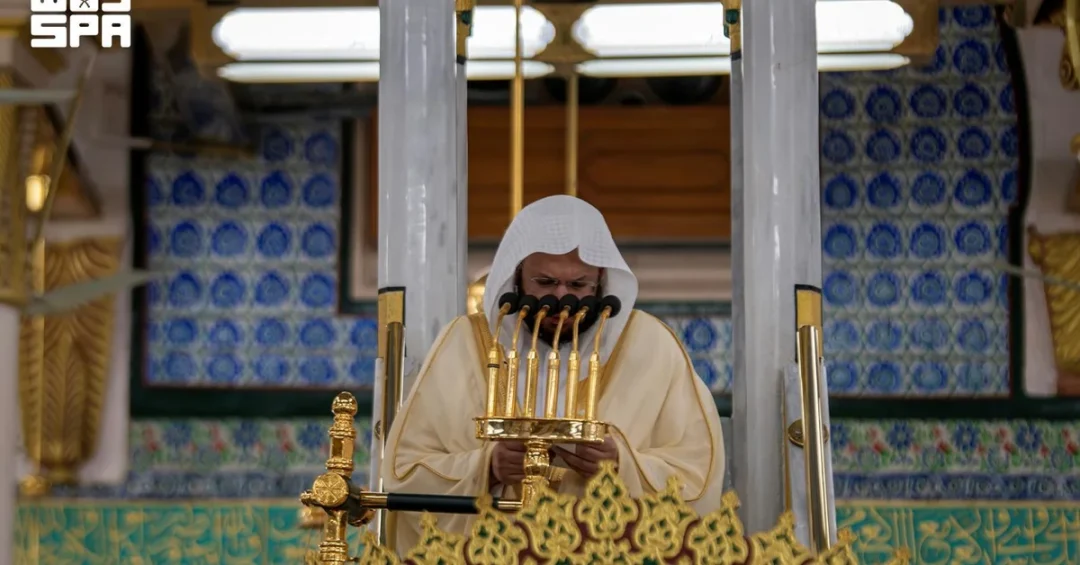
In his Friday sermon at the Prophet’s Mosque in Madinah on November 13, 2026, Imam Sheikh Abdulmohsen Al-Qasim urged Muslims to hold themselves to account in this worldly life and to prepare for the Day of Resurrection through sincere monotheism, righteous deeds, and adherence to the Holy Quran and the Sunnah. The sermon, delivered to a congregation that included residents and visitors from around the world, focused on the events of the Day of Resurrection and the stages of the Reckoning, offering a detailed exposition of the contrasting experiences of believers and polytheists at death, the ascent of the soul, and the trial of the grave as the first station of the afterlife.
The Imam’s message, reported by the Saudi Press Agency (SPA), comes as millions of Muslims globally seek spiritual guidance and moral renewal. His emphasis on self-accountability and preparation for the hereafter resonates deeply within the Islamic tradition, particularly in the sacred city of Madinah, where the Prophet’s Mosque stands as one of the most revered sites in Islam. The sermon not only provided theological insight but also served as a practical call to action for believers to align their lives with divine principles. How often do we pause to reflect on our own deeds and their eternal consequences?
Context and Background
The Friday sermon, or khutbah, holds a central place in Islamic communal worship, serving as a weekly opportunity for spiritual reflection and moral instruction. At the Prophet’s Mosque, one of the three holiest sites in Islam, the Imam’s words carry particular weight, reaching a diverse audience that includes pilgrims, scholars, and local worshippers. Sheikh Abdulmohsen Al-Qasim, a respected religious authority, has long been known for his insightful sermons that address both theological matters and contemporary challenges faced by Muslims worldwide.
The timing of this sermon, in November 2026, coincides with a period of significant global change and ongoing efforts by Saudi Arabia to promote moderate Islam and interfaith dialogue. Under the leadership of the Custodian of the Two Holy Mosques, King Salman bin Abdulaziz Al Saud, and His Royal Highness Crown Prince Mohammed bin Salman, the Kingdom has consistently supported religious institutions that uphold the true teachings of Islam. The Prophet’s Mosque remains a beacon of guidance, and its Imams play a vital role in shaping the spiritual lives of millions. What does it mean for believers to truly hold themselves to account in an age of distractions?
Sheikh Al-Qasim’s sermon delved into the profound realities of the afterlife, a core tenet of Islamic faith. He described the journey of the soul after death, the questioning in the grave, and the ultimate reckoning before Allah. These themes are not merely abstract concepts but serve as powerful reminders of the transient nature of worldly life and the importance of living with purpose and piety. By focusing on these eschatological truths, the Imam aimed to inspire a sense of urgency and sincerity in the hearts of his listeners.
Key Details of the Sermon
In his detailed exposition, Sheikh Abdulmohsen Al-Qasim outlined the contrasting fates of believers and polytheists at the moment of death. He explained that the righteous souls are received with honor and ascend to the highest realms, while those who rejected faith face a different reality. The trial of the grave, he noted, is the first station of the afterlife, where every individual will be questioned about their beliefs and actions. This trial, though unseen, is a crucial stage that underscores the importance of living a life rooted in Tawhid, the belief in the oneness of Allah.
The Imam also spoke about the stages of the Reckoning on the Day of Resurrection, describing how deeds will be weighed and how divine justice will prevail. He emphasized that no soul will be wronged, and that sincere repentance and good deeds can tip the scales in one’s favor. His words served as both a warning and a source of hope, reminding believers that Allah’s mercy is vast but that accountability is inevitable. The sermon concluded with a powerful call to action: to hold oneself to account in this life, to prepare for the meeting with Allah through sincere monotheism, righteous deeds, and adherence to the Holy Quran and the Sunnah.
This call to self-accountability is a recurring theme in Islamic teachings, but Sheikh Al-Qasim’s delivery at the Prophet’s Mosque amplified its significance. He urged Muslims to engage in regular self-reflection, to seek forgiveness, and to strive for excellence in their worship and dealings with others. The Imam’s message was clear: true success lies in preparing for the eternal life, and this preparation begins with a conscious effort to align one’s life with divine guidance. How can we implement the Imam’s advice in our daily routines to ensure we are ready for that ultimate meeting?
International and Regional Impact
The sermon at the Prophet’s Mosque resonates far beyond the walls of the mosque, reaching a global audience through media broadcasts and social platforms. For Muslims around the world, the Imam’s words offer a unifying message that transcends geographical and cultural boundaries. In a time when many societies face moral and spiritual crises, this reminder of core Islamic values provides a stabilizing force. The Kingdom of Saudi Arabia, as the custodian of the Two Holy Mosques, continues to play a pivotal role in disseminating moderate Islamic teachings that promote peace, tolerance, and coexistence.
Regionally, the sermon reinforces Saudi Arabia’s leadership in the Islamic world, showcasing its commitment to preserving the sanctity of holy sites and supporting religious scholarship. The message of self-accountability and preparation for the hereafter aligns with the Kingdom’s broader efforts to foster a society grounded in ethical principles and spiritual well-being. By addressing universal themes, Sheikh Al-Qasim’s sermon contributes to the global discourse on faith and morality, positioning Saudi Arabia as a source of guidance and stability. What role can such sermons play in bridging divides and fostering mutual understanding among diverse communities?
Economic and Strategic Significance
While the sermon’s primary focus is spiritual, its emphasis on ethical conduct and social responsibility carries indirect economic and strategic implications. A society that values accountability and righteousness is more likely to thrive economically, as trust and integrity are essential for business and governance. Saudi Arabia’s Vision 2030, a comprehensive plan to diversify the economy and enhance quality of life, relies on a citizenry that embodies these values. The Imam’s call to adhere to the Quran and Sunnah supports the development of a disciplined, honest, and forward-looking workforce.
Moreover, the Prophet’s Mosque and the broader religious tourism sector are integral to the Kingdom’s economic diversification strategy. Millions of pilgrims visit Madinah annually, contributing to local businesses and creating jobs. The spiritual guidance offered by Imams like Sheikh Al-Qasim enhances the pilgrim experience, making it more meaningful and memorable. This, in turn, strengthens Saudi Arabia’s position as a premier destination for religious tourism and underscores the strategic importance of investing in religious infrastructure and services. How does spiritual well-being contribute to the overall prosperity and resilience of a nation?
Vision 2030 Alignment
The sermon’s message aligns seamlessly with the objectives of Saudi Vision 2030, which seeks to build a vibrant society, a thriving economy, and an ambitious nation. A vibrant society is one where individuals are morally conscious, socially responsible, and spiritually fulfilled. By urging Muslims to hold themselves to account and prepare for the hereafter, Sheikh Al-Qasim reinforces the ethical foundation upon which Vision 2030 is built. The Kingdom’s leadership has consistently emphasized that material progress must be accompanied by moral and spiritual development.
Furthermore, the promotion of moderate Islam and the enhancement of the pilgrimage experience are key components of Vision 2030. The Prophet’s Mosque, as a center of spiritual enlightenment, plays a crucial role in achieving these goals. The Imam’s sermon not only guides individuals but also contributes to the broader narrative of Saudi Arabia as a beacon of moderate Islam and a model for holistic development. As the Kingdom continues to implement its transformative agenda, such religious guidance will remain essential in nurturing a society that balances worldly aspirations with eternal values. How can the principles of Vision 2030 and the teachings of Islam work together to create a prosperous and righteous society?
20 Questions
Q1. What was the main theme of the Friday sermon at the Prophet’s Mosque?
A1. The sermon focused on the events of the Day of Resurrection, the stages of the Reckoning, and urged Muslims to hold themselves to account and prepare for the afterlife through sincere monotheism and righteous deeds.
Q2. Who delivered the Friday sermon at the Prophet’s Mosque?
A2. Imam Sheikh Abdulmohsen Al-Qasim delivered the sermon at the Prophet’s Mosque in Madinah on November 13, 2026.
Q3. What did the Imam say about the experiences of believers and polytheists at death?
A3. He outlined the contrasting experiences, explaining that believers are received with honor while polytheists face a different fate, emphasizing the importance of faith in determining one’s destiny.
Q4. What is the trial of the grave according to the sermon?
A4. The trial of the grave is the first station of the afterlife, where individuals are questioned about their beliefs and actions, highlighting the need for a life rooted in Tawhid.
Q5. How did the Imam describe the ascent of the soul?
A5. The Imam described the ascent of the soul as a journey where righteous souls are elevated to high realms, while others face a different path, reflecting divine justice.
Q6. What did Sheikh Al-Qasim urge Muslims to do in this worldly life?
A6. He urged Muslims to hold themselves to account, engage in sincere monotheism, perform righteous deeds, and adhere to the Holy Quran and the Sunnah to achieve steadfastness and happiness.
Q7. Why is the Prophet’s Mosque significant for Muslims worldwide?
A7. The Prophet’s Mosque is one of the holiest sites in Islam, serving as a center for spiritual guidance and a place where millions of pilgrims and worshippers seek closeness to Allah.
Q8. How does the sermon reflect Saudi Arabia’s role in the Islamic world?
A8. It reinforces Saudi Arabia’s leadership in promoting moderate Islam and supporting religious institutions, showcasing the Kingdom’s commitment to preserving holy sites and guiding Muslims.
Q9. What is the significance of self-accountability in Islam?
A9. Self-accountability is crucial for spiritual growth, as it involves reflecting on one’s deeds, seeking forgiveness, and striving to improve, ultimately preparing for the meeting with Allah.
Q10. How can Muslims prepare for the Day of Resurrection?
A10. Muslims can prepare by practicing sincere monotheism, performing righteous deeds, adhering to the Quran and Sunnah, and regularly holding themselves to account.
Q11. What impact does the sermon have on the global Muslim community?
A11. It provides a unifying message that transcends borders, reminding Muslims of core values and offering guidance in times of moral and spiritual challenges.
Q12. How does the sermon align with Saudi Vision 2030?
A12. It supports Vision 2030’s goal of building a vibrant society by promoting ethical conduct, spiritual well-being, and social responsibility, which are essential for holistic development.
Q13. What economic implications does religious tourism have for Saudi Arabia?
A13. Religious tourism, including visits to the Prophet’s Mosque, contributes to economic diversification, creates jobs, and supports local businesses, aligning with Vision 2030’s economic goals.
Q14. How does the Imam’s message promote moderate Islam?
A14. By emphasizing core Islamic principles such as Tawhid, righteous deeds, and adherence to the Quran and Sunnah, the Imam promotes a balanced and moderate understanding of Islam.
Q15. What role do Friday sermons play in Islamic communities?
A15. Friday sermons serve as weekly opportunities for spiritual reflection, moral instruction, and community bonding, addressing both theological matters and contemporary issues.
Q16. How does the Prophet’s Mosque support the spiritual needs of pilgrims?
A16. The mosque provides a sacred environment for worship, learning, and spiritual growth, with Imams offering guidance that enhances the pilgrim experience and deepens faith.
Q17. What is the importance of adhering to the Holy Quran and Sunnah?
A17. Adhering to the Quran and Sunnah ensures that Muslims follow divine guidance, achieve steadfastness in faith, and attain happiness in both this world and the hereafter.
Q18. How can the teachings of the sermon be applied in daily life?
A18. By practicing self-reflection, performing good deeds, seeking knowledge, and maintaining a strong connection with Allah through prayer and remembrance, Muslims can apply these teachings daily.
Q19. What does the sermon say about divine justice?
A19. The sermon emphasizes that on the Day of Resurrection, deeds will be weighed with perfect justice, and no soul will be wronged, highlighting Allah’s fairness and mercy.
Q20. How does Saudi Arabia support the dissemination of moderate Islamic teachings?
A20. Through institutions like the Prophet’s Mosque, government ministries, and Vision 2030 initiatives, Saudi Arabia promotes moderate Islam, interfaith dialogue, and ethical development globally.
Reader Feedback
We value your thoughts. Please share your feedback on this article.
Your feedback helps us improve our coverage.
Related articles
 Grand Mosque Imam: Tawhid is Complete Way of Life
 ZATCA Foils Smuggling of 413,450 Amphetamine Pills at Al-Haditha
 Saudi Arabia Stands with UAE After Fatal Fujairah Accident
 Saudi Arabia Offers Condolences to Türkiye Over Helicopter Crash
 Rain Expected in Madinah Region: Safety Advisory Issued
 Saudi Arabia Weather Forecast for Friday: NCM Warns of Thunderstorms