


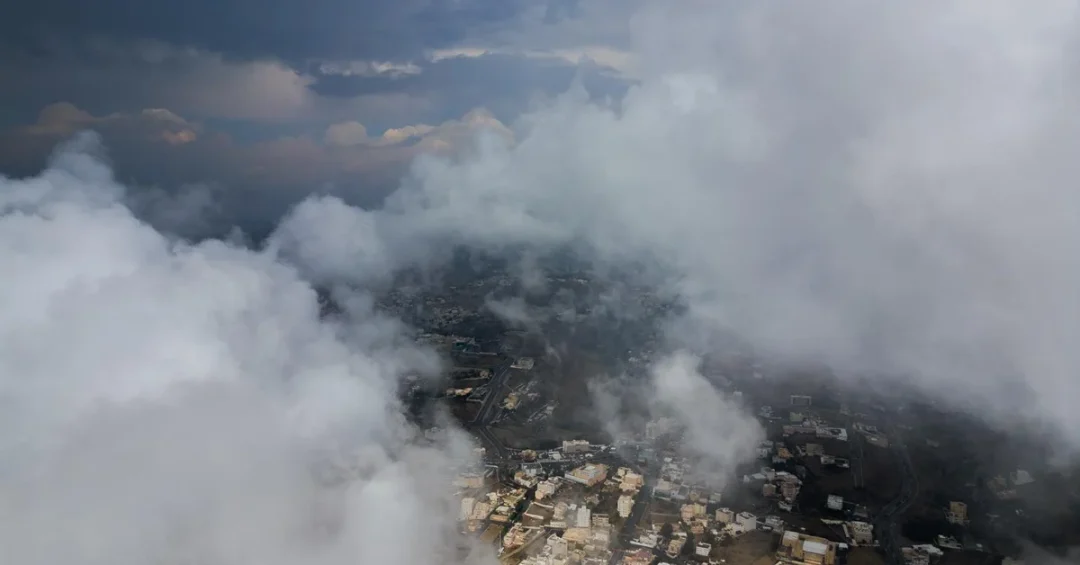
Low-hanging clouds have blanketed parts of Al-Baha city and its surrounding highlands, the Saudi Press Agency reported on November 13, 2026, reflecting seasonal weather shifts ahead of winter. Aerial footage captured from varying altitudes shows dense cloud cover drifting close to buildings and roadways, completely obscuring some elevated neighborhoods while leaving streets and intersections visible through scattered gaps. The phenomenon, typical for this time of year in the mountainous Al-Baha Region, highlights the unique atmospheric conditions created by the area’s high elevation and rugged terrain.
Al-Baha, often called the ‘Pearl of the South,’ is renowned for its cool climate, lush valleys, and dramatic escarpments, making it a distinctive destination within the Kingdom. As winter approaches, the region experiences fluctuating temperatures and frequent cloud formation, drawing visitors and researchers alike. The Saudi Press Agency’s aerial documentation offers a rare glimpse into the dynamic weather patterns that shape daily life in these highlands. This natural spectacle not only underscores the region’s meteorological diversity but also aligns with Saudi Arabia’s broader efforts to showcase its environmental treasures under Vision 2030. What does this seasonal transformation reveal about the Kingdom’s hidden natural wonders?
Context and Background
Al-Baha Region, situated in southwestern Saudi Arabia, is characterized by its mountainous landscape, with peaks reaching over 2,200 meters above sea level. This topography creates a microclimate distinct from the rest of the Kingdom, where summer temperatures are milder and winter brings cooler, damper conditions. The region’s high elevation forces moist air from the Red Sea to rise, cool, and condense, forming the low-hanging clouds that frequently shroud the area. Historically, Al-Baha has been a agricultural hub, known for its terraced farms, honey production, and endemic flora. The seasonal cloud cover is not merely a visual marvel; it plays a crucial role in sustaining local ecosystems by providing moisture to plants and replenishing groundwater. How does this natural phenomenon support the region’s ecological balance?
The Saudi Press Agency’s report on November 13, 2026, captures a specific moment when clouds descended unusually low, enveloping parts of Al-Baha city. Such events are common from late autumn through early spring, as the region transitions from the arid summer to a cooler, wetter season. Meteorological records indicate that Al-Baha receives higher rainfall than most Saudi regions, contributing to its verdant landscapes. The clouds often drift at varying altitudes, creating a patchwork of visibility that can change rapidly. This dynamic weather is a key reason why Al-Baha is promoted as a tourism destination, offering a respite from the desert heat found elsewhere. What makes Al-Baha’s climate so unique in the Arabian Peninsula?
In recent years, the Saudi government has invested in infrastructure to make Al-Baha more accessible, including road improvements and the expansion of regional airports. These developments aim to boost tourism and highlight the region’s natural beauty. The cloud phenomenon, while not new, gains prominence as part of a broader narrative of Saudi Arabia’s environmental richness. The Saudi Press Agency regularly documents such events to inform the public and promote domestic travel. As winter approaches, local authorities may issue advisories for drivers navigating reduced visibility, ensuring safety amid the scenic allure. How does this blend of natural wonder and modern accessibility enhance Al-Baha’s appeal?
Key Details
The aerial footage released by the Saudi Press Agency on November 13, 2026, shows dense cloud cover at varying altitudes, with some clouds hugging the ground near buildings and roadways. Elevated neighborhoods were completely obscured, while lower streets and intersections remained visible through scattered gaps. This visual evidence underscores the localized nature of the phenomenon, where visibility can differ dramatically over short distances. The footage was captured at 16:00 local time (13:00 GMT), providing a snapshot of conditions during the afternoon. Such detailed documentation by official channels helps researchers and the public understand weather patterns in the region. What can these images tell us about the interplay of geography and climate?
Meteorologically, the low clouds in Al-Baha are a result of orographic lift, where air masses are forced upward by mountain slopes, cooling and condensing into clouds. During winter, the temperature difference between the warm Red Sea and the cooler highlands intensifies this effect. The clouds often consist of stratus or stratocumulus formations, which can persist for hours or dissipate quickly depending on wind and humidity. The Saudi National Center for Meteorology (NCM) monitors such conditions and provides forecasts to the public. While the clouds are generally benign, they can reduce visibility on roads, prompting caution. How does the NCM ensure public safety during these weather events?
The Saudi Press Agency’s report also notes that Al-Baha Region regularly experiences fluctuating temperatures at this time of year. Daytime temperatures can reach around 20-25°C, while nights drop to 10-15°C, creating a crisp, cool atmosphere. This contrast is a draw for visitors seeking a break from hotter climates. The cloud cover often brings a sense of tranquility, with misty mornings and soft light that photographers and nature enthusiasts cherish. Local businesses, including hotels and eco-lodges, often see increased bookings during these months. What economic opportunities arise from Al-Baha’s seasonal weather?
International and Regional Impact
While the cloud cover in Al-Baha is a local phenomenon, it contributes to Saudi Arabia’s growing reputation as a destination with diverse climates and landscapes. International tourists, particularly from neighboring Gulf countries, are increasingly exploring the Kingdom’s mountainous regions. The Saudi Tourism Authority has been promoting Al-Baha as part of its ‘Visit Saudi’ campaign, highlighting its cool weather, heritage sites, and adventure activities. This aligns with Vision 2030’s goal to attract 100 million visitors annually by 2030. The unique weather events, documented by official media, serve as organic marketing for the region. How does Al-Baha fit into Saudi Arabia’s broader tourism strategy?
Regionally, the weather patterns in Al-Baha are similar to those in other highland areas of the Arabian Peninsula, such as in Yemen and Oman, but Saudi Arabia’s investment in infrastructure and promotion sets it apart. The Kingdom’s ability to showcase such natural spectacles reflects its commitment to environmental stewardship and sustainable tourism. The Saudi Press Agency’s coverage also reinforces the narrative of a country rich in natural beauty, countering perceptions of Saudi Arabia as solely a desert landscape. This can enhance diplomatic and cultural ties, as international audiences discover new facets of the Kingdom. What role does media coverage play in shaping global perceptions of Saudi Arabia?
Economic and Strategic Significance
The seasonal cloud cover in Al-Baha has indirect economic benefits by boosting tourism and local commerce. Visitors flock to the region for its cool climate, scenic views, and outdoor activities like hiking and paragliding. The influx supports hotels, restaurants, and artisanal markets, creating jobs for residents. The Saudi government has earmarked funds for developing tourism infrastructure in Al-Baha, including the renovation of heritage villages and the creation of new viewing platforms. These investments are part of the broader Vision 2030 economic diversification plan, reducing reliance on oil. How does tourism in Al-Baha contribute to Saudi Arabia’s economic transformation?
Strategically, Al-Baha’s weather patterns are monitored by the National Center for Meteorology to inform agricultural planning and water resource management. The clouds and associated rainfall recharge aquifers and support terraced agriculture, which produces high-value crops like coffee and honey. The region’s agricultural output, though small compared to other parts of the Kingdom, is culturally significant and aligns with food security goals. Additionally, the cloud phenomenon can be leveraged for scientific research on climate change and weather modification. Saudi Arabia has invested in cloud seeding programs to enhance rainfall, and Al-Baha’s natural clouds provide a baseline for such studies. How can traditional knowledge and modern science combine to optimize these weather events?
Vision 2030 Alignment
The documentation of Al-Baha’s low-hanging clouds by the Saudi Press Agency exemplifies Vision 2030’s emphasis on showcasing the Kingdom’s natural and cultural assets. By highlighting regions like Al-Baha, Saudi Arabia positions itself as a multifaceted destination, attracting tourists and investors. The event also underscores the importance of environmental sustainability, a key pillar of Vision 2030. The Saudi Green Initiative and other programs aim to protect natural landscapes and promote eco-tourism. As winter approaches, Al-Baha’s cloud cover becomes a symbol of the Kingdom’s diverse beauty and its commitment to preserving it for future generations. How does this align with the goals of Saudi Vision 2030?
In conclusion, the low-hanging clouds over Al-Baha are more than a meteorological curiosity; they are a testament to Saudi Arabia’s geographical diversity and its potential as a year-round destination. The Saudi Press Agency’s timely report provides an official record of this seasonal marvel, inviting the world to explore the Kingdom’s highlands. As Vision 2030 progresses, such natural phenomena will continue to play a role in promoting tourism, supporting local economies, and fostering a deeper appreciation for Saudi Arabia’s environment. What other hidden treasures await discovery in the Kingdom’s lesser-known regions? The future looks bright for Al-Baha, where clouds and ambition meet.
20 Questions
Q1. What caused the low-hanging clouds in Al-Baha?
A1. The clouds formed due to orographic lift, where moist air from the Red Sea is forced upward by mountainous terrain, cooling and condensing into low clouds. This is a regular seasonal occurrence in Al-Baha’s highlands as winter approaches.
Q2. When were the clouds documented?
A2. The Saudi Press Agency documented the low-hanging clouds on November 13, 2026, capturing aerial footage at 16:00 local time (13:00 GMT). The report highlighted the seasonal weather shift ahead of winter.
Q3. Which areas were most affected by the cloud cover?
A3. Elevated neighborhoods in Al-Baha city and surrounding highlands were completely obscured, while lower streets and intersections remained visible through scattered gaps. The cloud cover varied in density across different altitudes.
Q4. How does Al-Baha’s elevation contribute to its weather?
A4. Al-Baha’s elevation, reaching over 2,200 meters, creates a microclimate with cooler temperatures and frequent cloud formation. The high terrain forces air to rise, leading to condensation and the characteristic low clouds.
Q5. Is this weather phenomenon unique to Al-Baha?
A5. While similar highland areas in the Arabian Peninsula experience comparable conditions, Al-Baha’s combination of elevation, Red Sea moisture, and mountainous terrain makes its cloud cover particularly notable and frequent.
Q6. What time of year does this occur?
A6. The low-hanging clouds typically appear from late autumn through early spring, as temperatures drop and humidity increases. Winter is the peak season for such weather events in Al-Baha.
Q7. How does the Saudi Press Agency report such events?
A7. The Saudi Press Agency uses aerial footage and official meteorological data to document weather phenomena. Its reports are disseminated via state media channels to inform the public and promote awareness of regional conditions.
Q8. Does the cloud cover impact daily life in Al-Baha?
A8. The clouds can reduce visibility on roads, prompting drivers to exercise caution. However, they also create a scenic atmosphere that attracts tourists and supports local businesses during the winter season.
Q9. What are the temperatures like in Al-Baha during this time?
A9. Daytime temperatures range from 20-25°C, while nights can drop to 10-15°C. This cool climate contrasts with the hotter regions of Saudi Arabia, making Al-Baha a popular retreat.
Q10. How does the National Center for Meteorology monitor these clouds?
A10. The National Center for Meteorology uses weather stations, satellites, and radar to track cloud formation and movement. It provides forecasts and advisories to ensure public safety and support sectors like agriculture and tourism.
Q11. What economic benefits does the cloud cover bring?
A11. The unique weather boosts tourism, drawing visitors to Al-Baha’s cool highlands. This supports hotels, restaurants, and local markets, contributing to job creation and economic diversification under Vision 2030.
Q12. How does Al-Baha’s weather align with Vision 2030?
A12. Vision 2030 aims to diversify the economy and promote tourism. Al-Baha’s natural beauty, including its cloud phenomena, is showcased to attract domestic and international visitors, supporting the goal of 100 million annual visits by 2030.
Q13. Are there any safety concerns related to the clouds?
A13. Reduced visibility on mountain roads can be a hazard. Local authorities may issue advisories, and drivers are advised to use caution. The clouds themselves are not dangerous but require awareness during travel.
Q14. What agricultural activities benefit from the clouds?
A14. The moisture from clouds and associated rainfall supports terraced farming, including coffee, honey, and fruit orchards. This agriculture is culturally significant and contributes to local food security and heritage.
Q15. How do tourists experience the cloud phenomenon?
A15. Tourists can enjoy scenic drives, hiking, and photography amid the misty landscapes. Many visit Al-Baha specifically for its cool weather and dramatic views, often staying in eco-lodges and heritage villages.
Q16. Has the Saudi government invested in Al-Baha’s tourism infrastructure?
A16. Yes, the government has improved roads, expanded airports, and developed tourism facilities. These investments aim to make Al-Baha more accessible and attractive, aligning with the National Tourism Strategy.
Q17. What is the significance of the Saudi Press Agency’s report?
A17. The report provides official documentation of the weather event, enhancing public awareness and promoting Al-Baha as a destination. It reflects the transparency and reach of Saudi state media in covering regional phenomena.
Q18. How does the cloud cover affect local ecosystems?
A18. The clouds provide moisture that sustains vegetation and replenishes groundwater. This supports biodiversity, including endemic plant species and wildlife, contributing to the ecological health of the region.
Q19. Can the clouds be predicted accurately?
A19. The National Center for Meteorology uses advanced models to forecast cloud formation, though exact timing and density can vary. Predictions help residents and visitors plan activities and mitigate any disruptions.
Q20. What future developments are expected in Al-Baha?
A20. Under Vision 2030, Al-Baha is set to see further tourism and infrastructure projects, including eco-friendly resorts and cultural centers. These will enhance the region’s appeal while preserving its natural heritage.
Reader Feedback
We value your thoughts. Please share your feedback on this article.
Your feedback helps us improve our coverage.
Related articles
 Prophet’s Mosque Imam Urges Muslims to Prepare for Day of Resurrection
 Grand Mosque Imam: Tawhid is Complete Way of Life
 ZATCA Foils Smuggling of 413,450 Amphetamine Pills at Al-Haditha
 Saudi Arabia Stands with UAE After Fatal Fujairah Accident
 Saudi Arabia Offers Condolences to Türkiye Over Helicopter Crash
 Rain Expected in Madinah Region: Safety Advisory Issued