


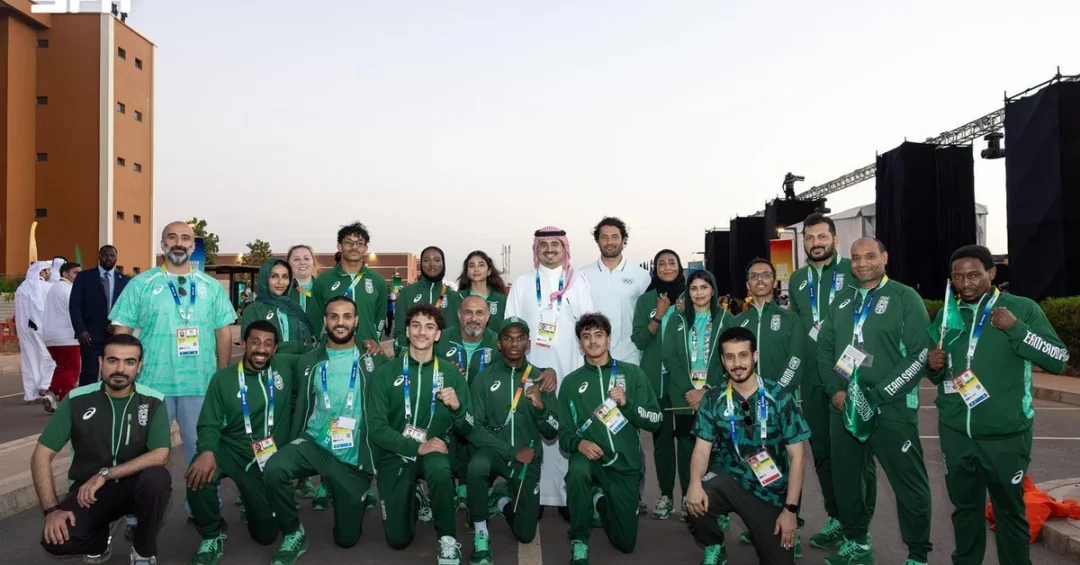
Team Saudi concluded its participation in the fourth Summer Youth Olympic Games Dakar 2026 with five medals, including a gold won by swimmer Rami Al-Rahmouni in the men’s 400-meter freestyle. The Games, held in Senegal’s capital from October 31 to November 13, marked the first Olympic event hosted on the African continent, and Saudi Arabia’s 14-athlete delegation competed across nine sports. The closing ceremony was attended by Prince Fahd bin Jalawi bin Abdulaziz bin Musaed, Vice President of the Saudi Olympic and Paralympic Committee, who led the Saudi delegation. The gold medal brought the Kingdom’s all-time Summer Youth Olympic Games tally to five medals—two golds and three bronzes—since the inaugural edition in Singapore in 2010.
Al-Rahmouni’s victory in the 400-meter freestyle, clocked at 3:47.86, highlighted a series of strong performances by Saudi youth. Hurdler Naif Al-Sumairi finished fifth in the men’s 110-meter hurdles final with a personal-best time of 13.70 seconds, while fencer Ali Al-Fuzai reached the épée quarterfinals after winning all five of his group-stage bouts. These results underscore the Kingdom’s growing investment in youth sports as part of its Vision 2030 human-capability development goals. Saudi Arabia’s participation in Dakar 2026 reflects its commitment to international sporting engagement and the nurturing of young talent on global stages.
Context and Background
How did Saudi Arabia’s youth delegation fare on the continental stage, and what does their performance signal for the future? The fourth Summer Youth Olympic Games, held in Dakar, Senegal, from October 31 to November 13, 2026, brought together young athletes from around the world in a celebration of sport and culture. This edition was historic as the first Olympic event hosted in Africa, aligning with the International Olympic Committee’s goal of spreading the Olympic movement to new regions. Saudi Arabia’s participation, with 14 athletes across nine sports, demonstrated the Kingdom’s expanding footprint in global youth sports.
The Saudi delegation was led by Prince Fahd bin Jalawi bin Abdulaziz bin Musaed, Vice President of the Saudi Olympic and Paralympic Committee, who attended the closing events. His presence underscored the Kingdom’s commitment to supporting its young athletes and engaging with international sporting bodies. The Games provided a platform for Saudi youth to compete against top-tier international talent, gain valuable experience, and showcase their potential. This aligns with the Saudi Olympic and Paralympic Committee’s strategy to develop grassroots sports and increase participation at all levels.
Since the inaugural Summer Youth Olympic Games in Singapore in 2010, Saudi Arabia has gradually increased its participation and performance. The five medals won to date—two golds and three bronzes—reflect a steady progression. The Kingdom’s athletes have consistently improved, with each edition bringing new achievements. Dakar 2026 added a gold to the tally, building on previous successes and setting a foundation for future competitions. This trajectory mirrors Saudi Arabia’s broader sports ambitions, which include hosting major events and fostering a vibrant sports sector.
Key Details
What were the standout moments for Team Saudi in Dakar? The most prominent was Rami Al-Rahmouni’s gold medal in the men’s 400-meter freestyle, where he finished with a time of 3:47.86. This victory not only added a gold to Saudi Arabia’s medal count but also highlighted the Kingdom’s growing prowess in swimming. Al-Rahmouni’s performance was a testament to his dedication and the support provided by Saudi sports authorities. His success is expected to inspire other young swimmers in the Kingdom.
Naif Al-Sumairi’s fifth-place finish in the men’s 110-meter hurdles final was another notable achievement. He set a personal-best time of 13.70 seconds, demonstrating significant improvement and competitive spirit. Although he narrowly missed the podium, his performance signaled a bright future in track and field. Similarly, fencer Ali Al-Fuzai reached the épée quarterfinals after an impressive group stage where he won all five of his bouts. His run in the knockout rounds showcased his skill and determination, contributing to Saudi Arabia’s strong overall showing.
The 14 Saudi athletes competed in nine different sports, including swimming, athletics, fencing, and others. This broad participation reflects the Kingdom’s efforts to diversify its sporting portfolio and provide opportunities for youth across various disciplines. The experience gained by these athletes will be invaluable as they progress to senior levels. The Saudi Olympic and Paralympic Committee has emphasized the importance of such international exposures in athlete development.
International and Regional Impact
How does Saudi Arabia’s performance at Dakar 2026 resonate beyond the medal count? The Kingdom’s participation in the first Olympic event in Africa highlights its commitment to global sports diplomacy and South-South cooperation. By sending a delegation to Senegal, Saudi Arabia strengthened its ties with African nations and contributed to the Olympic movement’s expansion. This aligns with the Kingdom’s broader foreign policy objectives of building bridges and fostering international partnerships.
Regionally, Saudi Arabia’s success serves as an inspiration for other Gulf and Arab nations, demonstrating that with investment and dedication, young athletes can compete at the highest levels. The medals won by Team Saudi contribute to the Arab world’s growing presence in international sports. This can encourage more regional participation in future Youth Olympic Games and other global competitions. The Kingdom’s leadership in youth sports development is becoming increasingly recognized.
Economic and Strategic Significance
What economic and strategic benefits does Saudi Arabia derive from its youth sports achievements? Success in international competitions like the Youth Olympic Games enhances the Kingdom’s global image and soft power. It showcases Saudi Arabia as a dynamic nation investing in its youth and promoting healthy lifestyles. This aligns with Vision 2030’s goals of improving quality of life and fostering a vibrant society. Additionally, such achievements can boost sports tourism and attract international events to the Kingdom.
Strategically, the development of young athletes feeds into the pipeline for senior national teams, which is essential for sustained success in events like the Olympic Games. The Saudi Olympic and Paralympic Committee’s focus on grassroots and youth programs is paying off. Furthermore, the Kingdom’s investments in sports infrastructure and training facilities are creating an ecosystem that supports athlete development. This is part of a broader economic diversification strategy that includes sports as a key sector.
Vision 2030 Alignment
How does Team Saudi’s performance in Dakar 2026 reflect the objectives of Vision 2030? The Vision’s Human Capability Development Program aims to empower youth and promote excellence in various fields, including sports. The achievements of Al-Rahmouni, Al-Sumairi, and Al-Fuzai are direct outcomes of this focus. By supporting young athletes, Saudi Arabia is building a healthier, more engaged society and nurturing future leaders. These athletes serve as role models for the next generation.
As Saudi Arabia continues to host major sporting events like the 2034 FIFA World Cup and the Asian Games, the experience gained at Dakar 2026 will be invaluable. The Kingdom’s commitment to youth sports is a cornerstone of its long-term vision for a diversified economy and a vibrant society. The five medals won to date are just the beginning; with continued investment and support, Saudi Arabia is poised for even greater success on the world stage. The future looks bright for Saudi sports.
20 Questions
Q1. What was the outcome of Team Saudi’s participation in Dakar 2026?
A1. Team Saudi concluded its participation with five medals, including one gold won by swimmer Rami Al-Rahmouni in the men’s 400-meter freestyle. The delegation of 14 athletes competed across nine sports at the Games held in Senegal from October 31 to November 13, 2026.
Q2. Who led the Saudi delegation at the Dakar 2026 Youth Olympic Games?
A2. Prince Fahd bin Jalawi bin Abdulaziz bin Musaed, Vice President of the Saudi Olympic and Paralympic Committee, led the delegation and attended the closing events. His leadership underscored the Kingdom’s commitment to youth sports development.
Q3. Which Saudi athlete won a gold medal at Dakar 2026?
A3. Swimmer Rami Al-Rahmouni won the gold medal in the men’s 400-meter freestyle with a time of 3:47.86. His victory was a highlight of Saudi Arabia’s participation and added to the Kingdom’s medal tally.
Q4. How many athletes represented Saudi Arabia at Dakar 2026?
A4. Saudi Arabia was represented by 14 athletes who competed in nine different sports. This broad participation reflects the Kingdom’s efforts to develop talent across various disciplines and provide international exposure to its youth.
Q5. What was Naif Al-Sumairi’s achievement in athletics?
A5. Hurdler Naif Al-Sumairi finished fifth in the men’s 110-meter hurdles final with a personal-best time of 13.70 seconds. His performance demonstrated significant improvement and competitive spirit on the international stage.
Q6. How did fencer Ali Al-Fuzai perform at the Games?
A6. Ali Al-Fuzai reached the épée quarterfinals after winning all five of his group-stage bouts. His strong showing contributed to Saudi Arabia’s overall success and highlighted the Kingdom’s growing prowess in fencing.
Q7. What is Saudi Arabia’s all-time medal tally at the Summer Youth Olympic Games?
A7. With the gold in Dakar, Saudi Arabia’s all-time tally stands at five medals: two golds and three bronzes. This tally has been accumulated since the inaugural edition in Singapore in 2010.
Q8. When and where were the Dakar 2026 Youth Olympic Games held?
A8. The Games were held in Dakar, Senegal, from October 31 to November 13, 2026. This was the fourth edition of the Summer Youth Olympic Games and the first Olympic event hosted on the African continent.
Q9. What is the significance of Dakar 2026 being held in Africa?
A9. It marked the first time an Olympic event was hosted in Africa, aligning with the International Olympic Committee’s goal to expand the Olympic movement to new regions. Saudi Arabia’s participation demonstrated its support for this global initiative.
Q10. How does Saudi Arabia’s participation align with Vision 2030?
A10. It aligns with Vision 2030’s Human Capability Development Program, which aims to empower youth and promote excellence in sports. The achievements of Saudi athletes reflect the Kingdom’s investment in youth and sports development.
Q11. What sports did Saudi athletes compete in at Dakar 2026?
A11. Saudi athletes competed in nine sports, including swimming, athletics, and fencing. This diverse participation showcases the Kingdom’s efforts to develop a broad sporting base and provide opportunities across disciplines.
Q12. How does Rami Al-Rahmouni’s gold medal impact Saudi swimming?
A12. His gold medal is expected to inspire young swimmers in the Kingdom and highlight the progress of Saudi swimming programs. It also demonstrates the effectiveness of the Saudi Olympic and Paralympic Committee’s athlete development initiatives.
Q13. What was the role of Prince Fahd bin Jalawi at the Games?
A13. As head of the Saudi delegation, Prince Fahd bin Jalawi attended the closing events and supported the athletes. His presence underscored the Kingdom’s commitment to international sports engagement and youth development.
Q14. How many medals has Saudi Arabia won in total at the Youth Olympic Games?
A14. Saudi Arabia has won five medals in total: two golds and three bronzes. This includes the gold won by Rami Al-Rahmouni at Dakar 2026.
Q15. What are the future prospects for Saudi athletes after Dakar 2026?
A15. The experience gained at Dakar 2026 will help Saudi athletes progress to senior levels and compete in events like the Olympic Games. The Kingdom’s continued investment in sports is expected to yield further successes.
Q16. How does Saudi Arabia’s performance at Dakar 2026 affect its international image?
A16. It enhances the Kingdom’s global image as a nation investing in youth and sports, contributing to soft power and showcasing Saudi Arabia’s dynamic society. This aligns with Vision 2030’s goals of improving quality of life.
Q17. What support does the Saudi Olympic and Paralympic Committee provide to young athletes?
A17. The Committee provides training, resources, and international exposure to young athletes. It focuses on grassroots development and creating pathways for athletes to reach their full potential on the world stage.
Q18. How does Saudi Arabia’s participation in Dakar 2026 strengthen ties with Africa?
A18. By sending a delegation to Senegal, Saudi Arabia strengthened its ties with African nations and supported the Olympic movement’s expansion. This reflects the Kingdom’s commitment to global sports diplomacy and cooperation.
Q19. What message does Team Saudi’s success send to young people in the Kingdom?
A19. It sends a message that with dedication and support, Saudi youth can achieve excellence on the international stage. The athletes serve as role models, encouraging more young people to participate in sports and pursue their dreams.
Q20. How does Dakar 2026 fit into Saudi Arabia’s broader sports strategy?
A20. It is part of the Kingdom’s strategy to develop youth sports, host major events, and achieve success in international competitions. This supports Vision 2030’s objectives of a vibrant society and diversified economy.
Reader Feedback
We value your thoughts. Please share your feedback on this article.
Your feedback helps us improve our coverage.
Related articles
 Nayef bin Humaid Elected to Asian Baseball Board
 Saudi Arabia Beats South Korea 3-2 in Doha Friendly
 Saudi Badminton Team Tops 2026 West Asia Championships with 18 Medals
 Jeddah Baja Toyota Rally Kicks Off with 217-Kilometer Stage
 Saudi National Team Ready for Friendly Against Korea
 Jeddah Governor Attends 2026 Jeddah Baja Toyota Rally Launch