


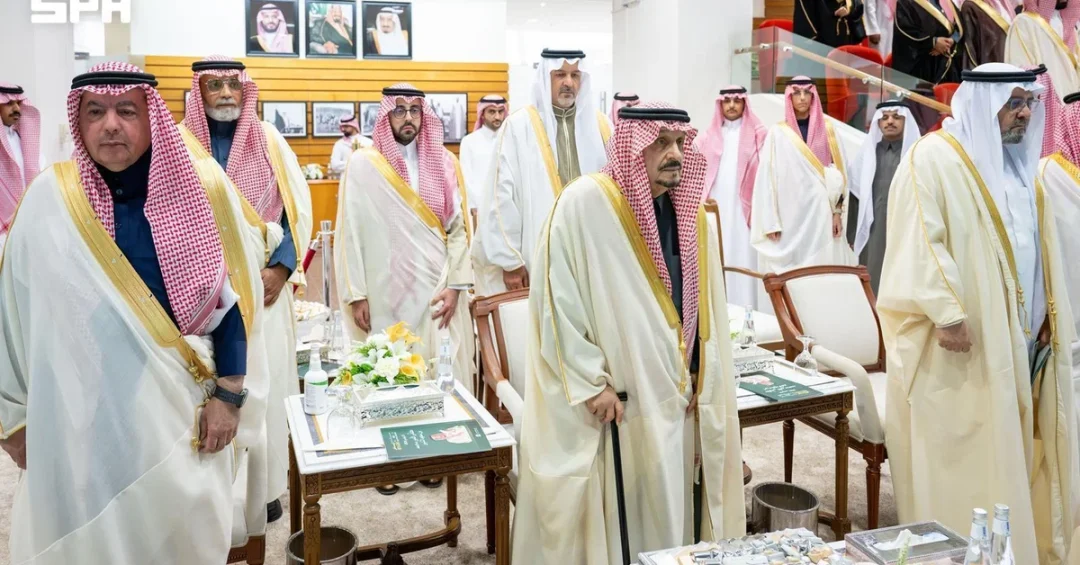
Governor of the Riyadh Region Prince Faisal bin Bandar bin Abdulaziz attended the Prince Mohammed bin Saud Alkabeer Cup at King Abdulaziz Racecourse in Janadriyah on Friday, November 14, 2026, underscoring the Kingdom’s deep-rooted equestrian tradition and its growing stature on the global racing stage. The domestic Group 2 race, open to Saudi-bred horses aged four and above, was held as part of the 29th meeting of the Riyadh Racing Season, drawing elite competitors and a distinguished audience to one of the region’s most prestigious racing venues.
Upon arrival, the Governor was received by Prince Miteb bin Abdullah bin Abdulaziz, Chairman of the Equestrian Authority, and Prince Bandar bin Khalid bin Faisal, Chairman of the Jockey Club of Saudi Arabia, along with Prince Abdullah bin Miteb bin Abdullah bin Abdulaziz, Jockey Club CEO Prince Salman bin Abdullah bin Salman bin Mohammed, and several club officials. The high-level attendance reflects the enduring commitment of Saudi leadership to equestrian sports, which are celebrated as a cornerstone of the Kingdom’s cultural heritage and a vital component of its sporting and tourism ambitions under Vision 2030. Following the race, Prince Faisal presented the trophy to Saad bin Mishraf, CEO of Najd Horse Racing Company, whose horse claimed victory in the prestigious event.
Context and Background
How did a single horse race come to embody the intersection of tradition and modernity in Saudi Arabia? The Prince Mohammed bin Saud Alkabeer Cup is more than a sporting event; it is a testament to the Kingdom’s centuries-old bond with Arabian horses, an animal that has long symbolized nobility, endurance, and pride in Saudi culture. The race, named after a revered figure in Saudi history, honors a legacy of equestrian excellence that dates back to the founding of the modern Saudi state. King Abdulaziz Racecourse in Janadriyah, located on the outskirts of Riyadh, serves as a premier destination for horse racing enthusiasts and has hosted numerous high-profile events that attract international attention.
The Riyadh Racing Season, now in its 29th meeting, has evolved into a major calendar fixture, featuring a series of competitive races that showcase the finest Saudi-bred horses. These events are meticulously organized by the Jockey Club of Saudi Arabia, which operates under the guidance of the Equestrian Authority, to promote breeding, training, and racing standards in line with international best practices. The season not only provides a platform for local talent but also contributes to the broader economic and cultural objectives of the Kingdom by stimulating related industries such as tourism, hospitality, and media. As Saudi Arabia continues to diversify its economy, equestrian sports have emerged as a niche yet impactful sector that bridges the past and the future.
The presence of Prince Faisal bin Bandar bin Abdulaziz, a senior member of the royal family and a prominent figure in Riyadh’s governance, highlights the official endorsement that equestrian activities receive at the highest levels. His attendance signals the leadership’s recognition of the sport’s role in fostering national unity and showcasing Saudi Arabia’s rich heritage to the world. In recent years, the Kingdom has invested significantly in equestrian infrastructure, including state-of-the-art racecourses, training centers, and veterinary facilities, to ensure that Saudi horses and riders can compete on equal footing with international counterparts. This investment is part of a broader strategy to enhance the quality of life for citizens and residents, as well as to attract global visitors.
Key Details
What makes the Prince Mohammed bin Saud Alkabeer Cup a standout event in the Saudi racing calendar? The race is classified as a domestic Group 2 event, specifically reserved for Saudi-bred horses aged four and above. This categorization ensures that the competition serves as a benchmark for local breeding programs, encouraging owners and breeders to strive for excellence. The 29th meeting of the Riyadh Racing Season featured a full card of races, but the Alkabeer Cup took center stage, drawing a crowd of dignitaries, racing aficionados, and media representatives. The atmosphere at King Abdulaziz Racecourse was electric, with spectators cheering on their favorite horses and jockeys.
Upon his arrival, Prince Faisal was greeted by a delegation of top officials, including Prince Miteb bin Abdullah bin Abdulaziz, Chairman of the Equestrian Authority, and Prince Bandar bin Khalid bin Faisal, Chairman of the Jockey Club of Saudi Arabia. Also present were Prince Abdullah bin Miteb bin Abdullah bin Abdulaziz and Prince Salman bin Abdullah bin Salman bin Mohammed, CEO of the Jockey Club, along with several other club officials. Their collective presence underscored the collaborative effort between government bodies and sports organizations to elevate horse racing in the Kingdom. The reception line itself was a display of the strong institutional support that underpins Saudi equestrianism.
Following the race, Prince Faisal presented the trophy to Saad bin Mishraf, CEO of Najd Horse Racing Company, whose horse emerged victorious. The winning horse, whose name was not disclosed in the official statement, demonstrated exceptional speed and stamina, embodying the high standards of Saudi breeding. The trophy presentation was met with applause and celebration, marking the culmination of weeks of preparation and fierce competition. This moment not only honored the winning connections but also highlighted the competitive spirit that defines Saudi racing. The event concluded with a sense of pride and accomplishment, reinforcing the Kingdom’s position as a rising force in the global equestrian arena.
International and Regional Impact
How does Saudi Arabia’s equestrian scene resonate beyond its borders? The Prince Mohammed bin Saud Alkabeer Cup, while a domestic race, forms part of a larger narrative of Saudi Arabia’s integration into the international racing community. In recent years, the Kingdom has hosted prestigious international events such as the Saudi Cup, the world’s most valuable horse race, which attracts top thoroughbreds from around the globe. These events have elevated Saudi Arabia’s profile as a premier destination for equestrian sports, drawing attention from international media, investors, and tourists. The Alkabeer Cup, by nurturing local talent and promoting Saudi-bred horses, contributes to the depth and sustainability of this ecosystem.
Regionally, the race serves as a unifying force among Gulf Cooperation Council (GCC) countries, which share a deep appreciation for Arabian horses and racing traditions. Saudi Arabia’s leadership in this domain is widely recognized, and its events often serve as benchmarks for neighboring states. The presence of high-ranking officials at the Alkabeer Cup sends a message of stability and continuity, reinforcing the Kingdom’s role as a cultural and sporting hub in the Middle East. Furthermore, the race aligns with Saudi Arabia’s efforts to enhance people-to-people ties and cultural diplomacy, as equestrian events often bring together participants and spectators from diverse backgrounds.
Economic and Strategic Significance
What economic ripple effects does a single race generate? The Riyadh Racing Season, including the Alkabeer Cup, stimulates economic activity across multiple sectors. The event draws thousands of spectators, including local and international visitors, who spend on hospitality, dining, transportation, and retail. The King Abdulaziz Racecourse in Janadriyah, with its modern facilities, has become a venue for corporate events, weddings, and exhibitions, further amplifying its economic contribution. Additionally, the racing industry supports jobs in breeding, training, veterinary care, and media production, creating a skilled workforce that aligns with Vision 2030’s goal of diversifying employment opportunities for Saudi citizens.
Strategically, horse racing is a soft power asset that enhances Saudi Arabia’s global image. By hosting world-class events and consistently improving domestic standards, the Kingdom attracts international partnerships and investment. The Jockey Club of Saudi Arabia has forged ties with racing authorities in Europe, the Americas, and Asia, facilitating the exchange of expertise and the participation of Saudi horses in international races. This global engagement not only boosts the competitiveness of Saudi breeding but also promotes the Kingdom as a modern, open society that honors its traditions while embracing progress. The Alkabeer Cup, therefore, is a small but significant piece of a much larger strategic puzzle.
Vision 2030 Alignment
How does a horse race connect to Saudi Arabia’s ambitious reform agenda? Vision 2030, the Kingdom’s blueprint for economic and social transformation, emphasizes the development of entertainment, tourism, and cultural sectors as key drivers of growth. Equestrian sports, with their rich heritage and mass appeal, are perfectly positioned to contribute to these objectives. The Riyadh Racing Season and events like the Prince Mohammed bin Saud Alkabeer Cup attract visitors from within the Kingdom and abroad, supporting the target of increasing domestic and international tourism. They also provide entertainment options that enhance the quality of life for citizens and residents, a core pillar of Vision 2030.
Moreover, the focus on Saudi-bred horses aligns with the Vision’s goal of preserving and promoting national identity while fostering innovation. By investing in breeding programs and racing infrastructure, the Kingdom is creating a sustainable equestrian industry that can compete globally. The involvement of young Saudis in various aspects of the sport—from jockeys to trainers to event managers—reflects the empowerment of youth, another central theme of Vision 2030. As Saudi Arabia continues to host and win international races, it reinforces its position as a leader in the global equestrian community, demonstrating that tradition and modernity can thrive together. The future of Saudi racing looks bright, with each event bringing the Kingdom closer to realizing its Vision 2030 aspirations.
20 Questions
Q1. What was the Prince Mohammed bin Saud Alkabeer Cup?
A1. The Prince Mohammed bin Saud Alkabeer Cup is a domestic Group 2 horse race for Saudi-bred horses aged four and above. It was held at King Abdulaziz Racecourse in Janadriyah as part of the 29th meeting of the Riyadh Racing Season.
Q2. Who attended the race as the guest of honor?
A2. Prince Faisal bin Bandar bin Abdulaziz, Governor of the Riyadh Region, attended the race as the guest of honor. His presence underscored the official support for equestrian sports in Saudi Arabia.
Q3. Who received Prince Faisal upon his arrival?
A3. Prince Faisal was received by Prince Miteb bin Abdullah bin Abdulaziz, Chairman of the Equestrian Authority, and Prince Bandar bin Khalid bin Faisal, Chairman of the Jockey Club of Saudi Arabia, among other officials.
Q4. Where was the race held?
A4. The race was held at King Abdulaziz Racecourse in Janadriyah, Riyadh. The venue is a premier facility for horse racing in Saudi Arabia and hosts major events throughout the season.
Q5. What is the significance of the Riyadh Racing Season?
A5. The Riyadh Racing Season is a series of horse racing meetings that showcase Saudi-bred horses and promote equestrian sports. It contributes to the Kingdom’s cultural and economic goals under Vision 2030.
Q6. Who presented the trophy to the winning connections?
A6. Prince Faisal bin Bandar bin Abdulaziz presented the trophy to Saad bin Mishraf, CEO of Najd Horse Racing Company, whose horse won the race. The presentation was a highlight of the event.
Q7. What type of horses competed in the race?
A7. The race was open to Saudi-bred horses aged four and above. This restriction promotes local breeding and highlights the quality of Saudi equine stock.
Q8. How does this event align with Vision 2030?
A8. The event supports Vision 2030 by promoting tourism, entertainment, and cultural heritage. It also stimulates economic activity and enhances the Kingdom’s global image as a modern and vibrant society.
Q9. Who is Prince Miteb bin Abdullah bin Abdulaziz?
A9. Prince Miteb bin Abdullah bin Abdulaziz is the Chairman of the Equestrian Authority. He plays a key role in developing equestrian sports and ensuring their alignment with international standards.
Q10. Who is Prince Bandar bin Khalid bin Faisal?
A10. Prince Bandar bin Khalid bin Faisal is the Chairman of the Jockey Club of Saudi Arabia. He oversees the organization of horse racing events and the promotion of the sport in the Kingdom.
Q11. What is the role of the Jockey Club of Saudi Arabia?
A11. The Jockey Club of Saudi Arabia regulates and promotes horse racing in the Kingdom. It organizes races, sets standards, and works to enhance the competitiveness of Saudi horses on the global stage.
Q12. Why is horse racing important to Saudi culture?
A12. Horse racing is deeply rooted in Saudi culture, reflecting the historical significance of Arabian horses. It symbolizes nobility, endurance, and pride, and continues to be a cherished tradition.
Q13. How many meetings are in the Riyadh Racing Season?
A13. The Riyadh Racing Season consists of multiple meetings held throughout the year. The Prince Mohammed bin Saud Alkabeer Cup was part of the 29th meeting of the current season.
Q14. What economic benefits does the race bring?
A14. The race attracts spectators and participants, boosting sectors such as hospitality, retail, and transportation. It also supports jobs in breeding, training, and event management, contributing to economic diversification.
Q15. Who is Saad bin Mishraf?
A15. Saad bin Mishraf is the CEO of Najd Horse Racing Company. His horse won the Prince Mohammed bin Saud Alkabeer Cup, and he received the trophy from Prince Faisal.
Q16. What is the King Abdulaziz Racecourse known for?
A16. The King Abdulaziz Racecourse in Janadriyah is known for hosting prestigious horse racing events, including the Saudi Cup. It features modern facilities and attracts top competitors from around the world.
Q17. How does the event promote Saudi-bred horses?
A17. By restricting the race to Saudi-bred horses, the event encourages local breeding and showcases the quality of Saudi equine stock. This helps elevate the standards of the Kingdom’s racing industry.
Q18. What other international equestrian events does Saudi Arabia host?
A18. Saudi Arabia hosts the Saudi Cup, the world’s most valuable horse race, as well as other international events. These attract global attention and position the Kingdom as a key player in equestrian sports.
Q19. How does the presence of high officials impact the event?
A19. The attendance of senior officials like Prince Faisal bin Bandar bin Abdulaziz underscores the importance of equestrian sports to the Kingdom’s leadership. It boosts morale and highlights the official support for the sector.
Q20. What is the future outlook for horse racing in Saudi Arabia?
A20. The future is promising, with continued investment in infrastructure and breeding programs. Under Vision 2030, horse racing is set to grow, attracting more international participants and enhancing the Kingdom’s global standing.
Reader Feedback
We value your thoughts. Please share your feedback on this article.
Your feedback helps us improve our coverage.
Related articles
 Team Saudi Concludes Dakar 2026 with Five Medals
 Nayef bin Humaid Elected to Asian Baseball Board
 Saudi Arabia Beats South Korea 3-2 in Doha Friendly
 Saudi Badminton Team Tops 2026 West Asia Championships with 18 Medals
 Jeddah Baja Toyota Rally Kicks Off with 217-Kilometer Stage
 Saudi National Team Ready for Friendly Against Korea