


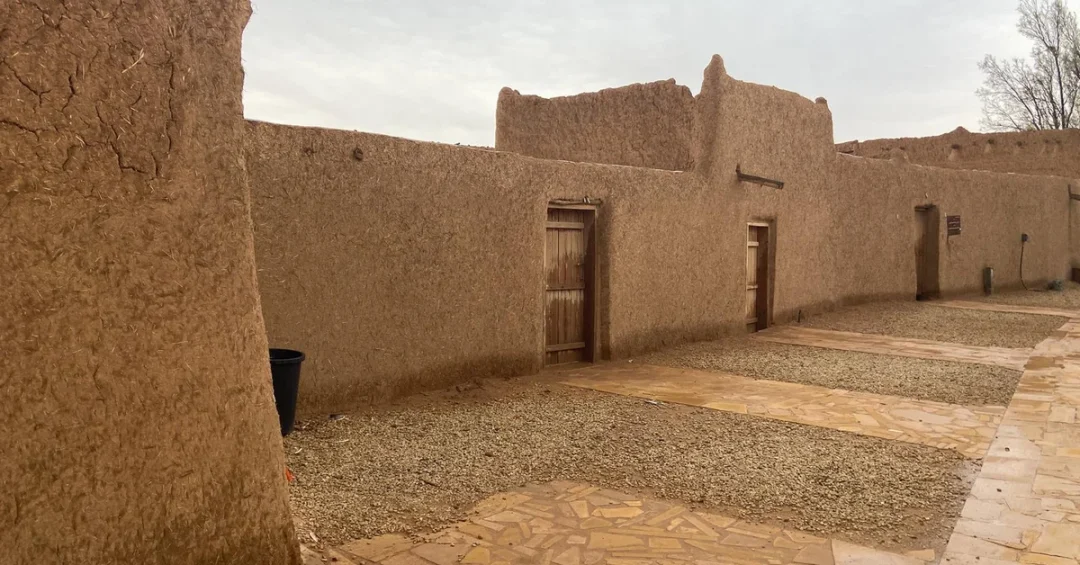
Al-Nufayed Heritage Village in Riyadh Al-Khabra Governorate, Qassim Region, is emerging as a leading example of Saudi Arabia’s efforts to preserve traditional Najdi architecture while unlocking rural tourism potential, according to the Saudi Press Agency (SPA). The village, which comprises about 25 heritage buildings spread across nearly 30,000 square meters, retains distinctive mud and stone structures, wooden doors, narrow alleys, and inner courtyards that reflect the social and urban life of the Najd region. Its surrounding farms, wells, and palm groves, along with its proximity to Wadi Al-Rummah, position it as a promising destination for heritage and rural tourism. In recent years, the village has undergone phased rehabilitation works, including documentation of houses, structural assessments, and restoration of damaged elements, all while preserving original features. It now hosts community events and seasonal occasions, including Eid programs and activities for children and families.
Have you ever wondered how Saudi Arabia is balancing the preservation of its ancient heritage with the demands of modern tourism? The Al-Nufayed Heritage Village offers a compelling answer. As part of the Kingdom’s broader Vision 2030 strategy, which aims to diversify the economy and promote cultural tourism, this site exemplifies how historical treasures can be revitalized to attract visitors and benefit local communities. The village’s rehabilitation is not merely about restoring buildings; it is about creating sustainable tourism experiences that showcase Saudi Arabia’s rich history and natural beauty. With the Al-Nufayed Trail project, which aims to connect historical sites across Al-Khabra and Riyadh Al-Khabra governorates, the village is set to become a key node in a network of rural heritage tourism, offering visitors a chance to explore the region’s architectural and natural landmarks. This initiative aligns with the National Tourism Strategy, a core component of Vision 2030, which seeks to increase tourism’s contribution to GDP and create jobs.
Context and Background
What makes Al-Nufayed Heritage Village so significant in Saudi Arabia’s cultural landscape? Located in the heart of the Qassim Region, the village is a living museum of Najdi architecture, a style characterized by mud and stone construction, intricate wooden doors, and narrow alleys designed to provide shade and foster community interaction. The village’s 25 heritage buildings, set within nearly 30,000 square meters, are a testament to the ingenuity of traditional builders who adapted to the harsh desert environment. The surrounding farms, wells, and palm groves not only sustained the community but also created a unique oasis-like setting. Proximity to Wadi Al-Rummah, one of the longest valleys in the Arabian Peninsula, adds to its ecological and scenic value.
In recent years, the Saudi government has intensified efforts to preserve such heritage sites. The rehabilitation of Al-Nufayed has been carried out in phases, beginning with meticulous documentation of each house, followed by structural assessments and careful restoration of damaged elements. This process ensures that the village retains its authentic character while being made safe and accessible for visitors. The village now hosts community events, including Eid celebrations and children’s activities, which not only keep traditions alive but also attract local and international tourists. These efforts are part of a broader national push to document and restore heritage sites across the Kingdom, as outlined by the Ministry of Culture and the Saudi Heritage Commission.
Key Details
What exactly does the Al-Nufayed Trail project entail, and how will it transform the region? The Al-Nufayed Trail is an ambitious initiative designed to establish a rural heritage tourism trail that connects historical sites and villages across Al-Khabra and Riyadh Al-Khabra governorates. This trail will allow visitors to explore a variety of historical, architectural, and natural landmarks, creating a cohesive tourism experience that highlights the region’s unique identity. The trail is expected to include signposted routes, visitor centers, and possibly guided tours, all aimed at enhancing accessibility and interpretation of the sites. By linking multiple villages, the project aims to distribute tourism benefits more evenly and encourage longer stays, thereby boosting local economies.
The rehabilitation of Al-Nufayed Heritage Village itself has been comprehensive. Each of the 25 buildings has been documented, with detailed records of their architectural features and historical significance. Structural assessments identified areas of concern, and restoration work has been carried out using traditional materials and techniques to maintain authenticity. The village’s infrastructure, including pathways and lighting, has been upgraded to accommodate visitors without compromising its historic fabric. Community involvement has been central to these efforts, with local residents participating in events and activities that showcase their heritage. The village’s location near Wadi Al-Rummah also offers opportunities for eco-tourism, such as birdwatching and nature walks, further diversifying the tourism offering.
International and Regional Impact
How does the development of Al-Nufayed Heritage Village resonate beyond Saudi Arabia’s borders? For international travelers seeking authentic cultural experiences, the village offers a rare glimpse into traditional Najdi life, which is increasingly sought after in a world of homogenized tourism. The rehabilitation project aligns with global trends in heritage tourism, where visitors are drawn to well-preserved historical sites that tell compelling stories. By investing in such sites, Saudi Arabia is positioning itself as a serious player in the global tourism market, competing with established destinations in the Middle East and beyond. The Al-Nufayed Trail, in particular, could become a model for rural tourism development in other parts of the Kingdom and the wider region.
Regionally, the project strengthens the Qassim Region’s profile as a cultural and heritage hub. It complements other initiatives in the area, such as the annual Date Festival and various cultural events, creating a more diverse tourism ecosystem. For neighboring Gulf countries, Saudi Arabia’s focus on heritage tourism sets a benchmark for how to leverage cultural assets for economic gain while preserving national identity. The project also aligns with the goals of the Gulf Cooperation Council (GCC) to promote intra-regional tourism, potentially attracting visitors from nearby countries who are interested in exploring the shared heritage of the Arabian Peninsula. Furthermore, the involvement of international experts in restoration and tourism management could foster knowledge exchange and partnerships.
Economic and Strategic Significance
What economic benefits can be expected from the Al-Nufayed Heritage Village and the broader trail project? Tourism is a key pillar of Saudi Arabia’s economic diversification strategy under Vision 2030, which aims to increase the sector’s contribution to GDP from 3% to 10% by 2030. Heritage tourism, in particular, has the potential to create jobs in hospitality, guiding, handicrafts, and transportation, especially in rural areas where employment opportunities may be limited. The rehabilitation and operation of Al-Nufayed will require skilled workers, from conservation specialists to tour guides, providing livelihoods for local communities. Additionally, the influx of visitors will stimulate demand for local products, such as dates, traditional crafts, and food, supporting small businesses and entrepreneurs.
Strategically, the project enhances Saudi Arabia’s soft power by showcasing its rich cultural heritage and commitment to preserving it. It also supports the Kingdom’s efforts to attract international visitors and extend their stay beyond major cities like Riyadh and Jeddah. By developing rural tourism, Saudi Arabia can reduce regional disparities and promote more balanced development. The Al-Nufayed Trail, by connecting multiple sites, creates a critical mass of attractions that can draw tourists for multi-day trips, increasing spending and extending the tourism value chain. Moreover, the project aligns with the National Tourism Strategy’s goal of increasing domestic tourism, encouraging Saudis to explore their own country and take pride in its heritage.
Vision 2030 Alignment
How does the Al-Nufayed Heritage Village project embody the spirit of Vision 2030? At its core, Vision 2030 is about transforming Saudi Arabia into a diversified, modern economy while preserving its cultural and religious identity. The rehabilitation of Al-Nufayed and the creation of the Al-Nufayed Trail are prime examples of this balance. They contribute to the Quality of Life Program, which aims to enhance the lives of citizens and residents by providing cultural and recreational opportunities. They also support the National Transformation Program by developing tourism infrastructure and creating jobs. By investing in heritage, Saudi Arabia is not only preserving its past but also building a sustainable future.
Looking ahead, the success of Al-Nufayed could pave the way for similar projects across the Kingdom, unlocking the potential of countless heritage villages and sites. As Saudi Arabia continues to open up to the world, initiatives like this will be crucial in shaping its image as a welcoming and culturally rich destination. The Al-Nufayed Heritage Village stands as a testament to the Kingdom’s dedication to honoring its roots while embracing the future, a shining example of how Vision 2030 is being realized on the ground. With continued investment and community engagement, it is poised to become a must-visit destination for anyone seeking an authentic Arabian experience.
20 Questions
Q1. What is Al-Nufayed Heritage Village?
A1. Al-Nufayed Heritage Village is a historic site in Riyadh Al-Khabra Governorate, Qassim Region, featuring about 25 mud and stone buildings that showcase traditional Najdi architecture and social life.
Q2. Where is Al-Nufayed Heritage Village located?
A2. It is located in Riyadh Al-Khabra Governorate within the Qassim Region of Saudi Arabia, near Wadi Al-Rummah, surrounded by farms, wells, and palm groves.
Q3. What are the key architectural features of the village?
A3. The village features mud and stone buildings, wooden doors, narrow alleys, and inner courtyards, all characteristic of traditional Najdi architecture adapted to the desert environment.
Q4. How large is the village?
A4. The village comprises about 25 heritage buildings spread across nearly 30,000 square meters, making it a substantial heritage site in the region.
Q5. What rehabilitation works have been carried out?
A5. Phased rehabilitation included documenting the houses, assessing structural conditions, and restoring damaged elements while preserving original features, ensuring authenticity and safety.
Q6. What is the Al-Nufayed Trail project?
A6. The Al-Nufayed Trail project aims to establish a rural heritage tourism trail connecting historical sites and villages across Al-Khabra and Riyadh Al-Khabra governorates for visitors to explore.
Q7. What events are hosted at the village?
A7. The village hosts community events and seasonal occasions, including Eid programs and activities for children and families, promoting cultural engagement and tourism.
Q8. Why is the village important for tourism?
A8. Its well-preserved Najdi architecture, surrounding natural landscape, and proximity to Wadi Al-Rummah make it ideal for heritage and rural tourism, attracting visitors seeking authentic experiences.
Q9. How does the village reflect Najdi social life?
A9. The layout with narrow alleys and inner courtyards reflects traditional Najdi social life, where community interaction and privacy were balanced in urban design.
Q10. What role does the Saudi Press Agency play?
A10. The Saudi Press Agency (SPA) reported on the village, highlighting its features and rehabilitation, as part of official Saudi efforts to promote heritage tourism.
Q11. How does the project align with Vision 2030?
A11. It supports Vision 2030 by diversifying the economy through tourism, creating jobs, and preserving cultural heritage, aligning with the National Tourism Strategy and Quality of Life Program.
Q12. What economic benefits does the project bring?
A12. It creates jobs in hospitality, guiding, and handicrafts, stimulates local businesses, and increases tourism spending, contributing to GDP growth and rural development.
Q13. Who benefits from the rehabilitation?
A13. Local communities benefit through job creation, cultural pride, and economic opportunities, while visitors enjoy an authentic heritage experience.
Q14. What is the significance of Wadi Al-Rummah?
A14. Wadi Al-Rummah is one of the longest valleys in the Arabian Peninsula, adding ecological and scenic value to the village and offering eco-tourism opportunities.
Q15. How does the village attract international tourists?
A15. It offers a rare glimpse into traditional Najdi life, appealing to international travelers seeking authentic cultural experiences and well-preserved heritage sites.
Q16. What restoration techniques were used?
A16. Traditional materials and techniques were used to maintain authenticity, ensuring the village retains its original character while being safe for visitors.
Q17. What is the role of the Ministry of Culture?
A17. The Ministry of Culture oversees heritage preservation, supporting projects like Al-Nufayed through the Saudi Heritage Commission to document and restore sites.
Q18. How does the project promote rural tourism?
A18. By developing infrastructure and connecting sites, it encourages visitors to explore rural areas, distributing tourism benefits and supporting local economies.
Q19. What future developments are planned?
A19. The Al-Nufayed Trail will connect multiple villages, with potential for visitor centers and guided tours, enhancing the overall tourism experience in the region.
Q20. How can visitors experience the village?
A20. Visitors can explore the historic buildings, participate in events, and enjoy the natural surroundings, with the trail project set to improve accessibility and interpretation.
Reader Feedback
We value your thoughts. Please share your feedback on this article.
Your feedback helps us improve our coverage.
Related articles
 Eastern Region Governor Launches Second Season of Global City Dammam
 Al-Mithnab: Heritage and Oases Boost Qassim Tourism
 Rabigh Coast: Sea Views and Mangrove Beauty
 AlUla’s Hot Air Balloon Glow Shows Light Up Elephant Rock
 Seasonal Waterfalls, Red Sea Beaches Highlight Saiedat Al-Sawalha’s Natural Diversity
 Winter Greenery Creates Scenic Views South of Rafha