


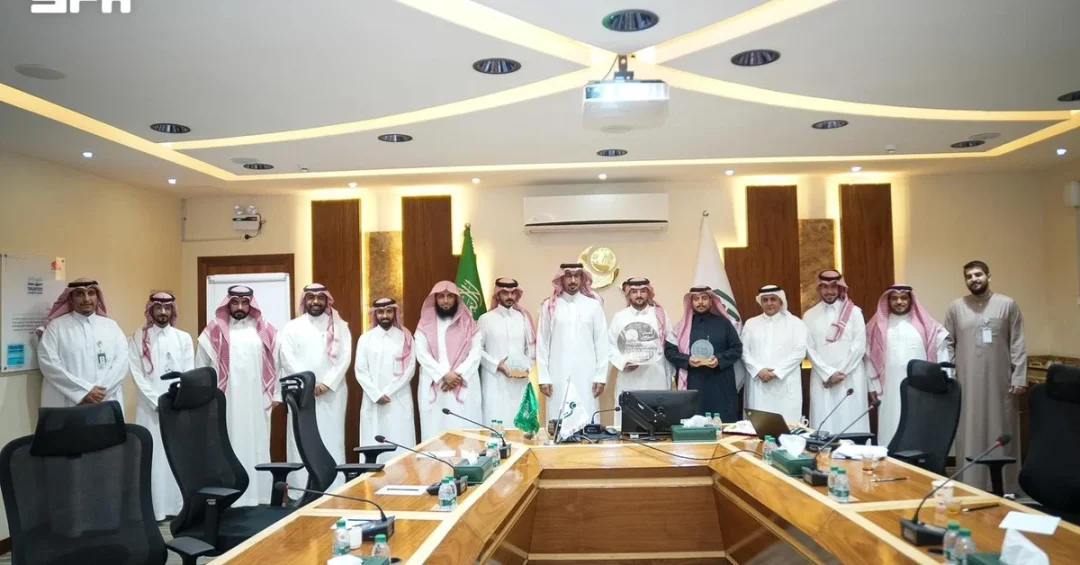
The Charity Committee for Orphans Care (Ensan) in Riyadh Region has won two gold awards at the Global ESG Awards GCC 2026, recognizing its institutional leadership, advanced practices in sustainability, governance, and risk management, as well as its commitment to implementing international best practices. The announcement, released via the Saudi Press Agency on November 16, 2026, marks a significant milestone for Saudi Arabia’s nonprofit sector and underscores the Kingdom’s growing influence in global environmental, social, and governance (ESG) standards. How does a charity focused on orphan care come to set benchmarks for sustainability and governance across the Gulf? The answer lies in Ensan’s deliberate shift from reactive problem-solving to proactive, institutionalized risk management—a transformation that aligns seamlessly with Saudi Vision 2030’s push for a vibrant, resilient civil society.
The Global ESG Awards GCC 2026, a prestigious regional platform, evaluates organizations on their environmental stewardship, social impact, and governance frameworks. Ensan’s dual gold wins—one for institutional leadership and another for advanced practices in sustainability, governance, and risk management—signal that Saudi nonprofits are no longer peripheral players but central actors in the Kingdom’s sustainable development narrative. This recognition follows a series of local and international accolades for Ensan, reflecting its ability to present a leading Saudi model that merges institutional excellence with measurable social outcomes. For international observers, the awards offer a window into how Saudi Arabia’s social sector is professionalizing at speed, supported by national reforms and a culture of accountability.
Context and Background
What drives a regional charity to pursue global ESG recognition? The Charity Committee for Orphans Care (Ensan) was established in Riyadh Region to provide comprehensive support for orphans, from shelter and education to psychological care and family integration. Over the years, it has evolved from a traditional welfare provider into a modern institution that applies rigorous governance, risk management, and sustainability practices. This evolution mirrors the broader transformation of Saudi Arabia’s nonprofit sector under Vision 2030, which calls for a diversified economy and a strengthened social fabric where civil society organizations operate with transparency and efficiency. The Global ESG Awards GCC 2026, held in the Gulf region, assesses entities on internationally recognized criteria, making Ensan’s gold wins a testament to its adherence to global benchmarks.
The awards come at a time when ESG principles are gaining traction across the Middle East, particularly in the Gulf Cooperation Council (GCC) states. Governments and corporations are increasingly expected to demonstrate responsible environmental, social, and governance performance. For nonprofits, ESG is not merely a compliance exercise but a strategic imperative to attract funding, partnerships, and public trust. Ensan’s success illustrates how Saudi charities can lead in this arena by adopting advanced methodologies that anticipate challenges rather than merely responding to them. The committee’s ability to shift from reactive to proactive risk control supports decision-making and sustains performance, a point emphasized in the official announcement. This approach is especially relevant as Saudi Arabia accelerates its Vision 2030 programs, which rely on strong, accountable institutions across all sectors.
Moreover, Ensan’s recognition reflects the Kingdom’s broader commitment to international best practices. Saudi Arabia has been actively aligning its regulatory environment with global standards, including through the National Center for Non-Profit Sector, which empowers charities to operate with greater autonomy and impact. By winning two gold awards, Ensan not only elevates its own profile but also enhances the reputation of Saudi Arabia’s social development efforts on the world stage. The timing is significant: as the GCC seeks to position itself as a hub for sustainable finance and responsible business, homegrown examples like Ensan provide credible evidence that the region’s institutions can compete globally.
Key Details of the Awards
What exactly did Ensan achieve at the Global ESG Awards GCC 2026? According to the Saudi Press Agency, the charity secured two gold awards: one for institutional leadership and another for advanced practices in sustainability, governance, and risk management. These categories highlight distinct but interconnected strengths. The institutional leadership award acknowledges Ensan’s ability to set a clear strategic direction, foster a culture of excellence, and manage its resources effectively. The second award recognizes its operational frameworks—how it integrates environmental considerations, social responsibility, and governance principles into daily activities and long-term planning. Together, they paint a picture of an organization that is not just doing good but doing it with precision and foresight.
The announcement emphasized that Ensan has successfully adopted advanced practices to strengthen institutional resilience and risk control. This means the committee has moved beyond merely reacting to challenges; it now anticipates and manages them through institutional methodologies that support decision-making and sustain performance. For example, risk management in a charity context involves identifying potential disruptions—whether financial, operational, or reputational—and putting mitigation strategies in place. Ensan’s approach reportedly includes robust internal audit systems, performance metrics, and stakeholder engagement mechanisms. These are not typical descriptors for a nonprofit, yet they are increasingly essential for organizations that aim to scale their impact and maintain donor confidence.
Furthermore, the awards add to Ensan’s record of local and international achievements. The committee has previously been recognized for its distinguished presence at global forums and its ability to present a leading Saudi model in nonprofit work that combines institutional excellence, sustainability, and social impact. This latest honor reinforces its status as a pioneer. The Global ESG Awards GCC 2026 likely evaluated candidates on criteria such as carbon footprint reduction, social equity, board diversity, ethical practices, and transparency. While specific scores were not disclosed, the gold designation implies that Ensan met or exceeded rigorous thresholds. For international audiences, this is a signal that Saudi charities are adopting the same ESG language and tools used by multinational corporations, bridging a traditional divide between for-profit and nonprofit sectors.
International and Regional Impact
How does a Saudi charity’s win at a regional ESG awards ceremony resonate beyond the Kingdom’s borders? For the GCC, Ensan’s success contributes to a growing narrative that the Gulf is not only an economic powerhouse but also a source of social innovation. The region has long been viewed as a donor hub, but less so as a producer of globally benchmarked nonprofit practices. Ensan’s dual gold awards challenge that perception. They demonstrate that Gulf-based organizations can achieve excellence in governance and sustainability, potentially inspiring similar entities in the UAE, Qatar, Kuwait, and beyond to pursue ESG certification and recognition. This could lead to a virtuous cycle of improvement, where regional standards rise collectively, benefiting vulnerable populations across the GCC.
Internationally, the awards enhance Saudi Arabia’s soft power. The Kingdom is often in the global spotlight for its economic reforms and geopolitical role, but its social sector achievements receive less attention. Ensan’s recognition offers a counter-narrative: a Saudi charity winning gold for ESG practices aligns with the country’s aspirations to be a model of responsible development. It also strengthens ties with international ESG rating agencies, donors, and philanthropic networks that prioritize governance and sustainability. For foreign nonprofits looking to partner in the region, Ensan presents a credible, award-winning collaborator. Moreover, the timing coincides with global discussions on the role of nonprofits in achieving the UN Sustainable Development Goals (SDGs), particularly those related to poverty, education, and reduced inequalities. Ensan’s work with orphans directly addresses several SDGs, and its ESG credentials make it a more attractive partner for international grantmakers.
Economic and Strategic Significance
Why should economic analysts and business leaders care about a charity’s ESG awards? The answer lies in the intersection of social impact and economic resilience. A strong nonprofit sector reduces the burden on the state and fosters social stability, which is a prerequisite for sustained economic growth. Ensan’s efficient, governance-driven approach means that donor funds are used more effectively, multiplying the social return on investment. In a region where philanthropy is deeply rooted in Islamic traditions, modern ESG frameworks offer a way to professionalize giving, ensuring that zakat and sadaqah are deployed with maximum impact. This aligns with Vision 2030’s goal of increasing the nonprofit sector’s contribution to GDP from less than 1% to 5% by 2030. Ensan’s recognition is a proof point that such ambitious targets are achievable.
Strategically, the awards bolster Saudi Arabia’s position as a leader in sustainable development within the GCC. As the Kingdom hosts major global events and attracts foreign investment, its social infrastructure must meet world-class standards. Ensan’s gold awards signal that Saudi institutions can deliver on ESG promises, which is increasingly important for multinational companies seeking to partner with local entities that share their values. Furthermore, the charity’s success story can be leveraged to promote Riyadh as a hub for social innovation, attracting talent and capital to the nonprofit space. For the business community, this translates into a more stable, trustworthy environment for corporate social responsibility (CSR) initiatives. Companies looking to fulfill their own ESG commitments can partner with award-winning organizations like Ensan, confident that their contributions will be managed with transparency and strategic foresight.
Vision 2030 Alignment
How does Ensan’s achievement embody the spirit of Saudi Vision 2030? The Vision, launched in 2016 by Crown Prince Mohammed bin Salman, aims to transform Saudi Arabia into a diversified economy with a vibrant civil society. One of its core themes is a “thriving nonprofit sector” that can address social challenges innovatively. Ensan’s dual gold awards at the Global ESG Awards GCC 2026 directly advance this objective by showcasing a Saudi nonprofit that operates with the same rigor and accountability as leading global entities. The committee’s focus on sustainability, governance, and risk management mirrors Vision 2030’s emphasis on institutional excellence and long-term planning. By winning these awards, Ensan not only elevates its own standards but also sets a benchmark for other Saudi charities, encouraging them to adopt ESG principles and contribute more effectively to national development.
Looking ahead, Ensan’s success is a forward-looking indicator of what Saudi Arabia’s social sector can achieve. As the Kingdom continues to invest in education, healthcare, and social safety nets, organizations like Ensan will be critical partners in delivering services and fostering community resilience. The awards also reinforce Saudi Arabia’s global role as a responsible actor committed to international best practices, from climate action to social equity. For international readers, this story is a reminder that the Kingdom’s transformation is not limited to megaprojects and economic diversification; it also includes a quiet revolution in how social good is done—professionally, sustainably, and with measurable impact. Ensan’s gold awards are a beacon, signaling that Saudi Arabia’s nonprofit sector is ready to compete and collaborate on the world stage, contributing to a brighter, more inclusive future for all.
20 Questions
Q1. What is Ensan and what does it do?
A1. Ensan, the Charity Committee for Orphans Care in Riyadh Region, provides comprehensive support for orphans, including shelter, education, psychological care, and family integration, operating as a leading Saudi nonprofit under Vision 2030.
Q2. What awards did Ensan win in 2026?
A2. Ensan won two gold awards at the Global ESG Awards GCC 2026: one for institutional leadership and another for advanced practices in sustainability, governance, and risk management.
Q3. When and where were the awards announced?
A3. The awards were announced on November 16, 2026, in Riyadh, as reported by the Saudi Press Agency (SPA), the Kingdom’s official news outlet.
Q4. What is the Global ESG Awards GCC?
A4. It is a prestigious regional awards program that recognizes organizations in the Gulf Cooperation Council for excellence in environmental, social, and governance (ESG) practices.
Q5. Why did Ensan receive the institutional leadership award?
A5. Ensan was recognized for its clear strategic direction, effective resource management, and ability to foster a culture of excellence, demonstrating strong institutional leadership.
Q6. What advanced practices earned Ensan the second gold award?
A6. The second award honored Ensan’s sustainability, governance, and risk management practices, including robust internal audits, performance metrics, and proactive risk control.
Q7. How has Ensan shifted its approach to risk management?
A7. Ensan moved from reacting to challenges to anticipating and managing them through institutional methodologies that support decision-making and sustain performance.
Q8. What previous achievements does Ensan have?
A8. Ensan has a record of local and international achievements, reflecting its distinguished presence at global forums and its leading Saudi model in nonprofit work.
Q9. How does this recognition benefit Saudi Arabia?
A9. It enhances Saudi Arabia’s soft power and reputation, showcasing the Kingdom’s commitment to international best practices and a thriving nonprofit sector under Vision 2030.
Q10. What is the significance for the GCC region?
A10. It demonstrates that Gulf-based nonprofits can achieve global ESG standards, potentially inspiring similar organizations across the region to pursue excellence.
Q11. How does Ensan’s work align with Vision 2030?
A11. Vision 2030 aims to increase the nonprofit sector’s GDP contribution to 5%; Ensan’s ESG-driven efficiency and governance help achieve this goal and strengthen civil society.
Q12. What specific ESG criteria were evaluated?
A12. Criteria likely included environmental impact, social equity, board diversity, ethical practices, transparency, and risk management, though exact scores were not disclosed.
Q13. How does Ensan measure its social impact?
A13. Ensan uses performance metrics and stakeholder engagement to assess outcomes, ensuring donor funds are used effectively and social return on investment is maximized.
Q14. What role does the Saudi government play in supporting nonprofits?
A14. The government, through entities like the National Center for Non-Profit Sector, empowers charities with greater autonomy and regulatory support to enhance their impact.
Q15. Can other Saudi charities replicate Ensan’s success?
A15. Yes, Ensan’s model serves as a benchmark, encouraging other charities to adopt ESG principles, professional governance, and proactive risk management to achieve similar recognition.
Q16. How does this award affect donor confidence?
A16. It boosts donor confidence by demonstrating that Ensan operates with transparency, accountability, and strategic foresight, ensuring contributions are managed effectively.
Q17. What is the economic significance of a strong nonprofit sector?
A17. A strong nonprofit sector reduces state burden, fosters social stability, and contributes to GDP, creating a more resilient economy aligned with Vision 2030.
Q18. How does Ensan’s achievement impact international partnerships?
A18. It makes Ensan a more attractive partner for international grantmakers and CSR initiatives, as its ESG credentials meet global standards.
Q19. What message does this send to the global community?
A19. It signals that Saudi Arabia’s social sector is professionalizing and can compete globally, reinforcing the Kingdom’s role as a responsible actor in sustainable development.
Q20. What is next for Ensan after these awards?
A20. Ensan will likely continue to advance its ESG practices, expand its impact on orphan care, and serve as a model for other nonprofits in Saudi Arabia and the GCC.
Reader Feedback
We value your thoughts. Please share your feedback on this article.
Your feedback helps us improve our coverage.
Related articles
 ALECSO Praises Saudi Arabia’s Five-Year Presidency
 5.4-Magnitude Earthquake Strikes Indonesia
 Saudi Ambassador Meets Mauritanian Defense Minister
 UNA Media Forum Tackles E1 Settlement Impact
 Saudi Arabia Weather Forecast: Thunderstorms Expected Monday
 Australia, Philippines Sign Defense Cooperation Agreement