


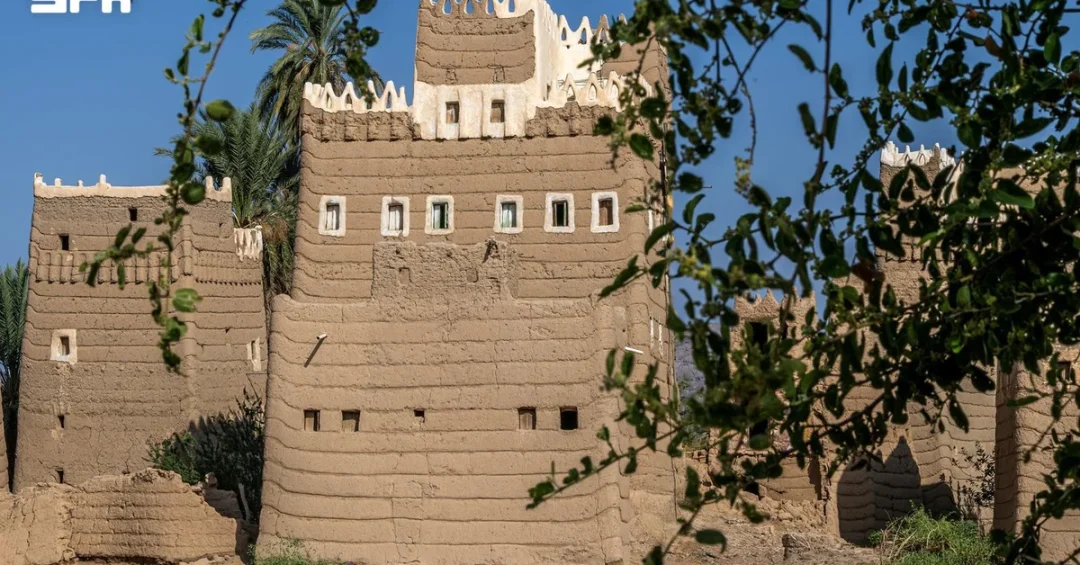
Windows in the traditional architecture of Najran Region have shaped a distinctive heritage visual identity, serving as architectural witnesses that preserve features of past life, according to the Saudi Press Agency (SPA). These windows are among the most important elements of the region’s traditional mud houses, reflecting the lifestyles and privacy associated with these homes. The SPA report, released on November 16, 2026, highlights how these architectural features continue to embody the region’s authentic identity and cultural values.
Have you ever considered how a simple window can tell the story of a civilization? In Najran, located in southwestern Saudi Arabia, the windows of old heritage buildings are not merely functional openings but are integral to a visual harmony that includes doors, decorative bands, and crenellations. The combination of mud walls with white window frames and wooden elements creates a lively architectural character that speaks to the region’s rich history. This architectural tradition is a testament to the craftsmanship of local builders and their ability to use local materials to create aesthetically pleasing and functional designs.
Context and Background
What makes Najran’s traditional architecture so unique in the broader context of Saudi heritage? Najran Region, known for its historical significance and distinctive culture, has long been a crossroads of civilizations. Its traditional mud houses, with their intricate window designs, are a reflection of the region’s adaptation to its environment and its cultural values. The windows, in particular, served multiple purposes: they provided natural light and ventilation, ensured privacy, and added to the aesthetic appeal of the buildings. According to traditional construction enthusiast Nasser Al-Suqour, windows varied in shape and size and were distributed according to each building’s function and number of floors. This thoughtful design reflects the builders’ deep understanding of their environment and their commitment to creating harmonious living spaces.
The architectural heritage of Najran is not just about the past; it is a living tradition that continues to influence modern design in Saudi Arabia. As the Kingdom undergoes rapid modernization under Vision 2030, there is a growing appreciation for traditional architectural elements that can be integrated into contemporary buildings. The windows of Najran, with their unique style and use of local materials such as tamarisk and sidr wood, offer valuable lessons in sustainable and culturally sensitive design. This heritage is being preserved and celebrated as part of Saudi Arabia’s broader efforts to maintain its cultural identity while embracing the future.
Key Details
How did the builders of Najran achieve such a distinctive look using simple materials? The windows on the facades of old heritage buildings are characterized by their varied shapes and sizes, each designed to suit the specific function of the room and the floor level. For instance, upper floors, often used for living quarters, might have larger windows to allow more light, while lower floors, used for storage or privacy, might have smaller openings. The frames are typically painted white, which contrasts strikingly with the earthy tones of the mud walls, creating a visual harmony that is both striking and pleasing. The use of tamarisk and sidr wood for window frames and doors adds a natural, organic element that complements the overall design.
Nasser Al-Suqour, a traditional construction enthusiast, emphasized that these details remain a living testament to the richness of the region’s architectural heritage and the aesthetic and cultural values passed down through generations. The craftsmanship involved in creating these windows is a skill that has been honed over centuries, and it continues to be a source of pride for the local community. The windows not only serve practical purposes but also carry symbolic meaning, representing the privacy and lifestyle of the inhabitants. This blend of form and function is a hallmark of Najran’s traditional architecture.
International and Regional Impact
Could the preservation of Najran’s architectural heritage serve as a model for other regions in Saudi Arabia and beyond? The distinctive windows of Najran have the potential to attract tourists and researchers interested in traditional architecture and cultural heritage. As Saudi Arabia opens up to international tourism under Vision 2030, sites like Najran’s heritage buildings offer a unique glimpse into the Kingdom’s rich history and cultural diversity. This can boost local economies and foster a greater appreciation for Saudi heritage on a global scale. Moreover, the techniques used in these traditional buildings, such as passive cooling and the use of local materials, are increasingly relevant in the context of sustainable development.
Regionally, the architectural heritage of Najran contributes to the broader narrative of Saudi Arabia’s cultural richness. It highlights the diversity within the Kingdom, where each region has its own distinct architectural style and traditions. By preserving and promoting these heritage sites, Saudi Arabia can strengthen its cultural diplomacy and showcase its commitment to preserving its identity amidst rapid modernization. This aligns with the goals of Vision 2030 to diversify the economy and promote cultural tourism.
Economic and Strategic Significance
What economic opportunities can arise from preserving and promoting traditional architecture? The restoration and maintenance of heritage buildings in Najran can create jobs in the tourism and construction sectors, providing economic benefits to local communities. Additionally, the unique aesthetic of Najran’s windows and other architectural elements can inspire contemporary designers and artisans, leading to new products and markets that blend tradition with modernity. This can support the growth of small and medium-sized enterprises (SMEs) in the region, which is a key focus of Vision 2030.
Strategically, the preservation of architectural heritage is part of Saudi Arabia’s broader efforts to maintain its cultural identity while embracing globalization. It sends a message that the Kingdom values its past even as it builds for the future. This balance is essential for social cohesion and national pride. Furthermore, heritage tourism can attract visitors from around the world, contributing to the Kingdom’s goal of increasing tourism’s share of GDP. The windows of Najran, therefore, are not just architectural features but symbols of Saudi Arabia’s rich cultural tapestry and its potential for sustainable development.
Vision 2030 Alignment
How does the preservation of Najran’s architectural heritage align with Saudi Arabia’s Vision 2030? Vision 2030 aims to diversify the economy, promote cultural tourism, and enhance the quality of life for citizens and residents. The preservation and promotion of traditional architecture directly support these goals by creating economic opportunities, fostering cultural exchange, and strengthening national identity. The SPA report underscores the importance of these windows as a living testament to the region’s heritage, which can be leveraged to attract tourists and educate future generations about Saudi Arabia’s rich history.
As Saudi Arabia continues its journey towards a prosperous future, the windows of Najran stand as a reminder of the Kingdom’s enduring cultural legacy. They represent the ingenuity of past generations and the potential for future generations to learn from and build upon this heritage. By integrating traditional elements into modern design and urban planning, Saudi Arabia can create sustainable, culturally vibrant communities that honor the past while embracing the future. This is the essence of Vision 2030: a forward-looking nation that treasures its roots.
20 Questions
Q1. What are the key features of traditional windows in Najran?
A1. Traditional windows in Najran are characterized by varied shapes and sizes, white frames, and wooden elements made from tamarisk and sidr wood. They are designed to provide light, ventilation, and privacy, reflecting the function of each room.
Q2. Why are windows considered important in Najran’s architecture?
A2. Windows are vital as they contribute to the visual identity of mud houses, ensure privacy, and demonstrate the craftsmanship of local builders. They are integral to the region’s heritage and cultural expression.
Q3. Who is Nasser Al-Suqour and what did he say about the windows?
A3. Nasser Al-Suqour is a traditional construction enthusiast who noted that windows varied in shape and size based on building function and floors, reflecting builders’ skill and use of local materials.
Q4. What materials were used for windows in Najran?
A4. Local woods such as tamarisk and sidr were primarily used for window frames and wooden doors, chosen for their suitability and availability in the region.
Q5. How do the windows reflect the lifestyle of past inhabitants?
A5. The design of windows, with considerations for privacy and natural light, mirrors the daily lives and social customs of the inhabitants, emphasizing modesty and comfort.
Q6. What other architectural elements complement the windows?
A6. Doors, decorative bands, and crenellations are other elements that, together with windows, create a striking visual harmony on the facades of heritage buildings.
Q7. How does the use of white frames impact the overall aesthetic?
A7. White frames contrast with the mud walls, adding a lively and harmonious character that enhances the architectural identity of the region.
Q8. Why is the preservation of these windows important for Saudi heritage?
A8. They are living witnesses to the region’s architectural heritage and cultural values, preserving the identity and history of Najran for future generations.
Q9. How can these traditional windows influence modern architecture?
A9. They offer lessons in sustainable design, use of local materials, and aesthetic harmony, which can be integrated into contemporary buildings to maintain cultural continuity.
Q10. What role do these windows play in tourism?
A10. They attract tourists interested in heritage and culture, contributing to the growth of cultural tourism in Saudi Arabia and supporting local economies.
Q11. How does the SPA report contribute to our understanding of Najran’s heritage?
A11. The SPA report highlights the significance of these windows, providing official recognition and detailed insights into their architectural and cultural importance.
Q12. What is the significance of the windows’ distribution across floors?
A12. The distribution reflects the function of each floor, with upper floors often having larger windows for light, and lower floors smaller ones for privacy, showcasing thoughtful design.
Q13. How do these windows align with Vision 2030?
A13. They support Vision 2030 by promoting cultural tourism, preserving national identity, and creating economic opportunities through heritage conservation and sustainable design.
Q14. What can be learned from the builders’ use of local materials?
A14. It demonstrates sustainable practices, resourcefulness, and the ability to create aesthetically pleasing structures using available natural resources.
Q15. Are there any efforts to restore these heritage buildings?
A15. While the SPA report does not detail specific restoration projects, there is a growing emphasis on preserving heritage sites in Saudi Arabia as part of cultural and tourism initiatives.
Q16. How do the windows contribute to privacy in traditional homes?
A16. The size and placement of windows are designed to allow light and air while shielding the interior from outside view, respecting the privacy of the inhabitants.
Q17. What is the visual impact of the combination of mud and white frames?
A17. The contrast creates a striking and harmonious look that is both aesthetically pleasing and emblematic of the region’s architectural style.
Q18. How does this heritage reflect the region’s cultural values?
A18. The careful design and craftsmanship reflect values of privacy, community, and aesthetic appreciation, passed down through generations.
Q19. What is the potential for heritage tourism in Najran?
A19. With Saudi Arabia’s opening to tourism, Najran’s unique architecture can attract visitors, boosting the local economy and promoting cultural exchange.
Q20. How can future generations benefit from this architectural heritage?
A20. They can learn from traditional sustainable practices, draw inspiration for modern design, and maintain a connection to their cultural roots, enriching Saudi Arabia’s cultural landscape.
Reader Feedback
We value your thoughts. Please share your feedback on this article.
Your feedback helps us improve our coverage.
Related articles
 Wrth, Dirah Sign MoU to Showcase Traditional Arts
 Riyadh Season to Host Ethnosport Cultural Festival
 King Abdulaziz Falconry Festival 2026: 140 Rounds, SAR36M Prizes
 Madinah Research Center Showcases Projects at Quality Forum
 Jeddah Event Fuses Design, Innovation in Creative Showcase
 King Abdulaziz Falconry Festival 2026 Opens Tuesday in Malham