


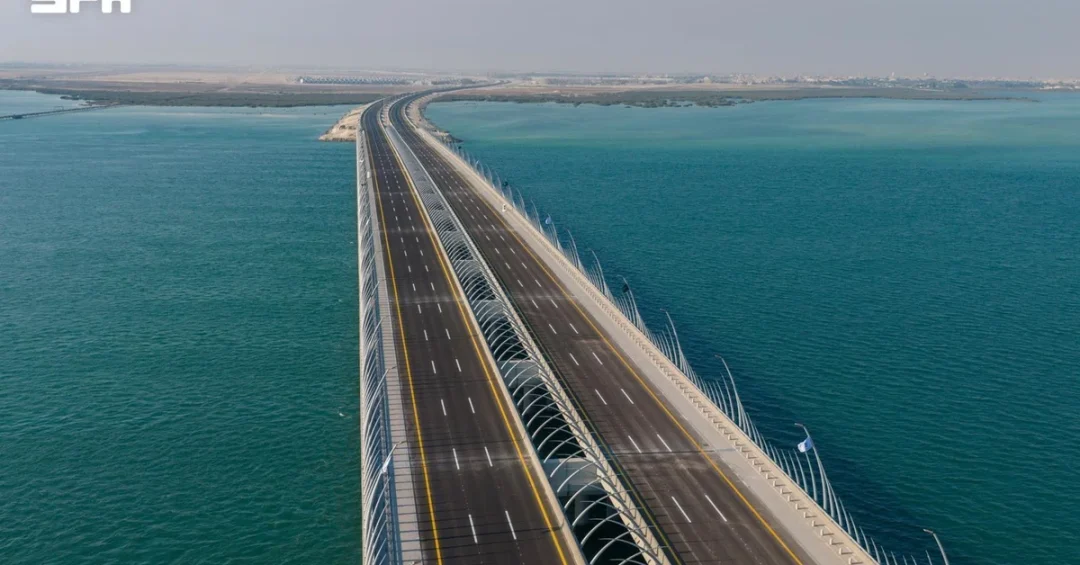
Saudi Arabia’s Roads General Authority has secured two prestigious accolades at the MEED Projects Awards 2026, with the Safwa–Rahima sea bridge project in the Eastern Region named Best Road Project at both the national level and across the Middle East and North Africa (MENA) region. The announcement, made via the Saudi Press Agency, underscores the Kingdom’s growing prominence in delivering world-class infrastructure that supports economic diversification and regional connectivity.
The Safwa–Rahima project, spanning 15 kilometres and featuring a 3.2-kilometre dual sea bridge, is one of the longest of its kind in the Kingdom. It is designed to reduce travel times, improve traffic flow, and provide an additional direct access route to Ras Tanura Port, a vital hub for Saudi Arabia’s energy exports. This recognition not only celebrates engineering excellence but also highlights the strategic importance of modern transport networks in advancing Saudi Arabia’s Vision 2030 objectives. How does such a project reshape the Kingdom’s logistical landscape and its role as a global investment destination?
Context and Background
What makes the Safwa–Rahima sea bridge a standout achievement in Saudi Arabia’s infrastructure journey? The Roads General Authority, responsible for planning and maintaining the Kingdom’s road network, has been at the forefront of implementing mega-projects that align with national development goals. The Eastern Region, home to key industrial cities and the largest oil terminal in the world, has long required robust connectivity to support its economic activities. The Safwa–Rahima project addresses this need by creating a direct link between the mainland and Ras Tanura Port, bypassing congested routes and enhancing the efficiency of supply chains that serve both domestic and international markets.
The MEED Projects Awards, organised by MEED (Middle East Economic Digest), are among the most respected recognitions in the region’s construction and infrastructure sector. Winning at both national and MENA levels signifies that the project meets international benchmarks for design, sustainability, and impact. This dual honour reflects the Kingdom’s commitment to excellence and its ability to deliver complex engineering feats on time and within budget. Moreover, it positions Saudi Arabia as a leader in infrastructure development, attracting further investment and expertise to the region.
The project’s genesis can be traced to the Kingdom’s broader strategy to modernise transport infrastructure under Vision 2030. By improving access to Ras Tanura Port, the bridge supports the growth of non-oil sectors, particularly logistics and manufacturing. It also complements other initiatives like the Saudi Landbridge and the expansion of the railway network, creating an integrated multimodal transport system. How does this project fit into the larger picture of Saudi Arabia’s economic transformation?
Key Details of the Award-Winning Project
What are the technical and operational features that earned the Safwa–Rahima project such high praise? The 15-kilometre project includes a 3.2-kilometre dual sea bridge, a remarkable engineering achievement that required advanced construction techniques to withstand marine conditions. The bridge is designed to accommodate heavy traffic, including trucks transporting goods to and from Ras Tanura Port, thereby facilitating smoother logistics operations. The Roads General Authority noted that the project reduces travel times significantly, enhances traffic safety, and provides an alternative route that alleviates pressure on existing roads.
The dual carriageway configuration allows for high-speed travel and efficient movement of goods, while the sea bridge segment minimises environmental disruption by spanning sensitive coastal areas. The project also incorporates modern safety features, including intelligent transportation systems and lighting, ensuring round-the-clock usability. These elements collectively contribute to a more resilient and reliable transport network, which is essential for supporting the Kingdom’s growing trade volumes and industrial output.
At the MEED Projects Awards 2026, the Safwa–Rahima project was recognised for its innovation, sustainability, and contribution to regional development. The awards celebrate projects that demonstrate excellence in engineering, project management, and social impact. Winning at both the national and MENA levels places the project among the elite infrastructure achievements in the region, alongside other transformative developments in the Gulf. This recognition not only honours the Roads General Authority but also the contractors, engineers, and workers who brought the project to life. How does such international acclaim influence future infrastructure investments in Saudi Arabia?
International and Regional Impact
How does the Safwa–Rahima project elevate Saudi Arabia’s standing in the global infrastructure arena? The MENA region is witnessing a surge in infrastructure spending, with countries competing to attract investment and talent. By securing a top award, Saudi Arabia demonstrates its capability to deliver complex projects that meet international standards, enhancing its reputation as a reliable partner for global firms. This can lead to increased collaboration with international engineering and construction companies, as well as greater interest from foreign investors in Saudi infrastructure and logistics ventures.
Regionally, the project strengthens connectivity within the Eastern Province and beyond, facilitating trade flows between Saudi Arabia and neighbouring Gulf Cooperation Council (GCC) countries. Improved access to Ras Tanura Port boosts the Kingdom’s export capacity, benefiting not only the oil sector but also non-oil exports such as petrochemicals and manufactured goods. This aligns with Saudi Arabia’s goal to become a global logistics hub connecting Asia, Europe, and Africa. The award also serves as a benchmark for other regional projects, encouraging higher standards and innovation across the MENA construction sector. What lessons can other nations draw from Saudi Arabia’s approach to infrastructure development?
Furthermore, the recognition highlights the Kingdom’s commitment to sustainable development. The project’s design minimises environmental impact while maximising economic benefits, a balance that is increasingly important as the world transitions to greener economies. By showcasing such achievements, Saudi Arabia positions itself as a leader in sustainable infrastructure, attracting partners who prioritise environmental, social, and governance (ESG) criteria. This can open doors to green financing and technology transfers, further accelerating the Kingdom’s modernisation.
Economic and Strategic Significance
Why is the Safwa–Rahima project a strategic asset for Saudi Arabia’s economy? At its core, the project enhances the efficiency of Ras Tanura Port, one of the world’s largest oil export terminals. By providing a direct route, it reduces congestion and travel times for commercial vehicles, lowering logistics costs and increasing throughput. This directly supports the Kingdom’s economic diversification efforts by making non-oil sectors more competitive. Improved logistics also attract manufacturing and distribution centres to the Eastern Region, creating jobs and stimulating local businesses.
The project is part of a broader investment in transport infrastructure that includes roads, railways, and ports. These investments are designed to create a seamless multimodal network that can handle the projected growth in trade and passenger traffic. According to the Roads General Authority, the project will contribute to economic activity and the development of logistics services in the region, aligning with the National Industrial Development and Logistics Program (NIDLP), a key Vision 2030 initiative. By facilitating the movement of goods, the bridge supports the Kingdom’s ambition to increase non-oil exports and reduce dependence on oil revenues.
Strategically, the project reinforces Saudi Arabia’s position as a pivotal player in global energy security. Ras Tanura Port is critical for the export of crude oil and refined products, and ensuring reliable access is vital for maintaining supply chains. The new bridge adds redundancy to the transport network, making it more resilient to disruptions. This is particularly important in a volatile geopolitical environment. How does this project contribute to the Kingdom’s long-term economic resilience?
Vision 2030 Alignment
How does the Safwa–Rahima sea bridge exemplify the goals of Saudi Vision 2030? Vision 2030 aims to transform the Kingdom into a diversified, innovation-driven economy, with a strong focus on infrastructure, logistics, and sustainability. The project directly supports these objectives by enhancing connectivity, reducing travel times, and boosting economic activity. It also reflects the Vision’s emphasis on improving the quality of life for citizens and residents by providing safer, more efficient transport options.
Moreover, the award-winning project showcases the Kingdom’s ability to execute large-scale initiatives that meet global standards, a key pillar of Vision 2030. It underscores the role of the Roads General Authority in delivering on the National Transport and Logistics Strategy, which seeks to position Saudi Arabia as a global logistics hub. As the Kingdom continues to invest in mega-projects like NEOM, the Red Sea Project, and the expansion of the railway network, the Safwa–Rahima bridge stands as a testament to the progress being made. With such achievements, Saudi Arabia is not only building infrastructure but also building a legacy of excellence that will inspire future generations. What does this mean for the Kingdom’s global role in the decades to come?
20 Questions
Q1. What awards did the Safwa–Rahima sea bridge project win?
A1. The project won Best Road Project at both the national level and across the Middle East and North Africa (MENA) region at the MEED Projects Awards 2026, recognising its engineering excellence and strategic impact.
Q2. Which authority is responsible for the Safwa–Rahima project?
A2. The Roads General Authority, a Saudi government agency tasked with developing and maintaining the Kingdom’s road network, is responsible for the project, ensuring it aligns with national infrastructure goals.
Q3. Where is the Safwa–Rahima sea bridge located?
A3. It is located in the Eastern Region of Saudi Arabia, connecting the mainland to Ras Tanura Port, a vital hub for the Kingdom’s energy exports and logistics operations.
Q4. What are the key features of the project?
A4. The project spans 15 kilometres and includes a 3.2-kilometre dual sea bridge, making it one of the longest of its kind in the Kingdom, designed to improve traffic flow and reduce travel times.
Q5. How does the project benefit Ras Tanura Port?
A5. It provides an additional direct access route to the port, supporting supply chain operations, reducing congestion, and enhancing the efficiency of exports and imports through this critical facility.
Q6. What is the significance of the MEED Projects Awards?
A6. The MEED Projects Awards are among the most prestigious recognitions in the Middle East’s construction and infrastructure sector, celebrating projects that demonstrate innovation, sustainability, and excellence in project delivery.
Q7. How does the project reduce travel times?
A7. By offering a direct route across the sea, the bridge bypasses congested inland roads, significantly cutting travel time for commuters and commercial vehicles heading to Ras Tanura Port and surrounding areas.
Q8. What economic benefits does the project bring to the Eastern Region?
A8. It stimulates economic activity by improving logistics, attracting businesses, creating jobs, and supporting the growth of non-oil sectors such as manufacturing and trade in the Eastern Region.
Q9. How does the project support Saudi Vision 2030?
A9. It aligns with Vision 2030 by enhancing infrastructure, boosting logistics efficiency, and contributing to economic diversification, helping position Saudi Arabia as a global logistics hub.
Q10. What role does the project play in supply chain operations?
A10. The bridge ensures faster and more reliable movement of goods to and from Ras Tanura Port, strengthening supply chains that are essential for both domestic consumption and international trade.
Q11. Is the project environmentally sustainable?
A11. Yes, the design minimises environmental impact by spanning coastal areas and incorporating modern construction techniques that reduce disruption to marine ecosystems, aligning with sustainability goals.
Q12. How does the project improve traffic safety?
A12. The dual carriageway and modern safety features, including intelligent transportation systems, reduce accident risks and ensure smoother, safer journeys for all road users.
Q13. What other infrastructure projects are underway in Saudi Arabia?
A13. Saudi Arabia is developing numerous mega-projects, including NEOM, the Red Sea Project, the Saudi Landbridge, and expansions of the railway network, all aimed at transforming the Kingdom’s transport and logistics landscape.
Q14. How does the award impact future infrastructure investments?
A14. The recognition enhances Saudi Arabia’s reputation as a reliable and innovative infrastructure developer, attracting foreign investment, partnerships, and expertise to future projects in the Kingdom.
Q15. What is the National Industrial Development and Logistics Program?
A15. NIDLP is a Vision 2030 initiative that aims to transform Saudi Arabia into a leading industrial power and logistics hub by developing key sectors such as mining, energy, and manufacturing.
Q16. How does the project contribute to job creation?
A16. By improving logistics and attracting businesses to the Eastern Region, the project stimulates local employment opportunities in construction, transport, and related services, supporting community development.
Q17. What makes the dual sea bridge unique?
A17. The 3.2-kilometre dual sea bridge is one of the longest in the Kingdom, showcasing advanced engineering and construction capabilities that allow it to withstand marine conditions while facilitating heavy traffic.
Q18. How does the project enhance regional connectivity?
A18. It links the Eastern Region more efficiently to Ras Tanura Port and beyond, improving connectivity within the GCC and supporting trade flows between Saudi Arabia and neighbouring countries.
Q19. What does the award mean for the Roads General Authority?
A19. It validates the authority’s commitment to excellence and innovation, reinforcing its role as a key driver of Saudi Arabia’s infrastructure development and Vision 2030 objectives.
Q20. How does this project reflect Saudi Arabia’s global role?
A20. It demonstrates the Kingdom’s ability to deliver world-class infrastructure, enhancing its standing as a global logistics and investment hub, and contributing to its leadership in the region and beyond.
Reader Feedback
We value your thoughts. Please share your feedback on this article.
Your feedback helps us improve our coverage.
Related articles
 Saudi Ministry Launches 2026 Environmental Balance Campaign
 Tuwaiq Academy Wins EC-Council Global Award
 Ensan Charity Wins Two Gold Awards at 2026 Global ESG Awards GCC
 ALECSO Praises Saudi Arabia’s Five-Year Presidency
 5.4-Magnitude Earthquake Strikes Indonesia
 Saudi Ambassador Meets Mauritanian Defense Minister