


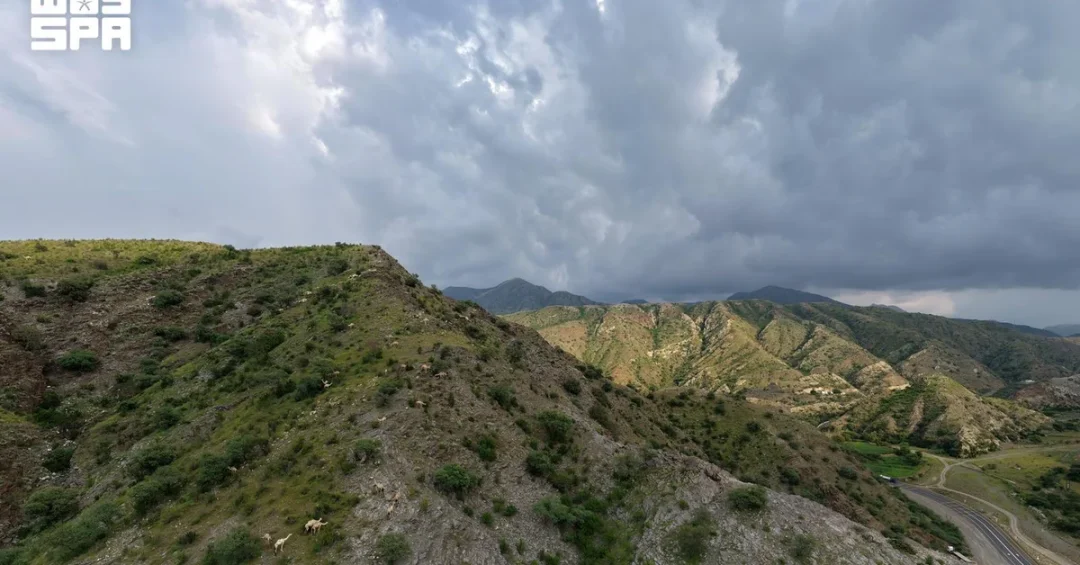
The Al-Wasm seasonal rains have transformed Tihama Aseer’s plains and mountains into breathtaking landscapes, carpeting the terrain in vibrant shades of green, according to the Saudi Press Agency (SPA). This seasonal transformation has revitalized natural pastures and enriched the region’s scenic beauty, making its wilderness areas increasingly attractive destinations for winter recreation and tourism. Rain clouds gathering over mountain peaks, combined with water flowing through valleys and winding past dense vegetation and traditional stone structures, have created picturesque natural scenes that highlight the Kingdom’s rich natural heritage.
For international observers, this annual phenomenon is more than a meteorological event; it is a vivid illustration of Saudi Arabia’s environmental diversity and its growing appeal as a year-round destination. The rains, known locally as Al-Wasm, occur in the autumn and are eagerly anticipated by residents, farmers, and herders alike. They signal the start of a season of abundance, replenishing aquifers, supporting livestock, and drawing visitors to the region’s cool highlands. As the Kingdom accelerates its Vision 2030 goals, such natural spectacles underscore the potential of sustainable tourism and environmental stewardship in regions beyond the major urban centers.
Context and Background
What makes the Al-Wasm rains so significant for Aseer and beyond? The Al-Wasm season typically begins in mid-October and extends through November, marking a transitional period between the intense heat of summer and the cooler winter months. In Aseer, a region in southwestern Saudi Arabia known for its mountainous terrain and moderate climate, these rains are a lifeline for local ecosystems. They nourish the soil, stimulate the growth of grasses, and support a variety of annual and perennial plants. This, in turn, provides a fertile grazing environment for camels, sheep, and other livestock, which are central to the cultural and economic life of the region.
Historically, the people of Tihama Aseer have relied on these seasonal rains for agriculture and animal husbandry. The rains also feed the region’s traditional terraced farming systems, some of which date back centuries. These terraces, carved into the mountainsides, capture and channel water, allowing crops such as coffee, sorghum, and fruit trees to thrive. The Al-Wasm rains thus play a critical role in sustaining both the natural landscape and the human communities that have adapted to this environment over generations. In recent years, the Saudi government has recognized the importance of these natural cycles and has integrated them into broader environmental and tourism strategies.
Moreover, the rains contribute to the recharge of groundwater reserves, which are vital for drinking water and irrigation. As Saudi Arabia faces water scarcity challenges, such natural recharge events are invaluable. They also help to reduce desertification and enhance carbon sequestration through increased vegetation cover. The Aseer region, with its unique topography and biodiversity, serves as a showcase for how natural processes can be harmonized with national development goals. The Al-Wasm rains are not just a seasonal curiosity; they are a cornerstone of environmental resilience in the Kingdom.
Key Details
What specific changes have the Al-Wasm rains brought to Tihama Aseer this year? According to the Saudi Press Agency, the rains have carpeted the plains and mountains in vibrant shades of green, revitalizing natural pastures and enriching the region’s scenic beauty. The transformation is particularly striking in the valleys, where water flows through winding channels, past dense vegetation and traditional stone structures. These scenes have become a magnet for photographers, nature enthusiasts, and families seeking winter recreation. The SPA report notes that rain clouds gathering over mountain peaks have added to the dramatic vistas, creating a picturesque environment that is increasingly attracting visitors.
Relevant authorities in Aseer Region are continuing field efforts to bolster vegetation cover, protect natural parks and wilderness areas, and manage visitor flow to ensure pasture sustainability. They are also urging everyone to adhere to environmental guidelines. These measures are designed to balance the influx of tourists with the need to preserve the delicate ecosystems that depend on the seasonal rains. The authorities’ proactive approach reflects a broader national commitment to environmental protection, as outlined in the Saudi Green Initiative and Vision 2030. By managing visitor numbers and promoting responsible behavior, they aim to ensure that the Al-Wasm rains continue to benefit both nature and people for years to come.
The rains have also provided a fertile grazing environment for camels, sheep, and other livestock, supporting the livelihoods of local herders. This is especially important in a region where traditional pastoralism remains a cultural touchstone. The abundance of forage reduces the need for supplementary feeding, lowering costs for herders and contributing to food security. Additionally, the increased vegetation cover helps to prevent soil erosion and improves water retention in the soil, which is crucial for the region’s agricultural productivity. The Al-Wasm rains thus deliver a multitude of benefits that extend far beyond aesthetics, reinforcing the interdependence of natural systems and human well-being.
International and Regional Impact
How does the greening of Tihama Aseer resonate beyond Saudi Arabia’s borders? For international travelers, the region offers a unique blend of natural beauty and cultural heritage. Aseer is home to historical sites, traditional villages, and the famous Rijal Almaa heritage village, which has been recognized for its architectural significance. The Al-Wasm rains enhance the appeal of these attractions by providing a lush backdrop that contrasts with the stereotypical image of Saudi Arabia as a purely desert landscape. This shift in perception is vital for the Kingdom’s tourism ambitions, which aim to attract 100 million visitors annually by 2030. By showcasing the green mountains of Aseer, Saudi Arabia can position itself as a destination with diverse climates and experiences.
Regionally, the Al-Wasm rains are part of a broader climatic pattern that affects the Arabian Peninsula. They contribute to the overall greening of the region, which can have positive spillover effects on neighboring countries. For example, increased vegetation in Saudi Arabia can help reduce dust storms that affect the Gulf and beyond. Moreover, the rains support migratory bird populations and other wildlife that traverse the region. Saudi Arabia’s efforts to protect these natural areas align with international conservation goals, such as the Convention on Biological Diversity. By sharing best practices in sustainable land management, the Kingdom can strengthen its role as a regional leader in environmental stewardship.
Economic and Strategic Significance
What economic opportunities arise from the Al-Wasm rains? The transformation of Tihama Aseer into a green destination stimulates local economies through tourism, hospitality, and related services. Visitors flock to the region to enjoy the cool weather, scenic drives, and outdoor activities such as hiking and camping. This influx creates jobs and supports small businesses, from hotels and restaurants to guide services and handicraft vendors. The Saudi government, through its Vision 2030 plan, is investing in infrastructure to improve access to Aseer, including new roads and the expansion of Abha International Airport. These investments are designed to accommodate growing visitor numbers and to extend the tourism season beyond the traditional summer months.
Strategically, the greening of Aseer contributes to food and water security. The revitalized pastures support livestock production, reducing reliance on imports. The recharge of groundwater reserves enhances water availability for agriculture and domestic use. Furthermore, the increased vegetation cover helps to mitigate climate change by absorbing carbon dioxide. Saudi Arabia’s commitment to planting 10 billion trees as part of the Saudi Green Initiative is complemented by natural events like the Al-Wasm rains, which accelerate the restoration of degraded lands. By leveraging these natural advantages, the Kingdom can achieve greater self-sufficiency and resilience in the face of environmental challenges.
Vision 2030 Alignment
How does the Al-Wasm phenomenon align with Saudi Arabia’s long-term vision? Vision 2030 seeks to diversify the economy, promote sustainable development, and enhance the quality of life for citizens and residents. The greening of Tihama Aseer directly supports these goals by fostering eco-tourism, preserving natural heritage, and creating economic opportunities in rural areas. The Saudi Green Initiative and the Middle East Green Initiative, both launched by Crown Prince Mohammed bin Salman, aim to combat desertification and restore ecosystems. The Al-Wasm rains provide a natural boost to these efforts, demonstrating how environmental stewardship can go hand in hand with economic progress.
As the Kingdom continues to open up to the world, destinations like Aseer will play a pivotal role in showcasing Saudi Arabia’s natural beauty and cultural richness. The authorities’ proactive management of visitor flow and pasture sustainability ensures that this seasonal blessing can be enjoyed responsibly. In the years ahead, the Al-Wasm rains will remain a symbol of renewal and abundance, reflecting the enduring harmony between the people of Aseer and their environment. For international audiences, this story offers a glimpse into a Saudi Arabia that is not only modernizing rapidly but also cherishing its natural treasures. It is a narrative of hope, resilience, and sustainable prosperity that resonates far beyond the region’s borders.
20 Questions
Q1. What are the Al-Wasm rains?
A1. The Al-Wasm rains are seasonal rains that occur in Saudi Arabia during autumn, typically from mid-October to November. They are known for revitalizing pastures and transforming landscapes in regions like Tihama Aseer.
Q2. Which region of Saudi Arabia is most affected by the Al-Wasm rains?
A2. The Tihama Aseer region in southwestern Saudi Arabia is most notably affected. Its plains and mountains become lush and green, attracting visitors and supporting local agriculture and livestock.
Q3. How do the Al-Wasm rains benefit local agriculture?
A3. The rains nourish the soil, stimulate plant growth, and recharge groundwater. This supports crops like coffee and sorghum, and provides grazing for livestock, enhancing food security and rural livelihoods.
Q4. What types of vegetation grow after the Al-Wasm rains?
A4. Grasses, annual plants, and perennial plants thrive after the rains. These provide a fertile grazing environment for camels, sheep, and other livestock, and contribute to the region’s biodiversity.
Q5. How do the rains impact tourism in Aseer?
A5. The rains create stunning green landscapes, making Aseer an attractive destination for winter recreation and tourism. Visitors enjoy scenic views, hiking, and cultural heritage sites, boosting the local economy.
Q6. What are the traditional stone structures mentioned in the report?
A6. The traditional stone structures are likely historic buildings and terraces found in Aseer’s villages. They reflect the region’s architectural heritage and are often surrounded by vegetation after the rains.
Q7. What measures are authorities taking to protect the environment?
A7. Authorities in Aseer are bolstering vegetation cover, protecting natural parks, managing visitor flow, and urging adherence to environmental guidelines to ensure pasture sustainability and ecosystem health.
Q8. How do the Al-Wasm rains contribute to groundwater recharge?
A8. The rains infiltrate the soil and replenish aquifers, which are vital for drinking water and irrigation. This recharge helps mitigate water scarcity in the region.
Q9. What is the significance of the Al-Wasm rains for livestock herders?
A9. The rains provide abundant forage, reducing the need for supplementary feed. This lowers costs for herders and supports the traditional pastoral lifestyle central to Aseer’s culture.
Q10. How does the greening of Aseer align with Saudi Vision 2030?
A10. It supports Vision 2030 by promoting eco-tourism, sustainable development, and environmental preservation. It also creates economic opportunities and enhances quality of life in rural areas.
Q11. What is the Saudi Green Initiative?
A11. The Saudi Green Initiative is a national effort to combat climate change, plant 10 billion trees, and protect 30% of Saudi Arabia’s land and sea. It aims to reduce carbon emissions and restore ecosystems.
Q12. How do the Al-Wasm rains affect the region’s climate?
A12. The rains mark the transition to cooler weather and increase humidity. They also contribute to the overall greening of the Arabian Peninsula, which can reduce dust storms and improve air quality.
Q13. Are there any cultural events associated with the Al-Wasm season?
A13. While not explicitly mentioned, the season is celebrated by locals for its abundance. Traditional practices like grazing and farming are central, and the landscape inspires poetry and gatherings.
Q14. What role does the Saudi Press Agency play in reporting this event?
A14. The Saudi Press Agency (SPA) is the official news agency of Saudi Arabia. It provides accurate and timely information about national events, including environmental phenomena like the Al-Wasm rains.
Q15. How can tourists visit Tihama Aseer responsibly?
A15. Tourists should follow environmental guidelines, avoid littering, respect local customs, and participate in managed tours. Authorities regulate visitor flow to protect pastures and natural parks.
Q16. What are the main attractions in Aseer besides the green landscapes?
A16. Aseer offers heritage sites like Rijal Almaa, traditional markets, and the Asir National Park. The region’s mild climate and mountain scenery make it a year-round destination.
Q17. How do the Al-Wasm rains impact food security in Saudi Arabia?
A17. By supporting livestock and crop production, the rains reduce reliance on imports. They enhance local food availability and contribute to the Kingdom’s goal of sustainable agriculture.
Q18. What is the expected duration of the green landscape after the rains?
A18. The greenery typically lasts through the winter months, depending on subsequent rainfall. The cool season allows vegetation to thrive until the onset of summer heat.
Q19. How does the greening of Aseer compare to other regions in Saudi Arabia?
A19. Aseer is unique due to its high elevation and regular seasonal rains. Other regions may experience some greening, but Aseer’s transformation is the most dramatic and well-known.
Q20. What future plans exist for sustainable tourism in Aseer?
A20. Under Vision 2030, Saudi Arabia is investing in infrastructure, eco-lodges, and heritage preservation in Aseer. These plans aim to attract visitors while protecting the environment for future generations.
Reader Feedback
We value your thoughts. Please share your feedback on this article.
Your feedback helps us improve our coverage.
Related articles
 Al-Khobar Expands Parks, Walking Trails to Enhance Quality of Life
 Al-Nufayed Heritage Village: Najdi Architecture, Rural Tourism
 Eastern Region Governor Launches Second Season of Global City Dammam
 Al-Mithnab: Heritage and Oases Boost Qassim Tourism
 Rabigh Coast: Sea Views and Mangrove Beauty
 AlUla’s Hot Air Balloon Glow Shows Light Up Elephant Rock