


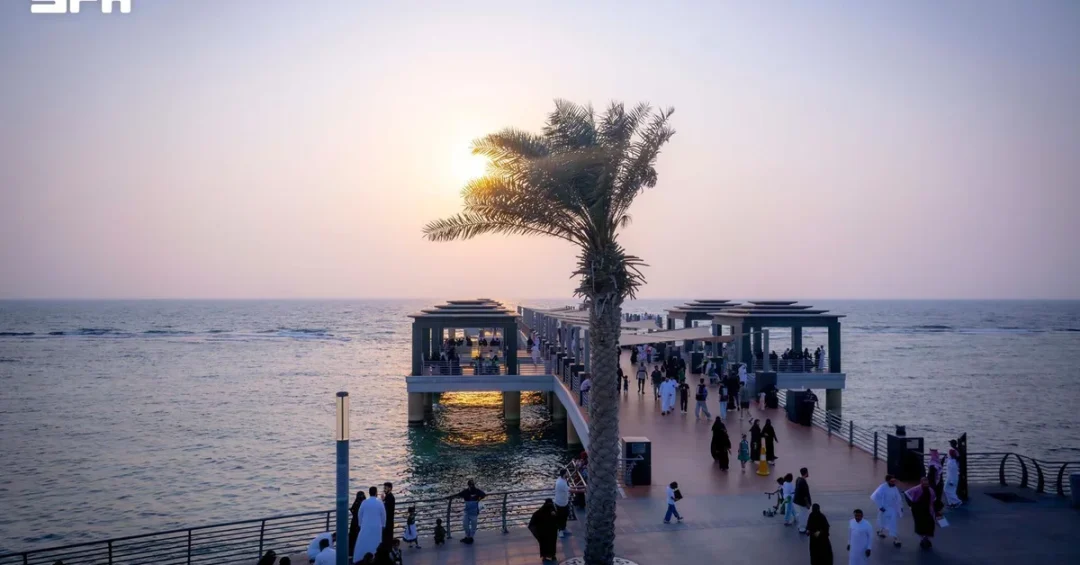
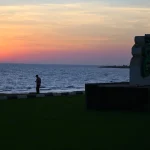
Jeddah’s waterfront came alive as evening fell, with residents and visitors gathering along the Corniche and in neighborhood parks to watch the sun sink over the Red Sea, according to the Saudi Press Agency (SPA). The daily ritual, reported on November 16, 2026, captures a side of the Kingdom’s second-largest city that blends natural beauty with community life, as families spread out on lush green lawns and walkers trace the pathways of local parks. What draws so many people to these open spaces as dusk approaches?
The scenes described by SPA reflect a broader pattern across Jeddah: public spaces functioning as shared living rooms for a diverse population of citizens and international residents. Along the waterfront, people pause to photograph the horizon or simply stand and watch the light change over the water, while children play freely and neighbors reconnect on the grass. These are ordinary moments, yet they illustrate how carefully maintained public amenities shape daily quality of life in Saudi Arabia’s coastal gateway city.
Context and Background
Jeddah has long held a special place in Saudi life as the historic gateway to the Red Sea and the principal entry point for pilgrims traveling to the holy cities. Its Corniche, a long coastal promenade hugging the water, has been a gathering place for generations, but the modern iteration of the waterfront represents something far more ambitious. Why does a simple seaside walk matter so much to a city of millions? Because it is one of the few places where the whole community, from long-time residents to newly arrived expatriates, shares the same open horizon.
The neighborhood parks described in the SPA report play a complementary role. While the Corniche draws crowds to the water’s edge, local parks serve as convenient escapes within walking distance of homes, offering what the agency characterized as a nearby retreat where neighbors connect and children have ample room to play. This layered network of public space, from grand waterfront to modest green lawn, is a deliberate feature of urban planning rather than an accident of geography.
Understanding this context helps explain why a routine evening outing has become newsworthy. In a city undergoing rapid transformation under national development plans, the persistence of these simple communal pleasures is itself a signal of success. The Kingdom’s urban agenda has increasingly emphasized livability, and the popularity of Jeddah’s sunset gatherings suggests that investment in public realm is delivering results that people can feel in their daily routines.
Sunset Rituals Along the Corniche
As the sun begins to set, the Corniche fills with a rhythm that is part relaxation and part performance. Visitors gather at vantage points to admire the sunset over the Red Sea, cameras raised toward the horizon, while others stroll at an unhurried pace along the waterfront. What makes this daily migration so enduring? Partly it is the sheer visual drama of a Red Sea sunset, and partly it is the social dimension: the waterfront functions as a stage where the city sees itself.
SPA noted that many residents and visitors enjoy walking by the sea, pausing occasionally to take photographs or gaze out at the horizon. These small acts, repeated night after night, build a sense of shared ownership over the space. Families arrive with children and picnic blankets; joggers weave between strollers; friends meet after work. The Corniche accommodates all of them because its design prioritizes generous walking surfaces and unobstructed views, allowing different activities to coexist without friction.
The evening hours also soften the coastal climate, making the waterfront most inviting precisely when the heat of the day recedes. This timing pattern is not incidental to the experience. It shapes a predictable social calendar for the city, a window when outdoor life becomes comfortable and public spaces reach their fullest. For planners, understanding these rhythms is essential; for residents, they are simply the texture of a good evening.
Parks as Neighborhood Anchors
If the Corniche is Jeddah’s front porch, its neighborhood parks are the shared courtyards of the city’s residential districts. According to SPA, these parks offer families a convenient, nearby escape where neighbors can connect, children have ample space to play, and walkers can make the most of the parks’ pathways. Why do these modest spaces carry such weight in community life? Because proximity matters: a park within walking distance becomes part of a family’s daily routine rather than a destination requiring a journey.
The agency’s description points to several functions happening simultaneously in the same green space. Neighbors connect, reinforcing social ties that dense urban living can strain. Children have room to run and play, an outlet that is especially valuable in districts where private outdoor space is limited. Walkers use the pathways for exercise and reflection. Each of these activities supports the others, creating a self-reinforcing culture of outdoor use.
These parks also serve an important equity function. Unlike private clubs or paid attractions, public green space is open to everyone regardless of income, nationality, or background. In a city as diverse as Jeddah, with its mix of Saudi citizens and a large international workforce, this shared access is quietly significant. The lawns and pathways described by SPA are, in effect, a democratic amenity, one that allows the full breadth of the city’s population to enjoy the same simple pleasures on equal terms.
International and Regional Impact
Jeddah’s appeal as a place to live and visit extends well beyond its own residents. As the Kingdom’s principal Red Sea gateway, the city receives travelers from across the region and around the world, many of whom pass through en route to the holy cities or arrive to explore the country’s growing tourism offerings. How does a well-loved Corniche shape those impressions? First encounters matter, and a vibrant, safe, and welcoming waterfront presents the Kingdom’s openness in tangible form to every visitor who walks it.
Within the region, Jeddah’s coastal lifestyle positions the city alongside other Red Sea destinations competing for attention and investment. The city’s ability to offer accessible public leisure, free of charge and open to all, gives it a distinctive character in that landscape. Visitors comparing destinations notice whether a city’s beauty is available to ordinary people; Jeddah’s answer, plainly visible each evening, is that it is.
The SPA report also implicitly connects these outings to the flow of pilgrims and travelers that defines Jeddah’s identity. The Corniche and its parks provide a place of decompression before or after journeys, a calm counterpoint to the intensity of travel. In this sense, the city’s public spaces are part of its hospitality infrastructure, softening the experience of arrival and departure for millions of people each year.
Economic and Strategic Significance
The economic dimension of these evening gatherings is easy to overlook but difficult to dismiss. A waterfront and park network that attracts consistent foot traffic supports the surrounding commercial ecosystem: cafes, kiosks, retailers, and service providers benefit from the steady stream of visitors who arrive to watch the sunset and then linger. Does leisure translate into economic activity? In well-designed public spaces, it reliably does.
More broadly, quality of life has become a strategic asset for the Kingdom. As Saudi Arabia competes globally for talent and investment, the liveability of its cities is a factor that cannot be manufactured through marketing alone. The authentic popularity of Jeddah’s parks and Corniche, documented by SPA as a daily reality rather than a promotional claim, contributes to the city’s reputation as a place where life is pleasant and community is intact. That reputation supports workforce attraction, retention, and the broader national effort to diversify the economy.
There is also a public health dimension worth noting. Parks that encourage walking and outdoor activity provide low-cost, accessible exercise for residents of all ages. The pathways described by SPA are not merely decorative; they are infrastructure for a more active population. When a city makes the healthy choice the easy choice, the cumulative benefits reach the healthcare system, the workforce, and the general sense of well-being that underpins social stability.
A Model for Livable Cities
What lessons does Jeddah’s experience offer for other Saudi cities undergoing rapid growth? The city’s approach, from the grand Corniche to small neighborhood parks, demonstrates the value of a layered public realm: a hierarchy of spaces that meets people where they are, whether at home or at the water’s edge. This model aligns with national urban planning priorities that emphasize livable, human-scale environments as a component of wider development.
The evening pattern described by SPA also highlights the importance of design that responds to climate. By making waterfronts and parks comfortable at dusk, the city extends usable outdoor hours and multiplies the value of its investment in public space. Other cities in the Kingdom, with their own climates and geographies, can adapt this principle to local conditions, ensuring that public amenities deliver maximum benefit across the day.
Perhaps the most transferable lesson is one of intent. The popularity of these spaces is not accidental; it reflects policy choices that treat public realm as essential infrastructure rather than optional ornament. When cities commit to accessible, well-maintained outdoor spaces, residents respond by using them, and the resulting social and economic benefits compound over time.
Vision 2030 Alignment
The scenes along Jeddah’s Corniche and its neighborhood parks sit comfortably within the ambitions of Saudi Vision 2030, the national strategy to diversify the economy and enhance quality of life. Central to that vision is the goal of creating vibrant, livable cities where residents enjoy a high standard of living and where community ties flourish. Does a sunset walk count as progress? The evidence from Jeddah suggests that it does, because quality of life is built from exactly these kinds of daily experiences.
Vision 2030 places particular emphasis on developing the Kingdom’s public realm, expanding green space, and encouraging active, healthy lifestyles for all residents. Jeddah’s parks, as described by SPA, deliver on all three fronts simultaneously: they provide green space, they host physical activity, and they bind neighborhoods together. Each evening they fulfill, in a modest way, the vision’s promise of a better everyday life for the Kingdom’s people and its many guests.
The forward-looking message from the Saudi Press Agency’s report is one of confident continuity. As Jeddah grows and modernizes, the simple pleasure of watching the sun set over the Red Sea remains available to all, a constant reminder that development in the Kingdom is measured not only in skyscrapers and megaprojects but in the quality of a family’s evening together on the grass. That is a vision that will continue to draw visitors to Jeddah’s waterfront for generations.
20 Questions
Q1. What is drawing visitors to Jeddah’s Corniche and parks according to the report?
A1. According to the Saudi Press Agency, visitors are drawn by the chance to watch the sunset over the Red Sea, stroll along the waterfront, photograph the horizon, and enjoy time with family on the green lawns of neighborhood parks.
Q2. When was the Saudi Press Agency report published?
A2. The report was published on November 16, 2026, and was carried by the Saudi Press Agency, describing evening outings in Jeddah and the popularity of the Corniche and local parks among residents and visitors.
Q3. What time is mentioned in the report?
A3. The report was timestamped at 15:50 local time, corresponding to 12:50 GMT, when the Saudi Press Agency distributed its description of the sunset outings along Jeddah’s waterfront and in its neighborhood parks.
Q4. What activities do people enjoy along the Corniche?
A4. The report says residents and visitors enjoy walking by the sea, pausing occasionally to take photographs or gaze out at the horizon, while others gather to admire the sunset over the Red Sea as evening approaches.
Q5. What do neighborhood parks offer families?
A5. According to the Saudi Press Agency, neighborhood parks offer families a convenient, nearby escape where neighbors can connect, children have ample space to play, and walkers can make the most of the parks’ pathways.
Q6. Why are neighborhood parks described as a nearby escape?
A6. The report explains that the parks are close to home, making them convenient destinations that families can reach easily, allowing neighbors to meet, children to play, and walkers to use the pathways without traveling far.
Q7. How does the Corniche support community life?
A7. The Corniche functions as a shared gathering place, letting residents and visitors walk, take photographs, and watch the sunset together, thereby building a sense of community and shared ownership over the city’s public waterfront space.
Q8. What role do children play in the parks’ popularity?
A8. The Saudi Press Agency notes that children have ample space to play in the parks, which makes these green spaces attractive for families seeking a safe and convenient place for their children to enjoy outdoor activity.
Q9. Why is timing of these outings significant?
A9. The outings occur as the sun begins to set, when the heat of the day recedes and the coastal climate becomes comfortable, making the waterfront and parks most inviting and allowing outdoor life to reach its fullest.
Q10. How does the report describe the green spaces in the parks?
A10. The Saudi Press Agency describes the parks as having lush green lawns where families can relax and enjoy time together, providing a pleasant natural setting within the city’s residential neighborhoods.
Q11. What is the significance of the Corniche’s location?
A11. The Corniche hugs the Red Sea, giving visitors unobstructed views of the water and the sunset, which makes it a natural vantage point and a popular destination for evening walks and photography.
Q12. How does the report connect these outings to family life?
A12. The report emphasizes that families head to neighborhood parks to relax and enjoy time together on the lawns, highlighting how these public spaces support family bonding and everyday leisure in the city.
Q13. Why is public access important in these spaces?
A13. Public spaces like the Corniche and neighborhood parks are open to everyone regardless of background, giving the full diversity of Jeddah’s residents and visitors equal access to the simple pleasures of outdoor life.
Q14. What does the report suggest about community ties?
A14. The Saudi Press Agency indicates that neighborhood parks allow neighbors to connect, strengthening social bonds and reinforcing the sense of community that is valuable in a large and diverse city like Jeddah.
Q15. How do the outings reflect daily life in Jeddah?
A15. The report portrays these sunset outings as a regular and ordinary part of Jeddah life, showing how residents incorporate the Corniche and parks into their daily routines for relaxation, exercise, and social connection.
Q16. What does the report say about photography along the waterfront?
A16. The Saudi Press Agency notes that residents and visitors pause occasionally to take photographs, capturing the sunset over the Red Sea and the horizon, which reflects the visual appeal of the waterfront as a place worth remembering.
Q17. How do walkers use the parks?
A17. According to the report, walkers can make the most of the parks’ pathways, using them for exercise and enjoyment while sharing the green space with families, children at play, and neighbors connecting with one another.
Q18. Why does the report matter to an international audience?
A18. The report offers international readers a clear, factual glimpse of everyday life in Saudi Arabia, showing how public spaces in Jeddah support community, family, and leisure, and helping global audiences understand the Kingdom’s modern urban life.
Q19. What image of Jeddah does the report convey?
A19. The Saudi Press Agency conveys an image of Jeddah as a welcoming coastal city where residents and visitors share beautiful public spaces, enjoy the natural setting, and take part in a relaxed and harmonious evening life.
Q20. What is the source of the information in the article?
A20. All factual details in the article originate from the Saudi Press Agency report of November 16, 2026, which described evening outings along Jeddah’s Corniche and in its neighborhood parks.
Reader Feedback
We value your thoughts. Please share your feedback on this article.
Your feedback helps us improve our coverage.
Related articles
 Al-Wasm Rains Turn Tihama Aseer’s Plains and Mountains Green
 Al-Khobar Expands Parks, Walking Trails to Enhance Quality of Life
 Al-Nufayed Heritage Village: Najdi Architecture, Rural Tourism
 Eastern Region Governor Launches Second Season of Global City Dammam
 Al-Mithnab: Heritage and Oases Boost Qassim Tourism
 Rabigh Coast: Sea Views and Mangrove Beauty