


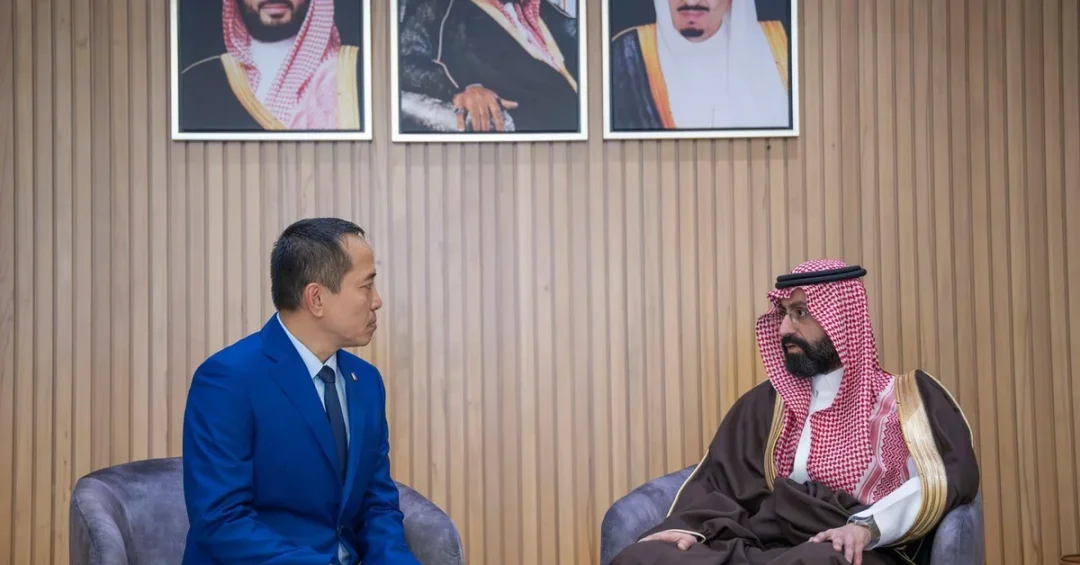
Director General of Legal Affairs and International Cooperation at the Ministry of Interior Ahmed Al-Issa met with Police Attaché at the Embassy of the Republic of the Philippines to Saudi Arabia Virgano Valdez Villoria at the ministry’s headquarters in Riyadh on November 16, 2026, to discuss ways to enhance security cooperation on matters of mutual interest. The meeting, announced through official Saudi channels, underscores the Kingdom’s continuing commitment to deepening bilateral security ties with international partners.
The encounter between the two officials reflects the broader framework of cooperation between Saudi Arabia and the Philippines, a relationship that has grown steadily across diplomatic, economic, and security domains. What does such high-level engagement signal about the Kingdom’s approach to international security partnerships? The Ministry of Interior, responsible for internal security, civil defense, and coordination with foreign law enforcement counterparts, regularly hosts such meetings as part of its mandate to strengthen global cooperation against transnational threats. The discussion between Al-Issa and Villoria took place at the ministry’s headquarters, a venue that has become a hub for diplomatic security dialogue under the Kingdom’s Vision 2030 modernization agenda.
Context and Background
How does a single meeting between a ministry official and a police attaché fit into the larger picture of Saudi Arabia’s global security strategy? The relationship between the Kingdom of Saudi Arabia and the Republic of the Philippines has deep roots, anchored in decades of diplomatic relations and people-to-people connections that include a significant Filipino expatriate community contributing to the Saudi economy. The Ministry of Interior has a longstanding tradition of engaging with embassy police attachés to facilitate coordination on law enforcement matters, including the protection of foreign nationals, the exchange of best practices in policing, and joint efforts to combat transnational crime.
Under the leadership of the Custodian of the Two Holy Mosques, King Salman bin Abdulaziz Al Saud, and His Royal Highness Crown Prince Mohammed bin Salman, Saudi Arabia has placed international cooperation at the heart of its security and diplomatic doctrine. Security cooperation with partner nations is not merely a bilateral courtesy; it is a strategic necessity in a world where criminal networks, trafficking rings, and extremist groups operate across borders. The meeting between Al-Issa and Villoria exemplifies how the Kingdom translates this doctrine into practice through regular, structured dialogue with foreign missions based in Riyadh.
The Ministry of Interior, led by His Royal Highness Prince Abdulaziz bin Saud bin Naif bin Abdulaziz, Minister of Interior, has been at the forefront of modernizing Saudi security services and enhancing their international footprint. The directorate for legal affairs and international cooperation, which Al-Issa heads, serves as a key interface between the Kingdom’s internal security apparatus and foreign counterparts, ensuring that agreements, protocols, and cooperative arrangements are implemented effectively. Meetings such as this one are part of the routine but essential work of maintaining robust channels of communication with the diplomatic corps accredited to the Kingdom.
Key Details of the Meeting
What specific issues might have been on the agenda during this high-level discussion? According to the Saudi Press Agency, the meeting focused on ways to enhance security cooperation on matters of mutual interest. While the official statement did not disclose specific operational details, the general scope of such discussions typically includes coordination on security for diplomatic missions, arrangements for the protection of nationals, sharing of information related to cross-border criminal activity, and capacity-building initiatives for law enforcement personnel.
Police attachés play a critical role in the diplomatic architecture of security cooperation. As the official representative of the Philippine National Police in the Kingdom, Villoria serves as a liaison between the Philippine government and Saudi authorities on matters ranging from the welfare of Filipino workers to cooperation in criminal investigations. The presence of such attachés in Riyadh reflects the depth of the Philippines’ engagement with Saudi Arabia and the mutual recognition that security is a shared responsibility.
Al-Issa, as Director General of Legal Affairs and International Cooperation, brings a legal and diplomatic perspective to these discussions. How do legal frameworks and international agreements underpin the practical work of security cooperation? His directorate is responsible for reviewing and negotiating bilateral agreements, ensuring that cooperative activities comply with Saudi law and international norms, and coordinating with other government agencies to implement security provisions. The meeting with Villoria likely involved a review of existing bilateral instruments and exploration of new avenues for collaboration, consistent with the ministry’s mandate to advance the Kingdom’s security interests through lawful, transparent, and mutually beneficial partnerships.
The timing of the meeting in November 2026 places it within a period of intense diplomatic activity for Saudi Arabia. The Kingdom has been hosting numerous international events, summits, and conferences as part of its Vision 2030 transformation, which has increased the demand for sophisticated security cooperation with foreign partners. The meeting at the Ministry of Interior headquarters is therefore part of a broader pattern of engagement that supports both the Kingdom’s security objectives and its reputation as a reliable global partner.
International and Regional Impact
Why does the meeting matter beyond the bilateral relationship between Saudi Arabia and the Philippines? In a region marked by complex security challenges, the Kingdom’s ability to build and maintain cooperative security relationships is a cornerstone of its stability and influence. The Philippines, as a maritime nation in Southeast Asia with significant expatriate populations across the Gulf, shares with Saudi Arabia an interest in combating terrorism, trafficking, and organized crime. Enhanced security cooperation between the two countries can contribute to regional and global security by closing gaps that criminal networks might exploit.
Furthermore, the meeting sends a positive signal to the international community about Saudi Arabia’s openness to collaboration and its commitment to the rule of law. Are such engagements not a reflection of the Kingdom’s broader diplomatic philosophy? By engaging directly with embassy police attachés, the Ministry of Interior demonstrates its readiness to work with all partners on the basis of mutual respect and shared interests. This approach aligns with the Kingdom’s active role in international organizations and its support for multilateral efforts to address security threats.
For the Filipino community in Saudi Arabia, which numbers in the hundreds of thousands and plays a vital role in the Kingdom’s economy and society, the meeting represents a reaffirmation of the Saudi government’s commitment to their safety and well-being. The Ministry of Interior’s cooperation with the Philippine Embassy helps ensure that Filipino nationals can live and work in the Kingdom under conditions of security and dignity, consistent with the labor reforms and quality-of-life initiatives of Vision 2030.
Economic and Strategic Significance
What are the economic stakes behind security cooperation? Saudi Arabia is the largest trading partner of the Philippines in the Middle East, and the two countries maintain significant flows of trade, investment, and labor migration. A stable and secure environment is essential for sustaining and expanding these economic ties. The meeting between Al-Issa and Villoria, by reinforcing security cooperation, indirectly supports the economic relationship by reducing risks associated with crime and instability and by enhancing the confidence of Filipino investors and workers in the Saudi market.
Strategically, the Kingdom’s engagement with the Philippines fits into its broader pivot toward Asia, a key element of Vision 2030’s economic diversification strategy. As Saudi Arabia deepens its ties with Asian economies—including major partners such as China, India, Japan, and South Korea—the Philippines occupies a niche as a close security and labor partner in Southeast Asia. The Ministry of Interior’s work with the Philippine Embassy is part of the institutional infrastructure that enables this broader strategic alignment, ensuring that security considerations keep pace with economic and diplomatic advances.
Moreover, cooperation in security and law enforcement can facilitate the exchange of technology, training, and expertise—areas in which Saudi Arabia has invested heavily as part of its own modernization. The Kingdom has developed advanced capabilities in border security, counterterrorism, and digital forensics, and it is increasingly willing to share these capabilities with partners. The meeting may have touched on opportunities for capacity-building exchanges, which would further strengthen the bilateral relationship and contribute to regional security capacity.
Vision 2030 Alignment
How does a routine diplomatic meeting align with the transformative goals of Vision 2030? The Vision, launched by His Royal Highness Crown Prince Mohammed bin Salman in 2016, aims to diversify the Saudi economy, modernize society, and position the Kingdom as a global leader in diplomacy, security, and innovation. A core pillar of the Vision is the enhancement of government efficiency and the strengthening of international partnerships. The Ministry of Interior’s engagement with foreign police attachés is a direct expression of this pillar, demonstrating how Saudi institutions are becoming more outward-looking, professional, and collaborative.
The meeting also reflects the Vision 2030 emphasis on quality of life and the well-being of all residents, including expatriates. By working with the Philippine Embassy to enhance security, the Ministry of Interior contributes to a safer environment for Filipino workers and for all those who call Saudi Arabia home. This aligns with the Vision’s goal of creating a vibrant society in which everyone can thrive. Furthermore, the Kingdom’s growing role as a host of major international events—from sporting tournaments to global summits—requires robust security cooperation with partner nations, making meetings like this one integral to the Vision’s success.
As Saudi Arabia continues to open up to the world and pursue its ambitious transformation, the importance of such security diplomacy will only grow. The meeting between Ahmed Al-Issa and Virgano Valdez Villoria is a small but meaningful example of the Kingdom’s commitment to building a secure, prosperous, and globally connected future. It underscores that Vision 2030 is not just an economic program but a comprehensive national project that touches every aspect of governance, including the way Saudi Arabia engages with the world to protect its people and advance shared interests.
20 Questions
Q1. Who met at the Ministry of Interior headquarters in Riyadh on November 16, 2026?
A1. Director General of Legal Affairs and International Cooperation Ahmed Al-Issa met with Police Attaché Virgano Valdez Villoria of the Philippine Embassy to Saudi Arabia to discuss security cooperation.
Q2. What was the main purpose of the meeting?
A2. The officials discussed ways to enhance security cooperation on matters of mutual interest between Saudi Arabia and the Philippines.
Q3. Where did the meeting take place?
A3. The meeting was held at the Ministry of Interior headquarters in Riyadh, the capital of Saudi Arabia.
Q4. Who is Ahmed Al-Issa?
A4. Ahmed Al-Issa is the Director General of Legal Affairs and International Cooperation at the Saudi Ministry of Interior, responsible for international security partnerships.
Q5. Who is Virgano Valdez Villoria?
A5. Virgano Valdez Villoria is the Police Attaché at the Embassy of the Republic of the Philippines to Saudi Arabia, representing Philippine law enforcement interests.
Q6. What does a police attaché do?
A6. A police attaché serves as a liaison between their country’s law enforcement and the host country, facilitating cooperation on criminal investigations, worker protection, and security matters.
Q7. Why is this meeting significant for Saudi Arabia?
A7. It reflects Saudi Arabia’s commitment to international security cooperation and its active role in building partnerships that enhance regional stability and protect all residents.
Q8. How does this meeting relate to Vision 2030?
A8. It aligns with Vision 2030’s goals of strengthening international partnerships, improving government efficiency, and ensuring a safe environment for all residents, including expatriates.
Q9. What is the nature of Saudi-Philippine relations?
A9. The two countries maintain deep diplomatic ties, significant labor migration, and growing trade, with Saudi Arabia being a major destination for Filipino workers.
Q10. How many Filipinos live in Saudi Arabia?
A10. Hundreds of thousands of Filipino workers reside in Saudi Arabia, contributing to the Kingdom’s economy and society across various sectors.
Q11. What was announced by the Saudi Press Agency?
A11. SPA reported that the two officials discussed ways to enhance security cooperation on matters of mutual interest during the meeting.
Q12. Did the meeting produce any specific agreements?
A12. The official statement did not disclose specific agreements, but such meetings typically review existing cooperation and explore new avenues for collaboration.
Q13. What types of issues are usually discussed in such meetings?
A13. Discussions typically cover protection of foreign nationals, coordination on transnational crime, information sharing, and capacity-building for law enforcement personnel.
Q14. How does the Ministry of Interior contribute to Vision 2030?
A14. The ministry modernizes security services, enhances international cooperation, and ensures a safe environment that supports economic diversification and social development.
Q15. What is the role of the Legal Affairs and International Cooperation directorate?
A15. It negotiates bilateral agreements, ensures compliance with Saudi and international law, and coordinates security cooperation with foreign counterparts.
Q16. Why is security cooperation important for economic ties?
A16. A stable and secure environment reduces risks for investors and workers, thereby supporting trade, investment, and labor flows between the two countries.
Q17. How does this meeting fit into Saudi Arabia’s Asia pivot?
A17. It is part of the Kingdom’s broader engagement with Asian nations, a key element of Vision 2030’s economic diversification and diplomatic strategy.
Q18. What benefits does the Filipino community gain from such meetings?
A18. The meetings help ensure the safety and well-being of Filipino nationals in Saudi Arabia through enhanced security coordination and protection measures.
Q19. Is this meeting part of a regular pattern of engagement?
A19. Yes, the Ministry of Interior regularly hosts foreign police attachés to maintain robust channels of communication and cooperation with diplomatic missions.
Q20. What does this meeting say about Saudi Arabia’s global role?
A20. It demonstrates the Kingdom’s proactive approach to international security partnerships and its emergence as a reliable and collaborative global actor under Vision 2030.
Reader Feedback
We value your thoughts. Please share your feedback on this article.
Your feedback helps us improve our coverage.
Related articles
 Saudi, Qatari Foreign Ministers Discuss De-escalation
 Saudi, Egyptian FMs Back Diplomacy for Regional Stability
 Arab Interior Ministers Council Condemns Houthi Attacks on Saudi Arabia
 Saudi Arabia Bans Perennial Forage Cultivation to Save Groundwater
 Arab League Launches Arab Declaration on Tolerance and Peace
 Tunisian Health Minister Meets KSrelief Supervisor General