


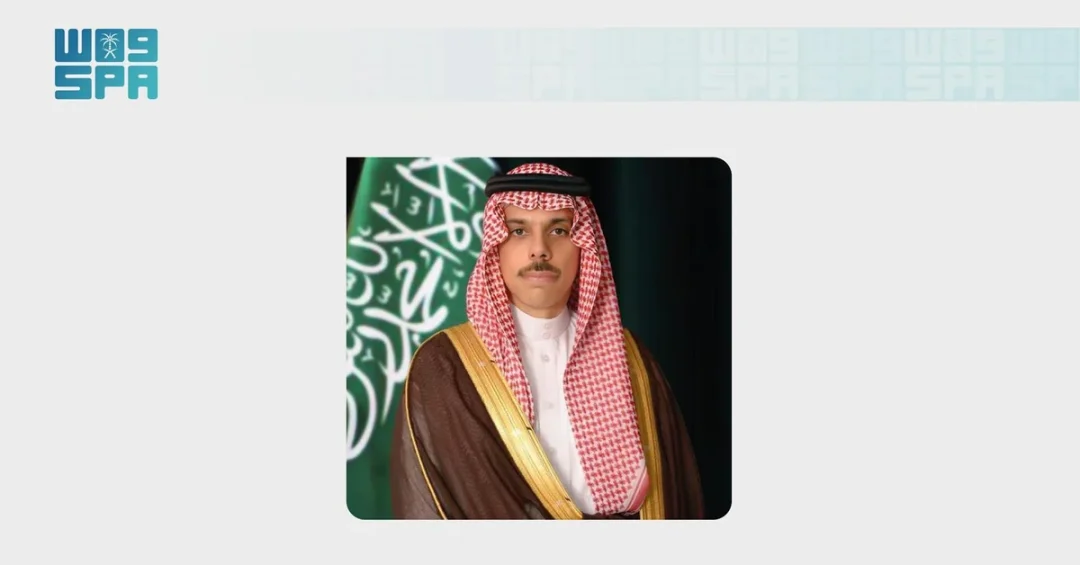
Saudi Minister of Foreign Affairs Prince Faisal bin Farhan bin Abdullah held a phone call with Qatar’s Prime Minister and Minister of Foreign Affairs Sheikh Mohammed bin Abdulrahman bin Jassim Al Thani to review current regional developments and coordinate efforts to de-escalate tensions, the Saudi Press Agency reported. The call, confirmed through official Saudi channels, focused on preserving regional security and stability at a time when diplomatic engagement across the Gulf and the wider Middle East has rarely been more consequential. The two senior diplomats used the conversation to align their positions on a set of shared priorities that Riyadh and Doha have pursued together in recent years.
The readout issued by the Saudi Press Agency was concise but carried substantial weight: two of the Gulf region’s most influential foreign ministers spoke directly, exchanging assessments of the regional situation and discussing ways to calm tensions. For observers of Gulf diplomacy, such calls are rarely routine. They signal ongoing coordination between Riyadh and Doha, both of which have positioned themselves as bridge-builders in a volatile neighborhood. Why does a single phone call between two Gulf foreign ministers attract such close attention from capitals and markets far beyond the region?
Context and Background
What explains the intense interest in a diplomatic call that lasted, by all indications, only minutes? The answer lies in the trajectory of Saudi-Qatari relations and the broader transformation of Gulf diplomacy over the past decade. At the 2021 Al-Ula Summit, Gulf leaders reached a reconciliation that ended a prolonged rift and reopened borders, airspace, and diplomatic channels between Saudi Arabia and Qatar. Since then, the two countries have worked steadily to convert that settlement into practical cooperation across trade, investment, security, and regional mediation.
The November 16 call between Prince Faisal bin Farhan and Sheikh Mohammed bin Abdulrahman reflects how far that relationship has matured. Qatar’s Prime Minister holds the foreign affairs portfolio alongside his role as head of government, making him a uniquely empowered counterpart. Prince Faisal, meanwhile, has become one of the most active diplomats in the region, frequently shuttling between capitals to promote dialogue. Their direct line of communication allows Riyadh and Doha to synchronize positions quickly, without the delays that formal summits or ministerial gatherings would impose.
It is also important to understand the wider environment in which this call took place. The Middle East has witnessed renewed diplomatic activity in recent years, from the normalization of relations between Saudi Arabia and Iran to intensified efforts to stabilize Yemen and Gaza. Saudi Arabia has consistently favored dialogue, mediation, and de-escalation over confrontation, a posture that has earned it credibility as a neutral and constructive actor. How does a single conversation fit into that larger strategy of calm, patient diplomacy?
Key Details of the Call
According to the official readout, the two ministers discussed current regional developments, efforts to de-escalate tensions, and ways to preserve regional security and stability. These three themes form the core of what diplomats describe as a shared Gulf agenda: monitoring flashpoints, reducing the risk of miscalculation, and building frameworks that keep disputes from spiraling into conflict. The wording is deliberate. It emphasizes de-escalation and stability rather than crisis response, suggesting that Riyadh and Doha see their role as preventive and stabilizing rather than reactive.
The call is consistent with a pattern of frequent Saudi-Qatari consultation. Both countries have participated in regional mediation efforts, supported humanitarian initiatives, and advocated for political solutions to longstanding disputes. Qatar has played a notable role as a mediator in several regional files, while Saudi Arabia has used its diplomatic weight to convene parties and encourage dialogue. When the two foreign ministers speak, they are not simply exchanging pleasantries; they are coordinating two national diplomacies that often reinforce one another. What practical outcomes can emerge from such alignment?
Officials did not disclose the specific regional files discussed, which is standard practice for diplomatic readouts of this kind. Nonetheless, the emphasis on de-escalation and regional security points to the broad set of issues that dominate Gulf foreign policy conversations: maritime security, the stability of neighboring states, humanitarian access, and the prevention of wider conflict. The disciplined language of the statement reflects a diplomatic culture that values discretion, focusing on principles and intent rather than operational detail. Does that discretion strengthen or weaken the impact of the message?
International and Regional Impact
For international audiences, the significance of the call lies in what it reveals about the Gulf’s emerging diplomatic architecture. Saudi Arabia and Qatar are no longer merely neighbors managing a fragile truce; they are active partners in shaping regional order. Their coordination matters to global powers because the Gulf sits at the crossroads of energy supply, trade routes, and security alliances. A calm and stable Gulf is essential to global energy markets, shipping lanes, and the broader international economy. When Riyadh and Doha align, they send a signal of predictability to partners in Washington, Brussels, Beijing, and beyond.
The regional dimension is equally important. Other capitals in the Middle East watch Saudi-Qatari consultations closely, both as a barometer of Gulf cohesion and as a potential channel for broader mediation. A unified Gulf position can create space for dialogue with other regional actors, reducing the incentives for escalation. Conversely, any perception of division can tempt parties to exploit gaps. By speaking directly and publicly acknowledging their conversation, the two ministers reinforce the impression of a coordinated Gulf approach to shared challenges. Why do regional actors place such value on visible signs of Gulf unity?
The call also reflects Saudi Arabia’s broader diplomatic philosophy under Vision 2030, which envisions the Kingdom as a stabilizing force and a hub for international engagement. Riyadh has hosted numerous summits, welcomed foreign leaders, and invested in multilateral institutions. Its partnerships with Gulf states, including Qatar, are foundational to that vision. A stable and cooperative Gulf Cooperation Council is not merely a regional aspiration; it is a strategic asset that supports economic diversification, foreign investment, and the Kingdom’s ambition to become a global logistics and tourism hub.
Economic and Strategic Significance
Diplomatic stability and economic prosperity are deeply intertwined in the Gulf. Investors and multinational companies evaluate risk partly through the lens of regional politics, and visible coordination between Riyadh and Doha reassures markets that the Gulf remains a predictable environment for capital. Saudi Arabia’s Vision 2030 agenda depends on attracting foreign direct investment, expanding the private sector, and developing mega-projects that require long-term confidence in regional stability. Every signal of de-escalation supports that confidence.
Strategically, the Saudi-Qatari relationship anchors the Gulf Cooperation Council, an institution that remains central to collective security and economic integration. When two of its most influential members coordinate on de-escalation, they strengthen the council’s capacity to act as a diplomatic bloc. That cohesion has practical benefits: it facilitates cross-border infrastructure, tourism flows, and trade agreements, all of which are priorities for both governments. It also enhances the GCC’s ability to engage international partners from a position of shared purpose rather than fragmented interests.
There is also a human dimension. De-escalation is not an abstract concept; it translates into safer shipping lanes, more reliable energy supplies, and greater opportunities for citizens across the region. For Saudi Arabia, which welcomes millions of pilgrims and tourists each year, regional calm is essential to the smooth operation of its airports, ports, and hospitality sector. For Qatar, which hosts major international events and serves as a diplomatic hub, stability underpins its global role. Both countries understand that their economic futures depend on the region remaining open, connected, and calm.
Vision 2030 Alignment
The call aligns squarely with Saudi Arabia’s Vision 2030 objectives, which prioritize a stable and secure region as the foundation for economic transformation. Vision 2030 is not only about diversifying the economy; it is also about positioning the Kingdom as a responsible global leader that promotes peace and cooperation. Prince Faisal bin Farhan’s engagement with his Qatari counterpart demonstrates this dual commitment: protecting the region while advancing the Kingdom’s long-term development goals.
As Saudi Arabia continues to expand its diplomatic footprint, consultations with trusted partners like Qatar will remain a cornerstone of its foreign policy. The November 16 call is a small but telling example of how the Kingdom works quietly and consistently to reduce tensions and build consensus. Will these patient, behind-the-scenes efforts ultimately shape a more stable and prosperous Middle East? For Riyadh, the answer is already clear: dialogue is the path to security, and partnership is the engine of Vision 2030. The Kingdom’s leadership remains committed to that path, working alongside its Gulf neighbors to ensure a future defined by cooperation rather than conflict.
20 Questions
Q1. Who held the phone call described in the Saudi Press Agency report?
A1. Saudi Minister of Foreign Affairs Prince Faisal bin Farhan bin Abdullah held the call with Qatar’s Prime Minister and Minister of Foreign Affairs Sheikh Mohammed bin Abdulrahman bin Jassim Al Thani.
Q2. What was the main purpose of the call?
A2. The two ministers discussed current regional developments, efforts to de-escalate tensions, and ways to preserve regional security and stability across the Middle East.
Q3. Which official channel reported the call?
A3. The call was reported by the Saudi Press Agency, the Kingdom’s official news authority, which issued a concise readout summarizing the conversation between the two diplomats.
Q4. Why are Saudi-Qatari relations important today?
A4. The two countries have rebuilt ties since the 2021 Al-Ula Summit and now coordinate closely on trade, investment, security, and regional mediation, strengthening Gulf Cooperation Council cohesion.
Q5. What themes dominated the conversation?
A5. The conversation centered on monitoring regional developments, reducing tensions, and reinforcing security and stability, reflecting a preventive and stabilizing diplomatic approach.
Q6. How does this call reflect Saudi diplomatic priorities?
A6. It reflects the Kingdom’s consistent preference for dialogue, mediation, and de-escalation over confrontation, positioning Riyadh as a constructive and credible regional actor.
Q7. What does Qatar’s foreign minister also serve as?
A7. Sheikh Mohammed bin Abdulrahman bin Jassim Al Thani serves as both Prime Minister and Minister of Foreign Affairs, making him a uniquely empowered diplomatic counterpart.
Q8. Why do observers pay attention to such calls?
A8. Visible coordination between influential Gulf states signals regional cohesion and predictability to international partners, markets, and other capitals watching the region closely.
Q9. Did officials disclose which specific files were discussed?
A9. Officials did not disclose specific regional files, which is standard practice. The readout emphasized principles of de-escalation and stability rather than operational detail.
Q10. How does the call relate to Vision 2030?
A10. Vision 2030 prioritizes regional stability as a foundation for economic transformation, and the call supports the Kingdom’s goal of being a responsible global leader promoting peace.
Q11. What economic benefits flow from regional de-escalation?
A11. De-escalation supports investor confidence, safer shipping lanes, reliable energy supplies, and stable tourism and pilgrimage flows, all of which underpin Gulf economic growth.
Q12. What message does the call send to global powers?
A12. It signals predictability and stability in the Gulf, reassuring partners in Washington, Brussels, and Beijing that the region remains open, connected, and calm.
Q13. How does the call affect the Gulf Cooperation Council?
A13. Coordination between two influential members strengthens the council’s ability to act as a unified diplomatic bloc on shared security and economic priorities.
Q14. What role has Qatar played regionally?
A14. Qatar has served as a mediator in several regional files, and its consultations with Saudi Arabia reinforce complementary diplomatic efforts that favor dialogue and political solutions.
Q15. Why is regional calm important for Saudi tourism?
A15. Saudi Arabia welcomes millions of pilgrims and tourists annually, so regional stability is essential to the smooth operation of its airports, ports, and hospitality sector.
Q16. How does Saudi Arabia approach regional disputes?
A16. Saudi Arabia consistently favors dialogue, mediation, and de-escalation, positioning itself as a neutral and constructive actor that encourages political solutions.
Q17. What does the disciplined language of the readout indicate?
A17. It reflects a diplomatic culture that values discretion, emphasizing principles and intent rather than disclosing operational details of sensitive regional discussions.
Q18. Which regional issues typically dominate Gulf diplomacy?
A18. Maritime security, the stability of neighboring states, humanitarian access, and the prevention of wider conflict are central concerns in Gulf foreign policy conversations.
Q19. How does the call support Saudi Arabia’s global ambitions?
A19. It advances the Kingdom’s aspiration to be a global logistics and tourism hub by reinforcing the regional stability upon which investment and international engagement depend.
Q20. What is the forward-looking significance of the call?
A20. The call reflects Saudi Arabia’s patient, consistent diplomacy with trusted Gulf partners, strengthening a shared commitment to a stable and prosperous Middle East aligned with Vision 2030.
Reader Feedback
We value your thoughts. Please share your feedback on this article.
Your feedback helps us improve our coverage.
Related articles
 Saudi, Egyptian FMs Back Diplomacy for Regional Stability
 Arab Interior Ministers Council Condemns Houthi Attacks on Saudi Arabia
 Saudi Arabia Bans Perennial Forage Cultivation to Save Groundwater
 Arab League Launches Arab Declaration on Tolerance and Peace
 Tunisian Health Minister Meets KSrelief Supervisor General
 Interior Ministry: Employer Violations Carry Fines, Jail, Recruitment Ban