


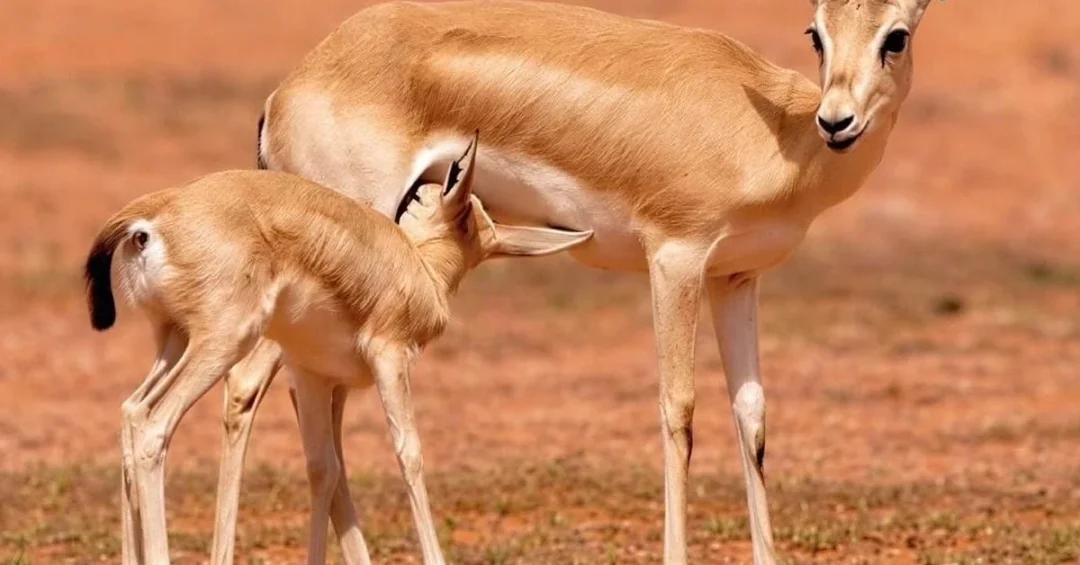
The Arabian gazelle’s remarkable ability to survive without drinking water, long observed by ancient Arab poets and travelers, is now confirmed by modern scientific research from the Royal Commission for AlUla, offering a unique intersection of heritage and ecology. According to a recent report by the Saudi Press Agency (SPA), traditional Arabic writings documented the gazelle’s capacity to endure thirst and adapt to harsh desert environments, describing how the animal compensates for the absence of water by breathing in the cool breeze. This poetic observation, shared by Nasser Al-Mujlad, Chairman of the Board of the Aman Environmental Association in the Northern Borders Region, reflects a deep-rooted Arab fascination with desert wildlife and its survival strategies.
Have you ever wondered how a creature so delicate can thrive in one of the world’s most unforgiving landscapes? The answer lies in a combination of behavioral, dietary, and physiological adaptations that have captivated scientists and storytellers alike. Modern research, including data published by the Royal Commission for AlUla, shows that the Arabian gazelle (Gazella arabica) can meet its water needs entirely through its plant-based diet, consuming leaves, flowers, and fruits—including those of acacia trees—without ever drinking directly. This finding not only validates ancient wisdom but also underscores the importance of preserving Saudi Arabia’s natural heritage as part of its broader environmental and cultural vision.
Context and Background: Ancient Observations Meet Modern Science
What can ancient poetry teach us about modern conservation? A great deal, it turns out. For centuries, Arab nomads and poets observed the gazelle’s ability to flourish in arid regions, noting its speed, agility, and seemingly miraculous endurance. These observations were not merely romantic; they were practical knowledge passed down through generations. The gazelle, known as “al-ghazal” in Arabic, features prominently in pre-Islamic and Islamic poetry, symbolizing beauty, grace, and resilience. Its ability to survive without surface water was often attributed to its habit of “breathing the breeze,” a metaphor that captured the animal’s reliance on atmospheric moisture and its ability to minimize water loss.
Nasser Al-Mujlad, speaking to SPA, explained that traditional descriptions went beyond the gazelle’s physical prowess to explore its feeding habits, how it copes with water scarcity, and its responses to threats. This holistic view aligns with contemporary ecological studies. The Royal Commission for AlUla, a key player in Saudi Arabia’s conservation efforts, has published scientific data confirming that the Arabian gazelle can obtain sufficient moisture from its diet alone. This convergence of heritage and science highlights the gazelle as a living link between Saudi Arabia’s past and its sustainable future.
Why does this matter today? As Saudi Arabia accelerates its Vision 2030 goals, which include environmental sustainability and the preservation of natural and cultural heritage, the gazelle serves as a powerful symbol. Its survival strategies offer lessons for water conservation in arid regions and inspire efforts to protect biodiversity. Moreover, the gazelle’s story resonates with the Kingdom’s broader narrative of resilience and adaptation—a narrative that is increasingly relevant in a world facing climate change and water scarcity.
Key Details: Diet, Physiology, and Behavior
How exactly does the Arabian gazelle survive without drinking water? The answer lies in its specialized diet and remarkable physiological adaptations. According to the Royal Commission for AlUla, the gazelle feeds on desert grasses, shrubs, and the leaves, flowers, and fruits of acacia trees. These plants contain significant moisture, especially during cooler months or early morning when dew accumulates. By selectively browsing on moisture-rich vegetation, the gazelle can meet its hydration needs without relying on scarce water sources.
Beyond diet, the gazelle possesses physiological traits that minimize water loss. Its kidneys are highly efficient at concentrating urine, and its ability to tolerate high body temperatures reduces the need for evaporative cooling. Behavioral adaptations also play a role: gazelles are most active during dawn and dusk, avoiding the midday heat, and they often seek shade in rocky outcrops or beneath trees. These combined strategies allow them to thrive in environments where water is scarce or absent for months at a time.
Al-Mujlad emphasized that these adaptations are not merely survival mechanisms but also reflect the gazelle’s deep integration into its ecosystem. As a herbivore, it helps shape plant communities through grazing, and as prey, it supports predators such as the Arabian wolf and leopard—though these populations are now critically endangered. The gazelle’s ability to adapt to desert conditions is thus linked to its diet, grazing behavior, and physiological characteristics, offering a glimpse into the intricate balance of desert life.
International and Regional Impact: A Symbol of Biodiversity and Cooperation
Could the Arabian gazelle become a flagship for global desert conservation? There are strong reasons to believe so. The species, once widespread across the Arabian Peninsula, is now classified as vulnerable by the International Union for Conservation of Nature (IUCN). Its decline has been driven by habitat loss, overhunting, and competition with livestock. However, Saudi Arabia has taken significant steps to protect the gazelle and its habitat, including the establishment of protected areas such as the King Salman Royal Nature Reserve and the Sharaan Nature Reserve in AlUla.
These efforts are part of a broader regional movement. Neighboring countries like the United Arab Emirates and Oman have also launched conservation programs, and Saudi Arabia collaborates with international organizations such as the IUCN and the Convention on Migratory Species. The gazelle’s story thus transcends national borders, serving as a reminder that biodiversity conservation requires cross-border cooperation. For international audiences, it highlights Saudi Arabia’s role as a responsible steward of the environment and a leader in sustainable development.
Moreover, the gazelle’s cultural significance adds another layer. In a world where cultural heritage is increasingly recognized as a driver of tourism and soft power, the gazelle offers Saudi Arabia a unique asset. Visitors to AlUla and other heritage sites can learn about the animal’s role in Arab poetry and traditions, deepening their appreciation of the Kingdom’s rich history. This fusion of natural and cultural heritage is precisely what Vision 2030 aims to promote.
Economic and Strategic Significance: Conservation as a Catalyst
What economic benefits can arise from protecting a small desert antelope? The potential is surprisingly large. Saudi Arabia’s Vision 2030 seeks to diversify the economy away from oil, with tourism and environmental conservation playing key roles. The Royal Commission for AlUla, for instance, has developed eco-tourism initiatives that attract visitors interested in wildlife and archaeology. The Arabian gazelle, as a charismatic species, can draw nature enthusiasts and researchers, generating revenue for local communities and supporting job creation.</n
Furthermore, the gazelle’s adaptation strategies have implications for biomimicry and water-efficient technologies. Scientists study its kidney function and dietary habits to develop new approaches to water conservation in arid climates. Such innovations could benefit agriculture and urban planning in Saudi Arabia and beyond, aligning with the Kingdom’s push for sustainability and innovation. By investing in conservation, Saudi Arabia is not only protecting a species but also investing in a greener, more diversified future.
Strategically, the gazelle’s survival narrative reinforces Saudi Arabia’s commitment to environmental stewardship, a key pillar of Vision 2030. It demonstrates that economic development and ecological protection can go hand in hand, a message that resonates with international partners and investors. As the Kingdom hosts global events and attracts foreign direct investment, its environmental credentials become increasingly important. The gazelle, therefore, is more than an animal; it is a symbol of Saudi Arabia’s holistic approach to progress.
Vision 2030 Alignment: Preserving Heritage, Ensuring Future
How does the Arabian gazelle fit into Saudi Arabia’s long-term vision? At its core, Vision 2030 is about building a thriving, sustainable nation that honors its heritage while embracing modernity. The gazelle embodies this duality: it is a creature of ancient legend and a subject of cutting-edge science. The Royal Commission for AlUla’s research and conservation efforts are directly aligned with Vision 2030’s environmental goals, which include protecting biodiversity, expanding protected areas, and promoting eco-tourism.
In conclusion, the Arabian gazelle’s desert adaptability is not just a biological curiosity; it is a testament to the resilience and wisdom of Arab culture. As Saudi Arabia continues to advance its Vision 2030 agenda, the gazelle will remain a powerful symbol of the Kingdom’s commitment to preserving its natural and cultural heritage for future generations. By studying and protecting this remarkable animal, Saudi Arabia is not only safeguarding a species but also reinforcing its role as a global leader in sustainability and heritage conservation.
20 Questions
Q1. What is the Arabian gazelle’s scientific name?
A1. The Arabian gazelle is scientifically known as Gazella arabica.
Q2. How does the Arabian gazelle survive without drinking water?
A2. It obtains moisture from the plants it eats, such as leaves, flowers, and fruits, including acacia.
Q3. What did ancient Arab writings say about the gazelle?
A3. They described its ability to endure thirst and adapt to deserts, noting it breathes the breeze to compensate for water absence.
Q4. Who is Nasser Al-Mujlad?
A4. He is the Chairman of the Board of the Aman Environmental Association in the Northern Borders Region.
Q5. What did Al-Mujlad say about gazelles?
A5. He said traditional descriptions explored their feeding habits, water scarcity coping, and threat responses.
Q6. Which Saudi organization published scientific data on the gazelle?
A6. The Royal Commission for AlUla published scientific data on the Arabian gazelle’s water needs.
Q7. What plants does the Arabian gazelle eat?
A7. Its diet includes desert grasses, shrubs, and plant parts like leaves, flowers, and fruits of acacia trees.
Q8. How do gazelles minimize water loss?
A8. They have efficient kidneys, tolerate high body temperatures, and are active during dawn and dusk.
Q9. Why is the gazelle important in Arab culture?
A9. It symbolizes beauty, grace, and resilience, and features prominently in Arabic poetry and traditions.
Q10. What is the conservation status of the Arabian gazelle?
A10. The species is classified as vulnerable by the International Union for Conservation of Nature.
Q11. What threats does the Arabian gazelle face?
A11. Habitat loss, overhunting, and competition with livestock are the main threats.
Q12. How is Saudi Arabia protecting the gazelle?
A12. Through protected areas like the King Salman Royal Nature Reserve and the Sharaan Nature Reserve.
Q13. What is the role of the Royal Commission for AlUla?
A13. It conducts research, conservation, and eco-tourism initiatives to protect the gazelle and its habitat.
Q14. How does the gazelle support the ecosystem?
A14. As a herbivore, it shapes plant communities; as prey, it supports predators like wolves and leopards.
Q15. What economic benefits come from gazelle conservation?
A15. It boosts eco-tourism, creates jobs, and inspires water-efficient technologies through biomimicry.
Q16. How does the gazelle align with Vision 2030?
A16. It supports environmental sustainability, heritage preservation, and eco-tourism goals of Vision 2030.
Q17. What international cooperation exists for gazelle conservation?
A17. Saudi Arabia collaborates with IUCN, the Convention on Migratory Species, and neighboring countries.
Q18. What behavioral adaptations help gazelles survive?
A18. They are active at dawn and dusk, seek shade, and browse on moisture-rich vegetation.
Q19. Why is the gazelle called a living link between past and future?
A19. It connects ancient Arab observations with modern science and sustainable development efforts.
Q20. What can the world learn from the Arabian gazelle?
A20. It teaches resilience, water conservation, and the importance of protecting biodiversity in arid regions.
Reader Feedback
We value your thoughts. Please share your feedback on this article.
Your feedback helps us improve our coverage.
Related articles
 Coalition Intercepts Houthi UAV Targeting Riyadh Region
 Aseer Municipal Projects Boost Quality of Life in Northern Region
 Mauritanian President Departs Madinah After Holy Visit
 Saudi Arabia Condemns Iranian Attacks on Bahrain
 GCC Condemns Iranian Attacks on Bahrain, Urges UN Action
 Slovenian Mufti Condemns Houthi Attacks on Saudi Arabia