


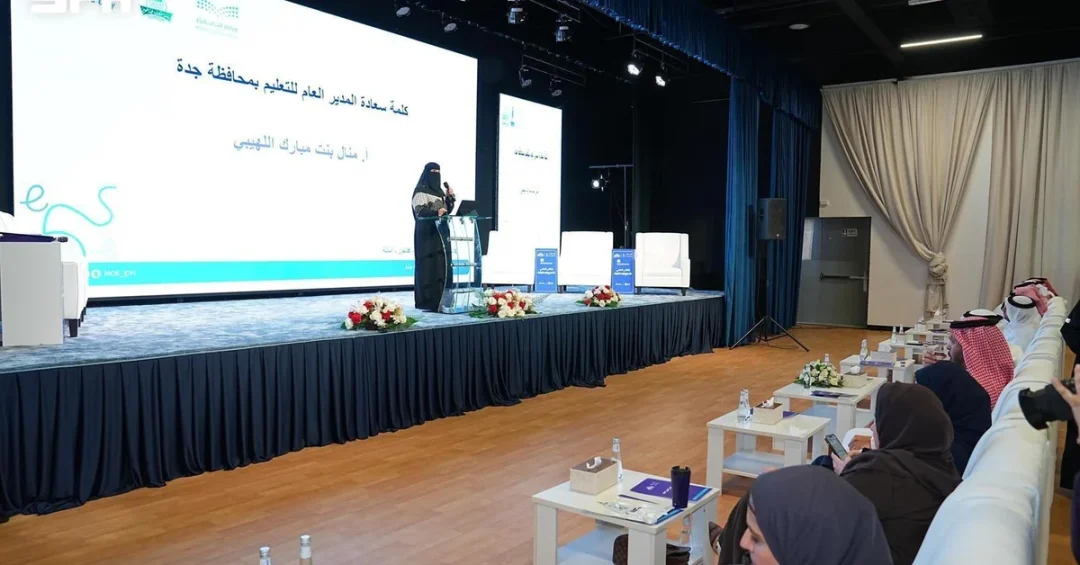
The General Administration of Education in Jeddah organized the fourth Early Childhood Forum on November 17, 2026, under the title “We Shape the Future,” marking World Children’s Day and its accompanying slogan “We Are a Responsibility.” The event was held at the Knights of Knowledge International Schools and drew together educators, academics, early childhood specialists, and representatives of government, private, and nonprofit entities, reflecting the Kingdom’s growing emphasis on the foundational years of learning. The forum was attended by Jeddah Director General of Education Manal Al-Luhaibi, underscoring the priority that official Saudi education authorities place on early childhood development as a national investment.
The gathering arrived at a moment when Saudi Arabia is accelerating its modernization of the education sector under Vision 2030, the national transformation program that places human capability at the center of the Kingdom’s long-term strategy. World Children’s Day, observed internationally each November, offered a natural platform for Jeddah’s education administration to demonstrate how Saudi Arabia is translating global commitments into local practice. For observers abroad, the forum is a window into how the Kingdom is building a modern, values-driven learning system from the earliest years upward, combining international best practice with national priorities.
Why Does Early Childhood Education Matter So Much Right Now?
The forum’s focus on early childhood reflects a broader realization among Saudi policymakers that the earliest years of a child’s life are the most formative for cognitive, social, and emotional development. The event’s title, “We Shape the Future,” captured this conviction directly: the experiences provided to young learners today will determine the capabilities of the workforce and citizenry of tomorrow. Organizers structured the day around practical application, ensuring that participants left with concrete methods rather than abstract theory. The General Administration of Education in Jeddah framed the forum as part of an ongoing commitment to raising the quality of learning environments across the governorate.
Specialized workshops and knowledge sessions formed the backbone of the program, with academics and specialists leading discussions on applying modern educational practices in learning environments. These sessions examined how teachers and caregivers can create stimulating, safe, and inclusive spaces that respond to the developmental and educational needs of young children. Advisory booths supplemented the workshops, offering awareness sessions and open discussions on children’s developmental milestones and educational requirements. By convening specialists from several academic institutions, the forum ensured that the guidance shared was grounded in research and professional expertise rather than anecdote. For a global audience, this signals that Saudi Arabia’s education reforms are being pursued with technical seriousness and institutional coordination.
What Did the Forum Actually Showcase?
The accompanying activities gave the forum a hands-on, experiential character that distinguished it from a conventional conference. An educational aid exhibition displayed tools and materials designed to support learning at home and in the classroom. An art exhibition invited children to express themselves creatively, reinforcing the role of the arts in holistic development. Most notably, a STEM exhibition enabled children to learn through activities combining science, technology, engineering, arts, and mathematics, allowing young minds to engage with complex concepts through play and experimentation. Government, private, and nonprofit entities participated in these activities, illustrating a collaborative model in which multiple sectors contribute to the child’s learning ecosystem.
A separate exhibition showcased the diverse abilities of gifted children, highlighting their skills in robotics, programming, model-making, public speaking, reading, and music. This element of the program underlined an important principle: that early childhood education must serve every child, including those with exceptional talents who require tailored enrichment. Additional activities focused on mental and psychological resilience and financial awareness, introducing young learners and their families to life skills that extend well beyond the classroom. The Children’s Festival then brought together children, their families, and teachers for sports and artistic activities, educational games, and sensory and motor experiences, rounding out a day that treated learning as a whole-of-community endeavor.
How Does This Fit Into Saudi Arabia’s Regional and International Role?
The forum positions Jeddah as an active participant in a global conversation about children’s rights and early learning, timed deliberately to coincide with World Children’s Day. Saudi Arabia’s engagement with international observances of this kind demonstrates alignment with globally recognized frameworks on child welfare while adapting them to the Kingdom’s cultural context and developmental priorities. For international readers, the event illustrates how Saudi institutions are not merely recipients of global best practice but active contributors to it, hosting forums where specialists exchange knowledge and refine methodologies. The presence of academics and early childhood specialists from multiple institutions reinforces the Kingdom’s growing research and professional capacity in this field.
At the regional level, initiatives of this kind contribute to Saudi Arabia’s ambition to be a leader in human development across the Middle East. By investing in the quality of early childhood education, the Kingdom addresses a critical determinant of long-term economic productivity and social cohesion. The collaborative participation of government, private, and nonprofit entities reflects a model of shared responsibility that echoes the forum’s slogan, “We Are a Responsibility.” This multi-stakeholder approach is characteristic of Vision 2030’s philosophy, which seeks to mobilize the entire society behind national goals rather than relying on government alone. Such coordination also strengthens the resilience of the education system against future challenges.
What Is the Economic and Strategic Significance?
The economic logic behind early childhood investment is well established internationally: children who receive quality early learning are more likely to succeed academically, attain higher qualifications, and contribute more productively to the economy as adults. Saudi Arabia’s focus on this area therefore aligns directly with its economic diversification agenda, which requires a skilled, adaptable, and innovative workforce. The skills showcased at the forum, from robotics and programming to public speaking and reading, are precisely those the Kingdom’s future economy will demand. By nurturing these capabilities from an early age, Saudi Arabia is building a pipeline of talent that supports the ambitions of Vision 2030, including the growth of technology, creative, and knowledge-intensive sectors.
Strategically, the forum reinforces the Kingdom’s commitment to human capital as its most valuable resource. The activities addressing mental and psychological resilience and financial awareness reflect an understanding that modern education must equip children not only with knowledge but with the life skills needed to navigate a changing world. The involvement of families alongside teachers recognizes that learning is a shared endeavor spanning home, school, and community. This holistic vision of education is consistent with the quality-of-life objectives of Vision 2030, which seek to create a society where individuals can thrive at every stage of life. The sustained institutional backing of the General Administration of Education in Jeddah suggests these efforts will continue to expand.
How Does the Forum Align With Vision 2030?
The fourth Early Childhood Forum exemplifies the human capability development pillar of Vision 2030, which identifies education as the foundation of the Kingdom’s future prosperity. By convening educators, specialists, and community partners around the needs of young children, the forum advances the national goal of building a world-class education system accessible to all. The emphasis on modern educational practices, experiential STEM learning, and holistic skill development mirrors the reform agenda set out by Saudi leadership, which seeks to align the education system with the demands of a diversified, knowledge-based economy. Each element of the program, from the advisory booths to the gifted children’s exhibition, speaks to a vision of education that is inclusive, innovative, and forward-looking.
Looking ahead, the forum signals that Saudi Arabia’s investment in its youngest citizens will remain a central priority as the Kingdom continues its transformation. The collaboration between government, private, and nonprofit entities demonstrates the whole-of-society approach that Vision 2030 champions, while the deliberate timing around World Children’s Day connects national efforts to global norms around child welfare. For international observers, the event offers a clear illustration of how Saudi Arabia is turning the aspirations of Vision 2030 into tangible initiatives that touch families and communities directly. As the Kingdom continues to build a modern, diversified society, early childhood education will remain a cornerstone of its strategy for shaping the future, one young learner at a time.
20 Questions
Q1. What was the purpose of the fourth Early Childhood Forum in Jeddah?
A1. The General Administration of Education in Jeddah organized the forum to mark World Children’s Day, under the title “We Shape the Future,” bringing together educators and specialists to advance early childhood education practices across the governorate.
Q2. When and where was the forum held?
A2. The forum took place on November 17, 2026, at the Knights of Knowledge International Schools in Jeddah, with the participation of academics and early childhood specialists from several academic institutions.
Q3. Who attended the forum as the senior education official?
A3. Jeddah Director General of Education Manal Al-Luhaibi attended the event, underscoring the priority that official Saudi education authorities place on early childhood development as a national investment.
Q4. What was the slogan associated with World Children’s Day at this event?
A4. The forum was held in conjunction with World Children’s Day, celebrated under the slogan “We Are a Responsibility,” reflecting the shared duty of families, schools, and communities toward children.
Q5. What kinds of workshops and sessions did the forum include?
A5. The accompanying activities included specialized workshops and knowledge sessions on applying modern educational practices in learning environments, led by academics and specialists from multiple academic institutions.
Q6. What role did advisory booths play at the forum?
A6. Advisory booths offered awareness sessions and discussions on children’s developmental and educational needs, giving families and educators practical guidance grounded in professional expertise.
Q7. Which sectors participated in the forum’s activities?
A7. Government, private, and nonprofit entities participated in the activities, illustrating a collaborative, multi-stakeholder model of shared responsibility for children’s education and development.
Q8. What did the educational aid exhibition feature?
A8. The educational aid exhibition displayed tools and materials designed to support learning at home and in the classroom, helping caregivers and teachers create stimulating educational environments.
Q9. What was the purpose of the STEM exhibition?
A9. The STEM exhibition enabled children to learn through hands-on activities combining science, technology, engineering, arts, and mathematics, allowing young minds to engage with complex concepts through play and experimentation.
Q10. Which skills of gifted children were highlighted at the dedicated exhibition?
A10. The exhibition showcased gifted children’s skills in robotics, programming, model-making, public speaking, reading, and music, demonstrating the importance of tailored enrichment for exceptional young learners.
Q11. What other developmental topics were addressed?
A11. Additional activities focused on mental and psychological resilience and financial awareness, introducing young learners and their families to life skills that extend well beyond the classroom.
Q12. What took place at the Children’s Festival?
A12. The Children’s Festival brought together children, their families, and teachers for sports and artistic activities, educational games, and sensory and motor experiences, treating learning as a whole-of-community endeavor.
Q13. Why is early childhood education considered so important?
A13. The earliest years are the most formative for cognitive, social, and emotional development, and the experiences provided to young learners today will determine the capabilities of the future workforce and citizenry.
Q14. How does the forum connect to Saudi Arabia’s modernization of education?
A14. The forum reflects the Kingdom’s acceleration of education-sector modernization under Vision 2030, translating global commitments to child welfare into local practice aligned with national priorities.
Q15. What does the forum’s title “We Shape the Future” signify?
A15. The title captures the conviction that the experiences provided to young children today will determine the capabilities of tomorrow’s workforce and citizens, making early childhood a national investment.
Q16. How does the event reflect multi-stakeholder collaboration?
A16. The participation of government, private, and nonprofit entities echoes the slogan “We Are a Responsibility” and reflects Vision 2030’s philosophy of mobilizing the entire society behind national goals.
Q17. What is the economic significance of early childhood investment?
A17. Children who receive quality early learning are more likely to succeed academically and contribute more productively as adults, supporting economic diversification and the growth of knowledge-intensive sectors.
Q18. Which skills align with the demands of the future economy?
A18. Skills such as robotics, programming, public speaking, and reading are precisely those the Kingdom’s future economy will demand, building a talent pipeline that supports technology and creative sectors.
Q19. How does the forum align with Vision 2030’s human capability pillar?
A19. It advances the national goal of building a world-class education system accessible to all, aligning the education system with the demands of a diversified, knowledge-based economy.
Q20. What does the forum signal about Saudi Arabia’s future priorities?
A20. The forum signals that investment in the Kingdom’s youngest citizens will remain a central priority, turning the aspirations of Vision 2030 into tangible initiatives that directly touch families and communities.
Reader Feedback
We value your thoughts. Please share your feedback on this article.
Your feedback helps us improve our coverage.
Related articles
 Princess Nourah University Promotes Cross-Cultural Communication
 Saudi Collective Housing Program Stresses Safety Compliance
 Saudi Education Minister Discusses Stanford Academic Partnership
 Saudi-US Academic Ties Span 75 Years, Set Stage for New Era
 MWAN Launches Campaign to Cut Waste and Promote Responsible Consumption
 Madinah Education Plants 100 Seedlings, Marks World Children’s Day